Saudi Heritage Commission Registers 1,516 New Archaeological Sites

Saudi Heritage Commission Registers 1,516 New Archaeological Sites
TT

Saudi Heritage Commission Registers 1,516 New Archaeological Sites

Saudi Heritage Commission Registers 1,516 New Archaeological Sites

Saudi Arabia’s Heritage Commission announced the registration of 1,516 new archaeological sites in the National Antiquities Register, increasing the total to 11,577, reported the Saudi Press Agency on Sunday.

The expansion reflects Saudi Arabia's rich and diverse heritage and demonstrates the commission's commitment to documenting and preserving archaeological sites across the Kingdom.

The new sites are distributed across several regions: Riyadh Region with 1,174, Al-Baha with 184, Tabuk with 85, Northern Borders with 70, and three in Jeddah.

The commission aims to boost the archaeological database and ensure the sustainability of these sites for future generations, thereby strengthening national identity and cultural heritage.

Citizens and residents are encouraged to report unregistered archaeological sites through the Archaeological Site Reporting service, the commission's official social media accounts, and local branches.


Kerala’s Snake Boat Racers Keep Tradition Afloat in Face of Floods and Financial Challenges

 Rowers from the United Boat Club train on the Pamba river in preparation for the Nehru Trophy snake boat race, near Kainakary, Kerala, India, August 7, 2026. (Reuters)
Rowers from the United Boat Club train on the Pamba river in preparation for the Nehru Trophy snake boat race, near Kainakary, Kerala, India, August 7, 2026. (Reuters)
TT

Kerala’s Snake Boat Racers Keep Tradition Afloat in Face of Floods and Financial Challenges

 Rowers from the United Boat Club train on the Pamba river in preparation for the Nehru Trophy snake boat race, near Kainakary, Kerala, India, August 7, 2026. (Reuters)
Rowers from the United Boat Club train on the Pamba river in preparation for the Nehru Trophy snake boat race, near Kainakary, Kerala, India, August 7, 2026. (Reuters)

This weekend around 20 wooden boats, 100-foot long and powered by about 100 rowers each, will slice through Kerala's backwaters to compete for the most prestigious trophy in the centuries-old sport of "vallam kali", or snake boat racing.

Thousands will cheer on from the shore and houseboats as the slender vessels, whose raised sterns give them a cobra-like appearance, race for village pride on a 1.4 km course at Punnamada Lake.

As well as the splashing of hundreds of oars hitting the water in unison over 90 times per minute, the rowing is accompanied by a cacophony of chants and whistles as well as the thunderous beat of thick wooden poles pounding on the deck.

The Alappuzha district, which used to be known as the rice bowl of Kerala because of the proliferation of paddy fields, contains some of the lowest lying land in India and is prone to flooding during the ‌monsoon rains.

But while ‌most villagers check the swollen Pamba River each monsoon morning with trepidation, Vakkachan Theverkkat sees ‌opportunity -- ⁠another chance to ⁠train his roster of 150-odd rowers.

Vakkachan is a former senior oarsman with a lot of experience of racing the massive boats that compete across a three-to-five month season, including Saturday's prestigious Nehru Trophy.

"It runs in my family," said Vakkachan, the leading captain of the Kainakary-based United Boat Club (UBC), which has been competing for the Nehru Trophy since 1963 and won it 12 times.

"Our club has won the Nehru Trophy the most times and also lost it the most times," he told Reuters with a smile.

Deadly floods killed 28 people and displaced thousands across Kerala this month and parts of Kainakary were also affected.

Several roads became inaccessible as houses and buildings stood half-submerged, surrounded by ⁠paddy fields that had swollen into lakes.

Yet UBC's rowers -- mostly locals but including oarsmen from ‌distant states like Uttarakhand and Manipur -- maintained their rigorous practice schedule, often twice ‌daily.

UBC are rated a decent chance for a 13th triumph as they have been hired to row "Veeyapuram", the boat which won the Nehru Trophy ‌and the Champions Boat League last season in the hands of the Village Boat Club.

"VICIOUS VEERU"

Like most Chundan Vallam, or ‌snake boats, Veeyapuram is community-owned and belongs to a village of the same name some 30 km (19 miles) south of Kainakary.

Hundreds of villagers raised around 9 million Indian rupees ($94,300) to launch the boat -- nicknamed "Vicious Veeru" -- in 2019.

Funding each season costs nearly 7 million rupees ($73,000), with the boat owners earning back only a fraction from sponsors and prize money.

While the Kerala government often uses snake boat races to promote tourism, shareholder Manikanthan ‌Nair TM said the boat-owning communities get little help as they battle financial hardship and natural disasters to keep the sport alive.

Kamarudeen KA, the secretary of the Veeyapuram ownership group, ⁠however, said they would not ⁠give up the tradition despite the challenges.

"As long as we're here, we'll keep (this boat) running," he said.

"People speak of it proudly and with admiration. We feel proud that this boat has given us that recognition and identity."

Originally designed as battle canoes in the 13th century, the snake boats have become unlikely symbols of unity in a culturally diverse state.

"There's no barrier like religion or caste when it comes to the boat ... we all pray for its success," said Robin Varghese, a Christian priest and member of the Veeyapuram committee.

"This is our blood and culture," said UBC secretary Sajimon B.

Boats can compete for decades. The Karichal snake boat, launched in 1970, narrowly beat Veeyapuram to win the 2024 Nehru Trophy.


Diriyah Art Futures Launches CONTINUUM 26

CONTINUUM 26 runs from September 3 to November 7. (SPA)
TT

Diriyah Art Futures Launches CONTINUUM 26

CONTINUUM 26 runs from September 3 to November 7. (SPA)

Diriyah Art Futures (DAF), an asset of Saudi Arabia’s Museums Commission under the Ministry of Culture, announced on Tuesday the lineup for CONTINUUM 26, an exhibition celebrating the creative output of the participants in its second Emerging New Media Artists Program.

The first New Media Arts center in the Middle East and North Africa, DAF is dedicated to advancing interdisciplinary creative practice at the intersection of art, science and technology. The exhibition reflects DAF's efforts to combine arts, research and education to empower the next generation of artists, foster new forms of creative expression and expand Saudi Arabia's creative ecosystem in line with the ambitions of the Museums Commission as part of Saudi Vision 2030.

Running from September 3 to November 7, in Diriyah, Riyadh, CONTINUUM 26 is the second installment in an annual exhibition series spotlighting innovative voices shaping the future of new media and digital art in the region and beyond.

CONTINUUM 26 showcases the artists' major new works developed during a year-long educational program at Diriyah Art Futures with support from across DAF's Education, Production, and Exhibition departments.

Working under the mentorship of acclaimed mentor-artists Louis-Philippe Demers and Rick Treweek, the participants explored new forms of creative expression spanning immersive and multimedia installations, light, sound, moving image, virtual reality, mixed reality, and AI-generated projects.

The title CONTINUUM speaks to the ever-evolving nature of creative inquiry that defines the Emerging New Media Artists program. It represents a dynamic process in which divergent artistic trajectories converge around shared thematic inquiries. This continuum reflects both the developmental journey of the participating artists and the fluid boundaries of the topics explored: worlds between reality and artificial reality, organic and synthetic, and human and artificial intelligences.

The exhibition is structured around four key thematic pillars that bridge technological experimentation with deeply human questions. Memory as a living process explores personal, collective, environmental, and cultural remembering. Systems of power and optimization examine technology as an extension of human decisions, desires, and control. The Body, perception, and presence shift focus toward embodiment, interspecies relationships, and immersive sensory environments. Repetition, rhythm, and collective experience explore the choreography of automated systems, labor, and human endurance.


Jeddah Cultural Centers Offer Quality Programs to Support Arts, Creativity

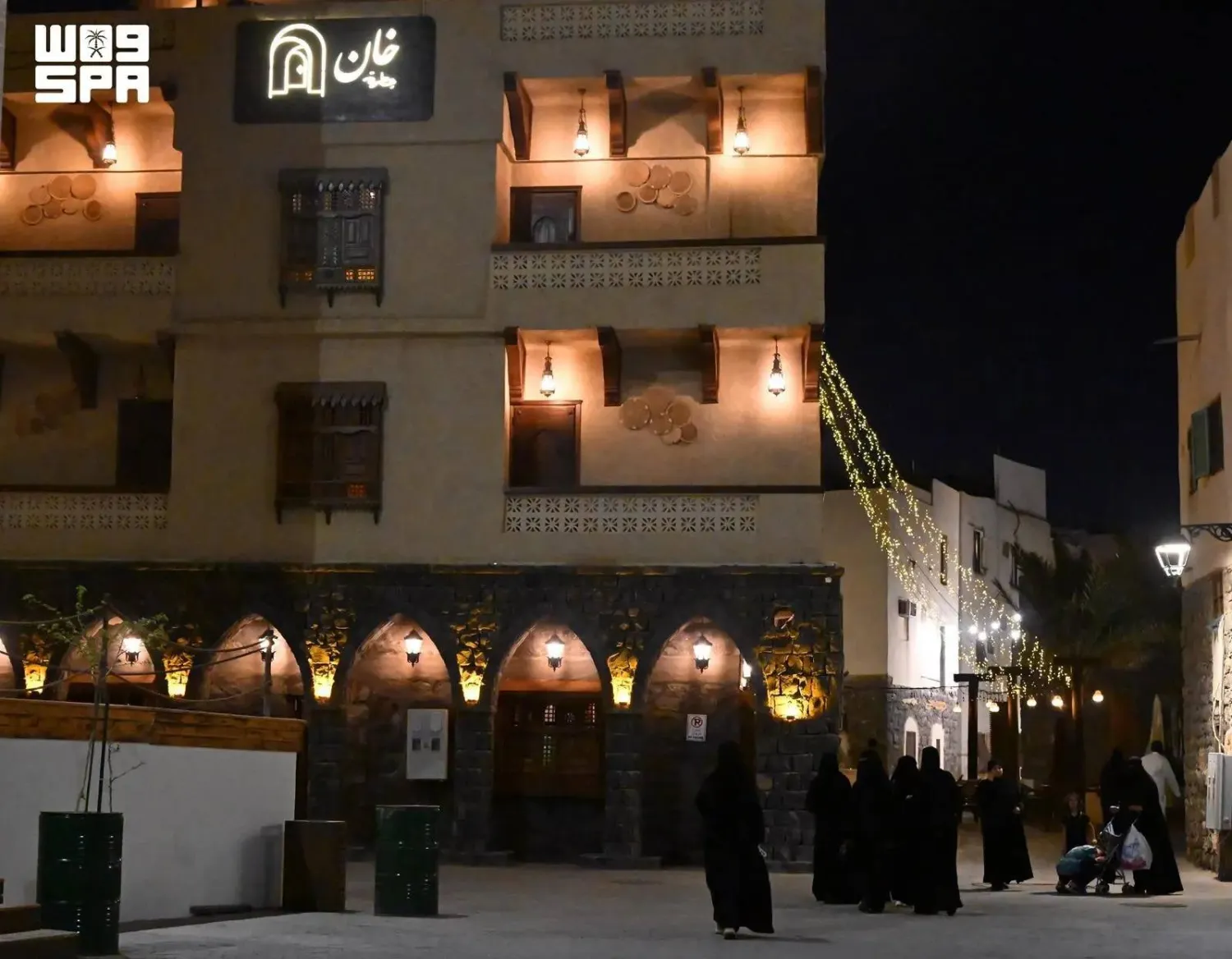
Jeddah is witnessing growing cultural activity, reflected in the programs and events offered by cultural centers and institutions. (SPA)
TT

Jeddah Cultural Centers Offer Quality Programs to Support Arts, Creativity

Jeddah is witnessing growing cultural activity, reflected in the programs and events offered by cultural centers and institutions. (SPA)

Jeddah is witnessing growing cultural activity, reflected in the programs and events offered by cultural centers and institutions throughout the year, the Saudi Press Agency said on Monday.

These include art exhibitions, creative workshops, literary and knowledge-based gatherings, performing arts shows, and initiatives targeting children and youth, providing talents with spaces to learn, experiment, and express themselves while strengthening interaction between creatives and audiences.

The importance of these programs lies in their ability to discover talent and develop creative skills. They provide practitioners and enthusiasts with opportunities for training, networking, and the exchange of expertise, while opening avenues for young artists to showcase their work and reach audiences.

Jeddah's cultural scene derives its distinctive character from the city's identity and historical diversity. For centuries, the city has remained a meeting point for people from diverse cultures, which has influenced its arts, architecture, and social heritage, giving the contemporary cultural scene a rich foundation that draws inspiration from the past and presents it in a modern language combining the authenticity of place with contemporary creative trends.

Cultural programs also help build bridges between generations by presenting local heritage in contemporary forms and giving children and young people opportunities to discover and practice the arts in stimulating environments. This supports the sustainability of cultural knowledge and raises awareness of the value of heritage and national identity.