

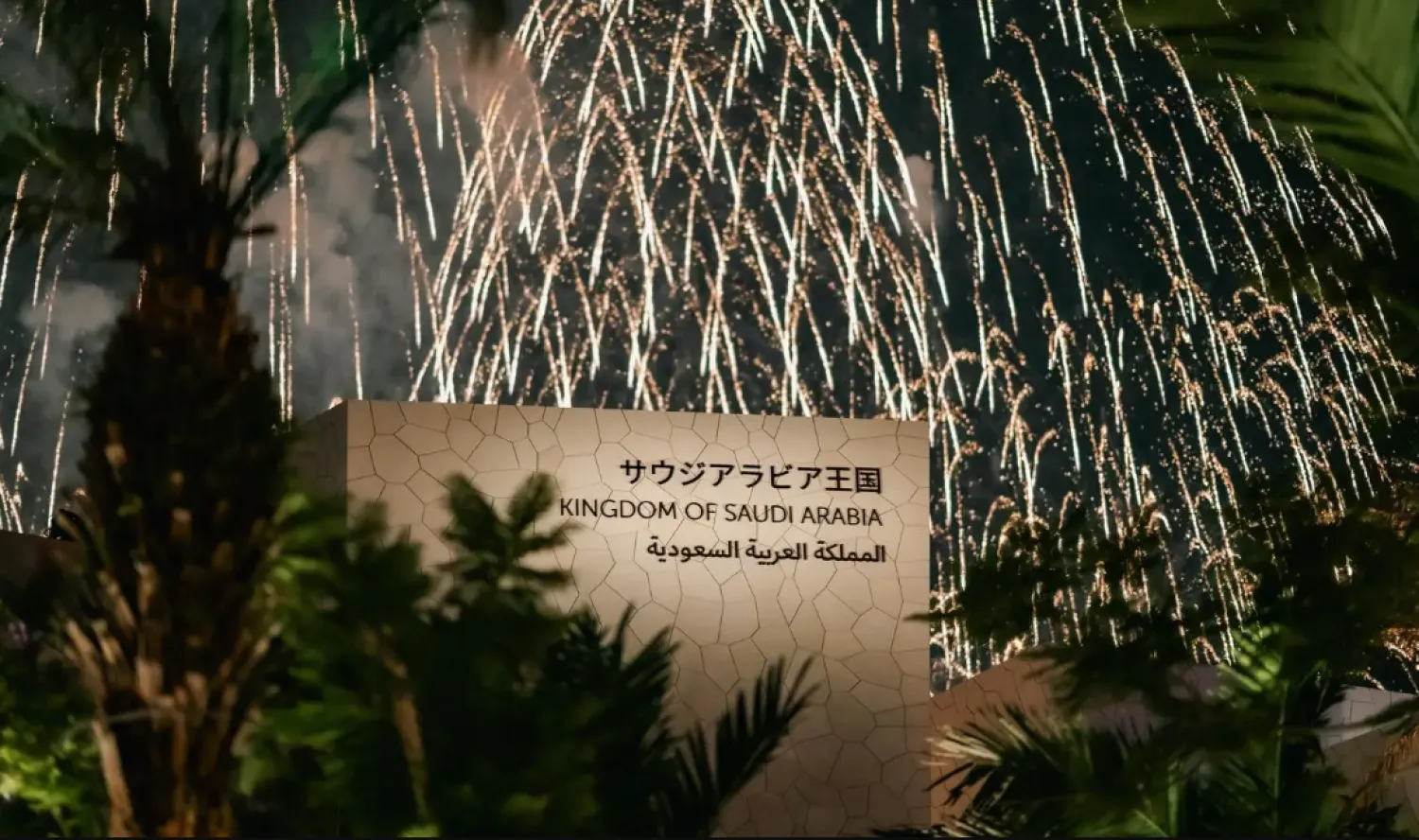

Saudi Pavilion Concludes Expo 2025 Osaka with Record Visitor Numbers and International Praise

Saudi Arabia’s pavilion has concluded its participation in the Expo 2025 Osaka - SPA
TT

Saudi Pavilion Concludes Expo 2025 Osaka with Record Visitor Numbers and International Praise

Saudi Arabia’s pavilion has concluded its participation in the Expo 2025 Osaka - SPA

Saudi Arabia’s pavilion has concluded its participation in the Expo 2025 Osaka, held from April 13 to October 13, with a closing ceremony attended by officials and distinguished guests from several nations.

In his remarks at the ceremony, Saudi Ambassador to Japan and Commissioner General of the Kingdom’s pavilion Dr. Ghazi Binzagr said that the Kingdom’s pavilion offered the world an opportunity to experience the Kingdom up close.

It symbolized a journey of transformation, innovation, and cultural exchange between Saudi Arabia and the global community, SPA reported.

He expressed gratitude to the government and people of Japan for their warm hospitality and hoped to welcome visitors again at Expo 2030 in Riyadh. Over the six-month period, the pavilion welcomed over three million visitors, who engaged with Saudi culture, heritage, and future vision through unique events, performances, and cross-cultural exchanges.

The pavilion received numerous awards and international acclaim, with CNN ranking it among the top 10 pavilions to visit.
Ahead of the expo, Saudi cultural tours were held from February to March across seven Japanese cities—Osaka, Kyoto, Kobe, Hiroshima, Fukuoka, Nagoya, and Tokyo—bringing the flavors of Saudi cuisine, the sounds of its music, and the warmth of its hospitality to the Japanese public, setting the stage for the pavilion’s grand opening.

As one of the largest national pavilions at the expo, second only to Japan’s own, the Saudi pavilion’s architecture embodied the Kingdom’s commitment to sustainability and community empowerment.

Constructed using lightweight Saudi stone sourced from within the Kingdom, the design offered visitors an immersive experience that evoked the spirit of Saudi cities and towns and celebrated its rich cultural heritage.

Visitors enjoyed interactive exhibits showcasing the Kingdom’s achievements in culture, clean energy, technology, tourism, space exploration, human potential, and sustainability.

With Expo 2025 Osaka concluded, Saudi Arabia is now preparing to host Expo 2030 Riyadh, aiming to build bridges of international cooperation and foster innovation under the theme “Foresight for Tomorrow.”

The upcoming event is expected to have participation from over 195 countries and 29 international organizations, focusing on addressing global challenges and presenting innovative solutions for a more sustainable future.




Philippine Museum Brings Deadly, Lucrative Galleon Trade to Life

This photo taken on April 23, 2026 shows visitors under the Galeon Espiritu Santo, a full-scale representation of a 17th century galleon, on display at the Museo del Galeon in Manila. (Photo by Jam STA ROSA / AFP)
TT

Philippine Museum Brings Deadly, Lucrative Galleon Trade to Life

This photo taken on April 23, 2026 shows visitors under the Galeon Espiritu Santo, a full-scale representation of a 17th century galleon, on display at the Museo del Galeon in Manila. (Photo by Jam STA ROSA / AFP)

A full-size replica of a Spanish galleon stares out into Manila Bay, the centerpiece of a museum that will transport visitors back to the 17th century, when conscripted Philippine mariners birthed the era of globalization.

The Museo del Galeon, which focuses on the hulking Espiritu Santo, aims to tell the story of Spain's 250-year-long Pacific galleon trade from the perspective of the Filipinos who built and crewed the towering vessels.

"This is a land with a great tradition of seafaring, but often under inhumane and degrading conditions," the museum's executive director Manuel Quezon told AFP, noting Filipinos still make up a quarter of the world's sailors.

"And it is one that we don't flinch from telling."

Built with forced labor in 1603, the Espiritu Santo was one of 181 treasure ships that made hundreds of trips between Manila and the Mexican port of Acapulco between 1565 and 1815 under harrowing conditions that historians say killed one in three crewmen.

"It was the first global trade, connecting three continents," said Francis Navarro, director of archives at the Ateneo de Manila University.

"It made the world smaller."

This photo taken on April 21, 2026 shows an interior view of the Galeon Espiritu Santo, a full-scale representation of a 17th century galleon, on display at the Museo del Galeon in Manila. (Photo by Jam STA ROSA / AFP)

Sailing west across the Pacific for three months, the ships brought silver coins from Spain's American colonies to Manila, where they would be exchanged for luxury goods like silk, porcelain and jade from China.

The return voyage lasted as long as a year, with cargo then transported across Mexico by mule before heading to Spain, completing a trade loop between the old and new worlds.

The galleons brought more than silver to the Philippines. They brought ideas, disease, food, religion, fashion and more -- the things that "made us who we are", Quezon said.

The colonial trade also ravaged the archipelago's forests and wrecked communities, with able-bodied men required to offer 40 days of unpaid service to fell trees and build ships under Spanish foremen.

Others were forced into service as sailors for up to 10 years at a time.

Cramped inside vessels overladen with precious cargo, crewmembers subsisted on a miserable diet of hardtack, an unleavened bread, and salted meat and fish that routinely spoiled and left many gravely ill.

"You had an astounding mortality rate of about 30 percent per voyage," Quezon said.

Deadly rebellions were sparked in some areas where galleons were built, Navarro added, including on the Cavite coast along Manila Bay.

The multi-continent trade would only end with Mexico's fight for independence from Spain.

Fourteen years after its conception, museumgoers will starting May 1 be able to walk the replica ship's decks, immersed in a giant, wrap-around LED display of star-studded night skies.

Artifacts from voyages line exhibits surrounding the vessel, including part of a Chinese tomb that once served as ballast in the hold of a galleon.

"We're filling the blanks in with this museum," Quezon told AFP on a tour ahead of its opening.

"The child who comes through, we want them to realize that many of the things that they take for granted have absolutely amazing stories behind them."

Funding for the "billion-peso" ($16.5 million) project came from the Philippines' wealthiest families after bids to secure financing from the government and a Mexican billionaire faltered.

But while the Espiritu Santo is a physical marvel, it will never set sail.

Early in the process, Quezon, a historian and grandson of a former Philippine president, learned to his dismay that the local hardwood and water-resistant species used to build the galleons had long been wiped out.

A wooden galleon of Espiritu Santo's size would have required 800 trees that could now only be found in the forests of Myanmar, said Quezon.

While the museum representation is scrupulously faithful to what is known of the original vessel's design and dimensions, it was built largely with fibreglass and other man-made materials.

"In those days, you would have levelled entire forests just to be able to produce a single galleon," he said.

"That would have been irresponsible, particularly because it wasn't meant to float."


Over 90 Countries Participate in the 5th Edition of Peoples’ Heritage Festival in Saudi Arabia

The cultural event reflected the diversity of global heritage and promoted cultural and knowledge exchange among peoples. SPA
TT

Over 90 Countries Participate in the 5th Edition of Peoples’ Heritage Festival in Saudi Arabia

The cultural event reflected the diversity of global heritage and promoted cultural and knowledge exchange among peoples. SPA

The fifth edition of the Peoples’ Heritage Festival, organized by Qassim University at the King Khalid Cultural Center in Buraidah, witnesses broad participation from more than 90 countries worldwide over six days, in a cultural event that reflects the diversity of global heritage and promotes cultural and knowledge exchange among peoples.

The festival presents live folkloric performances and traditional costumes that reflect the cultural identity of the participating countries, alongside international pavilions showcasing their most prominent popular heritage.

The scene blends authenticity with cultural diversity and features numerous events, including a children’s theater offering educational and entertaining shows, a classic car exhibition, and falconry displays that highlight an aspect of genuine Arab heritage.

Meanwhile, the Saudi pavilion illustrates the three stages of the Saudi state – first, second, and third – through informative content that sheds light on its history, development, and civilizational and cultural achievements.


‘Unique’ 16th Century Wreck Found off Sweden

A Swedish flag flutters in front of residential houses in Stockholm, Sweden, September 14, 2023. (Reuters)
TT

‘Unique’ 16th Century Wreck Found off Sweden

A Swedish flag flutters in front of residential houses in Stockholm, Sweden, September 14, 2023. (Reuters)

A 16th century shipwreck providing "unique historical and archaeological information" has been discovered off Sweden's southeastern coast, officials announced on Tuesday.

The ship, which has yet to be identified, is believed to have been built in the late 1500s, which would make it older than Sweden's iconic 17th-century warship "Vasa" on display in Stockholm after being salvaged in the 1960s.

A navy vessel found the wreck during a military exercise in late 2025 in Kalmar Strait, located between Sweden's southeastern mainland and the Baltic Sea island of Oland.

"After dendrochronological analysis of part of the wreck, results indicate that the ship was built in the late 1500s," the County Administrative Board in Kalmar said in a statement, referring to the scientific method of dating wood and trees.

"The shipwreck is of significant cultural historical value," antiquarian Daniel Tedenlind said in the statement.

The site is currently under protection, monitored by the coast guard, and has been designated a historic monument. No diving, fishing or anchoring is permitted near the area.

Thanks to the Baltic Sea's unique combination of brackish water, cold, darkness and low oxygen, many wooden shipwrecks are preserved in good condition.