


French Police May Nab Louvre Thieves but Unlikely to Recover Their Loot 

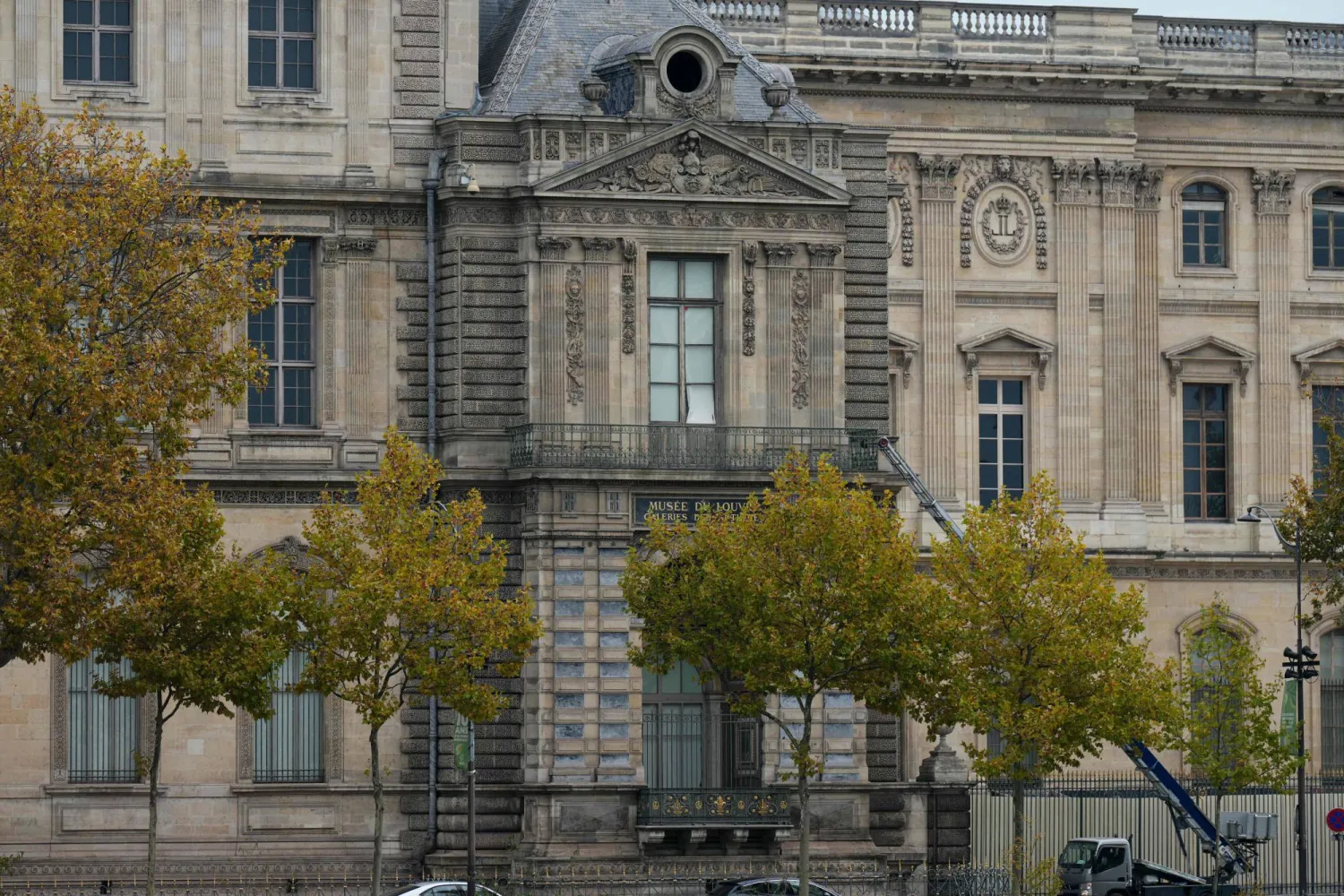
This photograph shows a furniture elevator used by robbers to enter the Louvre Museum, on Quai Francois Mitterrand, in Paris on October 19, 2025. (AFP)
TT

French Police May Nab Louvre Thieves but Unlikely to Recover Their Loot 

This photograph shows a furniture elevator used by robbers to enter the Louvre Museum, on Quai Francois Mitterrand, in Paris on October 19, 2025. (AFP)

Crime gangs around Europe are increasingly robbing valuable jewels and gold from cash-needy museums like the Louvre, but while police often catch the thieves, they struggle to recover the priceless goods, law enforcement and art experts say.

Only a small pool of criminals would be capable of such a job as Sunday's audacious robbery in Paris and may already be known to police, the specialists say. But the objects themselves could be quickly broken down into component parts and sold on.

"If I steal a Van Gogh, it's a Van Gogh. I can't dispose of it through any other channel than an illicit art market," said Marc Balcells, a Barcelona-based expert in crimes against cultural heritage. "But when I am stealing ... jewellery, I can move it through an illicit market as precious stones."

The brazen heist of crown jewels from the Louvre, the world's most visited museum, has been decried by some as a national humiliation and sparked security checks across France's multitude of cultural sites.

"If you target the Louvre, the most important museum in the world, and then get away with the French crown jewels, something was wrong with security," said art investigator Arthur Brand.

Officials at the Louvre, home to artworks such as the Mona Lisa, had in fact already sounded the alarm about lack of investment.

And at least four French museums have been robbed in the last two months, according to media reports.

On Tuesday, prosecutors said they had charged a Chinese-born woman for the theft of six gold nuggets worth about 1.5 million euros ($1.75 million) from Paris's Museum of Natural History last month. She was arrested in Barcelona trying to dispose of some melted gold, they said.

Christopher Marinello, founder of Art Recovery International, which tracks stolen art, said museum heists were on the rise across Europe and further afield.

He cited cases in the Netherlands and France.

"If you have jewels or gold in your collections, you need to be worried," Marinello said.

WHODUNNIT?

Paris prosecutors have entrusted the investigation to a specialized Paris police unit known as the BRB, which is used to dealing with high-profile robberies.

Former police officer Pascal Szkudlara, who served in the unit, said the BRB handled the 2016 Kim Kardashian probe, when Paris thieves stole her $4 million engagement ring, as well as a recent spate of kidnappings of wealthy crypto bosses.

He said the BRB has about 100 agents, with over a dozen specialized in museum thefts. Investigators will look at video footage, telephone records, and forensic evidence, while informants will also be activated.

"They can have teams working on it 24/7 and for a long period," Szkudlara said, expressing "100%" confidence the thieves would be caught.

Police will be poring over security footage going back weeks, looking to identify suspicious people casing out the joint, Brand said.

Corinne Chartrelle, who previously worked at the French Police's Central Office for the Fight against Trafficking in Cultural Property, said the jewels could feasibly end up in a global diamond center like Antwerp where there "are probably people who aren't too concerned about the origin of the items."

The diamonds could also be cut into smaller stones and the gold melted down, leaving buyers unaware of their provenance.

If the thieves feel the net closing, they could chuck or destroy the loot altogether.

Police are clearly in a race against time.

"Once they're been cut into smaller jewels, the deed is done. It's over. We'll never see these pieces again intact," said Marinello. "It's a very small percentage, recovering stolen artworks. When it comes to jewellery, that percentage is even less."

Any theory about the objects being ordered up by a mysterious buyer was laughable, said Brand. "That's unheard of," he said. "You only see it in Hollywood movies."

Cultural authorities across Europe will be looking at how to better secure museums at a time of tight public finances.

Brand said it was impossible to properly safeguard a museum, so the best thing was to slow down the time it takes to steal objects and escape, giving police longer to respond by making windows or display cases thicker, or adding more doors.

"They know they have only five, six minutes to get away with it because after six minutes, the police show up. So if they go into a museum ... and they find out that it takes more than six, seven, eight minutes, they will not do it," he said.

Finland's National Gallery Director General Kimmo Leva said financial realities meant tough decisions.

"A tightening everyday economy is, naturally, not the best basis for making the investments needed to mitigate potential threats," Leva said.



Qassim Region Principality Illuminated in Green in Celebration of Founding Day

The Qassim Region Principality illuminated in green marking Founding Day - SPA
TT

Qassim Region Principality Illuminated in Green in Celebration of Founding Day

The Qassim Region Principality illuminated in green marking Founding Day - SPA

The Qassim Region Principality building was illuminated in green in celebration of Founding Day.

The scene reflected pride in the historical roots of the Saudi state and embodied feelings of belonging on this cherished national occasion, SPA reported.

The illumination affirms the deep historical significance of Founding Day, marking 299 years since the establishment of the First Saudi State by Imam Mohammed bin Saud.

It also reflects the enduring principles upon which it was founded, including unity, stability, and state-building. These foundations culminate in the security, stability, and prosperity that the Kingdom of Saudi Arabia enjoys today under its wise leadership.


Prince Mohammed bin Salman Project Restores Century-Old Uqlat Al-Suqur Mosque in Qassim

The renovation utilized traditional mud, stone, and wood to preserve the mosque's authentic Najdi architectural style. (SPA)
TT

Prince Mohammed bin Salman Project Restores Century-Old Uqlat Al-Suqur Mosque in Qassim

The renovation utilized traditional mud, stone, and wood to preserve the mosque's authentic Najdi architectural style. (SPA)

The Prince Mohammed bin Salman Project for the Development of Historical Mosques has completed the restoration of the Uqlat Al-Suqur Mosque in Qassim Region, revitalizing a heritage landmark dating back to 1922, reported the Saudi Press Agency on Saturday.

Originally the only mosque in the area, it served as a vital religious and social hub for education and community governance.

The renovation, executed by specialized Saudi firms, utilized traditional mud, stone, and wood to preserve its authentic Najdi architectural style.

The project increased the mosque's area to 544 square meters, expanding its capacity to 250 worshippers while maintaining its historical identity.

The initiative aligns with Vision 2030 to preserve the Kingdom's urban heritage and boost the cultural and religious significance of its historical mosques for future generations.


Tomb More Than 1,000 Years Old Found in Panama

This handout picture released by Panama’s Ministry of Culture shows an archaeologist working inside a pre-Hispanic tomb approximately 1,200 years old, discovered at the El Cano Archaeological Park in Cocle, Panama, on February 20, 2026. (Handout / Panama’s Ministry of Culture / AFP)
TT

Tomb More Than 1,000 Years Old Found in Panama

This handout picture released by Panama’s Ministry of Culture shows an archaeologist working inside a pre-Hispanic tomb approximately 1,200 years old, discovered at the El Cano Archaeological Park in Cocle, Panama, on February 20, 2026. (Handout / Panama’s Ministry of Culture / AFP)

Archaeologists have discovered a tomb more than a thousand years old in Panama containing human remains alongside gold and ceramic artifacts, the lead researcher told AFP on Friday.

The discovery was made at the El Cano site in the Nata district about 200 kilometers (124 miles) southwest of Panama City.

Scientists and archaeologists have already unearthed other remains of pre-Hispanic cultures in the region that has been excavated for two decades.

The skeletal remains were found surrounded by gold objects and pottery decorated with traditional motifs, pointing to these being "high-ranking" individuals, archaeologist Julia Mayo told AFP, adding that the tomb was built between 800 and 1000 AD.

"The individual with the gold was the one with the highest social status in the group," she said.

That body was found with two bracelets, two earrings, and pectoral jewelry that featured bats and crocodiles, she added.

The El Cano archaeological site is linked to the societies that inhabited the central provinces of Panama between the 8th and 11th centuries.

"This is where they buried their dead for 200 years," said Mayo.

Nine other tombs "similar" to the one found on Friday had already been found at the site, she added.

Panama's Ministry of Culture said the discovery was "of great importance for Panamanian archaeology and the study of pre-Hispanic societies of the Central American isthmus," referring to the land that connects North and South America.

According to experts, these excavations demonstrate that death did not represent an end for these societies, but a transition to another phase where social status remained important.