
Rome to Charge Tourists to Get Close to the Famed Trevi Fountain

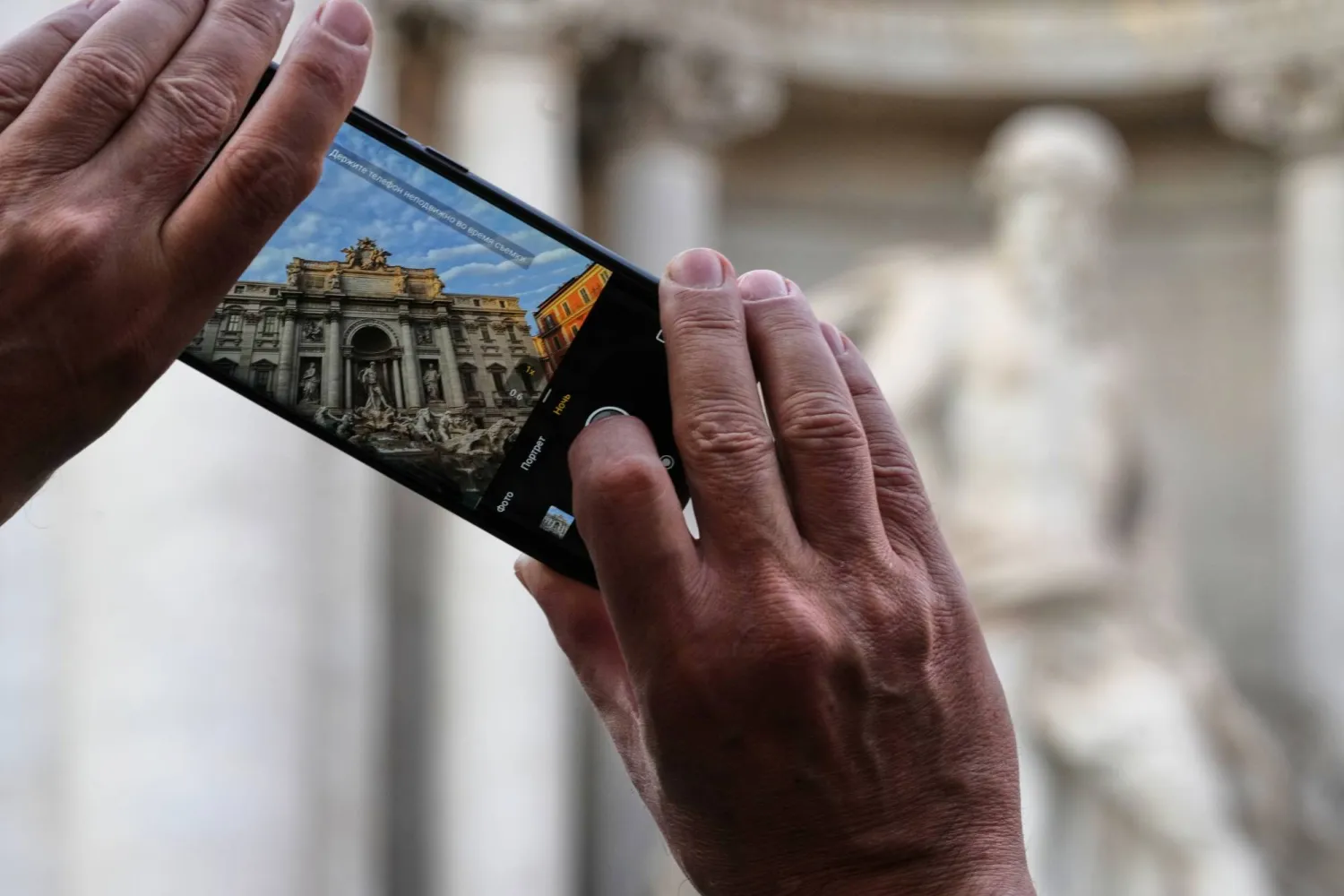
 A visitor takes a photo of Rome's Trevi Fountain, Friday, Dec. 19, 2025, as the city municipality announced that, starting on Feb. 1, it will impose a 2 euro fee for tourists to visit the recessed fountain edge. (AP)
A visitor takes a photo of Rome's Trevi Fountain, Friday, Dec. 19, 2025, as the city municipality announced that, starting on Feb. 1, it will impose a 2 euro fee for tourists to visit the recessed fountain edge. (AP)
TT

Rome to Charge Tourists to Get Close to the Famed Trevi Fountain

 A visitor takes a photo of Rome's Trevi Fountain, Friday, Dec. 19, 2025, as the city municipality announced that, starting on Feb. 1, it will impose a 2 euro fee for tourists to visit the recessed fountain edge. (AP)
A visitor takes a photo of Rome's Trevi Fountain, Friday, Dec. 19, 2025, as the city municipality announced that, starting on Feb. 1, it will impose a 2 euro fee for tourists to visit the recessed fountain edge. (AP)

Tourists who want to get close to Rome's Trevi Fountain will soon have to pay a two-euro ($2.34) fee, the city mayor said on Friday, as authorities look to profit more handsomely from Italy's many attractions.

Mayor Roberto Gualtieri told reporters the new payment system would start on February 1, adding that the measure was expected to raise 6.5 million euros a year.

"Two euros isn't very much ... and it will lead to less chaotic tourist flows," Gualtieri said, stressing that citizens of Rome will continue to have free access to the fountain.

Tourists will ‌have to ‌pay if they want to get ‌onto ⁠the stone steps ‌surrounding the fountain's basin, while the small surrounding square offering a view of the imposing monument will remain open for everyone.

The Trevi Fountain, where tradition dictates that visitors toss a coin into the water to guarantee their return to Rome, has long been a major tourist attraction, even for visiting world leaders.

Completed in 1762, the monument is ⁠a late Baroque masterpiece depicting Oceanus and symbolizing the varying ‌moods of the world's seas and ‍rivers.

It has received nine million ‍visitors so far this year, Gualtieri said, suggesting that he ‍expects many people will opt to view the fountain from afar in future, rather than pay to get near the water.

Visitors on Friday said they would be willing to pay if the money was put to good use.

"If it means that money is used to keep it maintained, then yeah, that's fine," said British ⁠tourist Yvonne Salustri.

Gualtieri said five other relatively unknown sites in Rome that are currently free will start charging five euros for access from February, continuing the recent trend aimed at squeezing profits from Italy's cultural heritage.

In 2023, a five-euro entrance fee was introduced for Rome's ancient Pantheon. As a result, the square outside is often crammed with people waiting for their turn to pay and enter.

Venice has introduced a tourist entry-fee system during the peak travel season, while Verona this month began charging for access to the balcony in ‌the northern Italian city that is associated with Shakespeare's "Romeo and Juliet".


Red Sea Fund Launches Second Round to Support Film Projects in Production Stage

File photo of the fifth day of the Red Sea International Film Festival - SPA
TT

Red Sea Fund Launches Second Round to Support Film Projects in Production Stage

File photo of the fifth day of the Red Sea International Film Festival - SPA

The Red Sea Fund, affiliated with the Red Sea Film Foundation, announced the opening of applications to support film projects in the production stage within the second round of this year’s support program, which will continue until March 21, as part of its efforts to enhance the cinema industry and empower innovators in the region, SPA reported.

The round aims to support promising cinematic voices from the Kingdom and the Arab world, as well as filmmakers from Africa and Asia, through financial grants that help complete film projects and present their creative narratives globally, with a special focus on projects ready to enter production and begin filming.


Prince Mohammed bin Salman Project Restores Historic Al-Jami' Mosque in Tabuk Region

The renovation utilized modern technologies to restore the mosque's original identity - SPA
TT

Prince Mohammed bin Salman Project Restores Historic Al-Jami' Mosque in Tabuk Region

The renovation utilized modern technologies to restore the mosque's original identity - SPA

The Prince Mohammed bin Salman Project for the Development of Historical Mosques has completed the restoration of Al-Jami' Mosque in Duba, Tabuk Region, as part of its mission to preserve the Kingdom's architectural heritage under Vision 2030.

As one of Duba’s oldest landmarks, the mosque is deeply intertwined with the city’s maritime history, traditionally serving as a central meeting point for sailors. Throughout its history, the mosque underwent several construction phases, including significant contributions by King Abdulaziz and King Fahd, before its selection for the current national development project, SPA reported.

The renovation utilized modern technologies to restore the mosque's original identity, increasing its area to 972.23 square meters and its capacity to 779 worshippers. The architectural style is inspired by traditional Red Sea heritage, incorporating natural materials like stone, mud, and wood for intricate mashrabiyas.

Executed by specialized Saudi firms, the project balances traditional standards with sustainability to rehabilitate the site for worship while highlighting its cultural significance. By restoring such landmarks, the project ensures the preservation of the Kingdom’s diverse architectural and social memory for future generations.


Leading Portraiture Competition Celebrates Saudi Heritage Through Art

Throughout its history, the award has emphasized themes rooted in Saudi heritage and national initiatives - SPA
TT

Leading Portraiture Competition Celebrates Saudi Heritage Through Art

Throughout its history, the award has emphasized themes rooted in Saudi heritage and national initiatives - SPA

The Dia Aziz Dia Award for Portrait, hosted by the Saudi Arabian Society for Culture and Arts in Jeddah, is a leading platform for portraiture and the only competition of its kind in the Middle East. It fosters national identity through contemporary art, connecting veteran and emerging artists.

Throughout its history, the award has emphasized themes rooted in Saudi heritage and national initiatives, including Saudi women, the Arabian horse, the Saudi Green Initiative, and King Abdulaziz.

These themes highlight art's role in reflecting social transformations and contributing to the cultural goals of Saudi Vision 2030, SPA reported.

The current ninth edition, with a theme focused on King Salman, invited artists to depict the leadership and humanity of the Custodian of the Two Holy Mosques. This edition attracted significant participation, with 787 submissions from 42 cities, including international entries.

Of these, 61 works were shortlisted for the final competition, with prizes totaling SAR170,000 awarded to three main winners and seven incentive recipients.