


Trevi Fountain Fee Takes Effect as Rome Seeks to Manage Tourist Crowds

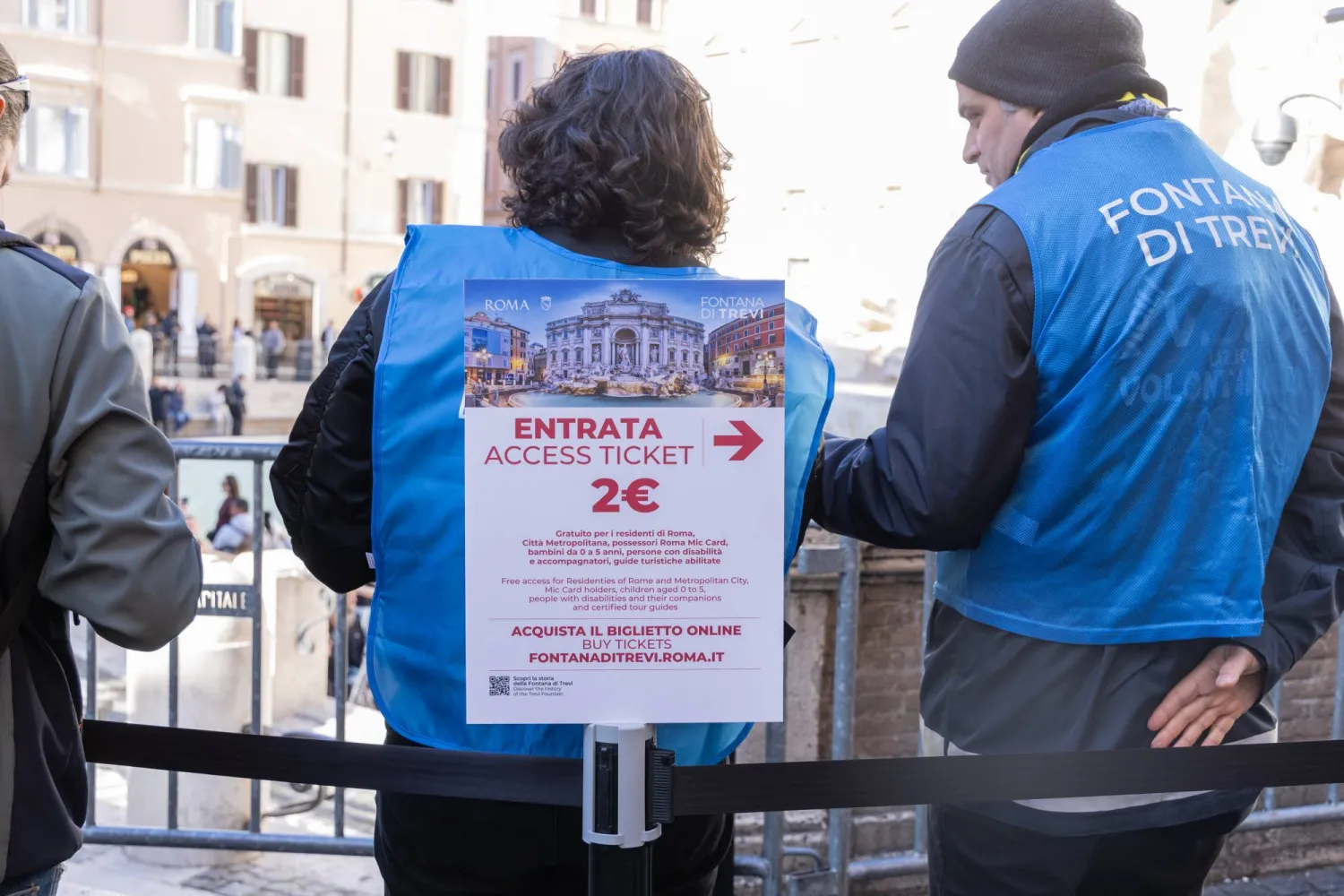
02 February 2026, Italy, Rome: First day of paid admission to the Trevi Fountain basin for tourists and non-residents of Rome. (dpa)
TT

Trevi Fountain Fee Takes Effect as Rome Seeks to Manage Tourist Crowds

02 February 2026, Italy, Rome: First day of paid admission to the Trevi Fountain basin for tourists and non-residents of Rome. (dpa)

Tourists hoping to get close to the Trevi Fountain had to pay 2 euros ($2.35) starting Monday as the city of Rome inaugurated a new fee structure to help raise money and control crowds at one of the world’s most celebrated waterworks.

The first tourists to pass through the new ticket check seemed unfazed by the tariff, noting it was a small price to pay for quality access to a fountain made famous by Federico Fellini’s movie “La Dolce Vita.”

“Before, there were problems accessing the fountain. There were a lot of people. Now, it’s very easy,” said Ilhan Musbah, a tourist from Morocco. “You can take photos, you feel good, you’re comfortable, and on top of that 2 euros is not much.”

The tourist fee was rolled out in conjunction with a new 5-euro (nearly $6) tourist ticket fee for some city museums. In both cases, Rome residents are exempt from the fees and the extra revenue will actually expand the number of city-run museums that are free for registered Roman residents.

It's all part of the Eternal City’s efforts to manage tourist flows in a particularly congested part of town, improve the experience and offset the maintenance costs of preserving all of Rome’s cultural heritage. Officials estimate it could net the city 6.5 million euros ($7.6 million) extra a year.

The city decided to impose the Trevi Fountain fee after seeing positive results already from a yearlong experiment to stagger and limit the number of visitors who can reach the front edge of the basin by imposing lines and pathways for entrance and exit.

“I think tourists were shocked by the fact that the city of Rome is only asking for 2 euros for a site of this level,” Alessandro Onorato, Rome’s assessor of tourism, said Monday. “I believe that if the Trevi Fountain were in New York, they would have charged at least $100.”

The fee follows a similar ticketing system at Rome’s Pantheon monument and the more complicated tourist day-tripper tax that the lagoon city of Venice imposed last year in a bid to ease overtourism and make the city more livable for residents.

The Italian fees still pale in comparison to the 45% price hike that French authorities announced for the Louvre Museum for most non-European visitors, where tickets can now run to 32 euros ($37) from 22 euros ($26).

The Trevi fee, which can be paid in advance online, enables tourists to get close to the fountain during prime-time daylight hours. The view for those admiring the late Baroque masterpiece from the piazza above remains free, as it is up close after hours.

The towering fountain features the Titan god Oceanus flanked by falls cascading down the travertine rocks into a shallow turquoise pool, where Marcello Mastroianni and Anita Ekberg famously took their nighttime dip in “La Dolce Vita.”

While bathing is prohibited nowadays, legend has it that visitors who toss a coin over their shoulders and make a wish will return to Rome.


Michelangelo’s Works Hidden in ‘Secret Room’, Researcher Says

Pedestrians walk past the Basilica of Santa Agnese Outside the Walls as a marble bust is displayed inside after being identified as a work by Michelangelo Buonarroti after centuries without attribution, following a decade of archival research by Italian researcher Valentina Salerno in Rome on March 4, 2026. (AFP)
TT

Michelangelo’s Works Hidden in ‘Secret Room’, Researcher Says

Pedestrians walk past the Basilica of Santa Agnese Outside the Walls as a marble bust is displayed inside after being identified as a work by Michelangelo Buonarroti after centuries without attribution, following a decade of archival research by Italian researcher Valentina Salerno in Rome on March 4, 2026. (AFP)

Renaissance artist Michelangelo ordered many of his artworks to be hidden by his pupils in a secret room to protect them for posterity, an Italian researcher claimed Wednesday.

According to renowned art historian Giorgio Vasari, the Italian genius burned a large number of his own drawings and sketches before his death in Rome in 1564.

But researcher Valentina Salerno says she has unearthed unpublished archival documents that reveal a plot to squirrel away his works.

"One of these three unpublished documents I found in the archives speaks of a room" kept by students of the Michelangelo school, the origins of which "can be traced back" to the artist, Salerno told AFP on the sidelines of a press conference in Rome.

"Assets are hidden inside this room. These assets are locked away so tightly that they require a system of multiple keys, so that no one can access them without the permission of others," she said.

Salerno was researching a book on Michelangelo when she came across a document that showed the artist had in 1550 joined the Brotherhood of the Most Holy Crucifix. Those close to him in his final years were members too.

Over a decade of research, she followed the document trail between a series of archives in the Vatican, Italy and European cities including Paris.

As part of what she called a "maniacal plan" cooked up by Michelangelo, his works were to be hidden "because otherwise it would all end up with a nephew he detested".

"The goal was to pass on to his poor, vulnerable, non-noble descendants the material to be able to continue studying, to transmit his art to future generations," she said.

Those involved in the plan went on to form the famous art Academy of San Luca in the 16th century, she added. It still exists today.

Salerno believes the secret room designed to safeguard the artist's creations was likely somewhere inside the Saint Peter in Chains church in central Rome.

- Michelangelo bust -

During her research, she also stumbled across a reference to a bust at the Basilica of Sant'Agnese, also in Rome, currently attributed to an anonymous artist.

She found documents attributing the white bust to Michelangelo down the centuries.

In the 1930s it appears to disappear from documentation, only to reappear in the 1980s, attributed to a minor artist.

Italy's cultural authorities later declared it to be a work by an unknown sculptor instead.

But Salerno insists the bust is a genuine Michelangelo, not just due to the paper trail, but also because it shares a striking resemblance to Tommaso dei Cavalieri, a young nobleman.

Salerno's work has not yet been peer reviewed, but she is a member of the Vatican committee for the celebrations marking the 500th anniversary of Michelangelo's birth.


Prince Mohammed bin Salman Project Restores Al-Hawza Mosque in Aseer

Following its inclusion in the project in 2022, the mosque's area was expanded to 293 square meters - SPA
TT

Prince Mohammed bin Salman Project Restores Al-Hawza Mosque in Aseer

Following its inclusion in the project in 2022, the mosque's area was expanded to 293 square meters - SPA

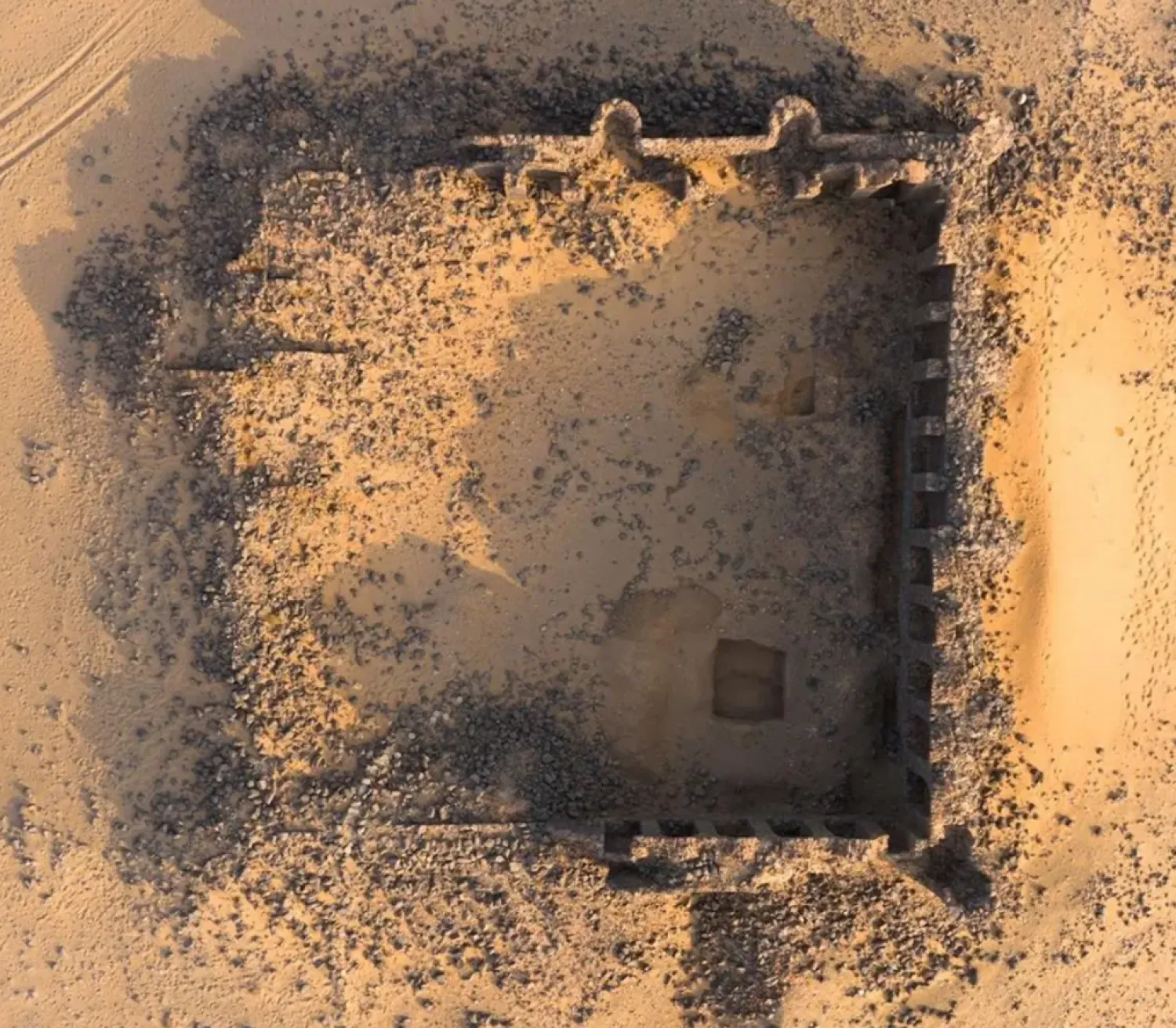
The Prince Mohammed bin Salman Project for the Development of Historical Mosques is rehabilitating Al-Hawza Mosque in Dhahran Al-Janoub, Aseer, as part of its mission to preserve Islamic heritage under Vision 2030.

Built in 8 AH by Ali ibn Abi Talib during his trip to Yemen to spread Islam, the mosque is one of the oldest in the region and has undergone expansions in 1213 AH and 1353 AH. Its unique architectural identity reflects the Sarawat region's style, utilizing layered mud bricks and local wood to harmonize with the mountainous environment, SPA reported.

Following its inclusion in the project in 2022, the mosque's area was expanded to 293 square meters, increasing its capacity to 148 worshippers while maintaining authentic features like its historic internal well.

By utilizing specialized Saudi companies and engineers, the project achieves a balance between traditional sustainability and modern standards, fulfilling strategic goals to restore architectural authenticity and highlight the Kingdom’s civilizational depth.


'Moon Spotter': AlUla's Enduring Tradition of Crescent Sighting

The people of AlUla in Saudi Arabia have long maintained a close relationship with nature, reflected in their careful observation of crescent moons. (SPA)
TT

'Moon Spotter': AlUla's Enduring Tradition of Crescent Sighting

The people of AlUla in Saudi Arabia have long maintained a close relationship with nature, reflected in their careful observation of crescent moons. (SPA)

The people of Saudi Arabia’s AlUla have long maintained a close relationship with nature, reflected in their careful observation of crescent moons and the determination of lunar months, particularly Ramadan and Shawwal (Eid). This tradition was carried out through a role locally known as the “Moon Spotter,” reflecting inherited astronomical knowledge passed down through generations.

Known for sharp eyesight and precise knowledge of celestial timings, the Moon Spotter relied on traditional methods, including placing a copper vessel filled with water at an elevated position to observe the reflections of the sun and moon, which helped determine the crescent's position with accuracy.

Upon sighting the crescent, he would mark the reflected point with a palm frond before notifying the relevant court to contribute to the official announcement, the Saudi Press Agency said.

This heritage is closely tied to AlUla's historically clear skies, which enabled residents to observe celestial bodies with clarity and fostered a lasting connection to astronomy as part of their cultural legacy.