

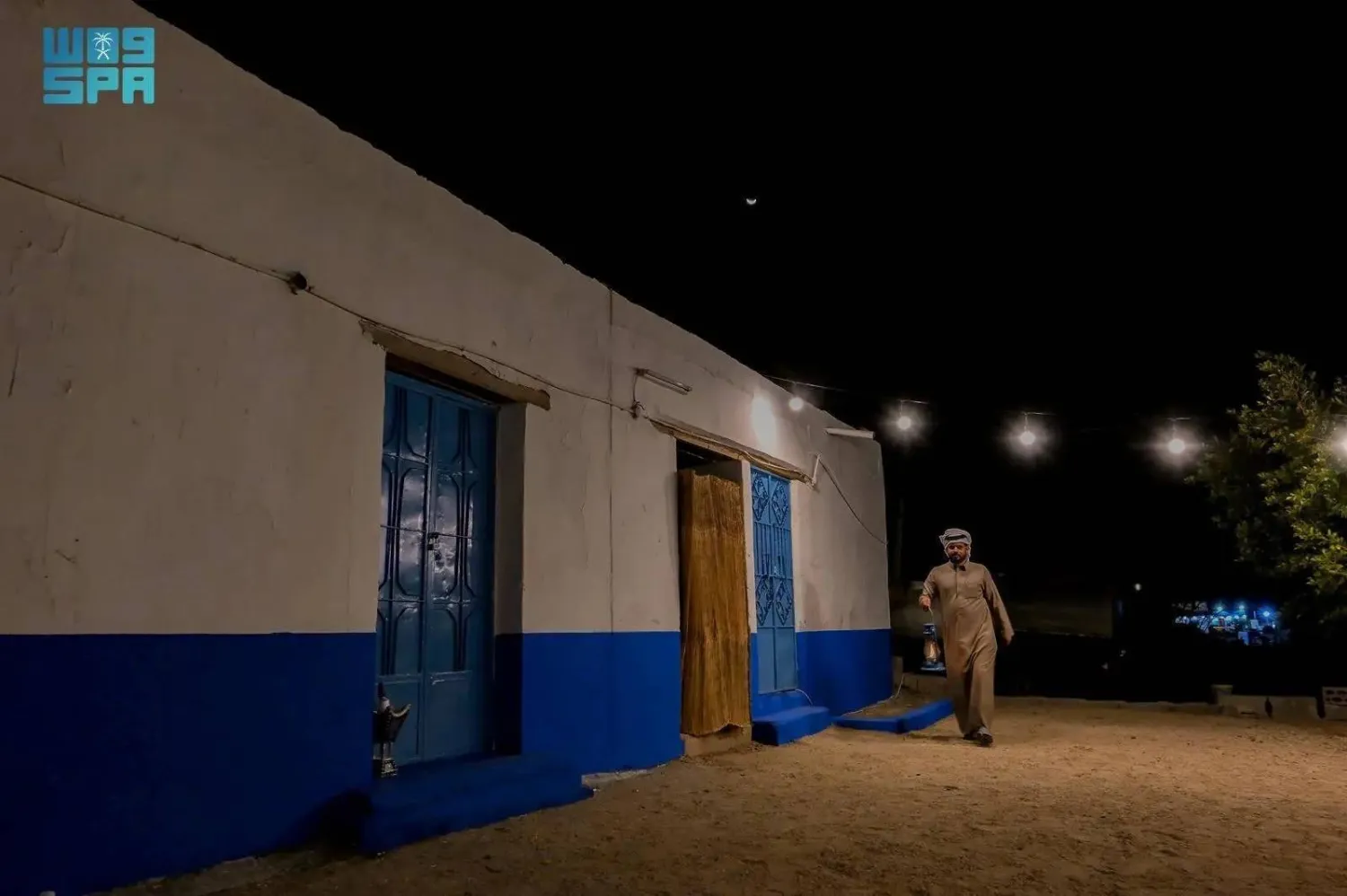

Old Houses in Al-Baha: A Living Architectural Heritage of Ramadan

Several residents of Al-Baha Region are reviving the atmosphere of Ramadan iftar in old houses. (SPA)
TT

Old Houses in Al-Baha: A Living Architectural Heritage of Ramadan

Several residents of Al-Baha Region are reviving the atmosphere of Ramadan iftar in old houses. (SPA)

Several residents of Al-Baha Region are reviving the atmosphere of Ramadan iftar in old houses, in a scene that reflects deep attachment to architectural heritage and embodies the spirit of simplicity lived by their forefathers. These traditional homes transform into spaces alive with memories, recalling the features of traditional life, its social values, and architectural authenticity.

The stone and mud houses found across the region’s governorates, including Al-Aqiq Governorate, represent a model of traditional architecture that relies on natural materials such as clay, stone, and wood. These homes are centered around an inner courtyard that once brought family members together for iftar in an atmosphere of serenity and tranquility.

The house whose owners have revived the Ramadan iftar experience is located in the village of Lif in Al-Aqiq Governorate, Al-Baha Region. It is one of the heritage homes held in high regard by the local community for its historical and architectural value, the Saudi Press Agency said on Thursday.

Citizen Mohammed Al-Ghamdi explained that he rehabilitated his family’s old house, which was built more than 40 years ago, noting that they once relied on kerosene lamps and lanterns for lighting.

He said, “Our iftar was simple, consisting of Saudi coffee, dates, milk, and bread. We would gather in the courtyard of the house, our voices rising in supplication before the Maghrib prayer adhan, in an unforgettable scene.” He emphasized that restoring old houses helps preserve identity and architectural heritage, while safeguarding the memory of the place and the stories of its people.

Specialists in architectural heritage affirm that preserving such houses represents an important cultural and tourism asset as it helps highlight local identity and document social life patterns that have shaped the region’s community, particularly during the holy month of Ramadan, when values of harmony and solidarity are most evident.

The old houses of Al-Baha remain living witnesses to an important historical era and a source of inspiration for younger generations to recall the meanings of simplicity and authenticity, while reinforcing pride in national heritage on various occasions.



Red Sea Fund Launches Second Round to Support Film Projects in Production Stage

File photo of the fifth day of the Red Sea International Film Festival - SPA
TT

Red Sea Fund Launches Second Round to Support Film Projects in Production Stage

File photo of the fifth day of the Red Sea International Film Festival - SPA

The Red Sea Fund, affiliated with the Red Sea Film Foundation, announced the opening of applications to support film projects in the production stage within the second round of this year’s support program, which will continue until March 21, as part of its efforts to enhance the cinema industry and empower innovators in the region, SPA reported.

The round aims to support promising cinematic voices from the Kingdom and the Arab world, as well as filmmakers from Africa and Asia, through financial grants that help complete film projects and present their creative narratives globally, with a special focus on projects ready to enter production and begin filming.


Prince Mohammed bin Salman Project Restores Historic Al-Jami' Mosque in Tabuk Region

The renovation utilized modern technologies to restore the mosque's original identity - SPA
TT

Prince Mohammed bin Salman Project Restores Historic Al-Jami' Mosque in Tabuk Region

The renovation utilized modern technologies to restore the mosque's original identity - SPA

The Prince Mohammed bin Salman Project for the Development of Historical Mosques has completed the restoration of Al-Jami' Mosque in Duba, Tabuk Region, as part of its mission to preserve the Kingdom's architectural heritage under Vision 2030.

As one of Duba’s oldest landmarks, the mosque is deeply intertwined with the city’s maritime history, traditionally serving as a central meeting point for sailors. Throughout its history, the mosque underwent several construction phases, including significant contributions by King Abdulaziz and King Fahd, before its selection for the current national development project, SPA reported.

The renovation utilized modern technologies to restore the mosque's original identity, increasing its area to 972.23 square meters and its capacity to 779 worshippers. The architectural style is inspired by traditional Red Sea heritage, incorporating natural materials like stone, mud, and wood for intricate mashrabiyas.

Executed by specialized Saudi firms, the project balances traditional standards with sustainability to rehabilitate the site for worship while highlighting its cultural significance. By restoring such landmarks, the project ensures the preservation of the Kingdom’s diverse architectural and social memory for future generations.


Leading Portraiture Competition Celebrates Saudi Heritage Through Art

Throughout its history, the award has emphasized themes rooted in Saudi heritage and national initiatives - SPA
TT

Leading Portraiture Competition Celebrates Saudi Heritage Through Art

Throughout its history, the award has emphasized themes rooted in Saudi heritage and national initiatives - SPA

The Dia Aziz Dia Award for Portrait, hosted by the Saudi Arabian Society for Culture and Arts in Jeddah, is a leading platform for portraiture and the only competition of its kind in the Middle East. It fosters national identity through contemporary art, connecting veteran and emerging artists.

Throughout its history, the award has emphasized themes rooted in Saudi heritage and national initiatives, including Saudi women, the Arabian horse, the Saudi Green Initiative, and King Abdulaziz.

These themes highlight art's role in reflecting social transformations and contributing to the cultural goals of Saudi Vision 2030, SPA reported.

The current ninth edition, with a theme focused on King Salman, invited artists to depict the leadership and humanity of the Custodian of the Two Holy Mosques. This edition attracted significant participation, with 787 submissions from 42 cities, including international entries.

Of these, 61 works were shortlisted for the final competition, with prizes totaling SAR170,000 awarded to three main winners and seven incentive recipients.