China's Landfills Brim with Textile Waste as Fast Fashion Reigns

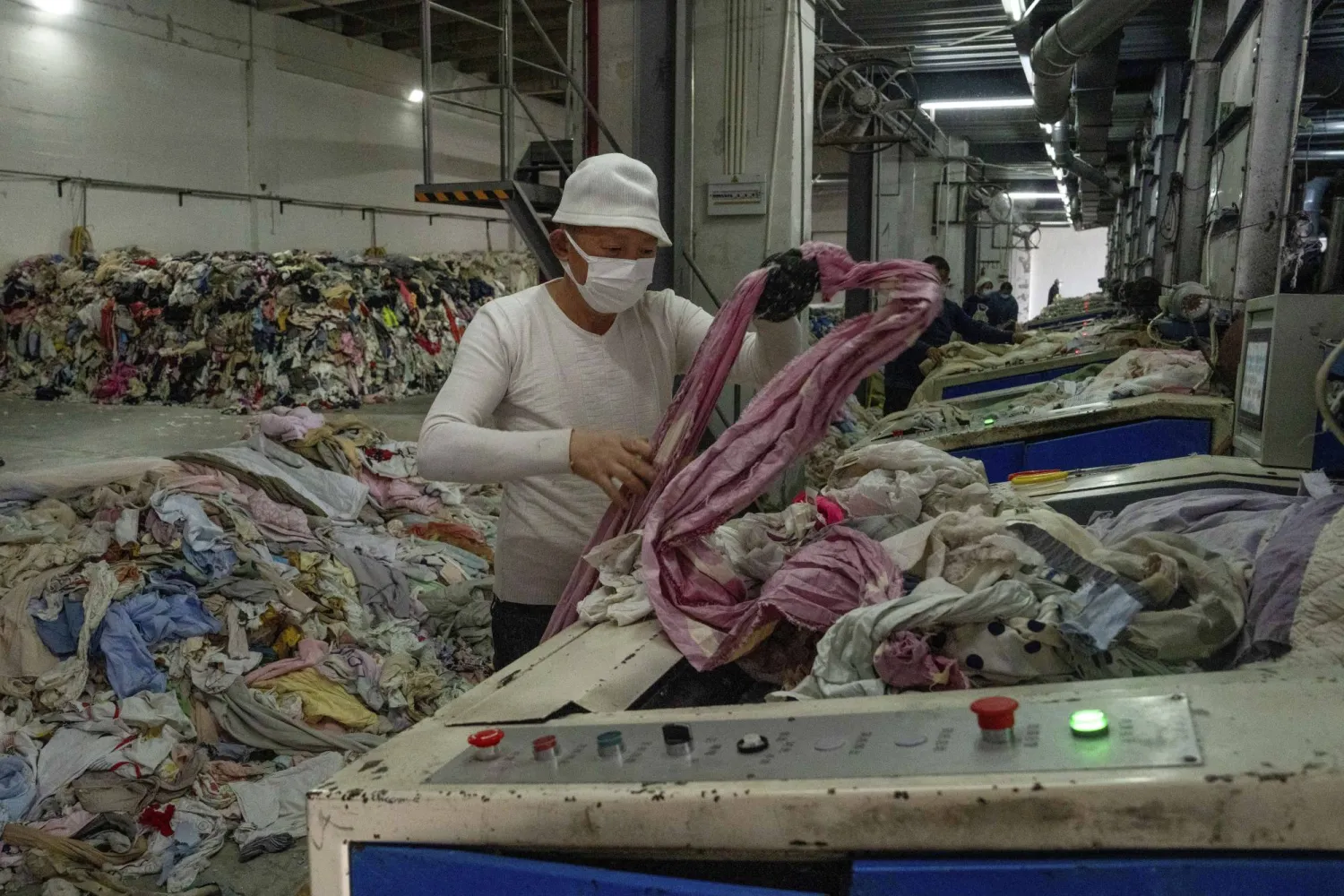
A worker feeds discarded textiles to a shredding machine at the Wenzhou Tiancheng Textile Company in eastern China's Zhejiang province on March 20, 2024. (AP Photo/Ng Han Guan)
TT

China's Landfills Brim with Textile Waste as Fast Fashion Reigns

A worker feeds discarded textiles to a shredding machine at the Wenzhou Tiancheng Textile Company in eastern China's Zhejiang province on March 20, 2024. (AP Photo/Ng Han Guan)

At a factory in Zhejiang province on China’s eastern coast, two mounds of discarded cotton clothing and bed linens, loosely separated into dark and light colors, pile up on a workroom floor. Jacket sleeves, collars and brand labels protrude from the stacks as workers feed the garments into shredding machines.
It’s the first stage of a new life for the textiles, part of a recycling effort at the Wenzhou Tiancheng Textile Company, one of the largest cotton recycling plants in China, The Associated Press reported.
Textile waste is an urgent global problem, with only 12% recycled worldwide, according to fashion sustainability nonprofit Ellen MacArthur Foundation. Even less — only 1% — are castoff clothes recycled into new garments; the majority is used for low-value items like insulation or mattress stuffing.
Nowhere is the problem more pressing than in China, the world’s largest textile producer and consumer, where more than 26 million tons of clothes are thrown away each year, according to government statistics. Most of it ends up in landfills.
And factories like this one are barely making a dent in a country whose clothing industry is dominated by “fast fashion” — cheap clothes made from unrecyclable synthetics, not cotton. Produced from petrochemicals that contribute to climate change, air and water pollution, synthetics account for 70% of domestic clothing sales in China.
China's footprint is worldwide: E-commerce juggernaut brands Shein and Temu make the country one of the world’s largest producers of cheap fashion, selling in more than 150 countries.
To achieve a game-changing impact, what fashion expert Shaway Yeh calls “circular sustainability” is needed among major Chinese clothing brands so waste is avoided entirely.
“You need to start it from recyclable fibers and then all these waste textiles will be put into use again,” she said.
But that is an elusive goal: Only about 20% of China’s textiles are recycled, according to the Chinese government — and almost all of that is cotton.
Chinese cotton is not without a taint of its own, said Claudia Bennett of the nonprofit Human Rights Foundation. Much of it comes from forced labor in Xinjiang province by the country's ethnic Uyghur minority.
"One-in-five cotton garments globally is linked to Uyghur forced labor,” Bennett said.
In May, the US blocked imports from 26 Chinese cotton traders and warehouses to avoid goods made with Uyghur forced labor. But because the supply chain is so sketchy, Uyghur cotton is used in garments produced in other countries that don't bear the “made-in-China” label, Bennett said.
“Many, many, many clothing brands are linked to Uyghur forced labor through the cotton," she said. They "hide behind the lack of transparency in the supply chain.”
While China is a global leader in the production of electric cars and electric-powered public transit and has set a goal of achieving carbon neutrality by 2060, its efforts in promoting fashion sustainability and recycling textiles have taken a back seat.
According to a report this year from independent fashion watchdog Remake assessing major clothing companies on their environmental, human rights and equitability practices, there's little accountability among the best-known brands.
The group gave Shein, whose online marketplace groups about 6,000 Chinese clothing factories under its label, just 6 out of a possible 150 points. Temu scored zero.
Also getting zero were US label SKIMS, co-founded by Kim Kardashian, and low-price brand Fashion Nova. US retailer Everlane was the highest-scorer at 40 points, with only half of those for sustainability practices.
China’s domestic policy doesn’t help.
Cotton recycled from used clothing is banned from being used to make new garments inside China. This rule was initially aimed at stamping out fly-by-night Chinese operations recycling dirty or otherwise contaminated material.
But now it means the huge spools of tightly woven rope-like cotton yarn produced at the Wenzhou Tiancheng factory from used clothing can only be sold for export, mostly to Europe.
Making matters worse, many Chinese consumers are unwilling to buy used items anyway, something the Wenzhou factory sales director, Kowen Tang, attributes to increasing household incomes.
“They want to buy new clothes, the new stuff,” he said of the stigma associated with buying used.
Still, among younger Chinese, a growing awareness of sustainability has contributed to the emergence of fledgling “remade” clothing businesses.
Thirty-year-old designer Da Bao founded Times Remake in 2019, a Shanghai-based brand that takes secondhand clothes and refashions them into new garments. At the company's work room in Shanghai, tailors work with secondhand denims and sweatshirts, stitching them into funky new fashions.
The venture, which began with Da Bao and his father-in-law posting their one-off designs online, now has a flagship store in Shanghai’s trendy Jing’an District that stocks their remade garments alongside vintage items, such as Levi’s and Carhartt jackets.
The designs are “a combination of the past style and current fashion aesthetic to create something unique,” Bao said.
Zhang Na has a fashion label, Reclothing Bank, that sells clothes, bags and other accessories made from materials such as plastic bottles, fishing nets and flour sacks.
The items' labels have QR codes that show their composition, how they were made and the provenance of the materials. Zhang draws on well-established production methods, such as textile fibers made from pineapple leaf, a centuries-old tradition originating in the Philippines.
“We can basically develop thousands of new fabrics and new materials,” she said.
Reclothing Bank began in 2010 to give “new life to old things,” Zhang said of her store in a historic Shanghai alley with a mix of Western and Chinese architecture. A large used clothes deposit box sat outside the entrance.
“Old items actually carry a lot of people’s memories and emotions,” she said.
Zhang said she has seen sustainability consciousness grow since she opened her store, with core customers in their 20s and 30s.
Bao Yang, a college student who dropped by the store on a visit to Shanghai, said she was surprised at the feel of the clothes.
“I think it’s amazing, because when I first entered the door, I heard that many of the clothes were actually made of shells or corn (husks), but when I touched the clothes in detail, I had absolutely no idea that they would have this very comfortable feel,” she said.
Still, she conceded that buying sustainable clothing is a hard sell. “People of my age are more addicted to fast fashion, or they do not think about the sustainability of clothes," she said.
Recycled garments sold at stores like Reclothing Bank have a much higher price tag than fast-fashion brands due to their costly production methods.
And therein lies the real problem, said Sheng Lu, professor of fashion and apparel studies at the University of Delaware.
“Studies repeatedly show consumers are not willing to pay higher for clothing made from recycled materials, and instead they actually expect a lower price because they see such clothing as made of secondhand stuff,” he said.
With higher costs in acquiring, sorting and processing used garments, he doesn't see sustainable fashion succeeding on a wide scale in China, where clothes are so cheap to make.
“Companies do not have the financial incentive,” he said.
For real change there needs to be “more clear signals from the very top," he added, referring to government targets like the ones that propelled China's EV industry.
Still, in China "government can be a friend to any sector,” Lu said, so if China's communist leaders see economic potential, it could trigger a policy shift that drives new investment in sustainable fashion.
But for now, the plastic-wrapped cones of tightly-wound cotton being loaded onto trucks outside the Wenzhou Tiancheng factory were all headed to overseas markets, far from where their recycling journey began.
“Fast fashion definitely is not out of fashion” in China, Lu said.



Etro Founding Family Exits Group as New Investors Including Türkiye's RAMS Global Join

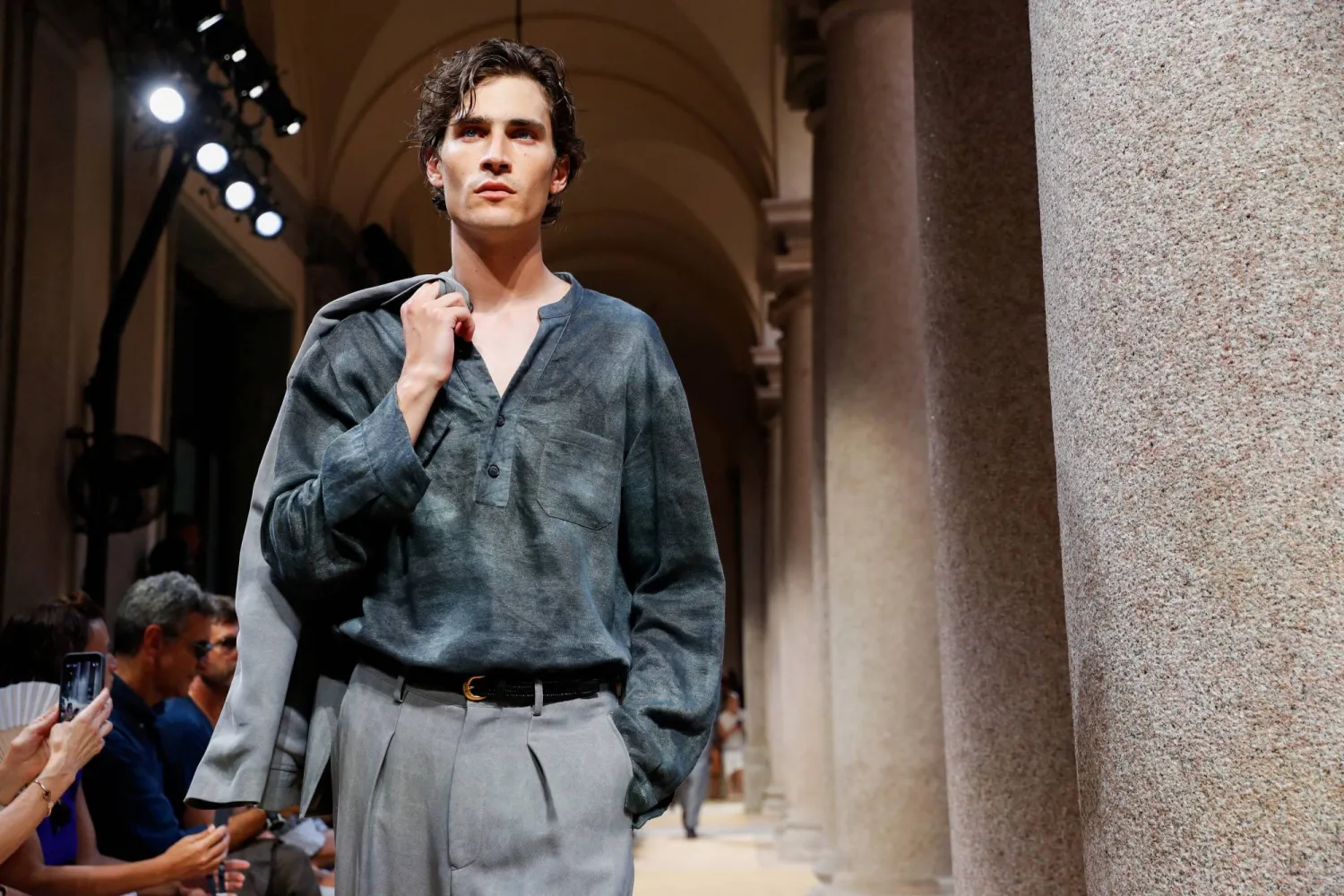
L Catterton, a private equity firm backed by French luxury giant LVMH, will remain Etro's majority owner. Reuters
TT

Etro Founding Family Exits Group as New Investors Including Türkiye's RAMS Global Join

L Catterton, a private equity firm backed by French luxury giant LVMH, will remain Etro's majority owner. Reuters

The founding family of Italian fashion house Etro has sold the minority stake it still owned in the brand to a group of investors including Turkish group RAMS Global, the company said on Friday.

L Catterton, a private equity firm backed by French luxury giant LVMH, will remain Etro's majority owner and "will continue to actively support the brand's long-term growth strategy," Etro added, according to Reuters.

The new investors comprise also Italian fashion group Swinger International and small private equity firm ⁠RSI.

In addition to buying the stake, they all subscribed to a capital increase that will lower L Catterton's holding in Etro to between 51% and 55% from around 65%.

When including both the acquisition and the capital increase, the deal is worth around 70 ⁠million euros ($82 million), two sources close to the matter said. Etro did not disclose financial details.

Chief Executive Fabrizio Cardinali will remain at the helm, while Faruk Bülbül, representing RAMS Global, will become chairman of the board.

L Catterton bought a 60% stake in the brand known for its paisley motif four years ago, and it slightly increased the holding over the years.

The company, founded by Gimmo Etro in 1968, has ⁠been struggling with its turnaround. Last year it posted a net loss of 23 million euros with net revenues declining to 245 million euros from 261 million euros, according to filings with the local chambers of commerce reviewed by Reuters.

Rothschild advised L Catterton and the Etro family on the deal.

Rothschild had been hired in 2024 to look for a new investor who could buy all or part of the Etro fashion group, sources had previously told Reuters.


Paris Court Rejects Bid to Suspend Shein Platform in France

A customer holds shopping bags with a Shein logo in the first physical space of Chinese online fast-fashion retailer Shein on the day of its opening inside the Le BHV Marais department store, the Bazar de l'Hotel de Ville, in Paris, France, November 5, 2025. REUTERS/Sarah Meyssonnier/File Photo
TT

Paris Court Rejects Bid to Suspend Shein Platform in France

A customer holds shopping bags with a Shein logo in the first physical space of Chinese online fast-fashion retailer Shein on the day of its opening inside the Le BHV Marais department store, the Bazar de l'Hotel de Ville, in Paris, France, November 5, 2025. REUTERS/Sarah Meyssonnier/File Photo

A Paris court on Friday rejected a government request to suspend Chinese fast-fashion platform Shein in France after authorities found illegal weapons and child-like sex dolls for sale on the fast-fashion giant’s website.

Shein welcomed the decision, saying it remains committed to strengthening its control processes in cooperation with French authorities.

“Our priority remains protecting French consumers and ensuring compliance with local laws and regulations," the company said in an emailed statement to The Associated Press.

The controversy dates to early November, when France’s consumer watchdog and Finance Ministry moved toward suspending Shein’s online marketplace after authorities said they had found childlike sex dolls and prohibited “Class A” weapons listed for sale, even as the company opened its first permanent store in Paris.

French authorities gave Shein hours to remove the items. The company responded by banning the products and largely shutting down third-party marketplace listings in France.

French officials have also asked the European Commission to examine how illegal products were able to appear on the platform under EU rules governing large online intermediaries.


Lululemon Jumps on Elliott's $1 Billion Bet Ahead of Leadership Change

FILE PHOTO: A logo is displayed inside a Lululemon outlet retail store at Bicester Village in Oxfordshire, Britain, August 21, 2024. REUTERS/Hollie Adams/File Photo
TT

Lululemon Jumps on Elliott's $1 Billion Bet Ahead of Leadership Change

FILE PHOTO: A logo is displayed inside a Lululemon outlet retail store at Bicester Village in Oxfordshire, Britain, August 21, 2024. REUTERS/Hollie Adams/File Photo

Lululemon Athletica shares rose nearly 8% in early trading on Thursday after reports Elliott Management has built a $1 billion stake in the athleisure wear maker and is working with former Ralph Lauren executive Jane Nielsen for a potential CEO role.

The Canada-based retailer said last week that Calvin McDonald will step down after nearly seven years as its top boss, sparking hopes for a leader who can reverse slowing growth and win back younger shoppers amid fierce competition from trendier players like Alo and Vuori. The stock has lost nearly half of its value this year, underscoring investor concerns over Lululemon's struggles. The company's shares were trading at $224 on Thursday.

"Elliott is famous for agitating for change. These positions aren't built overnight, so Lululemon's board probably saw this coming," said Brian Jacobsen, chief economic strategist, Annex Wealth Management.

The activist investor has been working closely for months with Nielsen, a retail veteran, a source told Reuters on Wednesday. Nielsen, who sits on the board of Cadbury parent Mondelez, has also served as finance chief at Tapestry-owned Coach.

"Lululemon is one of the most powerful brands in retail, defined by exceptional products, deeply engaged communities and significant global potential," Nielsen said in a statement to the Wall Street Journal. "I would welcome the chance to discuss this opportunity with the Lululemon board."

Elliott, Lululemon and Nielsen did not respond to Reuters requests for comment.

Analysts have said the company will need to upgrade its fabrics, use fresher designs and accelerate product launches that click with Gen Z to reclaim its "cool factor" and lure shoppers back.

With much of its sourcing tied to Asian factories facing higher import duties, Lululemon will also need to streamline its supply chain to blunt US tariff pressures and protect margins next year, analysts have said.

"Lululemon should implement fast fashions and introduce an assortment that will pull customers from Alo and Vuori - especially Gen Z customers.

Fast fashion requires a much better supply chain than is currently in use at Lululemon," said Brittain Ladd, a strategy and supply chain consultant at Florida-based Chang Robotics.

The brand's struggles have drawn sharp criticism from founder and largest individual shareholder Chip Wilson. He has also called for an urgent CEO search, led by new, independent directors with deep company knowledge to restore a product-first focus.

Wilson did not respond to a Reuters request for comment.

With a 4.3% ownership, Wilson's stake is valued at about $988 million, according to LSEG data, making Elliott one of the top shareholders in Lululemon, which is valued at nearly $25 billion.

Lululemon trades at a forward price-to-earnings ratio of 16.37, while Gap trades at 11.88 and American Eagle at 16.81, according to LSEG data.