Spain's Top Fashion Retailers to Launch Trial to Collect Clothes Waste in 2025https://english.aawsat.com/fashion/5069803-spains-top-fashion-retailers-launch-trial-collect-clothes-waste-2025
Spain's Top Fashion Retailers to Launch Trial to Collect Clothes Waste in 2025
A street performer dressed as a bear stands outside a Primark store in Madrid, Spain, October 2, 2024. REUTERS/Susana Vera
Spain's largest fashion companies will start collecting discarded clothes from April next year as part of a voluntary pilot scheme to manage textile waste that anticipates EU regulations expected to come into force in 2026.
Zara owner Inditex, H&M, Decathlon, Ikea and Primark are among 10 brands that will participate in a trial that will separate textiles and shoes from other waste collection so they can be reused or recycled, according to organizers of the project, dubbed Re-viste.
Spain is awaiting final approval of new EU regulations that will require member states to separate textiles from other waste before it issues rules to fashion companies, which will meet the cost of managing the textile waste, Marta Gomez, director of quality and environmental evaluation at the ministry of energy transition, told fashion leaders at an event in Madrid.
The EU regulations won't come into force before 2026 as authorities will give companies at least a year to adapt, government officials and fashion industry sources said.
"The regulations show us the way, but we have decided not to wait to comply with the legal requirements," said Andres Fernandez, president of Re-viste and head of sustainability at retailer Mango, which is also part of the trial.
The rules will mean that companies that sell more clothes and shoes are likely to have to pay more for managing the waste, Reuters reported.
In Spain, just 12% of used clothes are collected separately and 88% end up in landfill, according to official data. Each resident in Spain discards 20 kilos of clothes per year compared to an average of seven kilos in Europe, authorities say.
During the year-long trial, Re-viste plans to set up dozens of containers in churches, stores, shopping centers and streets to collect the waste in bags and take it to plants for sorting.
Once the legislation comes into force, fashion companies estimate that Spain will need one textile waste container for every 1,200 residents.
Fashion designer Stefano Gabbana leaves Gritti Palace in Venice, Italy, June 27, 2025. REUTERS/Yara Nardi
Stefano Gabbana, co-founder of Italian luxury fashion house Dolce & Gabbana, stepped down as chair in January, according to a company filing with the local chamber of commerce seen by Reuters on Friday.
The news was first reported by Bloomberg, which said the designer was also considering options for his roughly 40% stake in the company ahead of negotiations with its bank lenders.
Dolce & Gabbana’s lenders are seeking an injection of up to 150 million euros in fresh funds as part of a broader refinancing of 450 million euros ($525.7 million) of debt, Bloomberg reported, citing sources. It added that the company was considering the disposal of real estate and the renewal of licenses to raise money.
Dolce & Gabbana was not immediately available for comment.
Domenico Dolce and Stefano Gabbana founded the company in 1985 and they are still in charge of creative direction.
According to the filing, Gabbana, 63, informed the company in December that he intended to step down as chair effective January 1. Chief Executive Alfonso Dolce, the brother of co-founder Domenico Dolce, was appointed as the new chair.
In the past the company did not rule out the possibility of a minority investor or stock market listing.
Fashion Fund Unveils New Identity as Saudi Arabia's First Fashion Investment Fundhttps://english.aawsat.com/fashion/5260787-fashion-fund-unveils-new-identity-saudi-arabias-first-fashion-investment-fund
Fashion Fund Unveils New Identity as Saudi Arabia's First Fashion Investment Fund
The Fashion Fund unveiled its new identity under the name “ZYA Fund. (SPA)
The Fashion Fund unveiled its new identity under the name “ZYA Fund,” marking Saudi Arabia's first private equity fund dedicated to the fashion sector. The fund was established through a partnership between the Cultural Development Fund (CDF) and Merak Capital.
The Fund's Board of Directors held its inaugural meeting, bringing together local and international leaders and experts from culture, fashion, investment, and the creative industries, the Saudi Press Agency said on Thursday.
The board is chaired by Vice Minister of Culture and Vice Chairman of the Fashion Commission Hamed Fayez, with CEO of the Cultural Development Fund Majed Alhugail serving as vice chairman.
Board members include Founder and Chief Executive of Merak Capital Abdullah Altamami, CEO of the Fashion Commission Burak Cakmak, and Chairman and Chief Executive of Turmeric Capital Ravi Thakran.
Altamami said the fund aims to channel capital into high-potential opportunities across the fashion value chain, supporting Saudi brands with the capacity to expand regionally and globally.
With a total investment size of SAR300 million, the fund is anchored by CDF, which holds a 40% stake, while Merak Capital acts as the fund manager.
ZYA Fund will invest across the fashion sector value chain, including design and production, supply chains, e-commerce, and beauty, enabling Saudi brands to scale and expand.
The initiative reflects efforts to build an integrated fashion ecosystem and enhance the sector's attractiveness as an investment destination. It also supports the objectives of the National Culture Strategy under Saudi Vision 2030.
Britain Celebrates Late Queen Elizabeth II as a Style Icon to Mark Her Centenaryhttps://english.aawsat.com/fashion/5260774-britain-celebrates-late-queen-elizabeth-ii-style-icon-mark-her-centenary
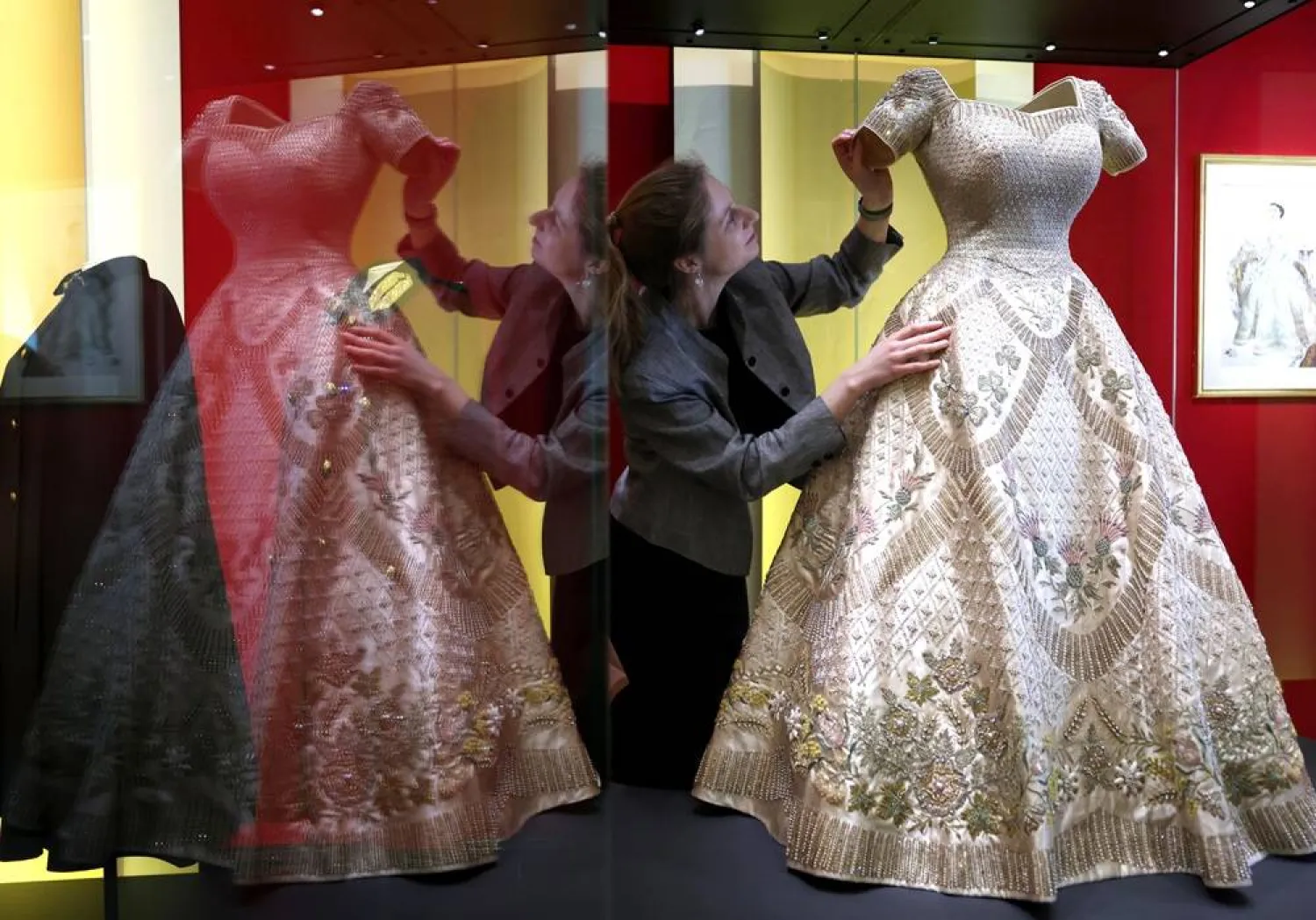
The coronation dress of Britain’s Queen Elizabeth II worn in 1953 is displayed at the exhibition “Queen Elizabeth II: Her Life in Style” at The King’s Gallery, Buckingham Palace in London, Britain, 09 April 2026. (EPA)
TT
TT
Britain Celebrates Late Queen Elizabeth II as a Style Icon to Mark Her Centenary
The coronation dress of Britain’s Queen Elizabeth II worn in 1953 is displayed at the exhibition “Queen Elizabeth II: Her Life in Style” at The King’s Gallery, Buckingham Palace in London, Britain, 09 April 2026. (EPA)
The late Queen Elizabeth II believed the monarch had to be seen to be believed. And she made sure that was true even when Britain’s famously changeable weather intervened, pioneering the use of a clear plastic raincoat so that a stodgy black umbrella didn’t obscure her from public view.
That raincoat is one of some 300 garments and other fashion artifacts that go on display Friday at the King’s Gallery at Buckingham Palace in an exhibit that celebrates the late queen’s life and reign as Britain prepares to mark the centenary of her birth. The most comprehensive exhibition of her style choices ever mounted, the show charts Elizabeth’s story, and her impact on British fashion.
“I think she had a definite sense of what suited her,” exhibition curator Caroline de Guitaut said. “She absolutely knew how she wanted to appear.”
An Olympian moment
Some of the items are easily recognizable since Elizabeth was one of the most photographed people ever. But the ball gowns, tweed suits and trademark headscarves are sometimes strange to see on museum mannequins instead of the queen herself.
And then there are the items that are truly one-offs.
Like the dress, complete with bloomers, that Elizabeth’s stunt double wore during the opening ceremony for the 2012 London Olympics, when the then-86-year-old queen appeared to parachute into the stadium alongside Daniel Craig in his James Bond persona. To complete the illusion, the queen soon emerged in the stands identically attired.
Both dresses, designed by Elizabeth’s longtime dressmaker Angela Kelly, are displayed side by side, though the stunt double’s version has large zipper in back to accommodate the parachute.
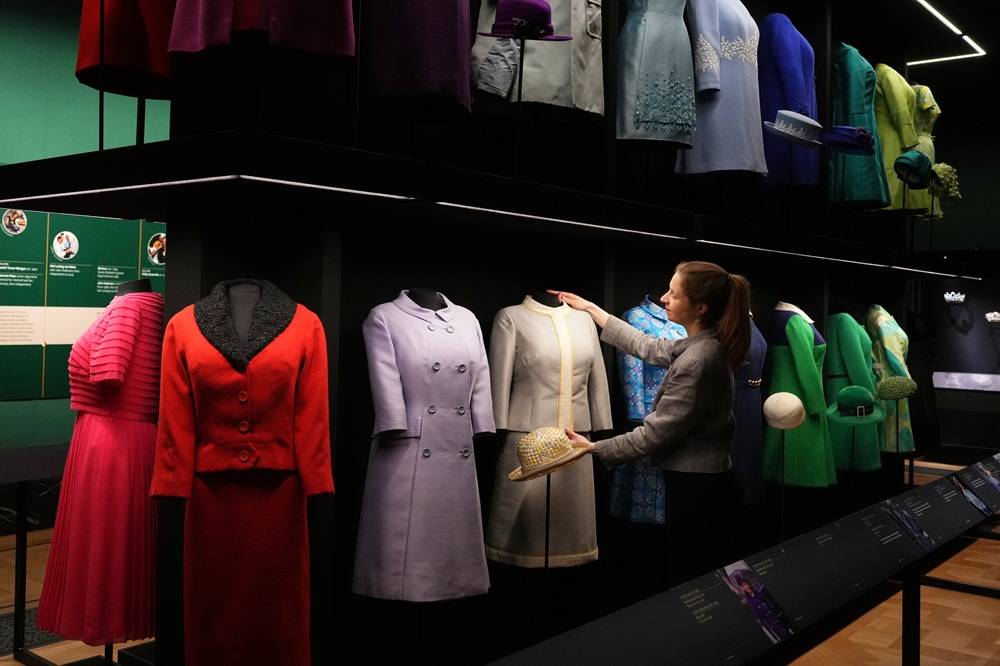
Cecilia Oliver, Textile Conservator at the Royal Collection Trust adjusts day wear worn by Queen Elizabeth II, on display at “Queen Elizabeth II: Her Life in Style” exhibition, to mark the centenary of the late queen's birth, at The King's Gallery at Buckingham Palace in London, Thursday, April 9, 2026. (AP)
Fashion connection to the public
The exhibition, drawn from some 4,000 items once owned by the queen, explores how fashion became one of her most powerful tools of communication as she evolved from a young princess into Britain’s longest-reigning monarch.
That could often be seen in her choice of color and decorative detail, as in the green and white Norman Hartnell gown she chose to wear for the state banquet during her 1961 visit to Pakistan, honoring her hosts by donning their national colors.
“The queen had an intimate understanding of how fashion could lend itself to diplomacy, a trait which, while its origins certainly lay in earlier reigns, the queen developed into nothing short of an art form,” de Guitaut said. “Color or embellishment communicated messages of respect to her host nation before she had even uttered a word in her speech.”
Particularly as she got older, Elizabeth opted to wear bright or distinctive shades during large public events so she could be easily spotted, and visitors could say they had seen the queen.
The exhibit also explores the queen’s off-duty wardrobe. The tweed suits she wore at Balmoral Castle, the royal family’s summer retreat in Scotland, are on display alongside clothes for riding, hiking and other outdoor pursuits. There’s a thick woolen coat Kelly designed during Elizabeth’s later years alongside items by Burberry and British designer Hardy Amies.
Big occasions, big statement gowns
Clothes worn during the many milestones of the queen's long life are also on display, from her christening robe, commissioned by Queen Victoria for the baptism of the future King Edward VII, to dresses she wore for her wedding and coronation.
The exhibit also includes sketches and notes that show just how involved the queen was in designing her wardrobe.
Naomi Pike, commissioning editor for Elle UK, said the collection finally recognizes Elizabeth’s status as a fashion icon, even though other royals, including her younger sister, the late Princess Margaret, and her daughter-in-law, the late Princess Diana, stole the spotlight during her lifetime.
“I think we’re very quick in this day and age to afford people icon status. ... It’s thrown around so easily,” Pike said. “But I think in the case of the queen, she was an icon and so much of that comes down to having a very strong sense of personal style.”
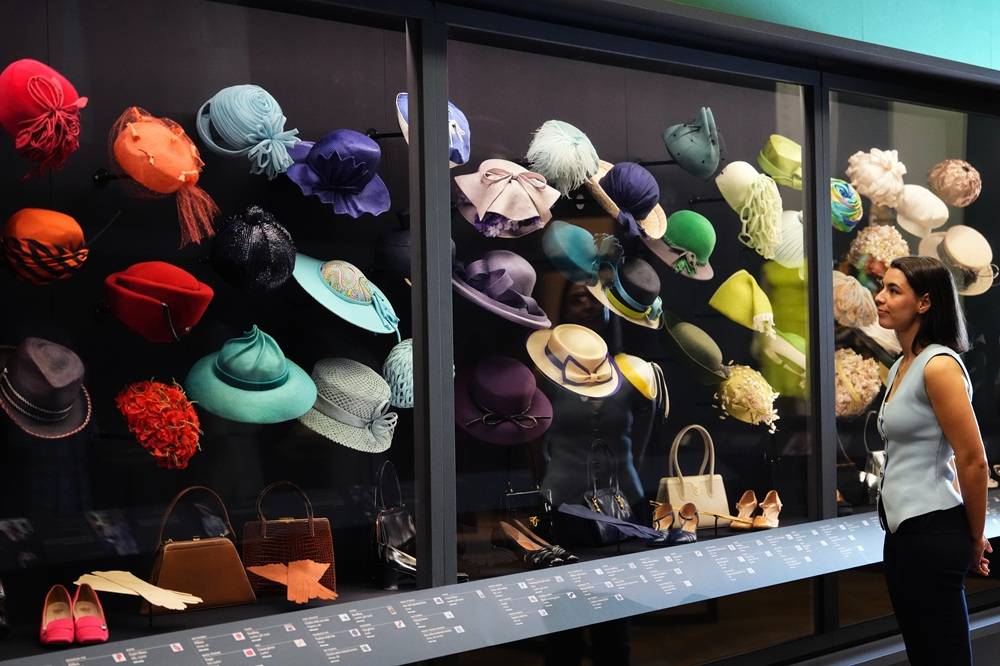
A member of the Royal Collection Trust staff looks towards hats, bags and shoes worn by Princess Elizabeth, on display at “Queen Elizabeth II: Her Life in Style” exhibition, to mark the centenary of the late queen's birth, at The King's Gallery at Buckingham Palace in London, Thursday, April 9, 2026. (AP)
On fairy wings
While the gowns may be the exhibit’s biggest draw, the show also provides a few surprises. With the task of showing us “what the monarch wore,” the curators conjured up a somewhat battered fairy outfit made from a tutu with wings on the back.
The piece is a favorite of Cecilia Oliver, a textile conservator at the King’s Gallery, who described it as the “cutest thing in the world.”
“I think what I love most about it is that it was bought for Elizabeth as a child, and to think of her as this tiny little girl that then grew up into this magnificent woman with all this weight of responsibility on her shoulders, it just feels very, sort of sentimental,” Oliver said.
Oliver grew almost wistful as she described the months of work on the exhibit and the privilege of handling so many things connected to a person familiar to so many but truly known by so few.
“As a conservator, I have a really intimate knowledge of these pieces. I’ve been able to touch them. I’ve been able to smell them. I’ve been able to understand them,” she said. “And through that, I felt really close to her.”
“Queen Elizabeth II: Her Life in Style” runs until Oct. 18 at the King’s Gallery, Buckingham Palace.
لم تشترك بعد
انشئ حساباً خاصاً بك لتحصل على أخبار مخصصة لك ولتتمتع بخاصية حفظ المقالات وتتلقى نشراتنا البريدية المتنوعة