


Armani Privé Turns 20. The Italian Maestro, 90, Celebrates with Paris Couture and Celebrities 

A model presents a creation by designer Giorgio Armani as part of his Haute Couture Spring/Summer 2025 collection show for Giorgio Armani Privé in Paris, France, January 28, 2025. (Reuters)
TT

Armani Privé Turns 20. The Italian Maestro, 90, Celebrates with Paris Couture and Celebrities 

A model presents a creation by designer Giorgio Armani as part of his Haute Couture Spring/Summer 2025 collection show for Giorgio Armani Privé in Paris, France, January 28, 2025. (Reuters)

Fashion maestro Giorgio Armani marked 20 years of his haute couture line, Armani Privé, with an elegant and emotionally charged show in Paris’s chic 8th arrondissement on Tuesday.

At 90 years old, the designer presented a collection diving into the archives of craftsmanship and moving some guests to tears as he took his bow at the end.

“Haute couture is fashion when it becomes art,” Armani said, describing the ethos behind Privé, the line he launched in January 2005. The name itself evokes rarity and exclusivity, serving as a platform for showcasing meticulous craft and timeless design, the house said.

This spring 2025 collection revisited iconic elements from Armani Privé’s past — with unapologetically glamorous results.

A segmented black gown shimmered with silver threads that gleamed like oil, Asian-inspired fitted jackets sparkled with intricate embroidery, and full skirts encrusted with crystals added both texture and weight, swinging heavily and noisily as the models walked.

Pearls featured prominently throughout the collection, used as embellishments and symbolic references to serenity, a recurring Armani motif.

The show’s setting, within the palazzo Armani and beneath gold-gilded ceilings, provided an intimate yet majestic backdrop for the celebration. Guests, including Demi Moore and Jessica Biel, were seen to tap their feet to the booming music.

While the collection embraced Armani’s signature balance of creativity and restraint, some pieces leaned on familiar themes, reflecting the designer’s adherence to his established aesthetic. Yet, this sense of continuity only heightened the timeless quality of the designs, reminding the audience why Privé remains a key part of the haute couture calendar.

The emotional highlight of the evening came at the finale when Giorgio Armani himself emerged to take his bow. Slowly walking the runway, the nonagenarian designer received a standing ovation from some in the audience, many of whom were visibly emotional by the moment.


Judge Lifts Judicial Control on 2 Italian Fashion Firms in Worker Exploitation Case

A woman walks her dog at the CityLife Shopping District in Milan, on March 25, 2026. (Photo by Stefano RELLANDINI / AFP)
TT

Judge Lifts Judicial Control on 2 Italian Fashion Firms in Worker Exploitation Case

A woman walks her dog at the CityLife Shopping District in Milan, on March 25, 2026. (Photo by Stefano RELLANDINI / AFP)

An Italian judge has lifted the judicial control imposed by Milan prosecutors on two Italian fashion firms over alleged worker exploitation, court documents seen by Reuters showed, meaning a court-appointed administrator need no longer monitor the two firms' operations.

It is the first time a judge has not upheld such a measure in a series of similar cases involving the high-end fashion sector.

Milan prosecutors had placed the two firms under investigation on March 17, along with their two directors and three Chinese nationals ⁠who owned two ⁠workshops to which the brands had subcontracted production.

In a 25-page ruling seen on Monday, Judge Roberto Crepaldi said "the conditions do not exist" for placing Alberto Aspesi and Dama Spa, owner of the Paul & Shark brand, under judicial oversight.

He added it had not been proven that ⁠the two companies' directors were complicit in the crime of labor exploitation.

The judge said the exploitation and underpayment of migrant workers had been established, but he attributed responsibility to the two subcontracting workshops rather than to the two client companies. Milan prosecutors said they would file an appeal on Tuesday over the judge's decision, asking a court to confirm the judicial oversight measure.

A three-judge panel will then decide whether to uphold the lower court ⁠judge's ruling ⁠or reimpose judicial control.

Being placed under investigation does not imply guilt or mean the case will go to trial.

Aspesi and Dama have not commented on the case, while the lawyer for Dama's director said he ruled out any criminal liability for his client, Andrea Dini.

The March 17 move had brought to seven the number of high-end brands put under various forms of judicial administration because of suspected labor violations, while another 13 have been subject to inspections - cases that have tainted the sector's image.


Debenhams Lifts 2027 Profit Forecast as Turnaround Strategy Pays Off

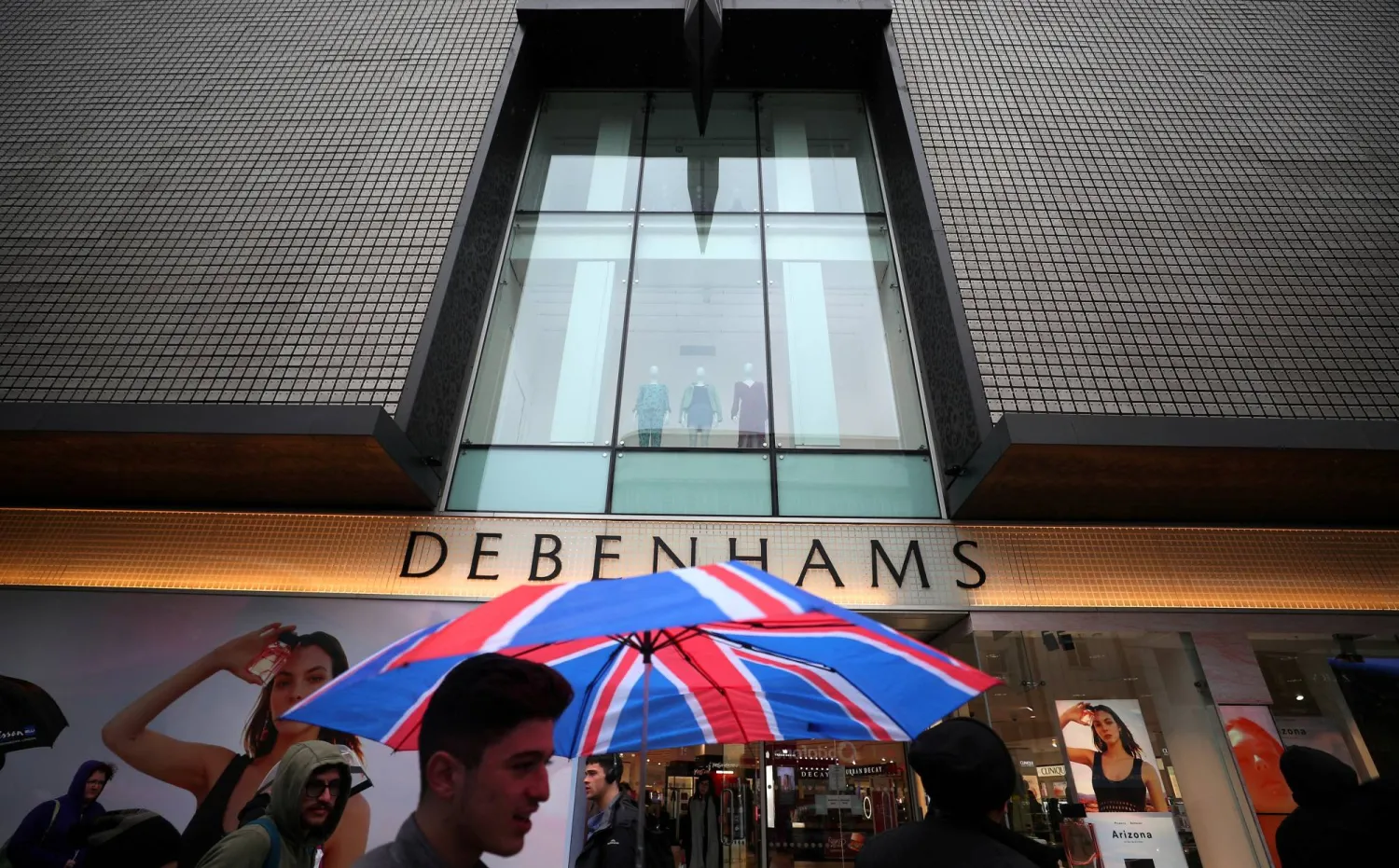
FILE PHOTO: Shoppers walk past Debenhams on Oxford Street in central London, Britain, April 2, 2018. REUTERS/Hannah McKay/File Photo
TT

Debenhams Lifts 2027 Profit Forecast as Turnaround Strategy Pays Off

FILE PHOTO: Shoppers walk past Debenhams on Oxford Street in central London, Britain, April 2, 2018. REUTERS/Hannah McKay/File Photo

British fashion retailer Debenhams raised its 2027 profit forecast after exceeding expectations for 2026 on Monday, as its turnaround strategy focused on cutting costs and debt begins to take root, sending its shares up more than 6%.

The iconic brand made a comeback in March last year after Boohoo rebranded as Debenhams and ⁠embarked on a ⁠plan to address the hit to profit from supply-chain challenges, weak demand and increased competition from low-cost fast-fashion names.

"The transformation work done has been huge and the noise (and costs) associated with these is now all but over," said Wayne Brown, a Panmure Liberum analyst.

The company ⁠forecast annual adjusted core profit of 53 million pounds ($70.37 million) for the year ended February 28, ahead of its upgraded guidance, driven by a 76% jump in second-half profit.

"All the signals and green shoots of the new business model are now visible," Reuters quoted Brown as saying.

Debenhams expects its fiscal 2027 adjusted core profit to grow by a double-digit percentage from the higher 53-million-pound base.

The retailer, which owns brands including PrettyLittleThing and Karen Millen, said gross merchandise value ⁠declines slowed for ⁠three straight quarters, exiting February down 5% compared with last year.

The company said all its brands continue to trade profitably on an adjusted core profit basis.

Debenhams had raised about 40 million pounds in February through an oversubscribed share placement, surpassing its initial 35 million-pound target, as it looks to boost liquidity.

The company has also been locked in a long-drawn tussle with top shareholder Frasers Group FRAS.L, majority-owned by British retail tycoon Mike Ashley, which unsuccessfully attempted to block its rebrand and oust its co-founder.


A Nonprofit in France Is Fighting Fast-Fashion Waste, One Sneaker at a Time

 Mohamed Boukhatem, co-founder and director of SneakCoeurZ, a nonprofit organization giving used footwear a second life, poses in Champs-sur-Marne, east of Paris, Wednesday, March 25, 2026. (AP)
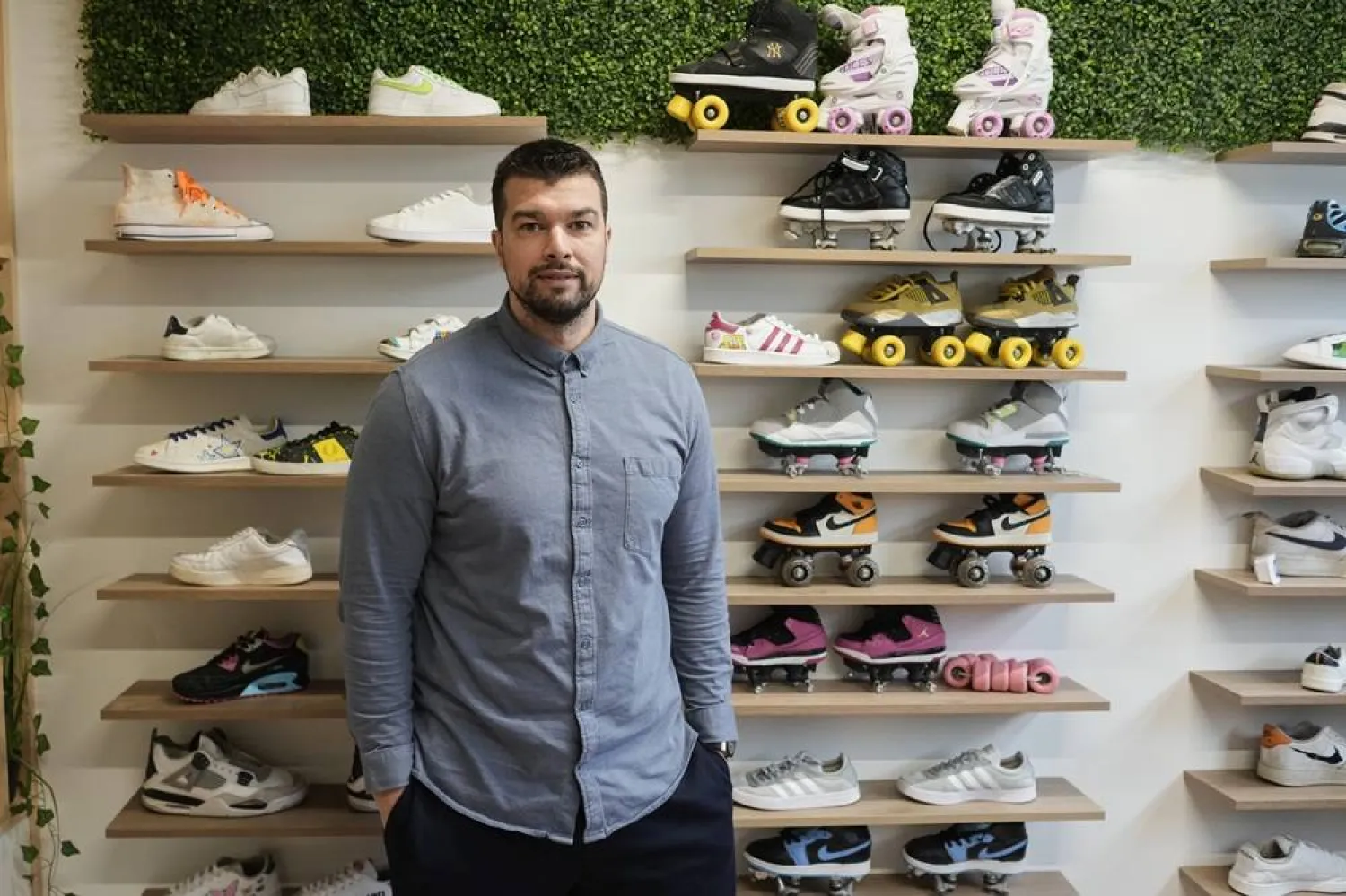
Mohamed Boukhatem, co-founder and director of SneakCoeurZ, a nonprofit organization giving used footwear a second life, poses in Champs-sur-Marne, east of Paris, Wednesday, March 25, 2026. (AP)
TT

A Nonprofit in France Is Fighting Fast-Fashion Waste, One Sneaker at a Time

 Mohamed Boukhatem, co-founder and director of SneakCoeurZ, a nonprofit organization giving used footwear a second life, poses in Champs-sur-Marne, east of Paris, Wednesday, March 25, 2026. (AP)
Mohamed Boukhatem, co-founder and director of SneakCoeurZ, a nonprofit organization giving used footwear a second life, poses in Champs-sur-Marne, east of Paris, Wednesday, March 25, 2026. (AP)

Hundreds of used sneakers arrive each week at a workshop east of Paris, where workers inspect them and ask a simple question: Can a shoe be saved?

The nonprofit SneakCœurZ is in the business of sorting the shoes to check which ones can be resold or redistributed, and which have to be rejected. It says it collected 30,000 pairs of used sneakers last year and resold 2,000 pairs, and wants to scale up that process.

“Today, there is no project of this scale in the sneaker sector,” said Mohamed Boukhatem, the organization's director general and co-founder. “We are the only ones able to industrialize both the processes and the collection of sneakers for reuse.”

The group's work underscores a growing waste problem in France, where the capital Paris is long one of the world’s fashion and luxury hubs.

The stakes are huge: the textile industry is among the world’s most polluting, and the fashion and textiles sector accounts for up to 8% of global greenhouse gas emissions, according to the United Nations. The European Parliament has said textiles were the third-largest source of water degradation and land use in the European Union in 2020.

Refashion, the French government-approved eco-organization for clothing, household linen and footwear, says 259 million pairs of shoes were sold in France in 2024.

It says only about a third of used textiles and footwear are separately collected, with much of the rest left in cupboards or thrown away with household waste.

At its workshop in Champs-sur-Marne, workers for SneakCœurZ inspect the used shoes and check which can be salvaged.

“The structural elements of the shoe are what determine whether we can refurbish it or not,” workshop manager Paul Defawes Abadie said.

“A damaged Velcro strap isn’t a deal breaker. A lace isn’t a deal breaker. Dirt is never a deal breaker,” he said. “What really matters is the wear of the structural materials, especially the outsole.”

Pairs that make the cut are cleaned from the sole upward, disinfected inside and, in some cases, whitened under UV light before being put back into circulation.

The nonprofit says it redistributed more than 7,000 pairs to people in need and helped create 19 jobs.

“Over the next three years, the goal is to triple or even quadruple these volumes and move to an industrial scale,” Boukhatem said.

France has tried to respond to the issue of fast-fashion waste with law, as well as rhetoric.

Its 2020 anti-waste law requires unsold nonfood goods to be reused, donated or recycled instead of destroyed.

Authorities introduced a state-backed repair bonus for clothing and shoes in November 2023. Separately, lawmakers are still working on a bill aimed at reducing the textile industry’s environmental impact.

The bill passed the National Assembly in March 2024 and the Senate in June 2025, and the government said in February that it was still aiming for a joint parliamentary committee this spring.