Fashion Retailer Hugo Boss Posts Q1 Beat, Reiterates 2025 Outlook

FILED - 08 March 2022, Baden-Wuerttemberg, Metzingen: The logo of the Hugo Boss fashion group, is seen at an outlet store at the company headquarters in Metzingen. Photo: dpa
TT

Fashion Retailer Hugo Boss Posts Q1 Beat, Reiterates 2025 Outlook

FILED - 08 March 2022, Baden-Wuerttemberg, Metzingen: The logo of the Hugo Boss fashion group, is seen at an outlet store at the company headquarters in Metzingen. Photo: dpa

German fashion group Hugo Boss reported better-than-expected quarterly results on Tuesday and maintained its full-year forecast despite increased macroeconomic uncertainties.
The company posted first-quarter revenue of 999 million euros ($1.13 billion), slightly below the 1.01 billion euros a year earlier, but above analysts' forecast of 974 million euros, a company-provided poll showed.
Despite US tariff concerns, it said it expects 2025 group sales to remain broadly in line with the prior year, ranging between 4.2 billion euros and 4.4 billion euros.
Earnings before interest and taxes for the first quarter came in at 61 million euros, compared to analysts' expectations of 50 million euros in a company-provided poll, Reuters reported.
The premium fashion retailer's shares rose 8.4%, topping Germany's mid-cap index. They have, however, fallen 11.7% year-to-date.
"Although we note that the demand outlook remains uncertain, we are encouraged by a better performance in March vs January/February," RBC analysts said.
Hugo Boss said in a statement that subdued global consumer sentiment continues to weigh on the fashion sector due to over US tariff uncertainty.
RBC, however, believes the company appears well positioned to weather the potential impact of tariffs "given its well diversified sourcing exposure."
CEO Daniel Grieder in a conference call with journalists said "It's difficult to make a clear, conclusive assessment and the discussions suggest that consumer confidence in the US has certainly diminished, but I believe that can change every day, and we're prepared for that. We're trying to respond actively but also flexibly to the given circumstances."
Luxury groups have struggled with tighter consumer spending due to slowing demand for fashion and accessories, particularly in the US and China.


From Uniqlo to Zara, Clothing Brands Try to Win Over Gen Z with a Needle and Thread

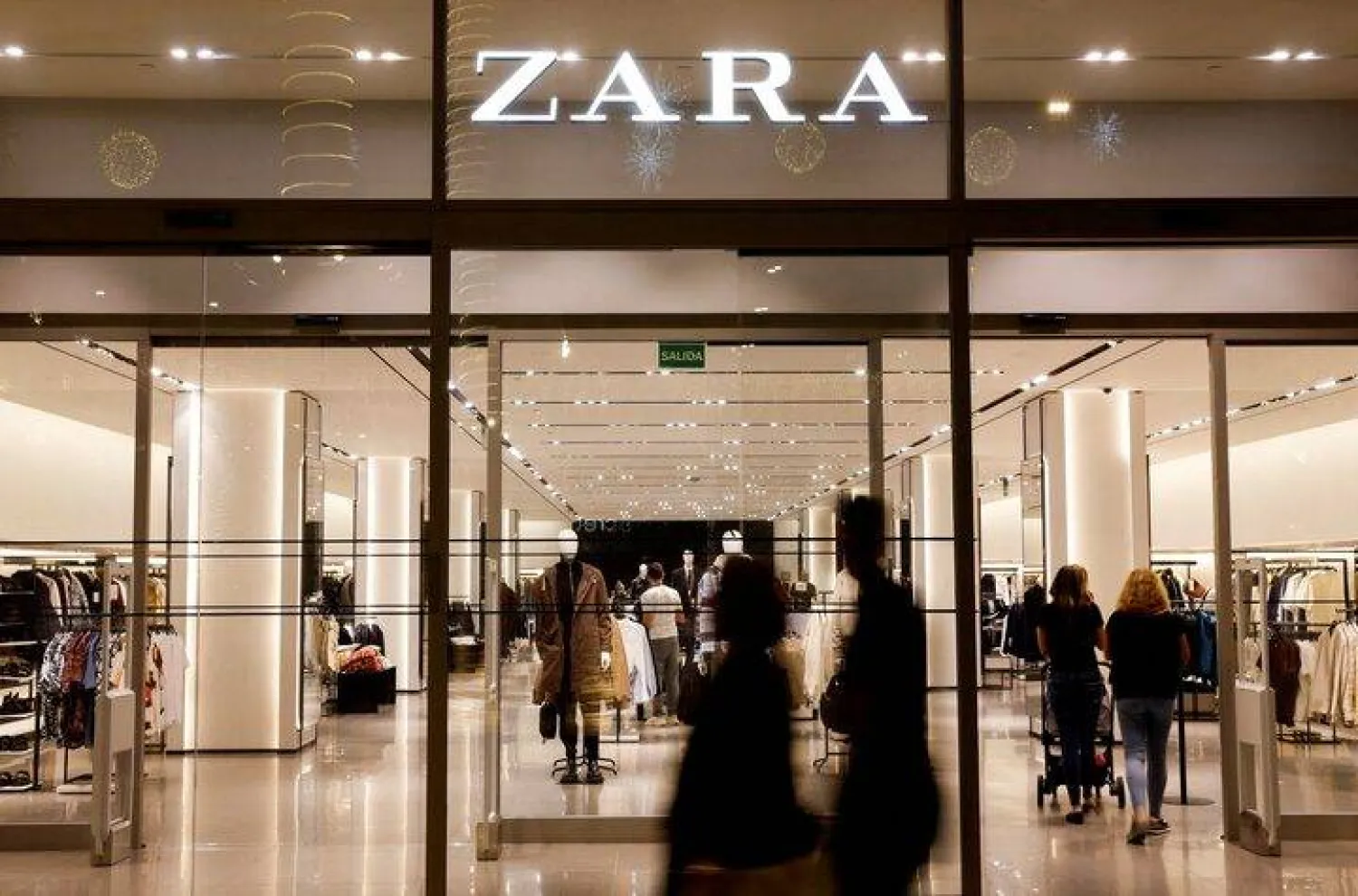
Shoppers walk past a Zara clothes store, part of the Spanish group Inditex, in Las Palmas de Gran Canaria, Spain, December 13, 2022. REUTERS/Borja Suarez
TT

From Uniqlo to Zara, Clothing Brands Try to Win Over Gen Z with a Needle and Thread

Shoppers walk past a Zara clothes store, part of the Spanish group Inditex, in Las Palmas de Gran Canaria, Spain, December 13, 2022. REUTERS/Borja Suarez

Encouraging customers to mend worn clothes instead of buying new ones might seem like a self-defeating sales strategy. But in-store repairs and sewing workshops are becoming essential retail services for clothing brands as they try to appeal to young consumers who want to save money and the planet.

While luxury fashion houses and select specialty retailers like Patagonia and L.L. Bean have offered product repairs for decades, the concept has caught on. Jeans giant Levi Strauss & Co., casual wear chain Uniqlo and budget retailer Primark are a few of the apparel companies hoping to win over Generation Z shoppers with a needle and thread.

Levi's created a handstitching course for high school students after determining that many members of Gen Z lacked the sewing skills to match their interest in thrift store shopping and sustainability. Employees spend 90 minutes instructing teenagers on four tasks: sewing on a button, hemming, patching a hole and fixing a tear.

The Wear Longer program, which the San Francisco-based company is expanding across the US, builds on the repair and customization services Levi's offers at hundreds of stores worldwide.

“We think it’s important to empower the people who buy our clothes with the skill sets to maintain them, to get them to that second life,” The Associated Press quoted Paul Dillinger, Levi's head of global design innovation, as saying.

Detroit resident Chloe Halprin, 25, is the kind of consumer retailers hope to attract with a “fix it, don’t ditch it” message.

In high school, Halprin shopped at inexpensive, trendy stores. Fixing a big rip felt beyond her limited sewing ability. If she damaged a top or skirt from Forever 21, “I might just throw it away."

These days, Halprin buys most of her clothes secondhand. She recently learned to hem with a sewing machine and hopes to tackle projects like turning a skirt into a shirt.

“I try to be conscientious of my carbon footprint,” Halprin, a nonprofit grant writer, said. "I really don’t like waste. I’m trying to save money as well.”

The evolution of mending from an economic necessity and traditional craft to a method for cultivating customers didn't happen overnight. The fashion industry as a whole has come under intensifying pressure to reduce its contributions to environmental pollution and climate change.

Textile waste — which includes manufacturing remnants, unwanted clothes and linens, and unsold products — is one of the industry's most pressing challenges. Each year, the world generates fabric waste at a rate equivalent to a garbage truck's worth getting dumped or incinerated every second, the United Nations Environment Program estimates.

Researchers broadly agree that repairing and reselling clothes can reduce a garment’s environmental impact, especially if it delays or replaces a new purchase. But many caution the practices remain too limited to offset continued growth in clothing production and consumption.

Clothing production roughly doubled between 2000 and 2015, while the average number of wearings per garment declined by about 36%, according to figures compiled by the Ellen MacArthur Foundation. The sustainability nonprofit estimated that less than 1% of discarded clothing material got recycled into new apparel.

Enter Generation Z, the cohort born between 1997 and 2012. It's the generation that grew up with fast fashion and e-commerce, then had school years and young adulthoods shaped by the coronavirus pandemic and post-pandemic inflation.

Whether due to limited budgets or a rejection of materialism, Gen Z has helped the preowned clothing market grow much faster than retail apparel sales in the US, independent market intelligence firm GlobalData estimated in a report with resale platform ThredUp.

For companies that make new clothes, mending programs and classes address “some deeper consumer needs and consumer behaviors at the moment," GlobalData retail analyst Neil Saunders said.

“It puts a halo on the brand,” he said.

The hands-on response from mass-market retailers, especially fast-fashion chains like Primark, Zara and H&M, has generated interest as well as skepticism.

Zara, which has its headquarters in Spain, launched a digital platform in 2022 for customers to resell their used pieces and to request basic alterations and repairs. The program is available in 17 of the nearly 100 countries where the trend-driven retailer operates.

Ireland-based Primark has focused more on customer education. The value-focused retailer hosts free “Love It For Longer” events where customers are taught skills like replacing zippers and buttons.

“Learning how to repair and care for clothing is probably one of the most simplest but absolutely totally effective ways that we can reduce waste and also extend the lifetime of whatever we buy,” Vicki Swain, Primark’s product longevity & partnership lead, said.

The company has held the workshops — more than 730 altogether — in nine of the 17 countries where Primark has stores, including the US Primark also tested in-store repairs at three UK locations this year.

Swain argues that affordable clothes can be just as durable and repair-worthy as more expensive ones. Half the items Primark sells annually are basics like socks, underwear, T-shirts, and jeans, she said.

“There is nothing throw away about our products,” Swain said.

Uniqlo, which focuses on timeless wardrobe staples, offers a range of aftercare services, including repairs, decorative sashiko mending, embroidery and creative restyling.

Available in 75 of the Japanese mass-market retailer’s roughly 2,500 stores worldwide, the services are promoted as a national extension of the product life cycle. Providing them also strengthens Uniqlo’s connection with customers, said Jean-Emmanuel Shein, director of global corporate responsibility at Uniqlo USA.

Kate Fletcher, a professor of sustainability, design and fashion systems at Manchester Metropolitan University in England, said she thinks the repair initiatives of popular retailers are well-meaning, but she doubts they will have much environmental impact.

“The fashion sector’s primary source of impact is due to the overproduction of pieces and growing volumes of garments created,” Fletcher said. “Repairing a garment in store happens in addition to these growing production volumes, not instead of them.”

The question facing the fashion industry is whether repairs can evolve from niche service to commercially viable.

Sweden's H&M Group, which has more than 4,000 stores in over 80 countries, has been unusually candid about one of the biggest obstacles: the economics. The company has argued that repair and resale are desirable goals, but manufacturing new garments costs businesses less than keeping existing ones in use.

H&M experimented with mending and redesign studios in several European flagship stores over the past decade. The company also is majority owner of a secondhand clothing platform called Sellpy.

In May, H&M joined Primark, ThredUp and dozens of other fashion and textile businesses in signing a statement that urged governments in North America and the European Union to adopt tax policies that would make repairing and reselling clothes profitable.

Making mending work in retail is challenging because it's labor intensive and must be priced low enough to entice customers, Saunders, of GlobalData, said. Signals from consumers also are mixed, he said.

“I think younger shoppers still shop fast fashion because even though it goes against some of their principles, it is one of the most accessible parts of the market," Saunders said. "But what they’re doing as well, though, is they’re buying into alternative channels like resale. And they’re having things repaired.”



Shein Finds There's No Place Like China after Vietnam Warehouse Experiment Disappoints

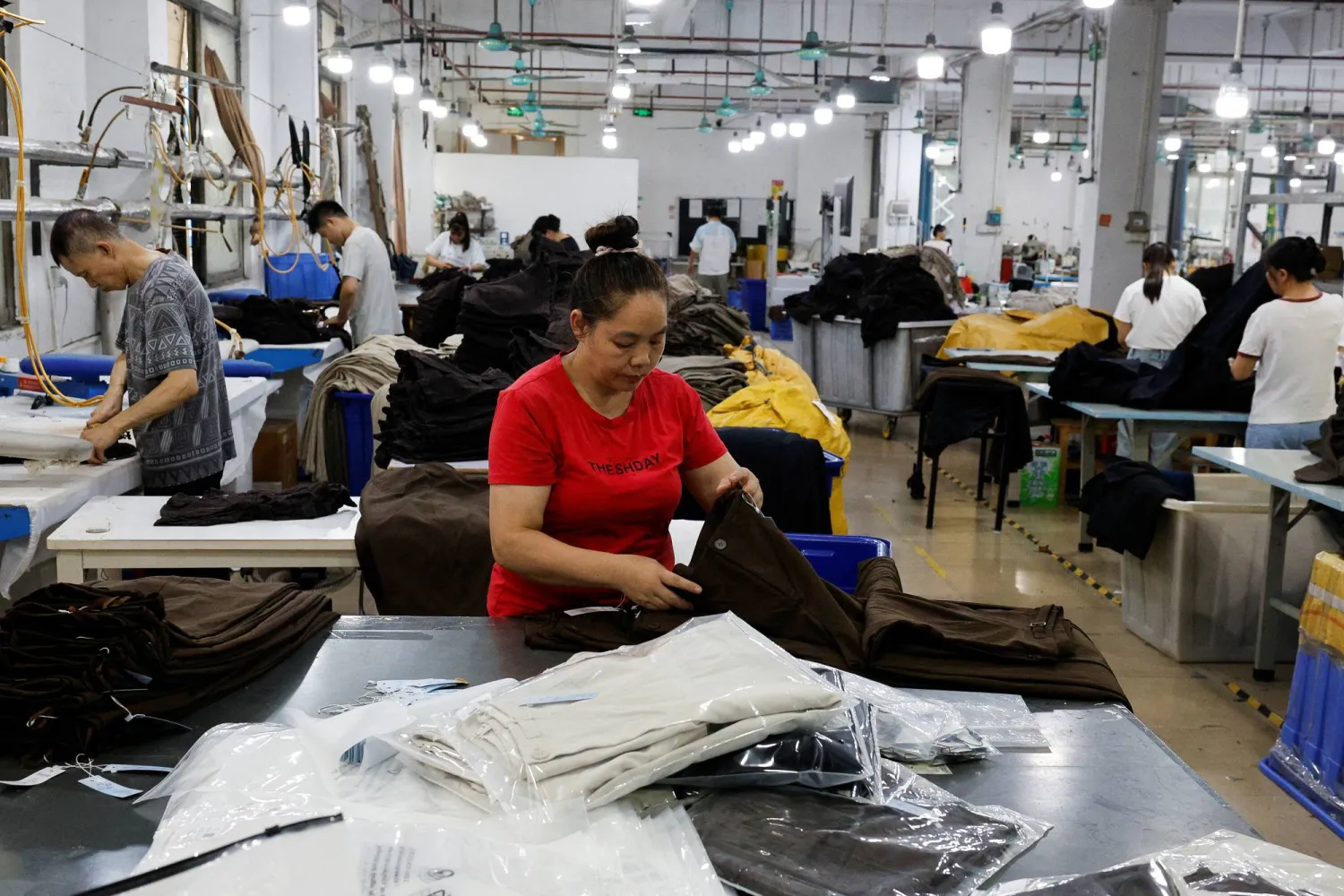
Employees work on a production line at a garment factory in Panyu District, Guangzhou, Guangdong province, China, July 27, 2026. REUTERS/Go Nakamura
TT

Shein Finds There's No Place Like China after Vietnam Warehouse Experiment Disappoints

Employees work on a production line at a garment factory in Panyu District, Guangzhou, Guangdong province, China, July 27, 2026. REUTERS/Go Nakamura

Just over a year ago, Chinese ultra-fast fashion retailer Shein began leasing 15 hectares of warehouse facilities — equivalent in size to 21 soccer pitches — near Ho Chi Minh City, part of a grand experiment to make Vietnam a major export base.

When it was formulating those plans in late 2024, it seemed like a bet that, while risky, was worth making.

US exemptions for duties on small parcels from China that underpinned its business model looked as if they would be abolished, Donald Trump had just been elected US president for a second term and fears of a heightened trade war were soon realized, with US tariffs on many Chinese goods rocketing to 145% by April 2025.

Shein started encouraging its biggest Chinese suppliers to set up manufacturing bases in Vietnam.

But things did not go to plan.

Today, IPO-bound Shein, known for selling $5 tops and $10 dresses, is drastically scaling back in Vietnam, six people familiar with its operations there said.

At 15 hectares, the bonded logistics hub was the largest of its kind in the country and used to employ thousands. The lease now covers 6 hectares, according to two of the sources. A separate person with direct knowledge of the matter said a third of the originally planned site is in use.

Mass layoffs began in April and more are expected, warehouse workers said, adding that some teams have retained one in four employees, while others lost even more. During a Reuters visit to the site in late July, only a handful of workers were present and just a few trucks were parked ⁠at its warehouses. ⁠Nearby warehouses operated by other tenants were bustling with activity.

Shein did not respond to Reuters requests for comment.

Its sharp U-turn in Vietnam, which has not previously been reported, reflects abrupt changes in US trade policies while underscoring how dependent Shein's business model is on Chinese suppliers which put up with terms that manufacturers in other countries won't — a pattern Shein has also seen play out in Brazil.

It also highlights how Shein is hewing more closely to its Chinese roots. Having unsuccessfully sought listings in New York and London and moved its headquarters to Singapore as it expanded globally, the company is now pursuing a Hong Kong IPO while deepening its commitment to its manufacturing base in southern China.

The first and biggest hit to Shein's Vietnam plans was the end of the US de minimis duty-free exemption for shipments under $800 from all countries, not just China. Trump ordered the move on July 30, 2025, and it took effect a month later, only a few months after the exemption for shipments ⁠from China ended.

Then, sky-high US tariffs on Chinese goods gradually came down. Vietnamese apparel is still subject to smaller tariffs than Chinese clothing, but the advantage is no longer as large as it used to be.

A knit polyester dress, for example, imported from either Vietnam or China is subject to a 16% duty, but the Chinese item would be hit with Section 301 tariffs imposed for alleged unfair trade practices that could lift the effective rate to around 33.5%.

Last month, both China and Vietnam were hit with new US tariffs of 12.5% for allegedly failing to prevent imports of goods made with forced labor — a decision that puts Vietnam at a disadvantage to other Southeast Asian nations with big apparel sectors and further undermines the case for Shein's suppliers to set up shop there.

It's not all about tariffs. Finding Vietnamese workers willing to work long hours for low wages has proven difficult, sources at Shein's Chinese suppliers say.

Shein's vast network of suppliers in China produces millions of styles in small batches at margins of as little as 1 yuan ($0.15) per piece, with orders fulfilled in days and quickly reordered if the company's 273 million shoppers take a liking to them.

"Sourcing diversification beyond China has practical limits, especially for companies like Shein whose competitive advantage depends on speed, flexibility, and extremely small production runs," said Sheng Lu, professor of fashion and apparel studies at the University of Delaware.

Many suppliers that went to Vietnam have come back, said a factory manager with the surname Wen ⁠in Guangzhou's Panyu district, home to "Shein villages" that comprise ⁠thousands of small garment factories.

"They realized that despite the smaller US tariff rate on Vietnamese goods compared to Chinese ones, the low efficiency still makes it less viable than manufacturing in China," Wen added. He declined to give his full name, saying Shein had warned suppliers not to speak to media.

Authorities in Guangzhou, keen to protect local jobs, were also not happy with Shein's efforts to subsidize Chinese manufacturers opening plants in Vietnam, and in mid-2025 warned it against moving orders significantly away from the region, according to a source with direct knowledge of the matter.

The Guangzhou Municipal Commerce Bureau did not respond to a request for comment.

Shein is now investing further in Guangzhou and the broader Guangdong province, with CEO Sky Xu making a rare public appearance in February to pledge spending of over 10 billion yuan ($1.5 billion) on a smart supply-chain system in the region.

But while Shein has recommitted to China, some domestic suppliers are not necessarily recommitting back as demand slows. Shein's draft prospectus showed a 14% slide in US revenue during the first quarter due to the end of the de minimis exemption.

Wen and three other suppliers said orders from Shein were either stagnant or showing only a little growth. Demand is expected to further slow after the European Union last month imposed a €3 duty on low-value e-commerce imports.

Ping He, who has worked in operations management for Shein and TikTok Shop, said thousands of Shein's smaller suppliers have begun supplementing their income by opening stores on PDD Holdings-owned Temu or Amazon.

"Shein is not the prettiest boy in town anymore. There are many more options now," she said.
Other suppliers are returning to larger orders with longer lead times.

"Shein's profit margins are just too thin ... their order volumes are quite small, often just dozens of pieces at a time, which makes production a hassle. So we decided to drop them," said Yang, a manager at Jiang Gong Clothes, a factory in Panyu that worked with Shein until a few months ago.


UK's JD Sports Appoints Former IKEA Boss Peter Agnefjäll as Chair

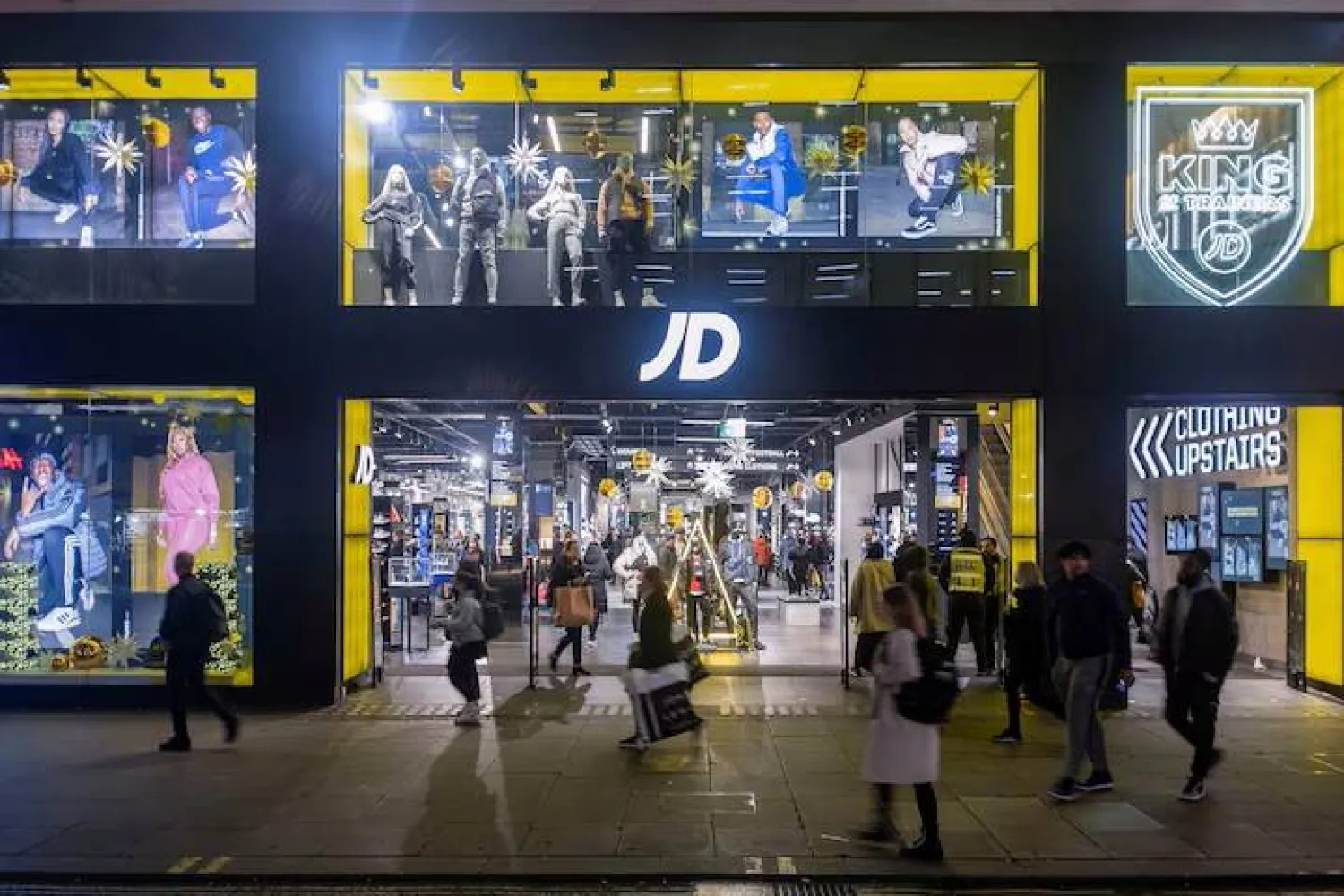
Exterior view of a JD Sports store in London, Britain, November 23, 2021. REUTERS/May James/File Photo
TT

UK's JD Sports Appoints Former IKEA Boss Peter Agnefjäll as Chair

Exterior view of a JD Sports store in London, Britain, November 23, 2021. REUTERS/May James/File Photo

British sportswear retailer JD Sports on Friday said former IKEA CEO Peter Agnefjäll has been appointed as chair effective September 1, succeeding Darren Shapland, who served on ⁠an interim basis.

Agnefjäll, ⁠who previously served as chair of supermarket group Ahold Delhaize, will take over ⁠after former chairman Andrew Higginson's abrupt exit in July.

Shapland, who will remain as an independent director, said, "His experience and perspective will be invaluable to JD's Board ⁠and executive ⁠team as the Group continues to execute against its strategic objectives and capitalize on the significant opportunities ahead."