


Local Fabrics, Fibers Shine at Eco-centered Lagos Fashion Week

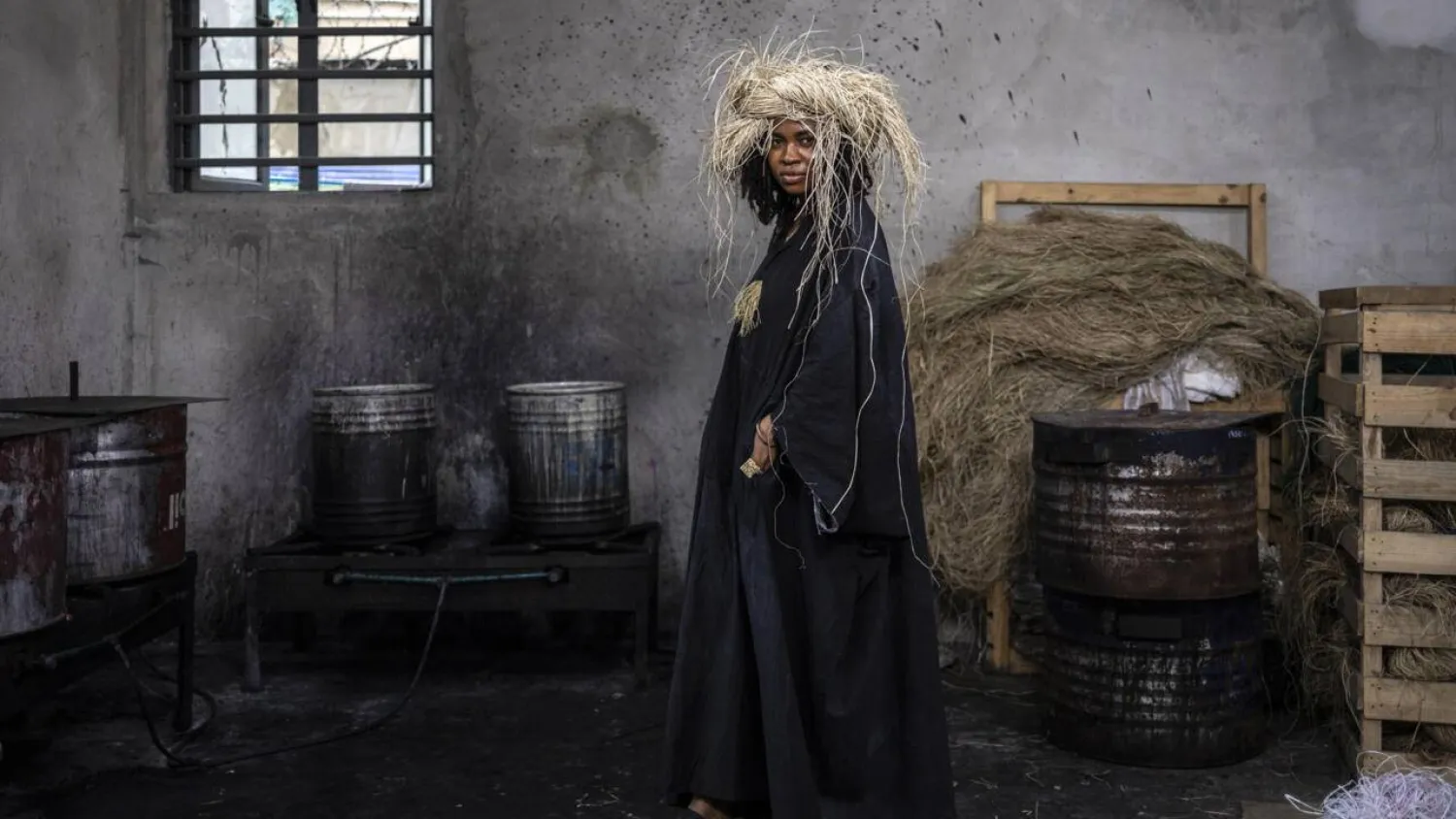
Abasiekeme Ukanireh, founder of Nigerian brand of Eki Kere, is known for incorporating raffia into her designs. OLYMPIA DE MAISMONT / AFP
TT

Local Fabrics, Fibers Shine at Eco-centered Lagos Fashion Week

Abasiekeme Ukanireh, founder of Nigerian brand of Eki Kere, is known for incorporating raffia into her designs. OLYMPIA DE MAISMONT / AFP

Four days ahead of her show at Lagos Fashion Week, the sewing machines at Abasiekeme Ukanireh's workshop were still buzzing.

Ukanireh, the founder of the popular Nigerian brand Eki Kere, met with models and tailors for the final preparations ahead of one of Africa's biggest fashion events, which ran through Sunday.

On the agenda: local materials, upcycling and African craftsmanship.

"Every single year for a brand, for me, as a designer, I always try to take it a step further in terms of being sustainable," Ukanireh, 35, told AFP.

Sustainability -- long both a bugbear and a buzzword in the fashion industry -- was a key feature of this year's Lagos Fashion Week, with designers from across the continent tapping into everything from traditional fabrics to banana fiber and coffee grounds.

Launched in 2020, Ukanireh's brand is known for its use of raffia, a grassy fiber from palm trees used in everything from thatched roofs to trendy bags.

This year, she played up the use of indigo and dyes made from kola nuts -- though she hadn't forgotten her raffia roots.

During her show Sunday, dozens of models walked the runway wearing outfits inspired by traditional wedding ceremonies in Ikot Ekpene, a historic town popularly known as "Raffia City" in southern Akwa Ibom state, where Ukanireh hails from.

The traditional wedding lace was swapped for cardboard, linen and raffia -- which is 100 percent biodegradable and compostable.

In 2018, the Lagos Fashion Week founder Omoyeni Akerele and her team launched Green Access, an incubator program that identifies, trains and supports young African designers.

"Even though sustainability is at the core of their design practice, it is to encourage them to even be more sustainable by rethinking their choices at every stage of the creative process, and understanding that it begins with materials," Akerele said.

Lagos Fashion Week also hosts what it calls "Swapshop" events, which allow people to exchange clothes they no longer wear for new ones.

"We all have clothes at home that we no longer wear," said 43-year-old businesswoman Danielle Chukwuma, who has attended several editions of the show.

"It's great to be able to swap them with people as stylish as those attending this kind of event."

Apart from Nigerian brands, Chukwuma has also discovered other African talents, including the Indian-Kenyan designer Ria Ana Sejpa of the brand LilaBare.

This year was Sejpa's third appearance at Lagos Fashion Week.

"Lagos is the fashion capital of Africa," she told AFP. "Fashion is a part of the culture here. People take pride in the way they dress, they love to stand out, and they aren't afraid to be fearless or glamorous."

The 34-year-old designer is known for making clothes from pineapple fiber, banana fiber and coffee grounds.

"It is essential to take into consideration your ecosystem, the strengths of the environment and the people around you, and to make conscious decisions at every step of the fashion creation process," Sejpa said.

31-year-old Florentina Hertunba, who is making waves with her brand Hertunba, shared the same view.

She said she incorporates traditional Nigerian fabrics such as aso oke and akwete as well as other locally available materials into her designs and uses biodegradable packaging to cut down waste.

"This piece is recycled," the young designer explained, pointing to a patterned black dress in her Lagos studio. "An old fabric was transformed into sewing thread and then reused to create it."

But for her, sustainability is only sustainable if consumers join the movement.

"One of the greatest dangers is this culture of overconsumption, where we constantly buy new clothes for every occasion," she told AFP. "Sustainable fashion is making progress, but overconsumption is too."



Fashion Commission Launches 1st Executive Master’s Program in Riyadh

Fashion Commission Launches 1st Executive Master’s Program in Riyadh
TT

Fashion Commission Launches 1st Executive Master’s Program in Riyadh

Fashion Commission Launches 1st Executive Master’s Program in Riyadh

The Fashion Commission announced the launch of the first Executive Master’s program to be delivered in Riyadh, developed in collaboration with the world-renowned Institut Français de la Mode (IFM).

The new program marks a significant leap in advancing fashion education and executive training within the Kingdom, according to SPA.

The Executive Master’s in Strategic Management of Fashion & Luxury represents a new milestone in fashion education, taking place in Riyadh for the first time. It is a 15-month hybrid executive master’s degree track designed for high-potential professionals seeking advanced executive training while continuing their careers. Delivered through a blend of in-person modules in Riyadh and Paris, alongside supervised online learning, the program equips participants with strategic, managerial, and analytical expertise tailored to the rapidly evolving fashion and luxury sector.

Designed with market needs in mind, the executive master’s curriculum covers creation and design, brand strategies, sustainability, new consumer behaviors, retail innovation, fashion media, collection management, and future industry perspectives. Participants will also complete a thesis that contributes new knowledge to the regional and global fashion landscape.

The program is taught by IFM’s internationally recognized faculty, experts in fashion history, sustainability, consumer behavior, design, and luxury management, alongside industry leaders from major global houses, fashion federations, media groups, and innovation-driven organizations.

This landmark program builds on the Fashion Commission’s ongoing partnership with IFM since June 2022. Within the first year, the collaboration introduced high-level educational initiatives, including the Advanced Management Program for Luxury Fashion and the Executive Master’s in Luxury Fashion, designed to elevate local talent and strengthen the Kingdom’s creative workforce.

These programs have contributed to developing the skills and knowledge required to support a world-class fashion ecosystem.

The launch of the Executive Master’s marks a pivotal step in establishing Riyadh as an education hub for the fashion and luxury sectors. By bringing a master’s qualification of this caliber directly to the Kingdom, the Fashion Commission reinforces its commitment to enabling professional growth, supporting innovation, and creating globally competitive talent pipelines.


Nike Shares Rise as Apple’s Cook Doubles His Bet on CEO Hill’s Overhaul Effort

A jogger wearing Nike shoes runs along the Charles River in Cambridge, Massachusetts, US, March 18, 2019. (Reuters)
TT

Nike Shares Rise as Apple’s Cook Doubles His Bet on CEO Hill’s Overhaul Effort

A jogger wearing Nike shoes runs along the Charles River in Cambridge, Massachusetts, US, March 18, 2019. (Reuters)

Nike shares rose 5% in early trading on Wednesday after Apple CEO Tim Cook doubled his personal stake in the sportswear maker, raising his bets on the margin-pinching turnaround efforts led by CEO Elliott Hill.

Cook, who has been on Nike's board since 2005, bought 50,000 shares at $58.97 ‌each, according to ‌a regulatory filing. As of December ‌22, ⁠he holds about ‌105,000 shares, which is now worth nearly $6 million.

It was the largest open market stock purchase for a Nike director or executive and possibly the largest in more than a decade, said Jonathan Komp, analyst at Baird Equity Research.

"(We see) Cook's move as a positive signal for the progress under CEO Elliott Hill and Nike's 'Win ⁠Now' actions," Komp said.

The purchase comes days after Nike reported weaker quarterly margins and weak ‌sales in China even as CEO ‍Hill tries to revive demand ‍through fresh marketing plans and innovation focused on running and sports, ‍while phasing out lagging lifestyle brands.

He has also attempted to mend Nike's ties with wholesalers such as Dicks Sporting Goods to increase visibility among shoppers amid stiff competition from newer brands.

However, the strategy has strained Nike's margins, which have been declining for over a year, while its efforts to win back its ⁠premier position in discount-friendly China appears to be faltering.

Nike's shares have slumped nearly 13% since it reported results on December 18 and are on track for the fourth straight year of declines. They were trading at $60.19 on Wednesday.

Cook has been a lead independent director of Nike since 2016 when co-founder Phil Knight stepped down as its chairman.

The Apple CEO "remains extremely close" with Knight, Komp said, adding that he has advised Nike through key strategic decisions including Hill's appointment last year.

Board director and former Intel CEO ‌Robert Swan also bought about 8,700 shares for about $500,000 this week.


Etro Founding Family Exits Group as New Investors Including Türkiye's RAMS Global Join

L Catterton, a private equity firm backed by French luxury giant LVMH, will remain Etro's majority owner. Reuters
TT

Etro Founding Family Exits Group as New Investors Including Türkiye's RAMS Global Join

L Catterton, a private equity firm backed by French luxury giant LVMH, will remain Etro's majority owner. Reuters

The founding family of Italian fashion house Etro has sold the minority stake it still owned in the brand to a group of investors including Turkish group RAMS Global, the company said on Friday.

L Catterton, a private equity firm backed by French luxury giant LVMH, will remain Etro's majority owner and "will continue to actively support the brand's long-term growth strategy," Etro added, according to Reuters.

The new investors comprise also Italian fashion group Swinger International and small private equity firm ⁠RSI.

In addition to buying the stake, they all subscribed to a capital increase that will lower L Catterton's holding in Etro to between 51% and 55% from around 65%.

When including both the acquisition and the capital increase, the deal is worth around 70 ⁠million euros ($82 million), two sources close to the matter said. Etro did not disclose financial details.

Chief Executive Fabrizio Cardinali will remain at the helm, while Faruk Bülbül, representing RAMS Global, will become chairman of the board.

L Catterton bought a 60% stake in the brand known for its paisley motif four years ago, and it slightly increased the holding over the years.

The company, founded by Gimmo Etro in 1968, has ⁠been struggling with its turnaround. Last year it posted a net loss of 23 million euros with net revenues declining to 245 million euros from 261 million euros, according to filings with the local chambers of commerce reviewed by Reuters.

Rothschild advised L Catterton and the Etro family on the deal.

Rothschild had been hired in 2024 to look for a new investor who could buy all or part of the Etro fashion group, sources had previously told Reuters.