

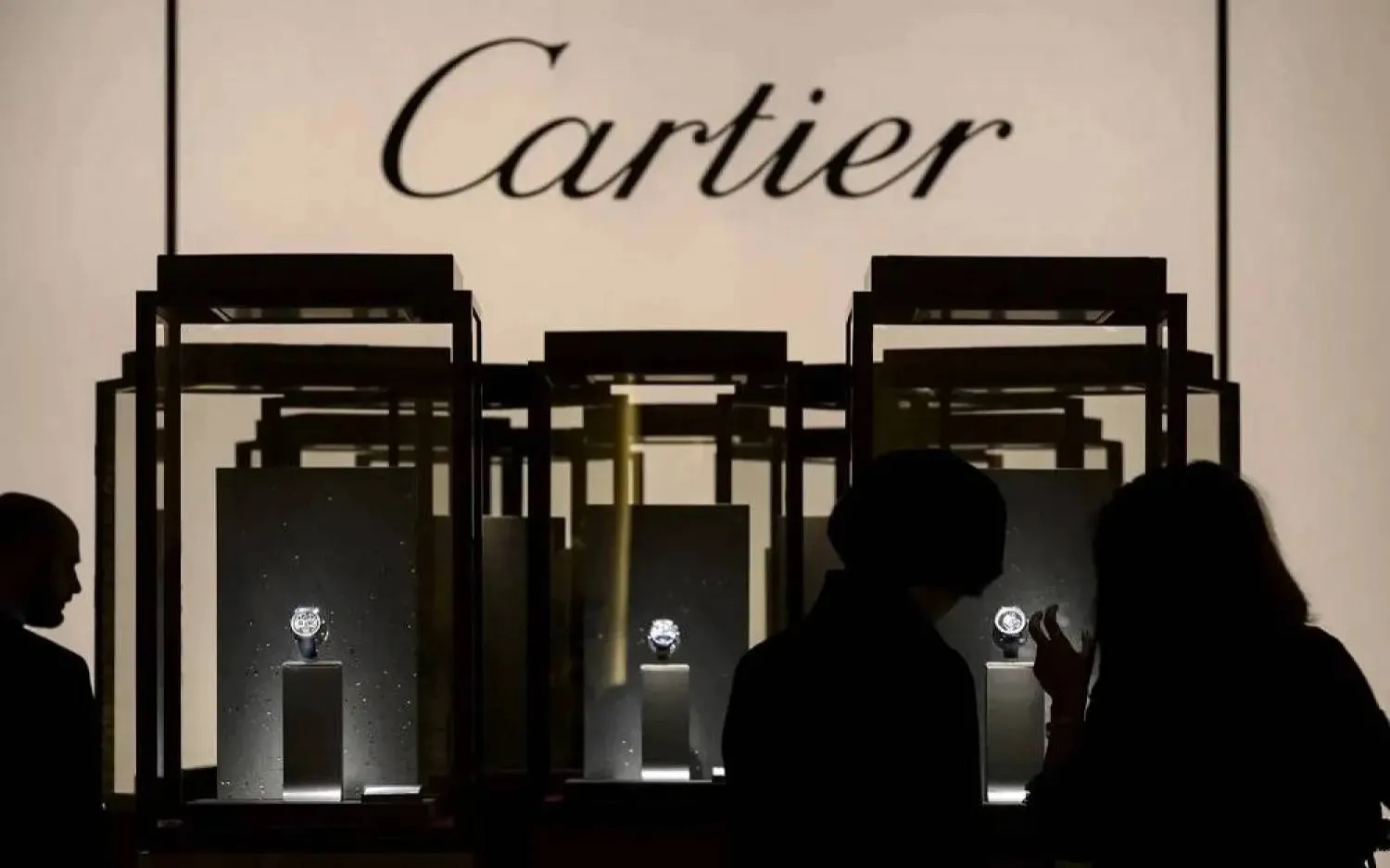

Cartier Owner Richemont Beats Sales Forecasts as China Recovery Continues

The Swiss-based company said sales in its fourth quarter to end-March rose to 5.17 billion euros ($5.80 billion). (AFP)
TT

Cartier Owner Richemont Beats Sales Forecasts as China Recovery Continues

The Swiss-based company said sales in its fourth quarter to end-March rose to 5.17 billion euros ($5.80 billion). (AFP)

Cartier owner Richemont reported sales ahead of market expectations on Thursday, buoyed by strong global demand for jewelry and a continued recovery in greater China, its second-biggest market and a bellwether for the luxury sector.

The Swiss company's shares rose 3% on the reading with investors looking for signs the luxury goods industry can return to stable growth in a year already marked by geopolitical turmoil and the bankruptcy of one of the sector's largest retail groups, Saks Global.

The world's second-largest luxury company, which also owns Van Cleef & Arpels and Buccellati, said sales in its September-to-December third quarter rose to 6.4 billion euros ($7.45 billion), a 4% year-on-year increase in reported currencies.

That beats an analyst consensus of 6.28 billion euros cited by Visible Alpha and represents an ‌11% increase when ‌measured in constant currencies, Reuters said.

Richemont's trading update provides the first clues on demand for ‌luxury ⁠goods going into ‌2026. LVMH is due to report its annual results later this month, followed by Hermes and Gucci-owner Kering in February. Smaller Italian cashmere brand Brunello Cucinelli was the first luxury brand to report quarterly sales this week.

Shares of sector peers, including watch company Swatch and Birkin-bag maker Hermes, rose in early trade following Richemont's results announcement.

CHINESE MARKET CONTINUES GROWTH REBOUND

Richemont highlighted continued improvement in China, Hong Kong and Macau, where its sales rose by 2%. China accounts for just under 20% of the company's sales, according to a Bank Vontobel estimate, ranking second behind the United States.

The greater China performance "mostly led by ⁠solid activity in Hong Kong" was the second quarter in a row that Richemont has reported improved sales in the region, following a 7% rise ‌in the previous three months.

China has been luxury's main growth engine in ‍recent years, but has been struggling with a sticky ‍real estate crisis and a shift in consumer appetite that have weighed on demand for Western brands.

Richemont's reported ‍trends from China "may be regarded as a pivotal moment", RBC analyst Piral Dadhania said in a note, adding that its performance is a positive signal for the wider luxury sector.

Demand in China, where most European houses saw their sales decline heavily last year, is seen as a decisive factor for the luxury industry to return to sustained growth.

"The Chinese consumer holds the key to luxury and is thus the critical sector theme for 2026," Berenberg analyst Nick Anderson said in a recent note to clients.

JEWELLERY UP BUT GOLD PRICES, STRONG FRANC PRESSURE MARGINS

Following two ⁠years of stagnation, analysts are beginning to turn more optimistic on the $400 billion luxury industry, with jewelry seen as a critical growth driver since inflation-wary shoppers view it as an investment rather than a mere treat.

Richemont's jewelry sales were up 14% helped by the launch of novelty items such as bracelets and pendants, which tended to be slightly cheaper and were popular during the gifting season.

"Jewelry is in strong shape, and Richemont dominates it with its brands," Bernstein analysts said.

The company's watchmaking business, which includes the IWC and Jaeger-LeCoultre brands, lifted sales by 7%.

Pressures on Richemont's margins due to record-high gold prices and the strong Swiss franc, however, will likely persist and could impact the group's profit outlook for the next business year if not countered by more price increases, analysts from Deutsche Bank said.

A company spokesperson declined to comment on the bankruptcy of Saks Global, the owner of US department stores Saks Fifth Avenue, Bergdorf Goodman and Neiman Marcus.

Richemont ‌is among the retailer's top unsecured creditors. Saks owes about $3.4 billion to creditors, while claims by the top 30 unsecured creditors are worth a total of $712 million, bankruptcy filings show.

Kering’s Fourth-Quarter Sales Fall Less Than Expected as Gucci Slide Continues

The logo of French luxury group Kering is seen at Kering headquarters in Paris, France, February 13, 2023. (Reuters)
TT

Kering’s Fourth-Quarter Sales Fall Less Than Expected as Gucci Slide Continues

The logo of French luxury group Kering is seen at Kering headquarters in Paris, France, February 13, 2023. (Reuters)

Kering reported on Tuesday a slightly smaller-than-expected drop in fourth-quarter sales, as investors await details of CEO Luca de Meo's plans ​to revive the Gucci owner's flagging fortunes.

Sales reached 3.9 billion euros ($4.64 billion), down 3% from the previous year when adjusted for currency swings. That beat analysts' consensus forecast for a 5% drop, according to Visible Alpha.

The revenue drop was 10% at Italian flagship label Gucci, which accounts for most of Kering's profits, versus analyst expectations of a 12% decline.

It ‌was the brand's ‌10th straight quarter of revenue ‌decline.

Finance ⁠Chief ​Armelle ‌Poulou told journalists Gucci saw some improvement at the end of last year in "almost all regions", helped by newly introduced products and handbag sales.

Grappling with weak sales since the maximalist styles of Gucci's former star designer Alessandro Michele fell out of fashion in 2022, Kering has faced heightened investor scrutiny over its high ⁠debt and declining profitability.

Free cash from operations fell by 35% last year ‌when excluding one-off payments from real estate ‍sales, reaching 2.3 billion euros, Kering ‍said.

"For Kering, it's really about (restoring) the broad desirability globally," said ‍JPMorgan analyst Chiara Battistini.

Facing an uncertain business outlook, the group, which also owns Gucci Balenciaga, Bottega Veneta and Yves Saint Laurent, further reduced its store network by 75 boutiques with further closures planned, Poulou said.

The ​earnings underscored the steep challenges Kering faces to catch up with peers even though its shares have ⁠risen around 50% since de Meo's appointment was announced last June.

"2025 did not reflect Kering's true potential or the strength of our brands, but it enabled us to lay the foundations for our future recovery," said Poulou.

Kering's annual operating income reached 1.63 billion euros, less than a third of its 2022 level. Kering's operating profit margin fell to 11% group-wide and 16% at Gucci, down from 28% and 36% three years earlier.

By contrast, LVMH delivered a 22% margin last year amid ‌a broader luxury slowdown, with its leather and fashion division - home to Louis Vuitton and Dior - hitting 35%.


Pieter Mulier Named Creative Director of Versace

(FILES) Pieter Mulier attends the 2025 CFDA Awards at The American Museum of Natural History on November 03, 2025 in New York City. (Photo by Dimitrios Kambouris / GETTY IMAGES NORTH AMERICA / AFP)
TT

Pieter Mulier Named Creative Director of Versace

(FILES) Pieter Mulier attends the 2025 CFDA Awards at The American Museum of Natural History on November 03, 2025 in New York City. (Photo by Dimitrios Kambouris / GETTY IMAGES NORTH AMERICA / AFP)

Belgian fashion designer Pieter Mulier has been named the new creative director of the Milan fashion house Versace starting July 1, according to an announcement on Thursday from the Prada Group, which owns Versace.

Mulier is currently creative director of the French fashion house Alaïa, and was previously the right-hand man of fellow Belgian designer and Prada co-creative director Raf Simons at Calvin Klein, Jil Sander and Dior.

In his new role, Mulier will report to Versace executive chairman Lorenzo Bertelli, the designated successor to manage the family-run Prada Group. Bertelli is the son of Miuccia Prada and Prada Group chairman Patrizio Bertelli.

“We believe that he can truly unlock Versace’s full potential and that he will be able to engage in a fruitful dialogue,’’ The Associated Press quoted Lorenzo Bertelli as saying of Mulier in a statement.

Mulier takes over from Dario Vitale, who departed in December after previewing just one collection during his short-lived Versace stint.

Mulier was honored last fall by supermodel and longtime Alaïa muse Naomi Campbell at the Council of Fashion Designers of America for his work paying tribute to brand founder Azzedine Alaïa. Mulier took the creative helm in 2021, after Alaïa’s death.


Ralph Lauren’s Margin Caution Eclipses Stronger‑than‑expected Quarterly Results

Guests wait after viewing the latest Ralph Lauren collection in New York City, US, April 17, 2025. REUTERS/Caitlin Ochs/File photo
TT

Ralph Lauren’s Margin Caution Eclipses Stronger‑than‑expected Quarterly Results

Guests wait after viewing the latest Ralph Lauren collection in New York City, US, April 17, 2025. REUTERS/Caitlin Ochs/File photo

Ralph Lauren posted third-quarter results above Wall Street estimates on Thursday, but the luxury retailer's warning of margin pressure tied to US tariffs sent its shares down nearly 6.4% in premarket trading.

The company expects fourth-quarter margins, its smallest revenue period, to shrink about 80 to 120 basis points due to higher tariff pressure and marketing spend.

Ralph Lauren, which sources its products from regions such as China, India and Vietnam, has relied on raising prices and reallocating production to regions with lower duty exposure to offset US tariff pressures, Reuters reported.

"Ralph Lauren has been able to raise prices for some time now. There is some limit on how long it can continue to do this. I think (the company's) gross margins are near peak levels," Morningstar analyst David Swartz said.

The company, which sells $148 striped linen shirts and $498 leather handbags, has tightened inventory, lifted full-price sales and refreshed core styles, boosting its appeal among wealthier and younger customers, including Gen Z.

Higher-income households are still splurging on luxury items, travel and restaurant meals, while lower- and middle-income consumers are strained by higher costs for rents and food as well as a softer job market.

The New York City-based company saw quarterly operating costs jump 12% year-on-year as it ramped up brand building efforts through sports-focused brand campaigns such as Wimbledon and the US Open tennis championship.

The luxury retailer said revenue in the quarter ended December 27 rose 12% to $2.41 billion, above analysts' estimates of a 7.9% rise to $2.31 billion, according to data compiled by LSEG.

It earned $6.22 per share, excluding items, compared to expectations of $5.81, aided by a 220 basis points increase in margins and an 18% rise in average unit retail across its direct-to-consumer channel.

Ralph Lauren now expects fiscal 2026 revenue to rise in the high single to low double digits on a constant currency basis, up from its prior forecast of a 5% to 7% growth.