


Phan Huy: The Fashion Prodigy Putting Vietnam on the Map

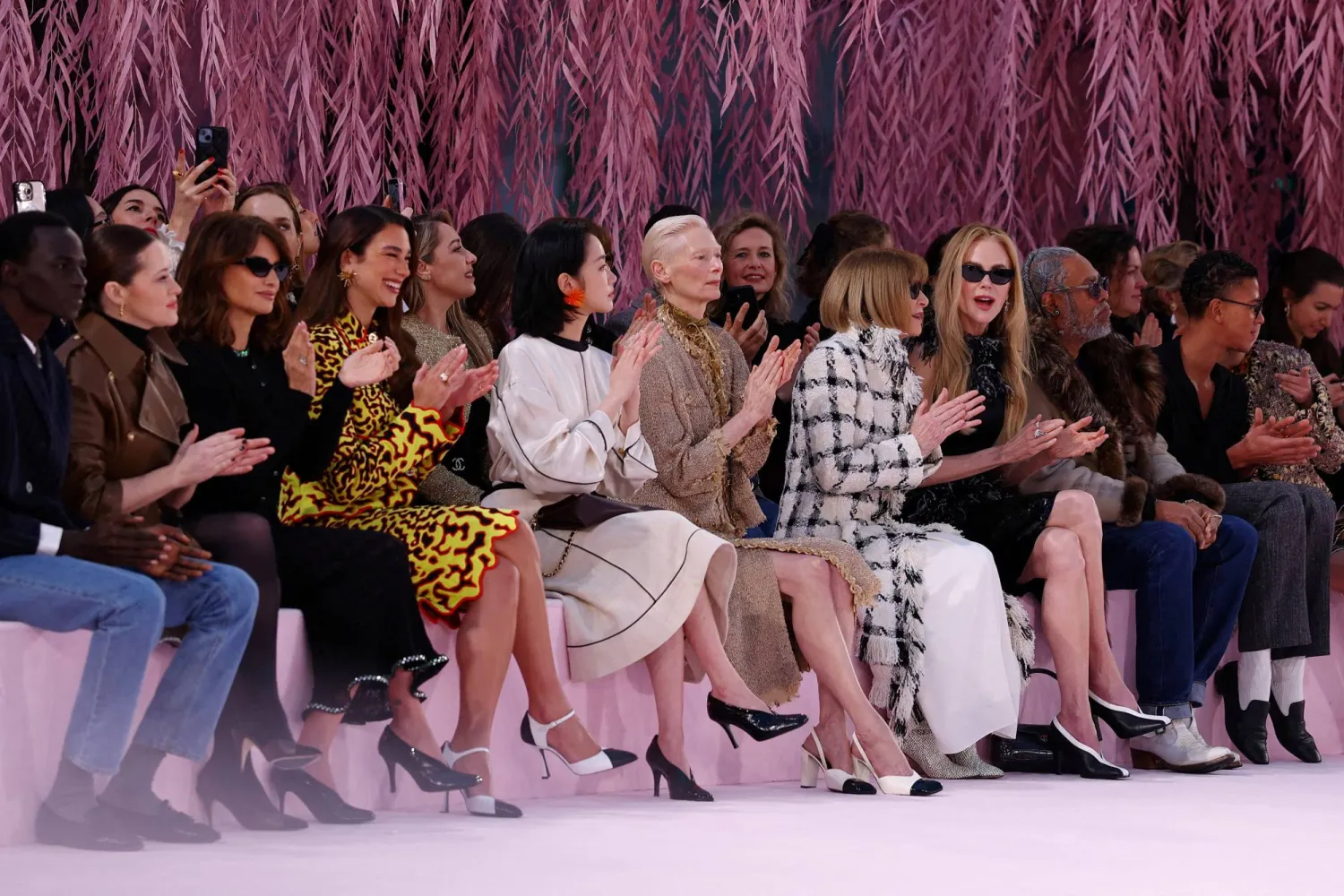
Claire Foy, Penelope Cruz, Dua Lipa, Kim Go-eun, Tilda Swinton, Anna Wintour, Nicole Kidman, Arthur Jafa, and Guillaume Diop attend the Chanel Haute Couture Spring/Summer 2026 collection show in Paris, France, January 27, 2026. REUTERS/Gonzalo Fuentes
TT

Phan Huy: The Fashion Prodigy Putting Vietnam on the Map

Claire Foy, Penelope Cruz, Dua Lipa, Kim Go-eun, Tilda Swinton, Anna Wintour, Nicole Kidman, Arthur Jafa, and Guillaume Diop attend the Chanel Haute Couture Spring/Summer 2026 collection show in Paris, France, January 27, 2026. REUTERS/Gonzalo Fuentes

Phan Huy has had a thrilling -- but quite stressful -- journey to making history at Paris Haute Couture Week on Thursday where he will become the youngest and the first Vietnamese designer to present a collection on the official calendar.

The early part of his week was spent anxiously waiting for his designs to arrive in France from Vietnam after they were held up in customs.

"I was very nervous," the soft-spoken 27-year-old told AFP on Tuesday just hours after his elaborate hand-made dresses were finally released, meaning he could begin fitting the models.

"We had a paperwork issue," his co-founder and brand chief executive Steven Doan, 40, explained.

The delays have complicated an already daunting task for the duo who have been catapulted into Paris Haute Couture Week and the fashion stratosphere, which some designers spend a lifetime hoping to enter.

They created the label less than three years ago, but have been fast-tracked into a field that includes corporate giants like Chanel, Dior or Armani, which have billions in annual sales.

Phan and Doan have more limited resources and prepared to unveil their designs on Thursday at 1230 GMT in a cramped basement apartment in western Paris.

"The first collection completely sold out and from that we reinvested," Doan explained. "We were very lucky that we've received a lot of orders from customers around the world, not just in Vietnam."

- 'A dream' -

The origins of the brand go back to Phan's final collection at the Ho Chi Minh City University which became a viral sensation, drawing attention from local celebrities including singers My Tam and Ho Ngoc Ha.

"It was a dream because I was a young student," said Phan, who only turned 27 this week.

Doan, a former model and a stylist in London, also reached out from his then-home in the British capital to suggest they work together.

"I was really struck by Huy's talent. In Vietnam there's a level of designing that is very similar and then when you see a different collection, it really stands out," Doan said.

While he grew up in the coastal city of Nha Trang, Phan hails from a village in the central Quang Tri province.

Phan credits his first interest in fabrics to his parents' curtain shop, where material was always abundant.

He would transform some of it into doll dresses.

"I was into fashion and clothing when I was six years old. I was always very picky with my own outfits," he explained.

- 'Fashion as well' -

The invitation to Paris Haute Couture Week came from France's FHCM fashion federation, which is the guardian of the country's highly protected Fashion Weeks and a key tastemaker.

Alongside the permanent French couture houses, the federation invites guest designers from around the world who have both the skill and commitment to handmade craft that form the basis of the business.

Phan Huy will take his place alongside other designers such as Rami Al Ali from Syria, Imane Ayissi from Cameroon and Hong Kong-born Robert Wun who have brought diversity and freshness to the program.

"I'm very happy and very proud because I can represent and bring the culture and creativity of Vietnam to the world," Phan said.

Doan stressed that their home country is known as a global manufacturing hub that produces mass-market clothes for Western brands.

"We want to prove that we can do fashion as well," he said.

The last Phan Huy collection, which was shown off-calendar in Paris last July, included references to everyday rural Vietnamese life from fans, fishing nets, straw bundles to banana leaves.

This upcoming Spring/Summer 2026 season has been inspired by Vietnam's former ruling Nguyen dynasty, notably Emperor Khai Dinh and the last empress consort, Nam Phuong, who both lived under colonial French rule.

"I want to be inspired by people like Empress consort Nam Phuong, King Khai Dinh, with their fashion style and the interaction between the West and the East," explained Phan.


Heat Catches Europe’s Fashion Industry Unprepared as Models Face the Sun in Fur and Wool

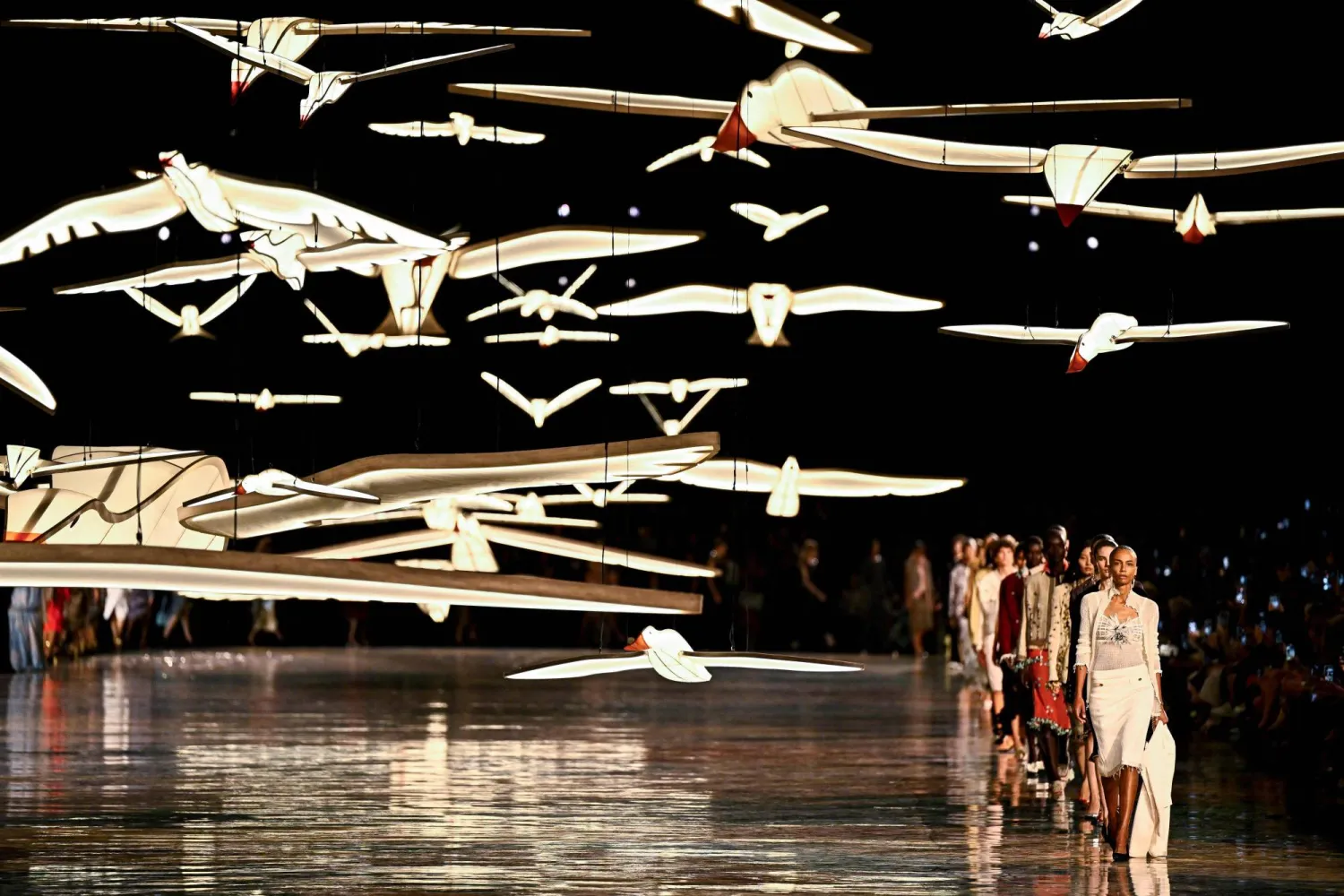
 A model presents a creation for Dior for the Menswear Spring/Summer 2027 collection fashion show as part of the Paris Fashion Week, in Paris on June 24, 2026. (AFP)
A model presents a creation for Dior for the Menswear Spring/Summer 2027 collection fashion show as part of the Paris Fashion Week, in Paris on June 24, 2026. (AFP)
TT

Heat Catches Europe’s Fashion Industry Unprepared as Models Face the Sun in Fur and Wool

 A model presents a creation for Dior for the Menswear Spring/Summer 2027 collection fashion show as part of the Paris Fashion Week, in Paris on June 24, 2026. (AFP)
A model presents a creation for Dior for the Menswear Spring/Summer 2027 collection fashion show as part of the Paris Fashion Week, in Paris on June 24, 2026. (AFP)

The most coveted accessory at the Paris Fashion Week shows this week was not a bag, a sneaker or a watch. It was an ice pack.

As a historic heat wave gripped the French capital, fashion houses fought to keep guests cool with mist machines, chilled towels, parasols and iced Evian on silver platters.

It wasn’t enough. Historic venues sweltered, guests were packed in tight, air conditioning was absent or inadequate and water ran short — at one house, organizers weighed serving none at all, having found only plastic bottles to hand out.

That mattered because Paris Fashion Week is not a minor cultural event.

It is one of France’s most visible export machines: six fashion seasons a year, global luxury houses, celebrities, editors, buyers and clients moving through an industry worth billions, often inside aging venues built for a cooler age.

This week raised a harder question: whether Paris should keep staging menswear and haute couture in the height of summer at all if climate change keeps bringing more frequent and intense heat waves.

“I honestly thought I was going to pass out,” said Ben Freeman, a London-based fashion critic from Australia.

Paris neared 41 degrees Celsius (106 Fahrenheit) during a heat wave that pushed France into emergency mode. Large parts of the country were under red alert, and hospitals were told to prepare for more heat-related cases.

Like the dusty Louvre, which cut hours and said its historic building “remains vulnerable and is not sufficiently adapted to climate change,” fashion week exposed a Paris problem as much as a fashion one: how to keep prestige institutions running when the weather no longer fits the building, the calendar or the crowd.

“Paris Fashion Week is the canary in the mine,” Freeman said.

The deeper contradiction was on the runway. At a Paris Fashion Week Men’s where the industry paid to imagine next summer could barely survive this one, houses cooled the people watching the shows, then dressed their models in unseasonable leather, neoprene, wool and fur.

“The calendar does not make any sense,” acknowledged Dior’s Jonathan Anderson, blaming fractured delivery cycles and a business that bears no relation to the season outside.

Some in the front row suggested that fashion week in the hottest months be scrapped.

“In Paris we don’t have AC everywhere, it’s quite rare,” said Thomas Levy, 24, a fashion student outside one show. “I don’t know how the models did it this week in some of the leather and knit coats."

The venues couldn’t cope

Pascal Morand, who heads France’s fashion federation, said organizers were following the government’s heat-wave plan.

“We are conscious of the challenges and very attentive to preserving the Fashion Week experience in this context of structural change,” he told The Associated Press.

The cause ran deeper — an industry whose fixed parts, from the buildings to the clothes, were designed for a cooler world and a customer who lives somewhere else.

The response included earlier shows, more water, more mist, more shade.

Fashion had already been warned about heat management. In March, Celine built an okoumé-wood pavilion in the courtyard of the Institut de France for a winter show, packed guests inside and still saw some leave because of the temperature.

Dior shifted its show to 9 a.m. from mid-afternoon, and Rick Owens moved his forward too. Yet inside Dior’s half-renovated mansion, water was scarce, there was no air conditioning, and some guests looked ready to pass out.

The strain had already shown at Milan Fashion Week last week. At Thom Browne’s first show there, giant misting fans ran and black umbrellas went out as guests waited out the midday sun.

Runways out of season

The clothes were made not for summer in Paris but for global markets and customers who pass the hottest months in refrigerated air. For them, a wool coat in June is not a contradiction. It is just a purchase.

Louis Vuitton presented wetsuits in neoprene, as well as coats in cashmere and fur.

At Saint Laurent, Anthony Vaccarello sent models through cooling clouds of vapor from a Fujiko Nakaya fog sculpture, then ran hot and cold at once: featherweight, unlined tailoring stripped down for the heat, against leather briefs, choker scarves and transparent shoes fogging with the wearer’s sweat.

Issey Miyake’s IM Men gave the clearest practical answer, handing out ice packs at the door, then bamboo-thread fabrics and shadowy prints that moved with the air rather than against it.

Rick Owens made the anxiety literal, sending models through mist in garments with fans whirring inside. One critic called it metaphor for climate catastrophe.

France’s uneasy cooling debate

Air conditioning remains culturally suspect in France — blamed for sore throats, dismissed as wasteful or bad for the planet — even as heat waves turn cooling into a question of public safety.

President Emmanuel Macron’s government leans toward shade, insulation and trees; environmentalists warn that mass cooling would only deepen the emissions driving the heat.

Europe is the fastest-warming continent, but its old cities are short on the cooling a hotter climate demands. From sport to tourism to construction, industries built around fixed calendars and outdoor crowds are being forced to adapt to heat that comes earlier, lasts longer and climbs higher.

The question is how much longer an aging 19th century Paris can host a summer spectacle where guests need ice packs to reach the finale.


H&M Reports Smaller-than-expected Q2 Operating Profit

People walk past a closed H&M clothing store in Omsk, Russia, March 3, 2022. REUTERS/Alexey Malgavko
TT

H&M Reports Smaller-than-expected Q2 Operating Profit

People walk past a closed H&M clothing store in Omsk, Russia, March 3, 2022. REUTERS/Alexey Malgavko

Swedish fashion retailer H&M reported on Thursday a smaller-than-expected March-May profit as it was unable to fully meet demand after reducing the amount of clothing it keeps in stock, and predicted unchanged June sales.

Operating profit in H&M's fiscal second quarter was unchanged year-on-year at 5.91 billion crowns ($606.5 million), having risen three quarters in a row, against a mean forecast in an LSEG poll of analysts of 6.38 billion.

Sales measured in local currencies were roughly ⁠flat in the quarter, ⁠and H&M predicted flat local-currency sales also in June, year-on-year. Reuters quoted CEO Daniel Erver as saying in a statement that quarterly sales were somewhat lower than planned.

"The profitability improvement and increased inventory productivity are in line with our long-term work to lay the foundations for sustainable and ⁠profitable growth. The tighter inventory management has, however, in some cases affected our ability to fully meet demand," he said.

Excluding a one-off restructuring cost of 679 million crowns, related to organizational changes, operating profit rose 11%. The quarter was closely watched for how H&M weathered the Iran war's impact on consumer confidence and costs.

Profit margins held up, with the gross margin widening to 56.6% from 55.4% a year earlier against an expected ⁠56.5%.

H&M ⁠said it expected markdowns in the third quarter to be on a similar level to a year ago.
Erver is trying to attract more shoppers with trendier styles and overhauled marketing.

On May 7, H&M launched a collection in collaboration with designer Stella McCartney.

While H&M's profit margins have been improving, sales have been more sluggish as cut-price online retailers like Shein compete for price-sensitive customers while Inditex's Zara dominates the upmarket end of fast fashion.


Valentino 2025 Sales, Core Profit Slide as Debt Edges Higher

A model presents a creation by Italian fashion house Valentino during the show "Interferenze" Fall/Winter 2026-2027 collection at Palazzo Barberini in Rome on March 12, 2026. (Photo by Alberto PIZZOLI / AFP)
TT

Valentino 2025 Sales, Core Profit Slide as Debt Edges Higher

A model presents a creation by Italian fashion house Valentino during the show "Interferenze" Fall/Winter 2026-2027 collection at Palazzo Barberini in Rome on March 12, 2026. (Photo by Alberto PIZZOLI / AFP)

Italian luxury group Valentino reported lower sales and earnings in 2025 from the previous year, while its net debt increased, a company filing showed on Tuesday.

Revenue fell 15% to €1.12 billion, ‌while earnings ‌before interest, taxes, ‌depreciation ⁠and amortization (EBITDA) dropped 41% ⁠to €174 million, the filing said.

Net debt rose to €1.13 billion at the end of 2025 from €1.08 billion a ⁠year earlier, it ‌added.

Valentino ‌is controlled by Qatar-backed Mayhoola, ‌which owns 70% of ‌the company, while French luxury group Kering holds the remaining 30%.

The fashion house ‌has been facing a slowdown in luxury demand ⁠and ⁠in November received a €100 million capital injection from Kering and Mayhoola to shore up its finances after it breached loan covenants earlier in the year.