
Stars Hit Paris Runways, but Fall’s Real Trend Was Dressing for Hard Times — and Real Life

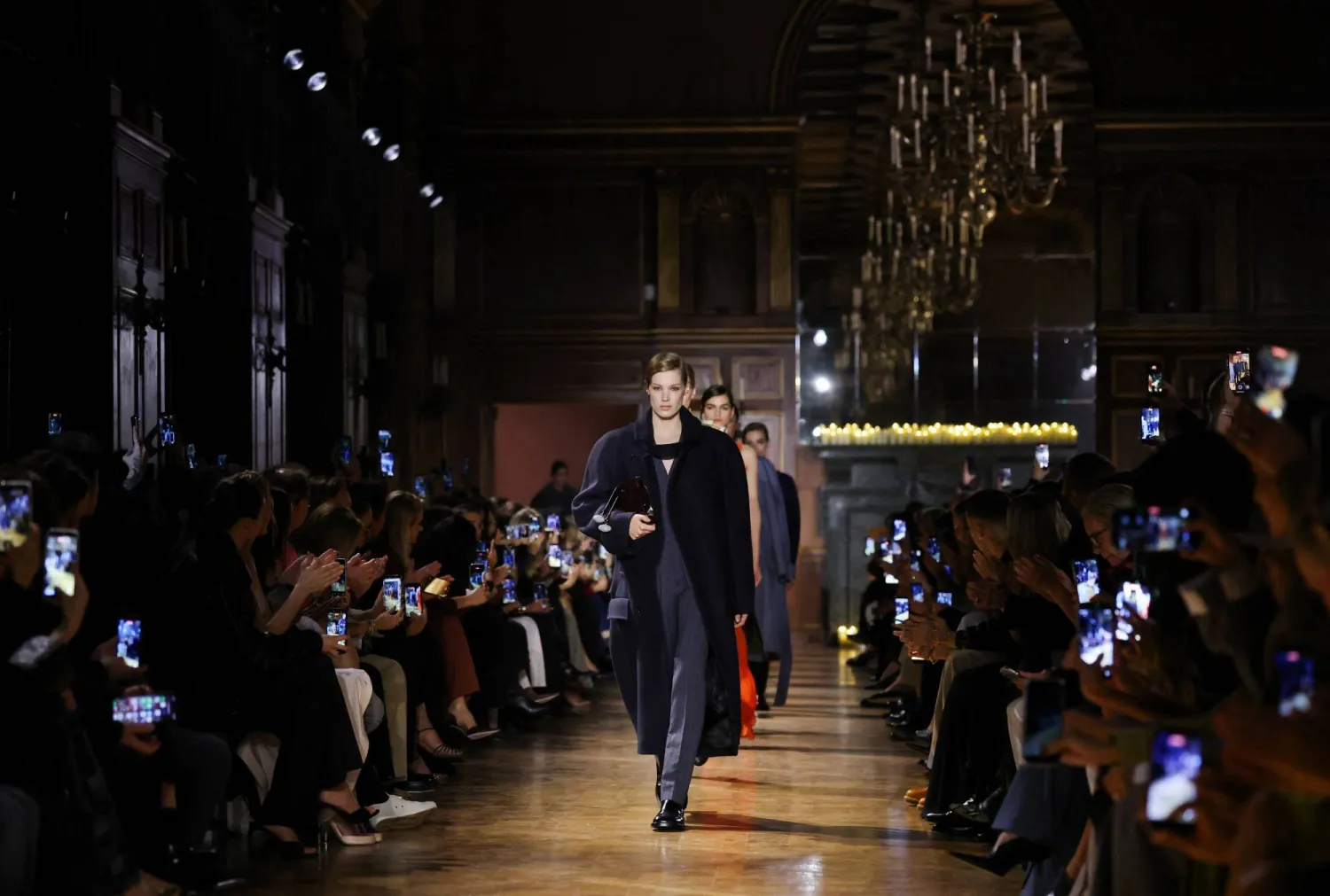
 Models present creations by designer Victoria Beckham as part of her Fall/Winter 2026/2027 Women's ready-to-wear collection show during Paris Fashion Week in Paris, France, March 6, 2026. (Reuters)
Models present creations by designer Victoria Beckham as part of her Fall/Winter 2026/2027 Women's ready-to-wear collection show during Paris Fashion Week in Paris, France, March 6, 2026. (Reuters)
TT

Stars Hit Paris Runways, but Fall’s Real Trend Was Dressing for Hard Times — and Real Life

 Models present creations by designer Victoria Beckham as part of her Fall/Winter 2026/2027 Women's ready-to-wear collection show during Paris Fashion Week in Paris, France, March 6, 2026. (Reuters)
Models present creations by designer Victoria Beckham as part of her Fall/Winter 2026/2027 Women's ready-to-wear collection show during Paris Fashion Week in Paris, France, March 6, 2026. (Reuters)

The celebrities came first, as they always do at the Paris runways.

After Oprah Winfrey stole the show in the opening stretch of the nine-day week, Naomi Watts and Kai Schreiber were at Balenciaga. Rooney Mara, Diane Kruger, Alexa Chung, Elizabeth Olsen and Yseult turned up at Givenchy.

Sarah Paulson and Tracee Ellis Ross watched Celine. Chappell Roan was at Vivienne Westwood and then at McQueen, where Myha’la and Sophie Thatcher were also there. Chanel was still to come Monday, and Louis Vuitton capping the season Tuesday.

But this week was about more than the front row.

Paris Fashion Week ’s biggest houses are in reset mode, and the designers leading them are trying to answer the same hard question: How do you dress people when the world feels dark, loud and unstable?

First came clothes built to shield: high collars, wrapped coats and strong tailoring.

Then came the silhouette: a sharper line, as designers moved away from years of oversized dressing and back toward shape.

The third trend was glamour that looked less polished. Hair was messier, makeup was smudged, clothes felt rougher and the mood was darker. Luxury no longer looked sealed off from real life.

Armor for anxious times Balenciaga led the first trend.

In his second show, Pierpaolo Piccioli built the collection around darkness and the search for light, working with “Euphoria” creator Sam Levinson on a set tied to the series’ return.

The mood pushed the collection toward unease.

On the runway, that became balloon bombers, cocoon backs, portrait collars and face-framing necklines that made the body look guarded.

Even the softer draped dresses kept that mood: these were clothes for a hard world.

Givenchy pursued a similar path and made it more personal. Sarah Burton’s third show felt like the one where her point of view clicked.

She was not proposing one ideal woman, but many women and many ways of being strong, with exact tailoring, strong coats, peplum hips, velvet, shearling and evening looks grounded in real life.

Burton's collection was about how women put themselves back together in the world they are living in. That idea gave the clothes force. They were polished, but still connected to it.

Junya Watanabe pushed the idea furthest, turning gloves, motorcycle gear and emergency blankets into couture-like forms.

McQueen did the same, with Seán McGirr talking about paranoia, perfection and the strain of always being seen. His slashed leather trousers, low-slung minis and chainmail-like textures suggested exposure, but also defense.

The second big trend was silhouette.

After years of volume, slouch and oversized ease, Paris is moving back toward the body.

Celine made that shift most clearly. Michael Rider’s third outing felt like a designer settling into his idea.

He wanted clothes for living in. His coats and suits sat closer to the torso. His trousers kicked out in cropped flares. His menswear came in long, narrow overcoats that looked crisp rather than inflated.

Rider also suggested that the long dominance of oversized dressing may be breaking.

His version of sharpness was not stiff or nostalgic. It had ease, but it also had character.

Classic clothes came back with a little edge: smaller details, stranger proportions, a more exact line.

That made Celine a clear mood-setter.

Paris runways were after presence, just no longer through sheer size.

You could see that shift elsewhere, too. Burton relaxed the strict hourglass she established earlier at Givenchy, but she did not give up shape.

Piccioli used collars and cocoon backs to frame the figure rather than bury it. McQueen’s low-rise minis and neat boots pointed the same way.

The season’s line was stronger, cleaner and closer to the body. After years of volume, Paris was asking for something more exposed. Stand up. Be seen. Take shape.

The third trend was less polished glamour.

Designers still wanted beauty, but they wanted friction too.

Rider evoked the messier inner lives beneath beautiful clothes.

Piccioli used shadow to keep darkness close.

Burton filled Givenchy with distinct female characters instead of one polished ideal.

Paris repeatedly rejected sterile luxury. Taken together, the strongest shows suggested a week less interested in escape than in resilience. The best designers were not trying to make the world disappear.

They were trying to arm women for it.


Hermes Shows Biker Looks in Dusky Colors for Fall/Winter Collection in Paris

A model presents a creation for Hermes for the Women's Ready to Wear Fall/Winter 2026-2027 collection fashion show as part of the Paris Women Fashion Week, in Paris, on March 7, 2026. (AFP)
TT

Hermes Shows Biker Looks in Dusky Colors for Fall/Winter Collection in Paris

A model presents a creation for Hermes for the Women's Ready to Wear Fall/Winter 2026-2027 collection fashion show as part of the Paris Women Fashion Week, in Paris, on March 7, 2026. (AFP)

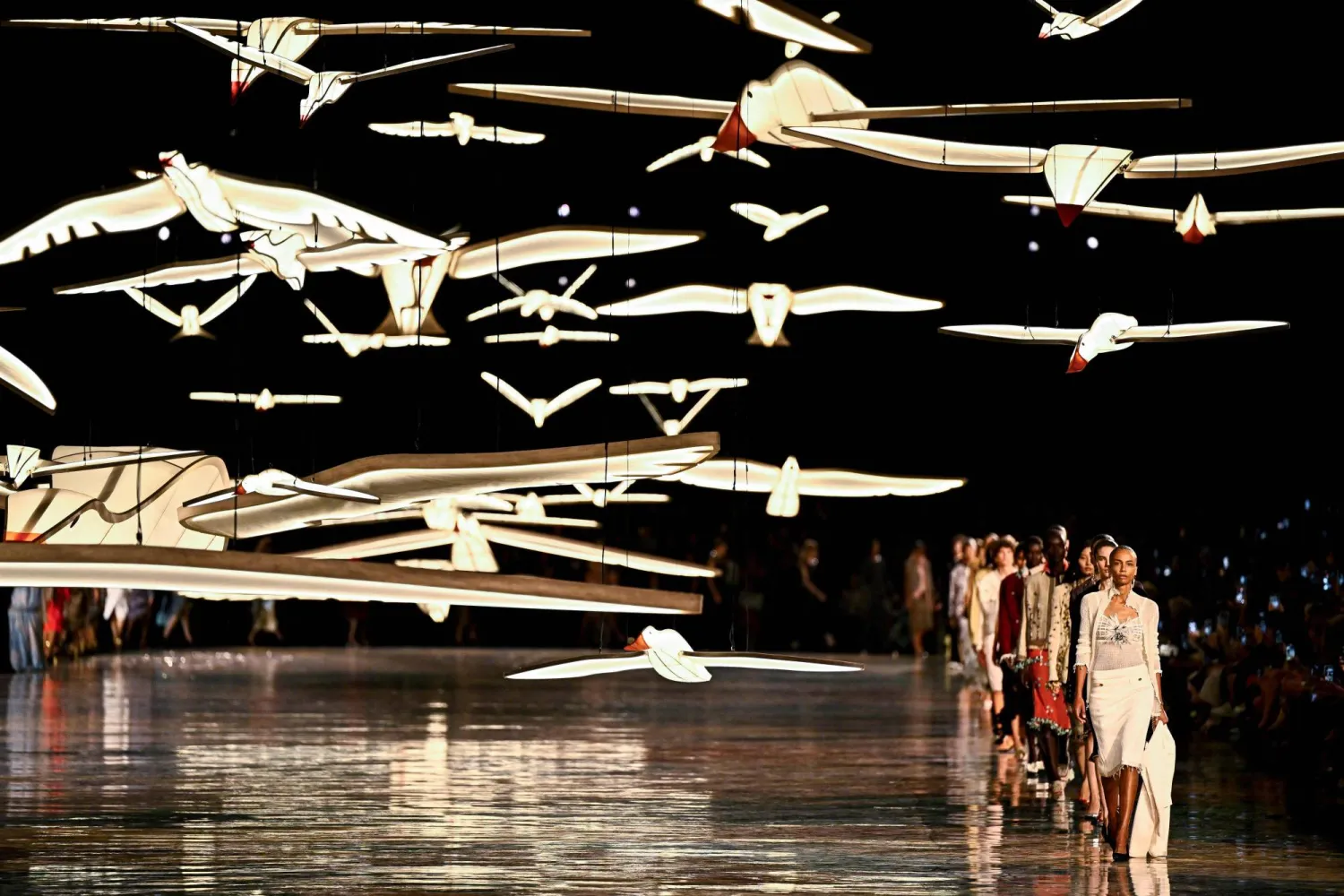
‌Hermes designer Nadege Vanhee took inspiration from the ambience of twilight for a fall/winter collection featuring fluid leather coats, zip-front mini dresses, and biker shorts.

Guests entering the Garde Republicaine, the sprawling barracks of Paris' mounted gendarmes, stepped onto a floor of thick moss extending across the show space.

Models emerged from a luminous ‌circular opening ‌in the far wall evoking the ‌moon ⁠and marched along ⁠a winding raised catwalk, above the vegetation.

The looks came in dusky blue and green tones, with pops of orange, oxblood and yellow.

Tight dresses in dark leather had asymmetrical zips revealing a contrasting ⁠shirt underneath, while long brown overcoats ‌featured huge ‌sheepskin collars.

Aviator jackets and trench coats were paired ‌with glossy cycle shorts made out ‌of lambskin.

Ostrich leather was used throughout for jackets, jodhpurs, and an orange biker-inspired jumpsuit that was zipped up the front and belted ‌at the waist.

Tailoring featured double-breasted jackets and cigarette trousers in browns ⁠and ⁠iridescent burgundy.

Vanhee has been womenswear creative director since 2014 for Hermes, which caters to the ultra-wealthy and tightly controls access to its products, with years-long waiting lists for its most exclusive handbags.

Hermes is one of many major luxury brands showing at Paris Fashion Week, which started on Monday and runs through March 11, with Chanel and Louis Vuitton catwalks still to come.


Victoria Beckham Shows Sheer Dresses and Sharp Suits at Paris Fashion Week

FILED - 03 September 2019, United Kingdom, London: David Beckham (L), Victoria Beckham and Brooklyn Beckham arrive at the GQ Men of the Year Awards 2019 in association with Hugo Boss at the Tate Modern. Photo: Matt Crossick/PA Wire/dpa
TT

Victoria Beckham Shows Sheer Dresses and Sharp Suits at Paris Fashion Week

FILED - 03 September 2019, United Kingdom, London: David Beckham (L), Victoria Beckham and Brooklyn Beckham arrive at the GQ Men of the Year Awards 2019 in association with Hugo Boss at the Tate Modern. Photo: Matt Crossick/PA Wire/dpa

Victoria Beckham presented sculptural gowns in sheer fabrics, tightly cut suits and voluminous coats in Paris on Friday for a fall/winter 2026 collection that played with shape and texture.

Dresses in dark blues and greens featured bodices of three-dimensional rosettes, a motif that repeated across skirts, contrasting with sober suits in navy and ‌black, said Reuters.

Large overcoats ‌were paired with sheer ‌white ⁠skirts or drainpipe trousers, ⁠while knitwear had giant collars and cut-outs revealing the models' backs.

According to the show notes, the collection was inspired by the work of Art Deco artist Tamara de Lempicka, famous for ⁠her cubist portraits of aristocrats in ‌sumptuous clothing.

Victoria Beckham's ‌husband David and the couple's children Romeo, Cruz, ‌and Harper were on the ‌front row. Their eldest, Brooklyn, was conspicuously absent after he went public in January with accusations against his parents, laying bare a family ‌feud for the first time.

Beckham founded her brand, which sells ⁠dresses ⁠between $950 and $2,500, in 2008 and launched Victoria Beckham Beauty in 2019.

Guests at the show were gifted bottles of her recently launched perfume, Portofino '97, inspired by a holiday the British couple took when they were still a secret item.

Paris Fashion Week, which started on Monday and runs through March 11, features big-name brands including Chanel, Dior, Hermes, Louis Vuitton, and Saint Laurent.


Italy's Agnona Brand: Lamb among the Fashion Wolves

Italy's Agnona Brand: Lamb among the Fashion Wolves
TT

Italy's Agnona Brand: Lamb among the Fashion Wolves

Italy's Agnona Brand: Lamb among the Fashion Wolves

At Milan Fashion Week, headlines go to splashy names, over-the-top fashions and celebrities posing by catwalks.

But behind the scenes, Italy's smaller and medium-sized brands, the often family-owned lifeblood of the industry, are doggedly defending their craft, striving to keep alive long traditions of excellence.

One of them, Agnona, began in 1953 as a wool mill in Italy's northern Piedmont region, producing luxurious textiles in natural fabrics like cashmere, lambswool and angora that supplied top haute couture houses in Paris, from Christian Dior to Givenchy to Yves Saint Laurent.

Acquired in 1999 by the Ermengildo Zegna Group, Agnona switched from textiles to apparel and was sold in 2020 to Zegna family members Stefano Aimone, the chief executive and creative director, and his father Roberto.

Agnona, which is opening its first flagship store in Milan next month, envisions a global network of owned and franchised stores in future.

Stefano Aimone sat down with AFP to explain the challenges facing smaller names amid competition from the big fashion conglomerates, changes in consumer habits and the race towards retail.

- 'Overwhelmed by demand' -

"If you want to aim for quality and certain types of craftsmanship you have to stay here in our Italian boot. But many companies have closed. Many closed because of Covid, post-Covid they were absorbed into larger groups because costs went up, prices fluctuated, they had periods of no sales -- no work at all -- followed by excess work. Financially they didn't have the reserves.

"The businesses that remain are now extremely overwhelmed by demand from the big French groups and the Italian brands.

"The problem isn't just cut-and-sew, it's also the production of materials, because everything cascades down... the dye houses that are still around are clogged up, which creates delays, and delays weaken the quality of the entire industrial process."

- 'Made in Italy' -

"I'd say 'Made in Italy' is becoming relatively less important to them (customers); the customer now identifies more with the brand itself, with its values, with what the brand represents...

"Made in Türkiye, Made in Italy, Made in France -- it can be important, but it's definitely not as important as it once was, because brands have been very active in communicating many other values they embody, which provide justification beyond geography.

"And in a way that's right, because a brand isn't just its product -- it's also what it stands for and what it does beyond the product itself."

- 'Sowing seeds' -

"We're just under 15 million euros in revenue but we expect to reach 20 million and beyond within three years.

"We still have many markets that we haven't even started talking to, for example, all of China, the entire Middle East, all of Latin America, the whole APAC region including Australia.

"Since we took over the brand, there have been years of rebuilding: not only rebuilding our premises -- the industrial site and the headquarters -- but working on the collection.

"We introduced menswear, so we focused heavily on internal work, and we didn't necessarily want to push revenue right away. Because if you go out to market without a solid product, you risk ruining everything you're trying to achieve -- it can be counterproductive.

"So those were years of sowing seeds, and now that we're ready, we're beginning to address the global market."