October War: Israel Hinted to the US at Using Nuclear Weapons

Israeli Minister of Defense Moshe Dayan and US Secretary of State Henry Kissinger (AFP)
TT

October War: Israel Hinted to the US at Using Nuclear Weapons

Israeli Minister of Defense Moshe Dayan and US Secretary of State Henry Kissinger (AFP)

The October 1973 war, a defining moment in the Arab Israeli conflict, continues to be a subject of intense scrutiny for both Arab and foreign researchers.

Decades since its outbreak, new information and previously classified documents have come to light, adding complexity and controversy to the narrative of this historic conflict.

Two distinct narratives have emerged, each presenting a vastly different perspective on the War.

The first narrative portrays it as a decisive military victory for the Arab armies, backed by regional support and underscored by the significance of oil as a diplomatic weapon.
The perspective emphasized the role of Arab military forces in challenging the Israeli tanks and fighter jets.

On the other hand, the Israeli narrative praises Tel Aviv's response to the surprise attack on what they call "Yom Kippur."

It highlights Israel's reaction as it faced the unexpected assaults by Egyptian and Syrian forces in the Sinai Peninsula and the Golan Heights.

However, amid these conflicting narratives, questions persist about the proper sequence of events during this pivotal war.

As the 50th anniversary approaches and Egypt and Syria have yet to release their classified documents, there is an increasing urgency to revisit and reassess the war records, particularly regarding communications between the US and world leaders.

- Failure or Overconfidence?

The Israeli surprise from the sudden Arab attack on October 6, 1973, sent shockwaves through various military fronts, creating significant confusion.

It was to such an extent that US Secretary of State Henry Kissinger found himself seeking answers about whether Washington had received any prior warnings about the impending war that were disregarded.

A classified document numbered 63, summarizing meetings at the US State Department on October 23, 1973, sheds light on the situation.

It reveals that Kissinger personally reviewed all pre-war intelligence, outlining a strategy rooted in the unique US-Israeli relationship.

The Director of Intelligence at the US State Department, Ray Cline, attributed the failure of intelligence to predict and prevent the war to their reliance on Israeli assessments.

Signs indicating imminent military action by Egypt and Syria had accumulated as early as September 1973.

Back then, King Hussein of Jordan warned Israeli Prime Minister Golda Meir that the Syrian army was in position and ready for action.

- Hours before the Battle

As the clock approached the afternoon of October 6, 1973, the US National Security Council (NSC) held an emergency session to discuss the evolving situation in the Middle East.

A memo from NSC member William Quandt reveals the chaos of that meeting and the heated debates about the seriousness of the Egyptian-Syrian attack and the Soviet evacuation of families from Cairo and Damascus.

The document also highlights an intelligence consensus that Arab states were not prepared to wage war against Israel as long as the military balance remained uneven.

However, the military balance would soon shift dramatically with the outbreak of the conflict.

- Soviet Message

The Soviet Union sent a message to Nixon and Kissinger on that fateful day. The message conveyed that Soviet Premier Leonid Brezhnev, like the US, was surprised by Egypt and Syria's decision to go to war.

Brezhnev considered this a significant miscalculation and expressed concerns about a catastrophic military or political event for the allies, Egypt and Syria.

- Initial Assessment

Considering the time difference, while it was afternoon Washington time, the National Security Council was meeting regarding developments in the Middle East.

"As Israelis observed Yom Kippur, the Egyptians and Syrians launched their attacks. Just after 2:00 PM (Cairo time), 100,000 Egyptian troops and 1,000 tanks engulfed Israeli forces on the east bank of the Suez Canal while 35,000 Syrian troops and 800 tanks broke through Israeli positions on the Golan Heights," according to the meeting memo.

In the meeting, attendees discussed several options for dealing with risks arising from the cutbacks in Arab oil production and the consequences of a heavy defeat for the Arabs.

Kissinger's advisers proposed reducing Soviet influence, provided that it could not result from a "major Arab defeat" because that could endanger US interests in the region, destroy the possibility of a settlement, and weaken "moderate" Arab regimes.

The advantages of finding ways to "minimize" Arab "loss of face" required serious consideration.

- Kissinger and Eban

Another US memorandum documents a conversation between Kissinger and Israeli Foreign Minister Abba Eban at 9:07 AM, during which the US official indirectly assured that Washington would not immediately go to the Security Council.

Later, Eban spoke with Kissinger's executive assistant, Lawrence Eagleburger, and registered his appreciation that Kissinger would defer UN action so that Israel had "time to recoup its position."

During this time, it was clear to the US that the Soviets were interested in a cease-fire, and so was President Hafez al-Assad, if the fighting stopped, he would have control of the Golan Heights.

Sadat, however, was not ready to halt until he had a stronger position on the Sinai.

- China exchanges

By 9 PM in Washington, Kissinger conversed with Chinese Ambassador Huang Zhen. He told the Chinese diplomat that Washington's "strategic objective is to prevent the Soviets from getting a dominant position in the Middle East."

Kissinger wanted to demonstrate to the Arab states that "whoever gets help from the Soviet Union cannot achieve his objective."

The Chinese were sympathetic to the Arab cause, so Kissinger had to be able to ensure progress on Arab grievances.

Perhaps this prompted Kissinger to attempt to reassure the Chinese ambassador, stating that it would be possible for Washington to offer security guarantees for "new borders after the settlement."

- The Second Day

Despite half a century since the war, the first page of a document between Kissinger and Israeli Ambassador Simcha Dinitz is primarily illegible, except for a few scraps on US supply of Sidewinder (air-to-air) missiles and bomb racks.

However, it provides interesting details on the early moments of the war, such as Israeli cabinet debates on whether to preempt or not.

Apparently, advice that Kissinger had given in the past--"whatever happens, don't be the one that strikes first"--played no small part in Meir's thinking.

- A miserably tough day

During the first day of the fighting, Arab forces made significant gains. Given the tremendous strategic value of the Golan Heights, so close to Israeli population centers, the Israelis started to throw in units there first.

To keep officials abreast of developments, the State Department's Middle East Task Force, lodged at the Department's basement Operations Center, regularly issued "sitreps" on military and political consequences.

At the end of the second day of the fighting, it showed a grim situation: "major losses on both sides," a "miserably tough day" for the Israelis.

- Pivotal Moment

The ninth and tenth of October 1973 can be considered a pivotal battle moment.

The Egyptian and Syrian armies surprised everyone with a resounding defeat of Israeli tanks, which had attempted to regain control of the situation in Sinai and the Golan Heights.

Early Tuesday morning, Kissinger received a call from Dinitz that Israeli forces were in a more "difficult" position. A counter-offensive launched the previous day had failed with significant losses.

Dinitz acknowledged that the Israelis had lost over 400 tanks to the Egyptians and 100 to the Syrians.

He explained that Egyptian armor and surface-to-air missiles were taking their toll in the air and ground battle, and the Israeli cabinet had decided that it had to "get all equipment and planes by air that we can."

Kissinger, who had assumed that Tel Aviv could recapture territory without significant aid infusions, was perplexed by the bad news--"Explain to me, how could 400 tanks be lost to the Egyptians?"

Dinitz and Kissinger met privately, without a notetaker, to discuss Meir's request for a secret meeting with Nixon to plea for military aid, a proposal that Kissinger quickly dismissed because it would strengthen Moscow's influence in the Arab world.

- Nuclear blackmail
In a remarkable turn, the document also reveals that to underline the situation's urgency, "Dinitz may have introduced an element of nuclear blackmail into the private discussion."

Meir had rejected military advice for nuclear weapons use. She had ordered at least the arming and alerting of Jericho missiles to influence Washington.

According to the document, "Kissinger has never gone on record on this issue, and no US documentation on the US Israeli nuclear posture during the war has been declassified."

Later, Kissinger was responsive to the pleas for more assistance.

In an evening meeting on the same day, Kissinger informed Dinitz that Nixon had approved the list of "consumable" items sought by the Israelis (except for laser bombs) that would be shipped.

"Moreover, aircraft and tanks would be replaced if the need became acute."

To ensure that the US role had low visibility, Israeli cargo plans would have the El Al markings painted out.

Moreover, the discussion of arrangements to charter US commercial aircraft for shipping war material began on Washington's side.

During that meeting, Dinitz had better news to report progress on the Golan Heights and the massive destruction of Syrian tanks.

- Oil Threat

A report prepared jointly by the US State Department and the National Security Council states that while Arab and Israeli ground forces were "sparring and regrouping," Syrian and Israeli air forces were engaged in battle, and the Israeli Air Force bombed the international airport at Damascus.

Meanwhile, Greek, Israeli, and US intelligence picked up signs that the Soviets were airlifting supplies to their Arab clients.

"The Israelis speculate the main cargo is missiles."

The Soviets had made their airlift decision early in the war, believing that extensive support could enhance Moscow's prestige in the Arab world.

The decision had significant implications for the course of the war; not only did the airlift encourage the Egyptians and Syrians to continue fighting, but it came to be seen in Washington as a "challenge" to US power.

The report also mentions that the US press had already observed an Israeli Boeing 707 picking up missiles and bombs in Virginia.

Moreover, Saudi Arabia's Minister of Petroleum, Sheikh Ahmed Zaki Yamani, suggested that "the US military supply of Israel would have a cost cutback in oil production."



Bleak Future for West Bank Pupils as Budget Cuts Bite

Private tutoring makes up some, but not all of the teaching shortfall for the Hajj twins. Jaafar ASHTIYEH / AFP
TT

Bleak Future for West Bank Pupils as Budget Cuts Bite

Private tutoring makes up some, but not all of the teaching shortfall for the Hajj twins. Jaafar ASHTIYEH / AFP

At an hour when Ahmad and Mohammed should have been in the classroom, the two brothers sat idle at home in the northern West Bank city of Nablus.

The 10-year-old twins are part of a generation abruptly cut adrift by a fiscal crisis that has slashed public schooling from five days a week to three across the Israeli-occupied Palestinian territory.

The Ramallah-based Palestinian Authority's deepening budget shortfall is cutting through every layer of society across the West Bank.

But nowhere are the consequences more stark than in its schools, where reduced salaries for teachers, shortened weeks and mounting uncertainty are reshaping the future of around 630,000 pupils.

Unable to meet its wage bill in full, the Palestinian Authority has cut teachers' pay to 60 percent, with public schools now operating at less than two-thirds capacity.

"Without proper education, there is no university. That means their future could be lost," Ibrahim al-Hajj, father of the twins, told AFP.

The budget shortfall stems in part from Israel's decision to withhold customs tax revenues it collects on the Palestinian Authority's behalf, a measure taken after the war in Gaza erupted in October 2023.

The West Bank's economy has also been hammered by a halt to permits for Palestinians seeking work in Israel and the proliferation of checkpoints and other movement controls.

- 'No foundation' for learning -

"Educational opportunities we had were much better than what this generation has today," said Aisha Khatib, 57, headmistress of the brothers' school in Nablus.

"Salaries are cut, working days are reduced, and students are not receiving enough education to become properly educated adults," she said, adding that many teachers had left for other work, while some students had begun working to help support their families during prolonged school closures.

Hajj said he worried about the time his sons were losing.

When classes are cancelled, he and his wife must leave the boys alone at home, where they spend much of the day on their phones or watching television.

Part of the time, the brothers attend private tutoring.

"We go downstairs to the teacher and she teaches us. Then we go back home," said Mohammad, who enjoys English lessons and hopes to become a carpenter.

But the extra lessons are costly, and Hajj, a farmer, said he cannot indefinitely compensate for what he sees as a steady academic decline.

Tamara Shtayyeh, a teacher in Nablus, said she had seen the impact firsthand in her own household.

Her 16-year-old daughter Zeena, who is due to sit the Palestinian high school exam, Tawjihi, next year, has seen her average grades drop by six percentage points since classroom hours were reduced, Shtayyeh said.

Younger pupils, however, may face the gravest consequences.

"In the basic stage, there is no proper foundation," she said. "Especially from first to fourth grade, there is no solid grounding in writing or reading."

Irregular attendance, with pupils out of school more often than in, has eroded attention spans and discipline, she added.

"There is a clear decline in students' levels -- lower grades, tension, laziness," Shtayyeh said.

- 'Systemic emergency' -

For UN-run schools teaching around 48,000 students in refugee camps across the West Bank, the picture is equally bleak.

The territory has shifted from "a learning poverty crisis to a full-scale systemic emergency," said Jonathan Fowler, spokesman for the UN agency for Palestinian refugees, UNRWA.

UNRWA schools are widely regarded as offering comparatively high educational standards.

But Fowler said proficiency in Arabic and mathematics had plummeted in recent years, driven not only by the budget crisis but also by Israeli military incursions and the lingering effects of the Covid-19 pandemic.

"The combination of hybrid schooling, trauma and over 2,000 documented incidents of military or settler interference in 2024-25 has resulted in a landscape of lost learning for thousands of Palestinian refugee students," he said.

UNRWA itself is weighing a shorter school week as it grapples with its own funding shortfall, after key donor countries - including the United States under President Donald Trump - halted contributions to the agency, the main provider of health and education services in West Bank refugee camps.

In the northern West Bank, where Israeli military operations in refugee camps displaced around 35,000 people in 2025, some pupils have lost up to 45 percent of learning days, Fowler said.

Elsewhere, schools face demolition orders from Israeli authorities or outright closure, including six UNRWA schools in annexed east Jerusalem.

Teachers say the cumulative toll is profound.

"We are supposed to look toward a bright and successful future," Shtayyeh said. "But what we are seeing is things getting worse and worse."


Security Issues Complicate Tasks of ‘Technocratic Committee’ in Gaza Strip

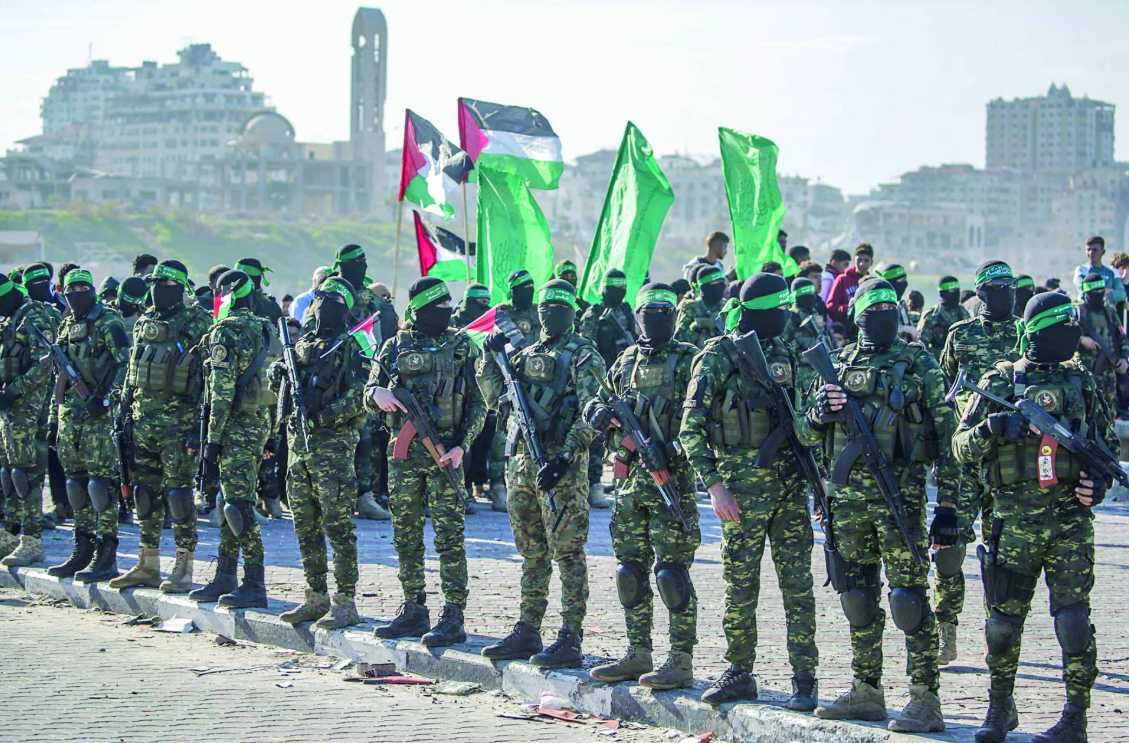
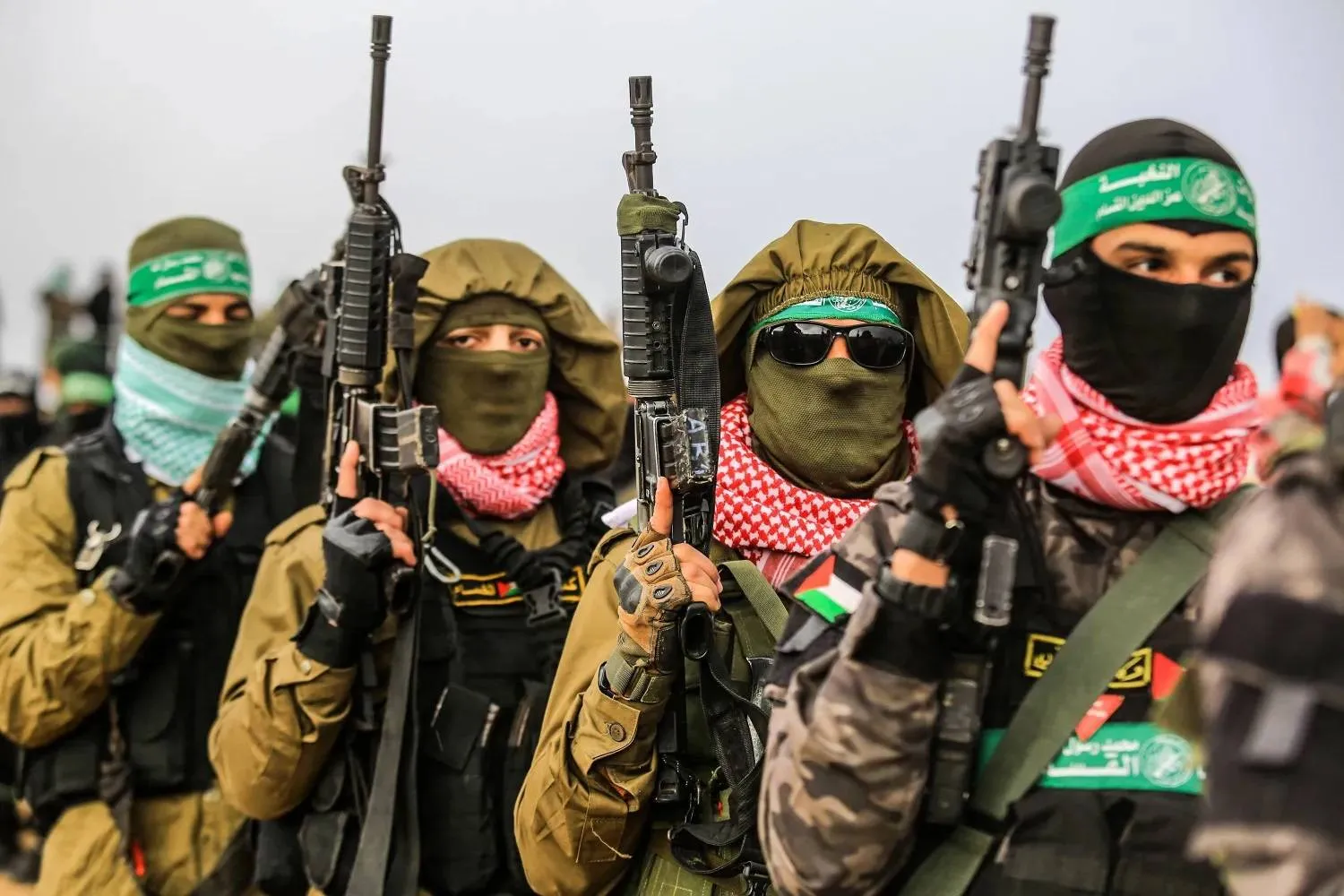
Fighters from the Izz ad-Din al-Qassam Brigades, the armed wing of Hamas, in Khan Younis, Gaza Strip, Feb. 20, 2025. (dpa)
TT

Security Issues Complicate Tasks of ‘Technocratic Committee’ in Gaza Strip

Fighters from the Izz ad-Din al-Qassam Brigades, the armed wing of Hamas, in Khan Younis, Gaza Strip, Feb. 20, 2025. (dpa)

The Palestinian National Committee tasked with administering the Gaza Strip is facing a number of challenges that go beyond Israel’s continued veto on its entry into the enclave via the Rafah crossing. These challenges extend to several issues related to the handover of authority from Hamas, foremost among them the security file.

Nasman and the Interior Ministry File

During talks held to form the committee, and even after its members were selected, Hamas repeatedly sought to exclude retired Palestinian intelligence officer Sami Nasman from the interior portfolio, which would be responsible for security conditions inside the Gaza Strip. Those efforts failed amid insistence by mediators and the United States that Nasman remain in his post, after Rami Hilles, who had been assigned the religious endowments and religious affairs portfolio, was removed in response to Hamas’s demands, as well as those of other Palestinian factions.

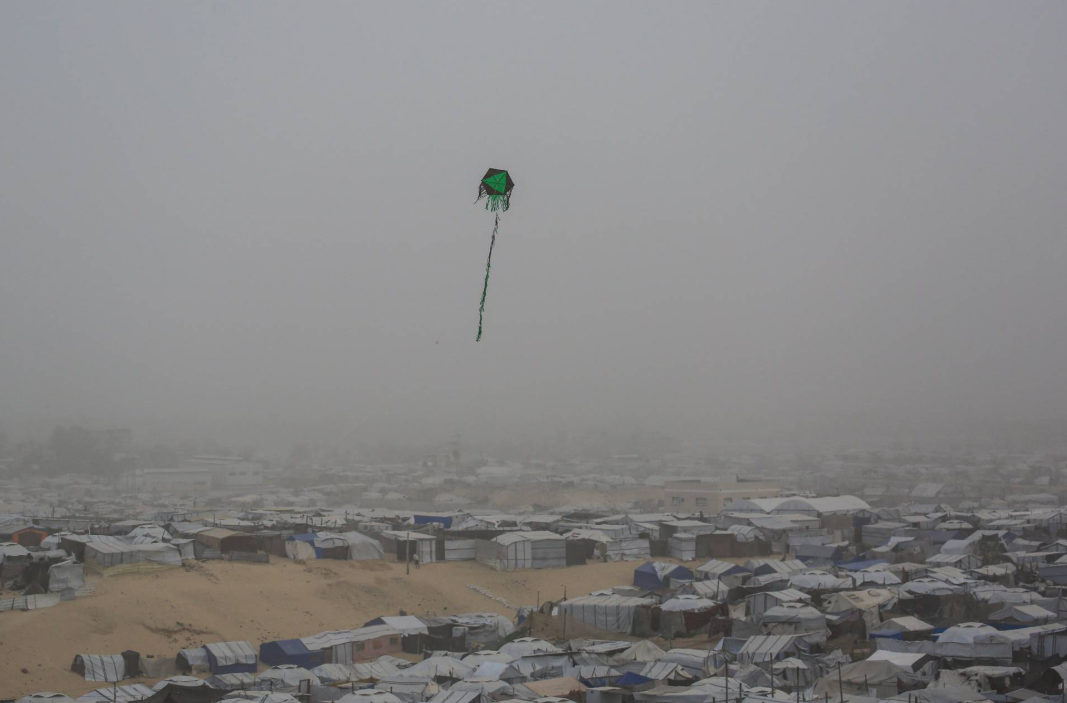
A kite flies over a camp for displaced people in Khan Younis, in the Gaza Strip, on Saturday. (AFP)

Sources close to the committee told Asharq Al-Awsat that Hamas continues to insist that its security personnel remain in service within the agencies that will operate under the committee’s supervision. This position is rejected not only by the committee’s leadership, but also by the executive body of the Peace Council, as well as other parties including the United States and Israel.

The sources said this issue further complicates the committee’s ability to assume its duties in an orderly manner, explaining that Hamas, by insisting on certain demands related to its security employees and police forces, seeks to impose its presence in one way or another within the committee’s work.

The sources added that there is a prevailing sense within the committee and among other parties that Hamas is determined, by all means, to keep its members within the new administrative framework overseeing the Gaza Strip. They noted that Hamas has continued to make new appointments within the leadership ranks of its security services, describing this as part of attempts to undermine plans prepared by Sami Nasman for managing security.

The new logo of the National Committee for the Administration of Gaza, published on its page on X.

Hamas Denies the Allegations

Sources within Hamas denied those accusations. They told Asharq Al-Awsat that Sami Nasman, “as we understand from multiple parties, does not plan to come to Gaza at this time, which raises serious questions about his commitment to managing the Interior portfolio. Without his presence inside the enclave, he cannot exercise his authority, and that would amount to failure.”

The sources said the movement had many reservations about Nasman, who had previously been convicted by Hamas-run courts over what it described as “sabotage” plots. However, given the current reality, Hamas has no objection to his assumption of those responsibilities.

The sources said government institutions in Gaza are ready to hand over authority, noting that each ministry has detailed procedures and a complete framework in place to ensure a smooth transfer without obstacles. They stressed that Hamas is keen on ensuring the success of the National Committee for the Administration of Gaza.

The sources did not rule out the possibility that overarching policies could be imposed on the committee, which would affect its work and responsibilities inside the Gaza Strip, reducing it to merely an instrument for implementing those policies.

Hamas has repeatedly welcomed the committee’s work in public statements, saying it will fully facilitate its mission.

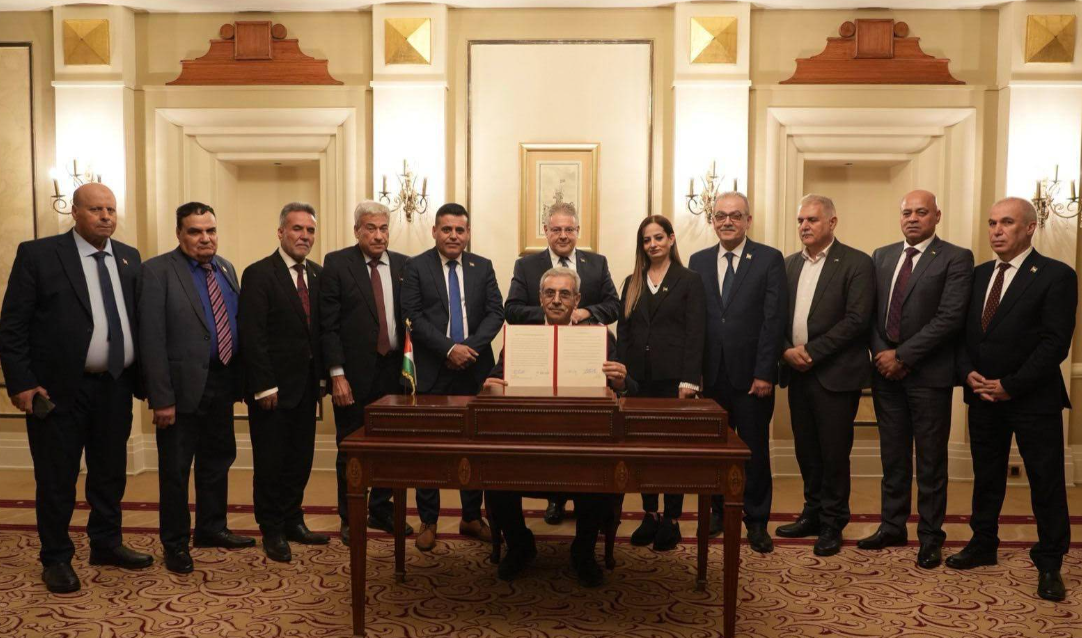
A meeting of the Gaza Administration Committee in Cairo. (File Photo – Egyptian State Information Service)

The Committee’s Position

In a statement issued on Saturday, the National Committee for the Administration of Gaza said that statements and declarations from inside the enclave regarding readiness to transfer the management of all institutions and public facilities represent a step in the interest of citizens and pave the way for the committee to fully assume its responsibilities during the transitional phase.

The committee said that the announcement of readiness for an orderly transition constitutes a pivotal moment for the start of its work as the interim administration of the Gaza Strip, and a real opportunity to halt the humanitarian deterioration and preserve the resilience of residents who have endured severe suffering over the past period, according to the text of the statement.

“Our current priority is to ensure the unimpeded flow of aid, launch the reconstruction process, and create the conditions necessary to strengthen the unity of our people,” the committee said. “This path must be based on clear and defined understandings characterized by transparency and implementability, and aligned with the 20-point plan and UN Security Council Resolution 2803.”

Fighters from Hamas ahead of a prisoner exchange, Feb. 1, 2025. (EPA)

The committee stressed that it cannot effectively assume its responsibilities unless it is granted full administrative and civilian authority necessary to carry out its duties, in addition to policing responsibilities.

“Responsibility requires genuine empowerment that enables it to operate efficiently and independently. This would open the door to serious international support for reconstruction efforts, pave the way for a full Israeli withdrawal, and help restore daily life to normal,” it said.

The committee affirmed its commitment to carrying out this task with a sense of responsibility and professional discipline, and with the highest standards of transparency and accountability, calling on mediators and all relevant parties to expedite the resolution of outstanding issues without delay.

Armed Men in Hospitals

In a related development, the Hamas-run Ministry of Interior and National Security said in a statement on Saturday that it is making continuous and intensive efforts to ensure there are no armed presences within hospitals, particularly involving members of certain families who enter them. The ministry said this is aimed at preserving the sanctity of medical facilities and protecting them as purely humanitarian zones that must remain free of any tensions or armed displays.

The ministry said it has deployed a dedicated police force for field monitoring and enforcement, and to take legal action against violators. It acknowledged facing on-the-ground challenges, particularly in light of repeated Israeli strikes on its personnel while carrying out their duties, which it said has affected the speed of addressing some cases. It said it will continue to carry out its responsibilities with firmness.

Local Palestinian media reported late Friday that Doctors Without Borders decided to suspend all non-urgent medical procedures at Nasser Hospital in Khan Younis starting Jan. 20, 2026, due to concerns related to the management of the facility and the preservation of its neutrality, as well as security breaches inside the hospital complex.

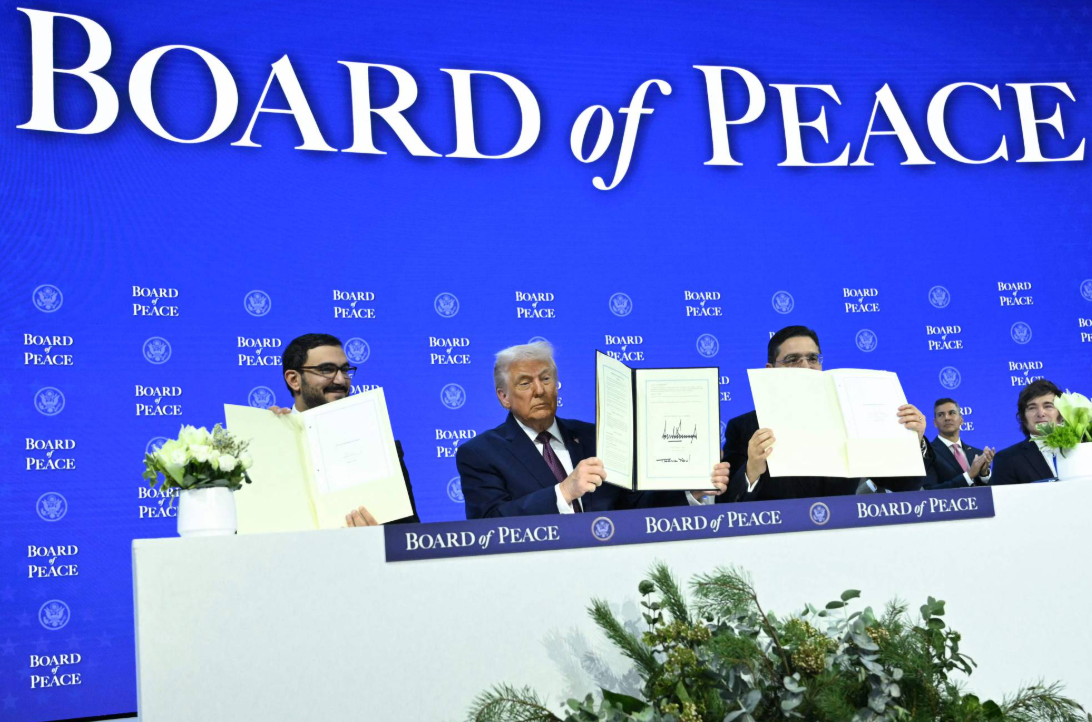
US President Donald Trump holds a document establishing the Peace Council for Gaza in Davos, Switzerland, Jan. 27, 2026. (Reuters)

The organization said in a statement attributed to it, not published on its official platforms or website, that its staff and patients had, in recent months, observed the presence of armed men, some masked, in various areas of the complex, along with incidents of intimidation, arbitrary arrests of patients, and suspected weapons transfers. It said this posed a direct threat to the safety of staff and patients.

Asharq Al-Awsat attempted to obtain confirmation from the organization regarding the authenticity of the statement but received no response.

Field Developments

On the ground, Israeli violations in the Gaza Strip continued. Gunfire from military vehicles and drones, along with artillery shelling, caused injuries in Khan Younis in the south and north of Nuseirat in central Gaza.

Daily demolition operations targeting infrastructure and homes also continued in areas along both sides of the so-called yellow line, across various parts of the enclave.


What is the Two-state Solution to the Israel-Palestinian Conflict?

FILE PHOTO: Smoke rises following an explosion, within the "yellow line" zone, which is controlled by Israel, in Khan Younis in the southern Gaza Strip, February 10, 2026. Picture taken with a phone. REUTERS/Haseeb Alwazeer/File Photo
TT

What is the Two-state Solution to the Israel-Palestinian Conflict?

FILE PHOTO: Smoke rises following an explosion, within the "yellow line" zone, which is controlled by Israel, in Khan Younis in the southern Gaza Strip, February 10, 2026. Picture taken with a phone. REUTERS/Haseeb Alwazeer/File Photo

Israel has taken steps ‌to help settlers acquire land in the occupied West Bank and widen its powers in parts of the territory where Palestinians have some self-rule - measures they said aimed to undermine the two-state solution.

It marks the latest blow to the idea of establishing a Palestinian state co-existing peacefully alongside Israel in territory Israel captured in the 1967 Middle East war. Long backed by world powers, this vision formed the bedrock of the US-backed peace process ushered in by the 1993 Oslo Accords.

But the obstacles have only grown with time. They include accelerating Jewish settlement on occupied land and uncompromising positions on core issues including borders, the fate of Palestinian refugees and the status of Jerusalem.

WHAT ARE ISRAEL'S NEW DECISIONS?

They would expedite settler land purchases by making public previously confidential West Bank land registries, and also repeal a Jordanian law governing land purchases in the West Bank, which was controlled by Jordan from 1948 until 1967.

Further, Israel would expand "monitoring and enforcement actions" to parts of the West Bank known as areas A and B, specifically "regarding water offences, damage to archaeological sites and environmental hazards that pollute the entire region", a statement by the finance and defense ministers said.

The West Bank was split into Areas A, B and C under the Oslo Accords. The Palestinian Authority has full administrative and security control in Area A - 18% of the territory. In Area B, around 22%, ‌the PA runs civil ‌affairs with security in Israeli hands. Most Palestinians in the West Bank live in areas A and B.

Israel ‌has ⁠full control over ⁠the remaining 60% - Area C, including the border with Jordan.

Palestinian President Mahmoud Abbas said the measures violate international law and aim to undermine Palestinian institutions and a future two-state solution.

Ultranationalist Israeli Finance Minister Bezalel Smotrich called the decision a "real revolution" and said, "We will continue to kill the idea of a Palestinian state."

WHAT ARE TWO-STATE SOLUTION'S ORIGINS?

Conflict ignited in British-ruled Palestine between Arabs and Jews who had migrated there, seeking a national home as they fled antisemitic persecution in Europe and citing biblical ties to the land throughout centuries in exile.

In 1947, the United Nations agreed on a plan partitioning Palestine into Arab and Jewish states with international rule over Jerusalem. Jewish leaders accepted the plan, which gave them 56% of the land. The Arab League rejected it.

The state of Israel was declared on May 14, 1948. A day later, five Arab states attacked. The war ended with ⁠Israel controlling 77% of the territory.

Some 700,000 Palestinians fled or were driven from their homes, ending up in Jordan, Lebanon ‌and Syria as well as in the Gaza Strip, the West Bank and East Jerusalem.

In the 1967 ‌war, Israel captured the West Bank, including East Jerusalem, from Jordan and Gaza from Egypt.

Although 157 of the 193 UN member states already recognize Palestine as a state, it is ‌not itself a UN member, meaning most Palestinians are not recognized by the world body as citizens of any state. About nine million live as ‌refugees in Syria, Lebanon, Jordan and territories captured by Israel in 1967. Another 2 million live in Israel as Israeli citizens.

HAS A DEAL EVER BEEN CLOSE?

The Oslo Accords, signed by Israeli Prime Minister Yizhak Rabin and Palestine Liberation Organization Chairman Yasser Arafat, led the PLO to recognize Israel's right to exist and renounce violence. Palestinians hoped this would be a step towards independence, with East Jerusalem as their capital.

The process suffered multiple reverses on both sides.

Hamas killed more than 330 Israelis in suicide attacks from 1994 to 2005, according ‌to Israel's government. In 2007, the group seized Gaza from the PA in a brief civil war. Hamas' 1988 charter advocates Israel's demise, though in recent years it has said it would accept a Palestinian state along 1967 borders. ⁠Israel says that stance is a ⁠ruse.

In 1995, Rabin was assassinated by an ultranationalist Jew seeking to derail any land-for-peace deal.

In 2000, US President Bill Clinton brought Arafat and Israeli Prime Minister Ehud Barak to Camp David to clinch a deal, but it failed, with the future of Jerusalem, deemed by Israel as its "eternal and indivisible" capital, the main obstacle.

The conflict escalated with a second Palestinian intifada (uprising) in 2000 to 2005. US administrations sought to revive peacemaking, to no avail, with the last bid collapsing in 2014.

HOW BIG ARE THE OBSTACLES TODAY?

While Israel withdrew settlers and soldiers from Gaza in 2005, settlements expanded in the West Bank and East Jerusalem, their population rising from 250,000 in 1993 to 700,000 three decades later, according to Israeli organization Peace Now. Palestinians say this undermines the basis of a viable state.

Jewish settlement in the West Bank accelerated sharply after the 2023 start of the Gaza war.

During the Second Intifada two decades ago, Israel also constructed a barrier in the West Bank it said was intended to stop Palestinian suicide bombers from entering its cities. Palestinians call the move a land grab.

The PA led by President Mahmoud Abbas administers islands of West Bank land surrounded by a zone of Israeli control comprising 60% of the territory, including the Jordanian border and the settlements, arrangements set out in the Oslo Accords.

Prime Minister Benjamin Netanyahu's government is the most right-wing in Israeli history and includes religious nationalists who draw support from settlers. Smotrich has said there is no such thing as a Palestinian people.

Hamas and Israel have fought repeated wars over the past two decades, culminating in the attacks on communities in southern Israel on October 7, 2023, that ignited the Gaza war.