
Hard Right Is Set to Surge in This Week’s European Union Elections 

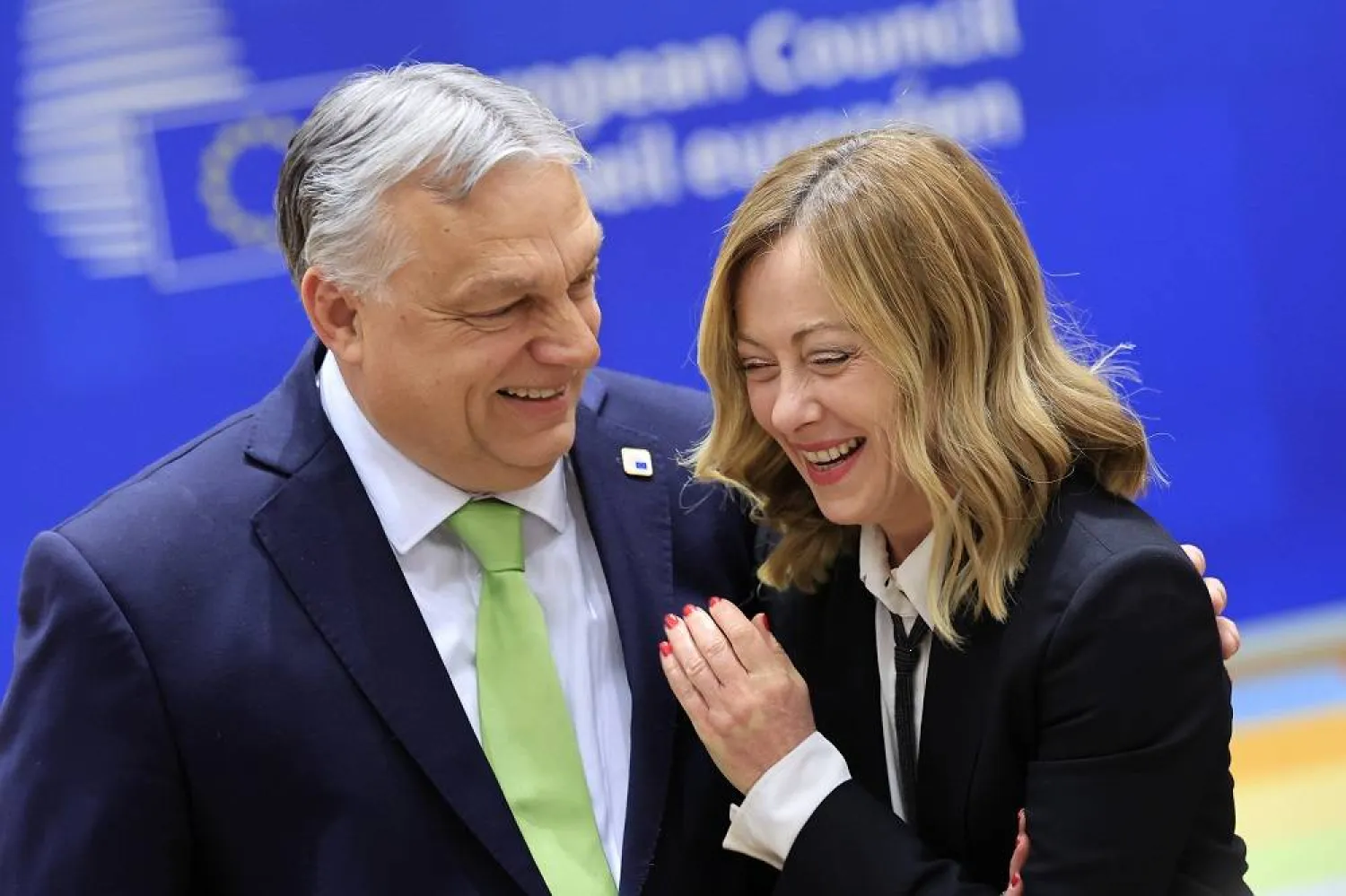
Hungary's Prime Minister Viktor Orbán, left, speaks with Italy's Premier Giorgia Meloni during a round table meeting at an EU Summit in Brussels, on March 21, 2024. (AP)
TT

Hard Right Is Set to Surge in This Week’s European Union Elections 

Hungary's Prime Minister Viktor Orbán, left, speaks with Italy's Premier Giorgia Meloni during a round table meeting at an EU Summit in Brussels, on March 21, 2024. (AP)

It seemed like a throwaway line by European Commission President Ursula von der Leyen, yet it encapsulated what is at stake for many in this week's European Union parliamentary elections — What to do with the hard right? And should it be trusted?

The top EU leader basically had said that far-right Italian Prime Minister Georgia Meloni, whose party is steeped in post-fascism, could be ready for prime time as a potential coalition partner once the four-day elections across the 27-nation EU end Sunday.

During an election debate, von der Leyen declared that Meloni checked all the necessary boxes, the last of which was "pro-rule of law." She immediately added, however, "if this holds."

That provisional question of whether to extend basic trust to extremist and populist parties is on many minds as the EU appears poised to veer rightward unlike it has ever done in its history, which has its seeds in the World War II defeat of Nazi Germany and fascist Italy.

Since the last European elections five years ago, populist, far-right and extremist parties are already leading three governments, are part of governing coalitions in several others and are surging in polls across the bloc like never before.

As a result, the whole political pendulum of the giant bloc is likely to swing toward the right after the elections, a plethora of surveys indicate and political observers agree.

"There will be a shift to the right. So the question is, how big?" said Maria Demertzis of the Brussels-based independent Bruegel think tank. "The numbers will matter because it could very well be that one of the possible outcomes is that the extreme right actually becomes the second (largest) party. If that is the case, then it’s interesting to see how and who will govern."

In the second-biggest exercise in democracy behind India's recent elections, almost 400 million voters will elect 720 members of the European Parliament from beyond the Arctic circle to the edges of Africa and Asia, impacting anything from global climate policies and defense to migration issues and geopolitical relations with China and the United States.

For the longest time, the European Parliament elections had little importance, as core members France and Germany set much of the policy for the ever-increasing group and the legislature looked like a retirement home for elderly national politicians and an incubator for young talent.

But as the powers of the legislature grew on issues like banking rules, agriculture and the EU budget, so did voting interest and the quality of legislators. While breaking a 50% voter turnout threshold was considered a major step forward in 2019, an EU Parliament survey says 71% could vote in the upcoming elections, another massive step forward.

Von der Leyen's European People's Party, a largely Christian Democrat group, is the legislature's biggest and bound to be the coalition kingmaker after the elections. For anyone to the right of the EPP, breaking up its coalition with the socialists, pro-business liberals and the greens should be the main issue at stake.

While bold, brazen and boisterous at best, the outer bounds on the right can be bellicose, bitter and biting at worst — bashing buddies to boot.

So even if the math adds up for a brilliant victory by the right on Sunday, the total will most likely be less than the sum of its parts.

For all the hard-right's unity in wanting to keep migrants out, ridicule climate measures as woke fiction and uphold conservative family values, there also are fundamental divergences. When it comes to the war in Ukraine, for example, someone like Meloni stands with the West, unlike Hungarian Prime Minister Viktor Orbán. Others remain in a grey zone.

It doesn't help that populist and hard-right parties are now split up in two groups in Parliament — the Identity and Democracy group to which the French National Rally of Marine Le Pen belongs, and the European Conservatives and Reformists, to which Meloni belongs.

Some are courting the center, others are courting controversy. The I&D group last month expelled its Alternative for Germany, or AfD, party after a growing list of scandals was capped when its lead candidate said that not all members of the Nazis’ elite SS unit, which was involved in major atrocities during World War II, were war criminals.

"The AfD has become the plague that no one wants to touch," said Roberto D’Alimonte, a political analyst at Rome’s LUISS university.

It is still unclear how far-right and populist parties will form new groups after the elections.

Nowadays, some want first and foremost to be "salonfähig," that quality of being accepted in the finest circles despite an extremist background. Le Pen is vying to become French president in 2027, and of course, Meloni has already reached that stage as Italian prime minister.

In almost two years as Italy's leader, she has overcome initial worries and proven reliable at EU summits and willing to work for hard-fought compromises, to the extent of even keeping the combustible Orbán in line during key debates. Leaders, including von der Leyen, have glossed over national complaints about her treatment of groups that do not meet her conservative family values or accusations of placing limits on press freedom.

And with the pro-business liberals and greens set for losses, the EPP's von der Leyen wants to keep her options open for coalition building, including Meloni, over the vociferous objections of her outgoing allies.

Even if coalitions in Parliament are brittle since legislators are sometimes beholden to national, not EU, agendas, von der Leyen is still eager to find a coalition that will give her the necessary 361 out of 720 votes to win a second five-year term as EU commission president, perhaps the most powerful position in the EU.

And this is where Meloni also comes in as a pivotal player who might have in her hands both the fate of von der Leyen and of a massive geopolitical bloc on the point of tilting ever further to the right.

"She’s one of these people — not quite the extreme right, but on the right of the right, as it were," said Demertzis of the Bruegel think tank. "She’s been talking to EPP, but she’s also talking to more extreme right groups, Mrs. Le Pen and others. And, of course, depending on how the votes turn out, she might have a big card up her sleeve."

In Finland, Radioactive Spent Nuclear Fuel Soon to Be Buried Underground

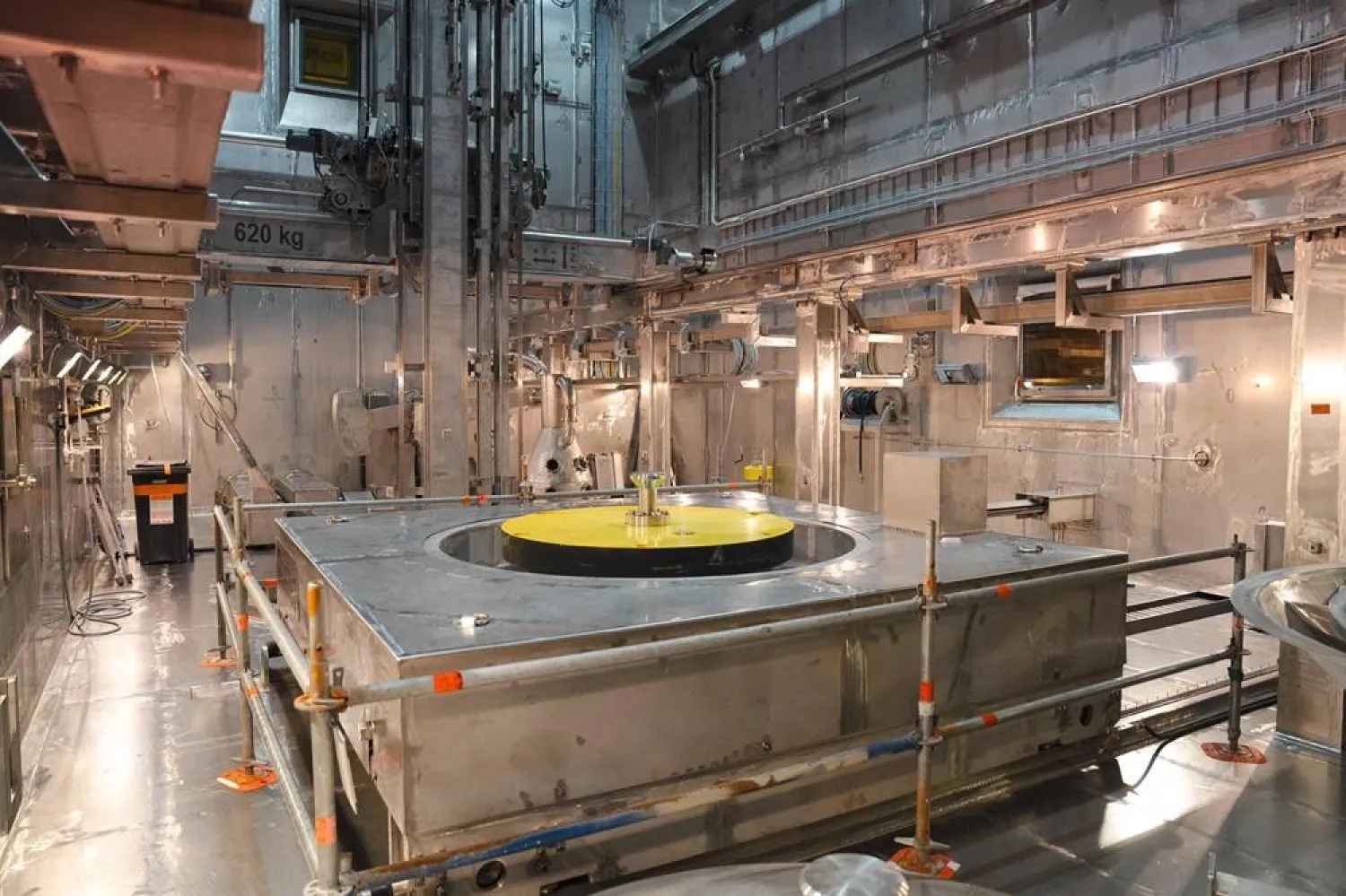
Picture taken on May 18, 2026 shows the "hot cell" fuel handling chamber at the encapsulation plant of nuclear waste management company Posiva at the site of what is expected to be the world's first permanent repository for radioactive spent nuclear fuel at the Onkalo nuclear repository in Eurajoki, southwestern Finland. (AFP)
TT

In Finland, Radioactive Spent Nuclear Fuel Soon to Be Buried Underground

Picture taken on May 18, 2026 shows the "hot cell" fuel handling chamber at the encapsulation plant of nuclear waste management company Posiva at the site of what is expected to be the world's first permanent repository for radioactive spent nuclear fuel at the Onkalo nuclear repository in Eurajoki, southwestern Finland. (AFP)

The elevator display reads "433", the number of meters below ground. The doors slide open, revealing the entrance to what is expected to be the world's first permanent repository for radioactive spent nuclear fuel.

Blasted into 1.9 billion-year-old stable bedrock in Eurajoki, southwest Finland, the geological repository for spent nuclear waste -- dubbed Onkalo which means "cave" in Finnish -- is nearly ready to start operations.

Countries have been wrestling with what to do with dangerous nuclear by-products since the first plants were built in the 1950s. Currently, most of it is in temporary storage.

Final repositories are being built in other countries, including neighboring Sweden and France, but Finland is expected to be first to open an underground storage solution.

The Finnish Radiation and Nuclear Safety Authority (STUK) is due to give approval in its final assessment in June, after which an operating license can be granted.

"We hope we can start the operation either at the end of this year or most probably at the beginning of next year," said Philippe Bordarier, chief executive of nuclear operator Teollisuuden Voima Oyj (TVO).

His voice echoed in the damp tunnel where the spent nuclear fuel will be buried in holes drilled into the bedrock, where it will remain harmfully radioactive for thousands of years.

The waste currently cooled in water pools at an interim storage site, at the nearby Olkiluoto power plant next to the Baltic Sea, will be first to be deposited, Bordarier said.

With space for 6,500 tons of uranium, Onkalo is aimed at providing permanent storage for spent fuel from Finland's five nuclear reactors -- three of them located in Olkiluoto.

Nuclear waste management company Posiva began building the site in 2004, with the cost now estimated at one billion euros ($1.16 billion).

- 'Forever'-

Spent fuel is planned to be deposited in Onkalo's massive network of tunnels for 100 years, but operations may be extended if new nuclear reactors are built.

Subsequently, the vault will be sealed to provide safe storage for at least 100,000 years.

"Basically, it needs to be safe forever," noted Lauri Parviainen, a Posiva chemist who showed reporters around the facilities.

The fuel will be highly radioactive for "tens of thousands of years", he said.

After 100,000 years, they will be "about the same level as the uranium ore of which the fuel is made."

Above ground, the spent nuclear fuel will be encapsulated in highly corrosion-resistant copper canisters.

The canisters will be lowered into holes drilled in the tunnels, before the holes are filled with bentonite clay to seal them, Parviainen explained.

"So if the bentonite stays in place, we are safe," he said.

Once each 300-meter-long disposal tunnel is filled, it will be sealed with a steel-reinforced concrete plug.

- Long-term risks -

Jarkko Kyllonen, an expert on nuclear safety at Finland's nuclear regulator STUK, has assessed risk scenarios for the Onkalo project stretching up to a million years into the future.

Considering the "hazard potential of the waste, the first 10,000 years are very important for keeping the capsules intact," he told AFP.

The main long-term risks are corrosion of the copper canisters or earthquakes during future ice ages, which could potentially damage the capsules and cause radioactive fuel to leak, Kyllonen said.

But the results of various risk assessments conducted over the years have been "positive".

While France's plans for a similar underground nuclear tomb have met with strong opposition, Onkalo has received broader backing in Finland.

There was some opposition locally when the plans were first introduced in the 1970s, but "people have gotten used to it, and they trust the assessments made by STUK", Matti Kojo, social sciences professor at Lut University, told AFP.

"At the moment, support for nuclear power is at a historically high level in Finland," he noted.

The Finnish Association for Nature Conservation remains critical of the project, however, insisting that nuclear waste poses a long-term, serious risk.

"No one can guarantee the safety of Onkalo for thousands of years," director Tapani Veistola told AFP in an e-mail.

- Finland's nuclear push -

Under Finnish law, nuclear waste produced in Finland has to be deposited in the country, Climate and Environment Minister Sari Multala told AFP.

"Before the legal change in 1994, the spent nuclear fuel was exported to, for example, Russia," she said.

Increasing nuclear power in Finland has been a priority for the right-wing government, and the country is considering building so-called small modular reactors (SMRs).

How the spent nuclear fuel from future SMRs would be managed "has not been decided yet," Multala said. An assessment should be completed by March next year, she added.


Iran's Strongest Card in Nuclear Talks: Its Highly Enriched Uranium

Centrifuges at the Fordow nuclear facility before the June 2025 attacks (Reuters)
TT

Iran's Strongest Card in Nuclear Talks: Its Highly Enriched Uranium

Centrifuges at the Fordow nuclear facility before the June 2025 attacks (Reuters)

Iran and the United States are in discussions to extend ‌their ceasefire so as to start negotiations on issues including Tehran's nuclear program, where Washington insists Iran must not be able to make a nuclear weapon.

While much of Iran's uranium enrichment infrastructure was destroyed or badly damaged when Israel and the US bombed it in June, a large part of the highly enriched uranium it amassed is thought to have survived. That is the biggest US concern ahead of nuclear talks.

On Friday Trump said in a social media post that Iran must agree that the enriched uranium buried underground after earlier US strikes be "unearthed" and destroyed in coordination with Iran and the UN nuclear watchdog.

WHAT IS HIGHLY ENRICHED URANIUM?

One of two fissile materials, along with plutonium, with which one can make the core of a nuclear bomb. While plutonium is usually extracted from the spent fuel of a nuclear reactor, requiring large and highly visible infrastructure, uranium can be enriched using centrifuges that have a much smaller footprint. Two of Iran's three enrichment sites that are known to have been operating when Israel and the ‌US attacked in ‌June were underground. The above-ground one was clearly destroyed.

Uranium is highly enriched when it ‌has ⁠reached 20% purity, and ⁠weapons-grade as of around 90%.

Modern reactors generally use fuel enriched to up to 5%, but some use fuel enriched to higher levels. The ones that power US nuclear submarines reportedly use fuel enriched beyond 90%.

HOW MUCH DOES IRAN HAVE?

Iran has not informed the UN nuclear watchdog of the fate of its enriched uranium since the June attacks or let its inspectors return to the sites where it was stored.

The International Atomic Energy Agency estimates Iran had these amounts when the first Israeli bombs fell on June 13:

- 440.9 kg enriched to up to 60%

- 184.1 kg enriched to up to 20%

- 6,024.4 kg enriched to ⁠up to 5%

- 2,391.1 kg enriched to up to 2%

According to an IAEA yardstick, ‌the amount at 60% is enough, if enriched further, for 10 nuclear weapons. ‌The 20% stock would be enough for one and the 5% could produce 12. How much has survived is unclear. IAEA chief ‌Rafael Grossi has said his agency believes "a bit more than 200 kg" of the 60% stock is stored at a ‌tunnel complex in Isfahan that appears to have been largely unharmed by the June attacks. Some was also at the Natanz nuclear site, he said.

WHY THE CONCERN? US concern has been focused on the 60% material because that would be easiest and thus quickest to make a bomb with. Washington wants it gone. Iran denies seeking nuclear weapons.

As the enrichment level of uranium increases, it becomes exponentially easier to enrich ‌further. Getting from 60% to 90% is easier than getting from unenriched to 5%.

President Donald Trump pulled the United States out of a nuclear deal between Iran and ⁠major powers that kept Tehran ⁠at a far greater distance from being able to produce an atom bomb than it is at now. The US withdrawal in 2018 caused the deal to unravel, and Iran quickly expanded its atomic program.

Under that 2015 deal, Iran did not enrich beyond 3.67%.

Even at 90%, however, it takes more steps to produce the core of a bomb. When it is enriched, the uranium is in gas form. It must then be turned into metal for use in a weapon.

CAN YOU MOVE IT?

Yes. Iran moved enriched material between sites under IAEA monitoring before the June attacks.

Under the 2015 deal and a precursor to it, Iran's stocks of uranium enriched to up to 20% were diluted or turned into reactor fuel plates and shipped out of the country.

Moving nuclear material like highly enriched uranium internationally is a sensitive but relatively routine procedure.

"It requires some precaution but it can be moved," Grossi told PBS in March when asked about the 60% material.

WILL IRAN GIVE IT UP? Iran's supreme leader has issued a directive that the 60% material should not be sent abroad, two senior Iranian sources said last week.

Iranian sources say Tehran might agree to send half of it to a third country, receiving uranium enriched to 5% in return, and dilute the other half inside Iran.


Beaufort Castle: Israel’s Geographic Gateway to South Lebanon

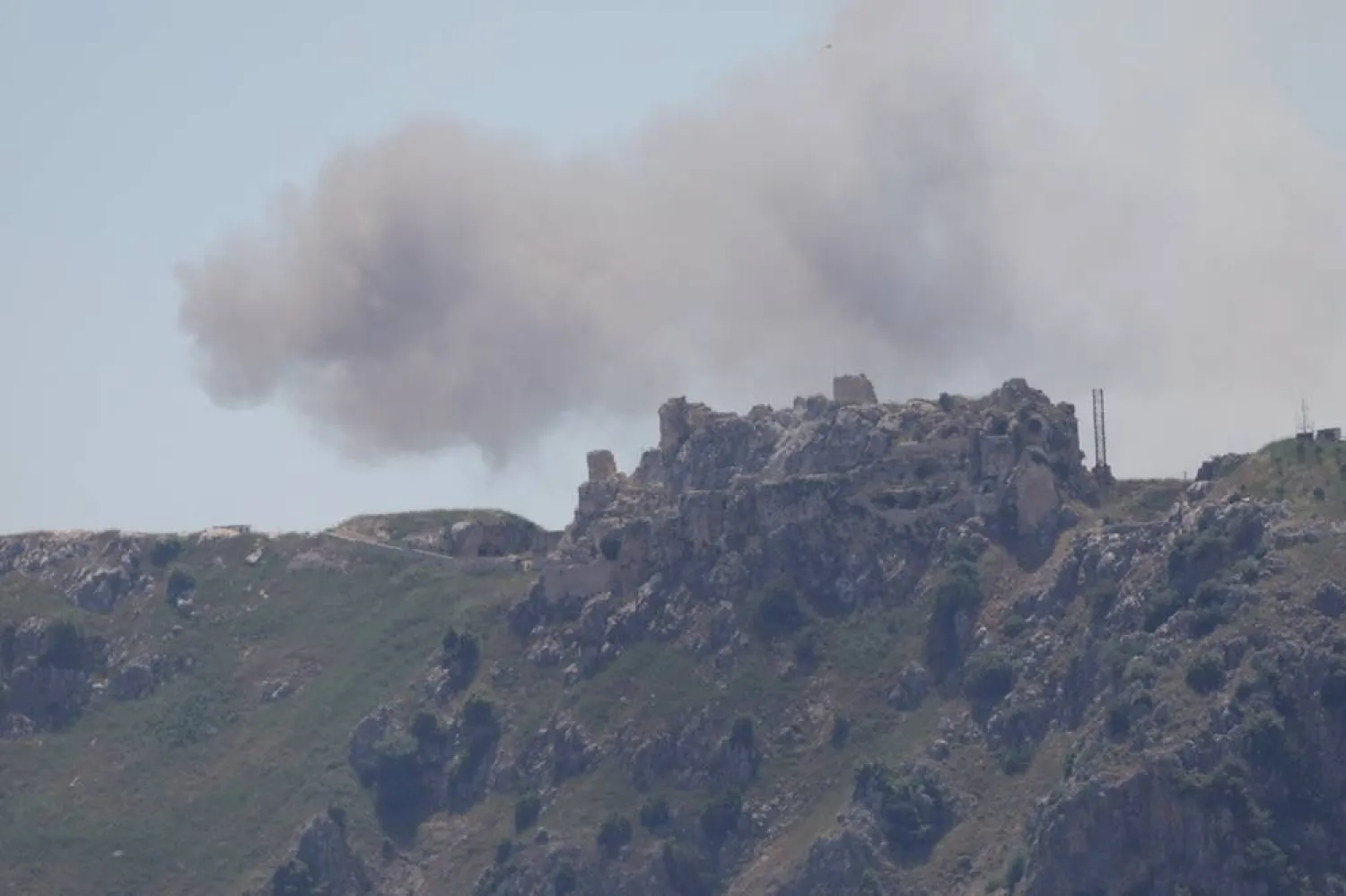
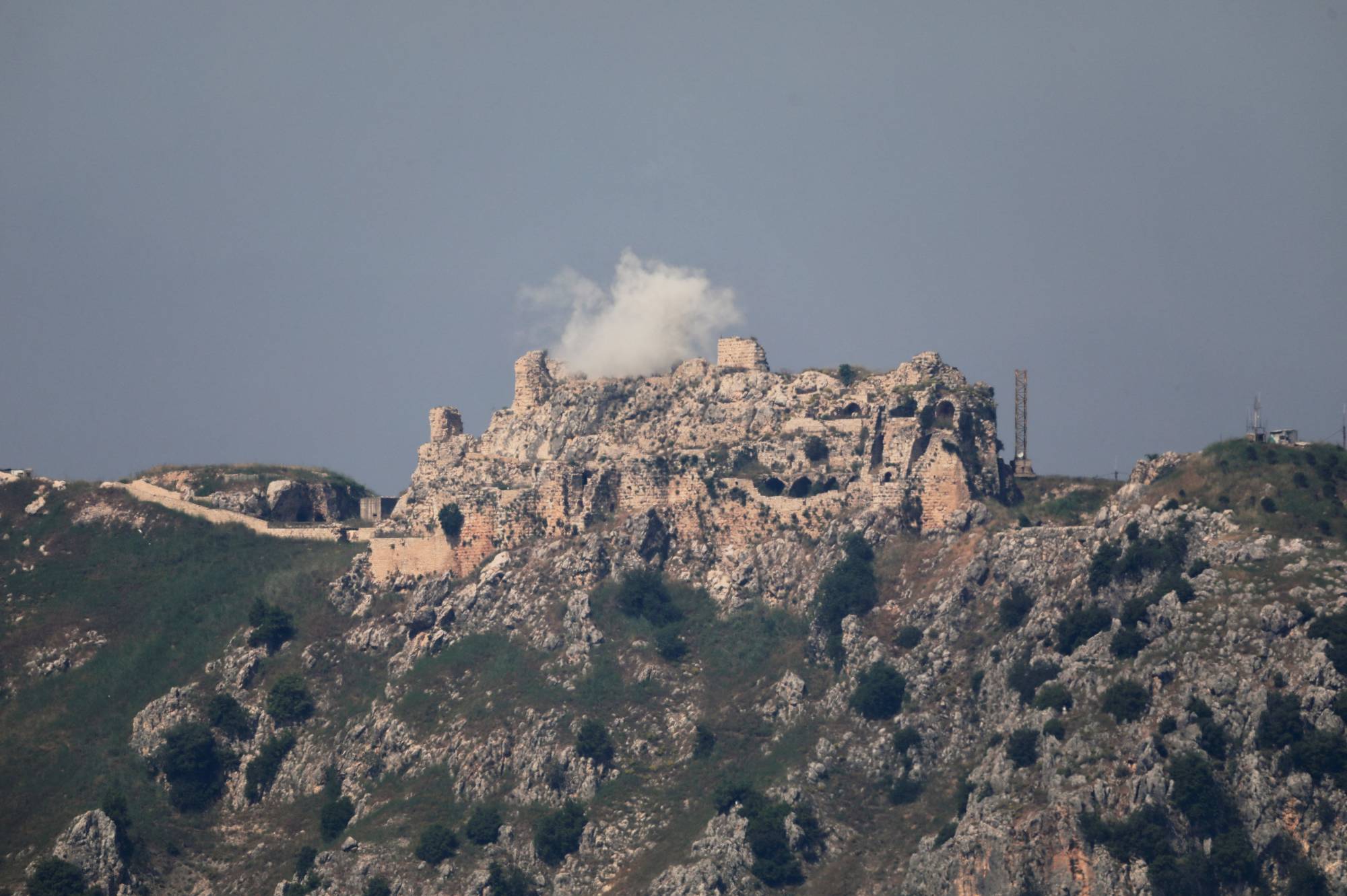
 Smoke rises near the Beaufort Castle, as seen from Marjeyoun, southern Lebanon, May 29, 2026. (Reuters)
Smoke rises near the Beaufort Castle, as seen from Marjeyoun, southern Lebanon, May 29, 2026. (Reuters)
TT

Beaufort Castle: Israel’s Geographic Gateway to South Lebanon

 Smoke rises near the Beaufort Castle, as seen from Marjeyoun, southern Lebanon, May 29, 2026. (Reuters)
Smoke rises near the Beaufort Castle, as seen from Marjeyoun, southern Lebanon, May 29, 2026. (Reuters)

Repeated Israeli strikes on the medieval Beaufort Castle and its surroundings east of Nabatieh have revived debate over one of southern Lebanon’s most sensitive sites due to its elevated position overlooking Palestinian territories, Syria and Lebanon.

For decades, the Crusader fortress was a commanding military position and a battlefield etched into Israeli and Lebanese memory. Now, as fighting escalates in the south, it is back at the center of events. Military assessments say its battlefield value remains, despite major changes in warfare over recent decades.

The renewed focus on Beaufort Castle comes as Israel intensifies strikes around the site and the heights overlooking Nabatieh. The attacks have raised fresh questions about the military value of a position that has remained present in major confrontations in southern Lebanon since Israel's 1982 invasion.

Heritage landmark

Beaufort Castle, known in Arabic as Qalaat al-Shaqif, is one of southern Lebanon’s most prominent historical and heritage landmarks, and among the most important Crusader castles in the Levant.

The Crusaders named it Beaufort, meaning “beautiful fortress.” It later fell to Salaheddine after a long siege. The Crusaders then retook it for a period, and the Knights Templar inhabited it, before the Mamluks, led by Sultan al-Zahir Baybars, seized it in 1268.

Smoke rises from Beaufort Castle following strikes, as seen from Marjeyoun, southern Lebanon, May 27, 2026. (Reuters)

Although the Romans first built initial fortifications at the strategic site, the Crusaders greatly expanded it and built most of its existing structures.

Since 2024, the castle has held “enhanced protection” status under the Second Protocol to the Hague Convention for the Protection of Cultural Property in the Event of Armed Conflict, Lebanon's Arnoun municipality said in a statement.

The municipality warned that repeated Israeli strikes could damage the castle and urged Lebanese authorities and relevant international organizations to act to protect the landmark and prevent further harm.

Battlefield advantage

Claiming the castle has long been seen as a battlefield advantage. In the 1970s, it came under heavy Israeli airstrikes after the Palestine Liberation Organization used it as a position to fire at Israel. In 1982, it was the scene of one of the fiercest battles between Israeli forces and Palestinian fighters and their Lebanese allies. Israel occupied it until 2000.

Retired Brigadier General Bassam Yassine said Beaufort Castle’s importance today is little different from the value that made it a focus of battles since the 1982 invasion. The site, he said, remains one of southern Lebanon’s most prominent commanding military positions.

“Beaufort Castle has been present in all wars and battles with Israel from 1982 until today because of its strategic location,” Yassine told Asharq Al-Awsat, saying it offers a commanding view over wide areas of southern Lebanon and northern occupied Palestine.

“Beaufort Castle overlooks the settlement of Metula, which is less than four kilometers away. It overlooks the area between the Litani and Zahrani rivers and is considered the highest hill in this sector,” he said.

The site gives whoever controls it a major military advantage, Yassine said.

“From Beaufort Castle, one can observe Taybeh, Deir Seryan and Qantara, where the Israeli army is present today. That is why it cannot leave it outside its control if it wants to remain in the area where it is deployed,” he said.

Yassine said this importance is not new. Before Israel withdrew from southern Lebanon in 2000, it controlled hills and heights around the area, including Beaufort Castle, to secure battlefield superiority and maintain observation over its surroundings.

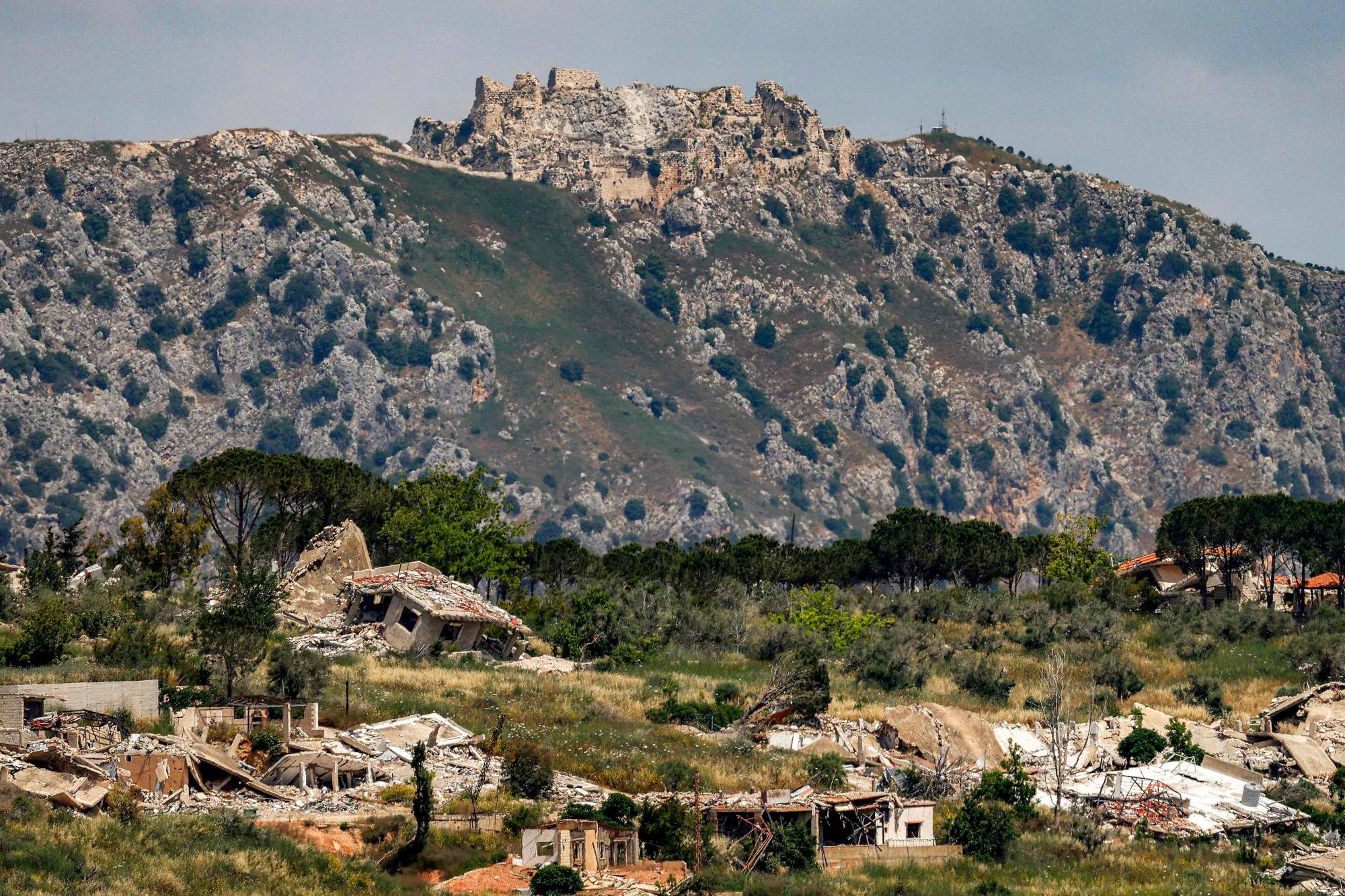
Destroyed buildings are pictured in the village of Kfar Kila in southern Lebanon as seen from across the border in the Upper Galilee region of northern Israel on May 29, 2026, with the Crusader-period Beaufort Castle pictured in Lebanon in the background. (AFP)

Asked which sectors the castle exposes, he said: “It directly overlooks Yohmor al-Shaqif, eastern Zawtar, western Zawtar, Kfar Tebnit and Nabatieh al-Fawqa. All these areas are exposed from the castle.”

“It also protects forces on the Yohmor and Zawtar axes, and provides cover for troops deployed in Taybeh, Deir Seryan and Qantara, and across this entire sector,” he added.

Yassine said the castle’s military value also lies in its defensive terrain.

“If any resistance force managed to infiltrate the castle and possess anti-armor missiles there, it would become very difficult to remove it from the site or destroy it because of the geography of the location,” he explained.

He said Israel had faced that problem before, during the period of Palestinian armed presence in the south.

“The Israelis tried many times to destroy the castle during the Palestinian period, but they did not succeed because of its geography,” he said.

Yassine said the site includes old historical passages and tunnels.

“The castle has tunnels that reach the Litani River below. They have existed since the Crusader era and are not newly built tunnels, which gives the site additional defensive value,” he said.

Control of the castle does not mean control of the area

Retired Brig. Gen. Dr. Bahaa Halal said Beaufort Castle is one of southern Lebanon’s most important military and geopolitical sites because of its strategic location.

“Israeli military doctrine views Beaufort Castle as a key point for achieving visual and intelligence superiority, which forms part of fire superiority, as it allows the monitoring of movements between south and north of the Litani, the tracking of routes toward the western Bekaa and Iqlim al-Tuffah, as well as monitoring the operational environment of attack drones and FPV aircraft,” Halal told Asharq Al-Awsat.

Any “resistance force that is able to deploy freely around Beaufort Castle gains a tactical advantage in missile maneuvering, managing ambushes and concealing combat infrastructure inside the mountainous terrain,” he added, making the area a constant Israeli security concern.

“Israel can theoretically reach the surroundings of Beaufort Castle through air cover, prior destruction and special forces. But there is a major difference between reaching the area and maintaining stable control,” he remarked.

Holding it, he said, would require secure supply lines, fire control over the castle’s surroundings, preventing flanking moves and ambushes, and ensuring permanent superiority in observation.

Such conditions are difficult to secure in an area geographically connected to Arnoun, Yohmor, Zawtar, Iqlim al-Tuffah and the valleys leading to the Litani, he stressed.