How Did North Korean Soldiers Wander Across the World’s Most Heavily Guarded Border? 

Barricades are placed near the Unification Bridge, which leads to the Panmunjom in the Demilitarized Zone in Paju, South Korea, Tuesday, June 11, 2024. (AP)
TT

How Did North Korean Soldiers Wander Across the World’s Most Heavily Guarded Border? 

Barricades are placed near the Unification Bridge, which leads to the Panmunjom in the Demilitarized Zone in Paju, South Korea, Tuesday, June 11, 2024. (AP)

Don’t believe the name: The Demilitarized Zone between the two rival Koreas might be the most heavily armed place on earth. Two million mines, barbed wire fences, tank traps and tens of thousands of troops from both countries patrol a divided swath of land 248 kilometers (154 miles) long and 4 kilometers (2.5 miles) wide.

So how, on the eve of Russian President Vladimir Putin’s summit Wednesday with North Korean leader Kim Jong Un, did as many as 30 North Korean soldiers wander over the line separating North from South, causing South Korea to fire warning shots before the North Koreans withdrew?

The short answer appears to be shrubbery: Because of an overgrowth of foliage, the North Koreans may not have seen the signs marking the thin military demarcation line that divides the DMZ into northern and southern sides.

But, more deeply, it can also be understood in light of the long, often violent history of the unique border set up after the 1950-53 Korean War. It ended with an armistice, instead of a peace treaty, leaving the Korean Peninsula divided, and technically still in a state of war.

Here's a look at the events surrounding the incursion:

___

What happened? On Tuesday, South Korean troops broadcast warnings and fired warning shots to turn back North Korean soldiers — somewhere between 20 to 30 — who briefly crossed the demarcation line in the DMZ.

The North Koreans, who had been doing construction work in the area, immediately retreated, and the South’s military didn’t spot any suspicious activity after that, the Joint Chiefs of Staff in Seoul said.

It was the second such incident in two weeks.

Neither incursion was an invasion, or even a maneuver meant to test the South’s defenses, Seoul says, but more likely an accident.

When North Korean soldiers briefly crossed a different part of the line on June 11, the same scenario played out: Warning shots from the South; a North Korean withdrawal.

___

What does the demarcation line look like? The demarcation line, in many parts of the DMZ, is simply a sign mounted on a stick or a slice of concrete.

People have stepped across it before, under very special circumstances, and usually at the border village of Panmunjom. Former US President Donald Trump walked across with Kim Jong Un. Last year an American soldier facing possible military discipline dashed over the line to the North.

Outside of Panmunjom, much of the DMZ is wilderness, but it is heavily monitored on both sides. And while the demarcation line may be easily crossed, it is very difficult to do so without being spotted immediately.

The southern side of the land border is protected not only by thousands of soldiers, guns and mines, but also by a dense network of cameras, motion sensors and other high-tech surveillance equipment. Breaches are very rare and are usually detected quickly. Defections from the North are also unusual along the North-South land border, though they have happened with frequency along the porous China-North Korea border and occasionally in the Yellow Sea.

The North’s accidental intrusions this month may have been caused by a sudden jump in North Korean troops fortifying their side of the border.

Because overgrown trees and plants may have been obscuring the signs marking the demarcation line, Seoul says, the North Korean troops may have stepped over the line without knowing it.

___

Why are so many North Koreans working in the DMZ? Relations between the rival Koreas are worse now than in many years.

Recent weeks have seen a tit-for-tat standoff that has resulted in Cold War-style psychological warfare. Both sides have said they are no longer bound by their landmark military agreement in 2018 to reduce tensions.

The North Koreans along the border, Seoul says, have been installing what appear to be anti-tank barriers, reinforcing roads and planting land mines, even as mine explosions have killed or wounded an unspecified number of North Korean soldiers.

The construction started around April and may be an attempt to curb North Koreans trying to defect to the South, according to Seoul's military.

___

Could it happen again? Possibly, especially if the North Korean construction continues along the demarcation line.

But both sides appear intent on containing their animosities to the psychological warfare they’re engaging in.

Still, there are worries that the hostilities are pushing them closer to a direct military clash. The Koreas have had no meaningful talks for years and could find it difficult to set up dialogue as tensions rise over the North’s development of nuclear-capable weapons.

Some analysts say the Koreas’ poorly marked western sea boundary — site of skirmishes and attacks in past years — is more likely to be a crisis point than the land border.

Kim, during a fiery speech in January, reiterated that his country does not recognize the Northern Limit Line in the Yellow Sea, which was drawn up by the US-led UN Command at the end of the war. North Korea insists on a boundary that encroaches deeply into South Korea-controlled waters.

While the huge military presence on both sides of the DMZ means that years sometimes pass without incident, violence can quickly erupt. Two American Army officers were axed to death in 1976 by North Korean soldiers, for instance.


Iran’s Khamenei Faces Gravest Crisis of His Rule as US Strike Force Gathers

A handout picture made available by Iran's Supreme Leader Office shows Iranian Supreme Leader Ali Khamenei addressing a ceremony in Tehran, Iran, 17 February 2026, amid heightened regional tensions following an increased US military presence in the Middle East. (EPA/Iran’s Supreme Leader Office Handout)
TT

Iran’s Khamenei Faces Gravest Crisis of His Rule as US Strike Force Gathers

A handout picture made available by Iran's Supreme Leader Office shows Iranian Supreme Leader Ali Khamenei addressing a ceremony in Tehran, Iran, 17 February 2026, amid heightened regional tensions following an increased US military presence in the Middle East. (EPA/Iran’s Supreme Leader Office Handout)

Ali Khamenei has crushed unrest and survived foreign pressure before but, with his envoys racing to avert threatened American airstrikes through ongoing talks, Iran's Supreme Leader faces the gravest crisis of his 36-year rule.

An embittered population toils under a sanctions-hit economy. Huge protests in January were crushed at a cost of thousands of lives. Israeli and US. strikes last year smashed prized nuclear and missile facilities. Iran's regional policy lies in tatters, with old allies and proxies weakened or gone.

With the risk of war hanging over the Middle East, the 86-year-old's fierce devotion to the Islamic Republic, his implacable hostility to the West and his record of guile in spinning out negotiations will shape the fate of the region.

PRESERVING IRAN'S ISLAMIC REPUBLIC AT ALL COSTS

Already this year, he has ordered the deadliest crackdown since the 1979 revolution, saying protesters "should be put in their place" before security forces opened fire on demonstrators chanting "Death to the dictator!".

US President Donald Trump's threats to bomb Iran again come only months after Khamenei was forced into hiding last June by strikes that killed several close associates and Revolutionary Guard commanders.

That assault was among the many indirect results of the attack on Israel by the Iran-backed Palestinian group Hamas on October 7, 2023, which not only triggered the war in Gaza but also spurred Israel to hammer Tehran's other ‌regional proxies.

With Hezbollah weakened ‌in Lebanon and Syria's Bashar al-Assad toppled, Khamenei's reach across the Middle East has been stunted. Now he faces ‌US demands ⁠to abandon Iran's ⁠best remaining strategic lever, its arsenal of ballistic missiles.

Iran has even offered apparent concessions on its nuclear program, which it says is purely civilian but is seen by the West and Israel as a path to an atomic bomb.

But Khamenei refuses to even discuss giving up missiles, which Iran sees as its only remaining deterrent to Israeli attack, a display of intransigence that may itself invite US airstrikes.

As the US military buildup intensifies, Khamenei's calculations will draw on a character molded by revolution, years of turmoil and war with Iraq, decades of sparring with the United States, and a ruthless accumulation of power.

Khamenei has ruled since 1989 and holds ultimate authority over all branches of government, the military and the judiciary.

While elected officials manage day-to-day affairs, no major policy - especially one concerning the United States - proceeds without his explicit approval; Khamenei's mastery of Iran's complex system of clerical rule combined with limited democracy ensures that no ⁠other group can challenge his decisions.

AS LEADER, KHAMENEI WAS ONCE FAR FROM SUPREME

Early in his rule, Khamenei was ‌often dismissed as weak and an unlikely successor to the Islamic Republic's late founder, the charismatic Khomeini.

When he was appointed Supreme Leader, Khamenei had difficulty wielding power through religious authority, as the theocratic system foresaw. After struggling for a long time to ‌emerge from the shadow of his mentor, it was by forging a formidable security apparatus devoted solely to him that he finally imposed himself.

Khamenei distrusts the West, ‌particularly the US, which he accuses of seeking to topple him.

In a typically pugnacious speech after January's protests, he blamed Trump for the unrest, saying: "We consider the US president criminal for the casualties, damages and slander he inflicted on the Iranian nation." Yet despite his ideological rigidity, he has shown a willingness to bend when the survival of the republic is at stake.

The concept of "heroic flexibility", first mentioned by Khamenei in 2013, permits tactical compromises to advance his goals, mirroring Khomeini's choice in 1988 to embrace a ceasefire after eight years of war with Iraq.

Khamenei’s guarded ‌endorsement of Iran's 2015 nuclear deal with six world powers was another such moment, as he calculated that sanctions relief was necessary to stabilize the economy and buttress his grip on power.

Trump quit the 2015 pact during his first ⁠term in 2018 and reimposed crippling sanctions on ⁠Iran. Tehran reacted by gradually violating all agreed curbs on its nuclear program.

LOYAL SECURITY STRUCTURE KEY TO KHAMENEI'S POWER

At times of increasing pressure, Khamenei has repeatedly turned to the Iranian Revolutionary Guard Corps (IRGC) and the Basij, a paramilitary force numbering hundreds of thousands of volunteers, to snuff out dissent.

It was they who crushed the protests that exploded after Mahmoud Ahmadinejad's re-election as president in 2009 amid allegations of vote fraud.

In 2022, Khamenei was just as ruthless in arresting, imprisoning or executing protesters enraged by the death in custody of the young Iranian-Kurdish woman Mahsa Amini.

And it was again the Guards and Basij who crushed the latest round of protests in January.

His power also owes much to the parastatal financial empire known as Setad, which is under Khamenei's direct control. Worth tens of billions of dollars, it has grown hugely during his rule, investing billions in the Revolutionary Guards.

Scholars outside Iran paint a picture of a secretive ideologue fearful of betrayal - an anxiety fueled by an assassination attempt in June 1981 with a bomb hidden in a tape recorder that paralyzed his right arm.

Khamenei himself suffered severe torture, according to his official biography, in 1963, when at 24 he served the first of many terms in prison for political activities under the rule of the shah.

After the revolution, as deputy defense minister, Khamenei became close to the Guards during the 1980-88 war with Iraq, which claimed a million lives from both sides.

He won the presidency with Khomeini's support but was a surprise choice as successor when the supreme leader died, lacking both his popular appeal and his superior clerical credentials.

Karim Sadjadpour at the Carnegie Endowment for International Peace said that "accident of history" had transformed a "weak president to an initially weak supreme leader to one of the five most powerful Iranians of the last 100 years".


US Strikes on Iran Could Target Individual Leaders, Officials Say

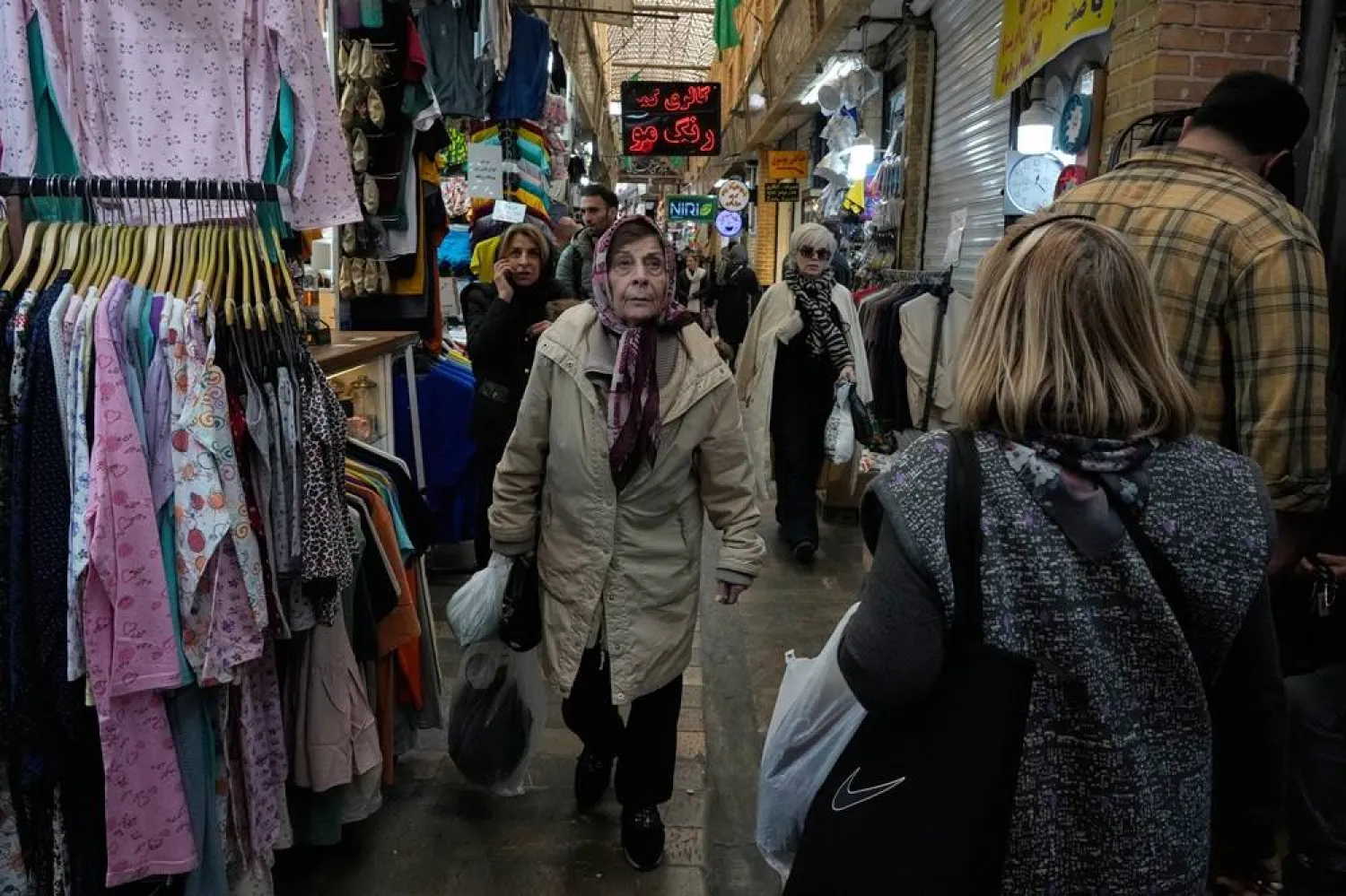
 People walk at Tajrish traditional bazaar in northern Tehran, Iran, Thursday, Feb. 19, 2026. (AP)
People walk at Tajrish traditional bazaar in northern Tehran, Iran, Thursday, Feb. 19, 2026. (AP)
TT

US Strikes on Iran Could Target Individual Leaders, Officials Say

 People walk at Tajrish traditional bazaar in northern Tehran, Iran, Thursday, Feb. 19, 2026. (AP)
People walk at Tajrish traditional bazaar in northern Tehran, Iran, Thursday, Feb. 19, 2026. (AP)

US military planning on Iran has reached an advanced stage with options including targeting individuals as part of an attack and even pursuing regime change in Tehran, if ordered by President Donald Trump, two US officials told Reuters.

The military options are the latest signs that the United States is preparing for a serious conflict with Iran should diplomatic efforts fail. Reuters first reported last week that the US military is preparing for a sustained, weeks-long operation against Iran that could include striking Iranian security facilities as well as nuclear infrastructure.

The latest revelations suggest more granular, ambitious planning ahead of a decision by Trump, who has in recent days publicly floated the idea of regime change in the country.

The US officials, who spoke on condition of anonymity due to the sensitive nature of the planning, did not offer further details on which individuals could be targeted or how the US military could attempt to carry out regime change without a large ground force.

Pursuing regime change would mark another shift away from Trump's vows during the presidential campaign to abandon what he has called the failed policies of past administrations, which included military efforts to topple governments in Afghanistan and Iraq.

Trump has assembled a massive amount of firepower in the Middle East, but most of the combat ‌capabilities are aboard warships ‌and fighter aircraft. Any major bombing campaign could also count on support from US-based bombers.

In his first term, ‌Trump ⁠showed a willingness ⁠to carry out targeted killings by approving a 2020 attack on Iran's top general, Qassem Soleimani, who led the foreign espionage and paramilitary arm of Iran's Revolutionary Guard Corps, known as the Quds Force.

The Trump administration formally labeled the IRGC a foreign terrorist organization in 2019, the first time Washington had applied the designation to another nation’s military.

One of the US officials noted Israel's success targeting Iranian leaders during its 12-day war with Iran last year. At the time, regional sources told Reuters at least 20 senior commanders were killed, including the armed forces chief of staff, Major General Mohammad Bagheri.

"The 12-day war and Israeli strikes against individual targets really showed the utility of that approach," the US official said, adding that the focus was on those involved in command and control of IRGC forces.

Still, the official cautioned that targeting individuals requires additional intelligence ⁠resources. Killing a particular military commander would mean knowing their exact location and understanding who else might be harmed in ‌the operation.

It was unclear to the officials who spoke with Reuters what intelligence the US has ‌on Iranian leaders who could potentially be targeted by the United States.

The White House and Pentagon did not immediately respond to requests for comment.

REGIME CHANGE AS A POSSIBLE GOAL

Trump ‌has openly floated the possibility of changing the government in Iran, saying last week it "seems like that would be the best thing that could happen." ‌He declined to say who he wanted to take over Iran, but said, "there are people."

While regime change operations have traditionally involved major movement of US ground forces, Trump turned to special operations forces to oust Venezuela's President Nicolas Maduro, sending them to grab him from his Caracas compound last month in an audacious raid.

At the same time, the US president has also held out hope for diplomacy, saying on Thursday that "really bad things" would happen if no deal were reached. He appeared to set a deadline of no more than ‌10 to 15 days before the US might take action.

Iran's Revolutionary Guard has warned it could retaliate against US military bases in the region if the US strikes Iranian territory.

In a letter on Thursday to UN Secretary-General Antonio Guterres, Tehran said it would not start any war but that "in the event that it is subjected to military aggression, Iran will respond decisively and proportionately" in its exercise of the right of self-defense.

US officials have told Reuters they fully expect Iran to fight back in the event of an attack, raising the risk of US casualties and a regional conflict, given the number of countries that could come under fire from Iran's missile arsenal.

Trump's threats to bomb Iran have pushed up oil prices, and on Thursday a Russian warship joined planned Iranian naval drills in the Gulf of Oman, a vital sea route for global energy shipments.

THREATS TO SHUT STRAIT OF HORMUZ

Tehran has in the past threatened to shut down the Strait of Hormuz if it is attacked, a move that would choke off a fifth of global oil flows.

Iranian and US negotiators met on Tuesday and Iranian Foreign Minister Abbas Araqchi said they had agreed on "guiding principles." White House press secretary Karoline Leavitt said on Wednesday, however, that the two sides remained far apart on some issues.

Iran has resisted making major concessions on its nuclear program, though insisting it is for peaceful purposes. The US and Israel have in the past accused Tehran of trying to develop a nuclear bomb.

A senior US official said Iran would make a written proposal on how to address US concerns.

Trump called on Tehran on Wednesday to join the US on the "path to peace."

"They can't have a nuclear weapon, it's very simple," he said. "You can't have peace in the Middle East if they have a nuclear weapon."


First Ramadan After Truce Brings Flicker of Joy in Devastated Gaza 

Worshippers perform evening Tarawih prayer on the first night of the holy fasting month of Ramadan at the Al-Kanz Mosque, which was damaged during the Israel-Hamas war, in Gaza City, Tuesday, Feb. 17, 2026. (AP)
TT

First Ramadan After Truce Brings Flicker of Joy in Devastated Gaza 

Worshippers perform evening Tarawih prayer on the first night of the holy fasting month of Ramadan at the Al-Kanz Mosque, which was damaged during the Israel-Hamas war, in Gaza City, Tuesday, Feb. 17, 2026. (AP)

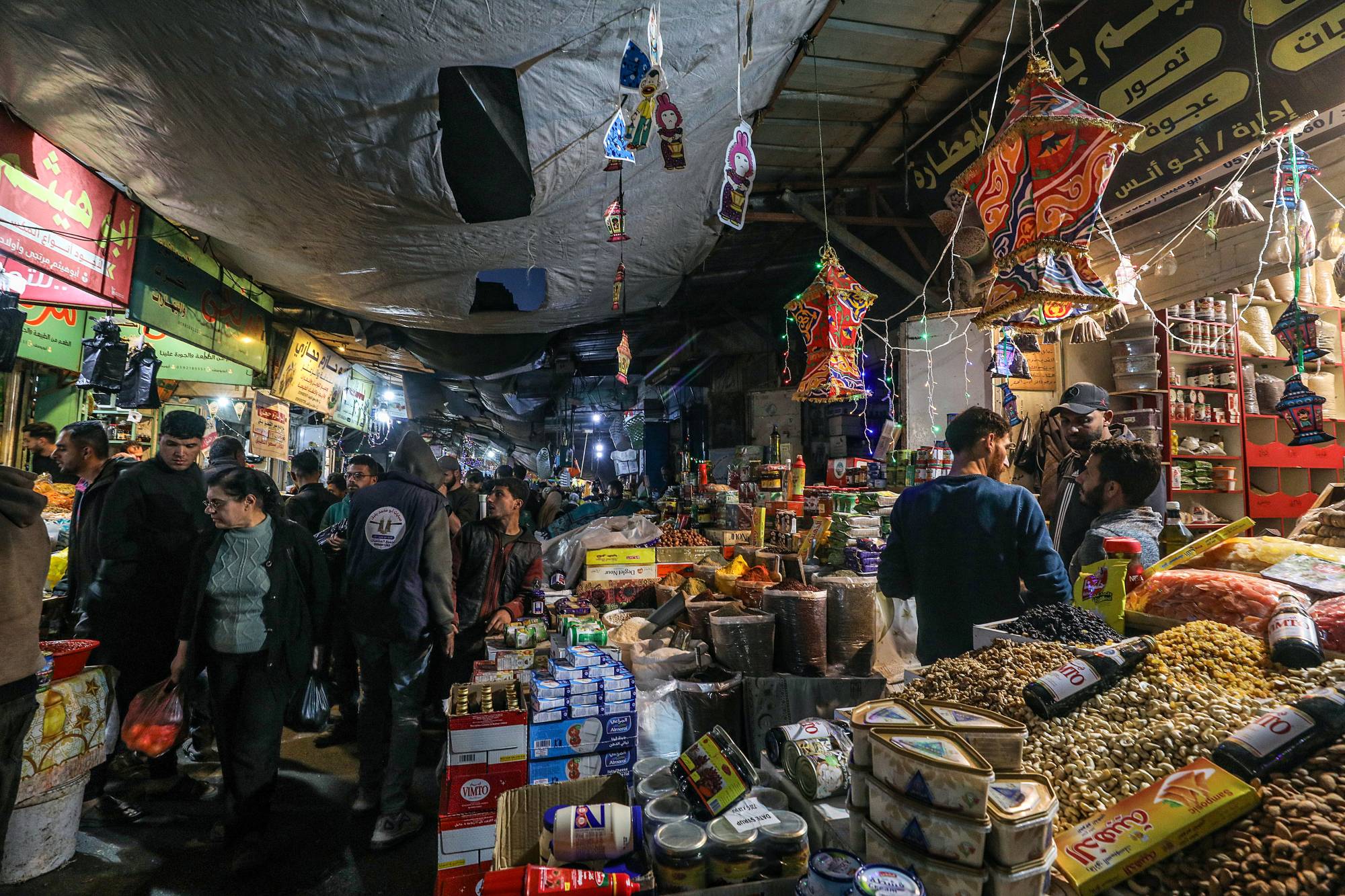
Little Ramadan lanterns and string lights appeared on streets lined with collapsed buildings and piles of rubble in Gaza City, bringing joy and respite as Islam's holiest month began -- the first since October's ceasefire.

In the Omari mosque, dozens of worshippers performed the first Ramadan morning prayer, fajr, bare feet on the carpet but donning heavy jackets to stave off the winter cold.

"Despite the occupation, the destruction of mosques and schools, and the demolition of our homes... we came in spite of these harsh conditions," Abu Adam, a resident of Gaza City who came to pray, told AFP.

"Even last night, when the area was targeted, we remained determined to head to the mosque to worship God," he said.

A security source in Gaza told AFP Wednesday that artillery shelling targeted the eastern parts of Gaza City that morning.

The source added that artillery shelling also targeted a refugee camp in central Gaza.

Israel does not allow international journalists to enter the Gaza Strip, preventing AFP and other news organizations from independently verifying casualty figures.

A Palestinian vendor sells food in a market ahead of the holy month of Ramadan in Gaza City, 17 February 2026. (EPA)

- 'Stifled joy' -

In Gaza's south, tens of thousands of people still live in tents and makeshift shelters as they wait for the territory's reconstruction after a US-brokered ceasefire took hold in October.

Nivin Ahmed, who lives in a tent in the area known as Al-Mawasi, told AFP this first Ramadan without war brought "mixed and varied feelings".

"The joy is stifled. We miss people who were martyred, are still missing, detained, or even travelled," he said.

"The Ramadan table used to be full of the most delicious dishes and bring together all our loved ones," the 50-year-old said.

"Today, I can barely prepare a main dish and a side dish. Everything is expensive. I can't invite anyone for Iftar or suhoor," he said, referring to the meals eaten before and after the daily fast of Ramadan.

Despite the ceasefire, shortages remain in Gaza, whose battered economy and material damage have rendered most residents at least partly dependent on humanitarian aid for their basic needs.

But with all entries into the tiny territory under Israeli control, not enough goods are able to enter to bring prices down, according to the United Nations and aid groups.

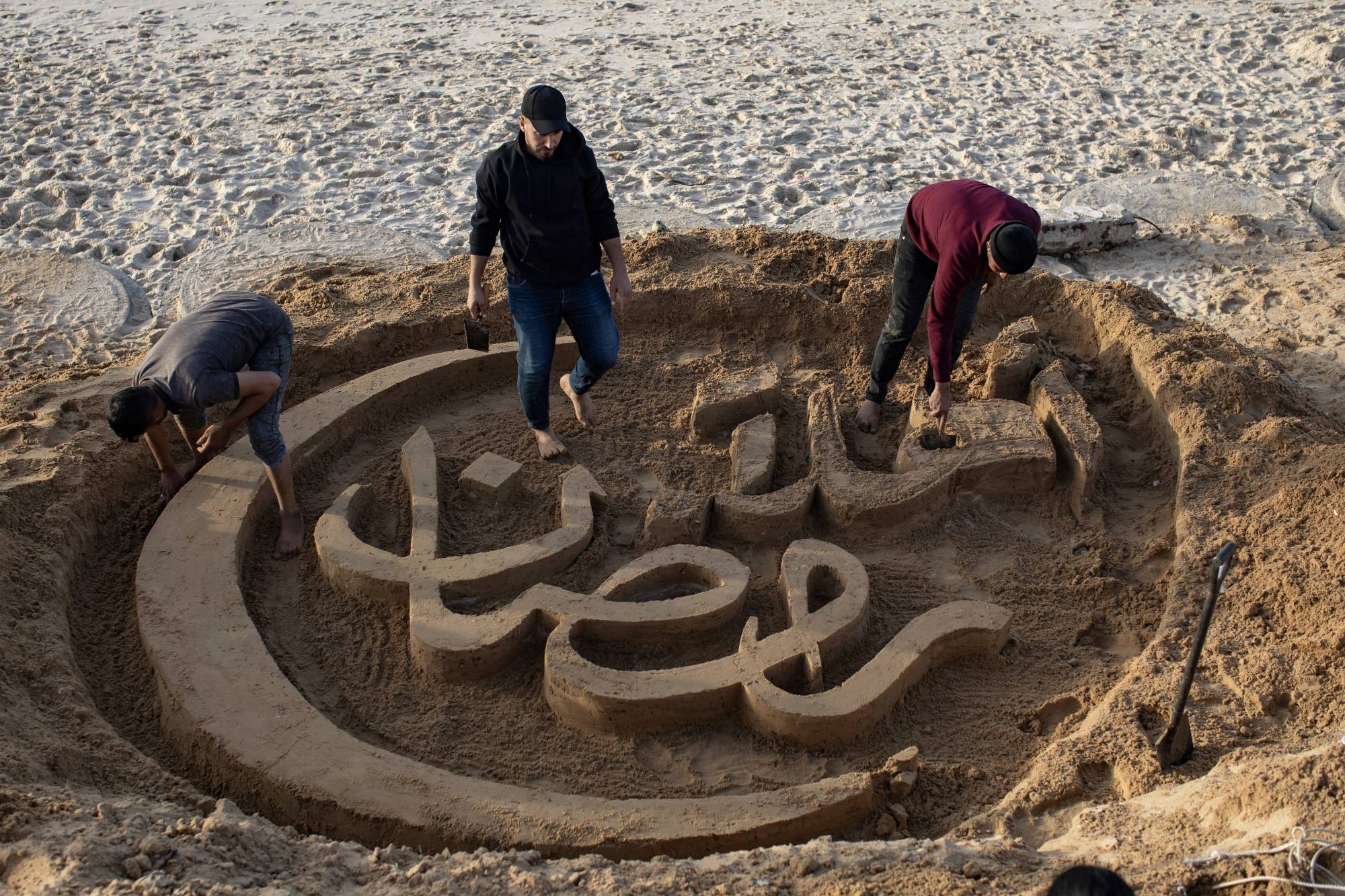
A sand sculpture bearing the phrase "Welcome, Ramadan," created by Palestinian artist Yazeed Abu Jarad, on a beach in Khan Younis, southern Gaza Strip, 17 February 2026, amid a ceasefire between Israel and Hamas. (EPA)

- 'Still special' -

Maha Fathi, 37, was displaced from Gaza City and lives in a tent west of the city.

"Despite all the destruction and suffering in Gaza, Ramadan is still special," she told AFP.

"People have begun to empathize with each other's suffering again after everyone was preoccupied with themselves during the war."

She said that her family and neighbors were able to share moments of joy as they prepared food for suhoor and set up Ramadan decorations.

"Everyone longs for the atmosphere of Ramadan. Seeing the decorations and the activity in the markets fills us with hope for a return to stability," she added.

On the beach at central Gaza's Deir al-Balah, Palestinian artist Yazeed Abu Jarad contributed to the holiday spirit with his art.

In the sand near the Mediterranean Sea, he sculpted "Welcome Ramadan" in ornate Arabic calligraphy, under the curious eye of children from a nearby tent camp.

Nearly all of Gaza's 2.2 million residents were displaced at least once during the more than two years of war between Israel and Hamas, sparked by the latter's unprecedented October 7 attack on Israel.

Mohammed al-Madhoun, 43, also lives in a tent west of Gaza City, and hoped for brighter days ahead.

"I hope this is the last Ramadan we spend in tents. I feel helpless in front of my children when they ask me to buy lanterns and dream of an Iftar table with all their favorite foods."

"We try to find joy despite everything", he said, describing his first Ramadan night out with the neighbors, eating the pre-fast meal and praying.