As Israel’s Fight with Hezbollah Heats Up, People of Gaza Fear Being Forgotten

Palestinians look at the destruction after an Israeli airstrike on a crowded tent camp housing Palestinians displaced by the war in Muwasi, Gaza Strip, Sept. 10, 2024. (AP)
TT

As Israel’s Fight with Hezbollah Heats Up, People of Gaza Fear Being Forgotten

Palestinians look at the destruction after an Israeli airstrike on a crowded tent camp housing Palestinians displaced by the war in Muwasi, Gaza Strip, Sept. 10, 2024. (AP)

As the escalating conflict between Israel and Hezbollah grabs global attention, Palestinians in Gaza wonder: What will become of their plight after nearly a year of devastating war?

They are petrified that international concern has been diverted, and that a dark possibility looms: abandonment.

The families of Israeli hostages held in Gaza have the same worry.

Nezar Zaqout, one of some 1.9 million Palestinians forced to flee their homes since the Israel-Hamas war broke out, said he fears the fighting across the Israel-Lebanon border will overtake interest in the abysmal living conditions in Gaza and efforts to negotiate a ceasefire.

"We have become completely forgotten," said Zaqout, who is living in Khan Younis after fleeing from Gaza City months ago. "There is no news about us in the media."

Palestinians fret the miserable conditions in Gaza will become permanent. Ninety percent of the population is homeless, with hundreds of thousands in unsanitary tent camps struggling to find food and clean water.

"A year on, and no one cares about us. Every day there is bombing, every day there are martyrs, and every day there are injuries," said Saadi Abu Mustafa, who fled Khan Younis to Muwasi, a sprawling tent camp along Gaza's southern coast.

Since Hamas launched the war on Oct. 7, Israel's retaliatory invasion of Gaza has killed more than 41,000 Palestinians and wounded more than 95,000, according to Gaza's Health Ministry, which does not differentiate between civilians and fighters, but says over half of the dead were women and children.

Months of intense air and ground assaults have razed entire housing blocks to the ground; researchers who study satellite imagery estimate nearly 60% of buildings in the Gaza Strip have likely been damaged since the start of the war.

Israel vowed to destroy Hamas after Oct. 7, when its fighters killed some 1,200 people and abducted 250 others. While it has been badly hobbled, the armed group backed by Iran remains in power.

Israel’s government says about 70 of the 100 hostages are still presumed alive. Their families dread the government's focus on ending the war is fading.

"My biggest concern is that all the public’s attention and the world’s attention would be gone to the north," said Udi Goren, a relative of Tal Haimi, an Israeli killed on Oct. 7 and whose body was taken to Gaza. "Eventually the hostages will just be completely left alone without anyone to bring them out."

As the threat of all-out-war between Israel and Hezbollah has risen, Israel has drawn down its troop presence in Gaza to move key units to its northern border with Lebanon. Still, thousands of soldiers remain in Gaza, carrying out sporadic raids and preventing displaced Palestinians from returning home.

Daily strikes have continued in Gaza, too. An Israeli strike on a school-turned-shelter in northern Gaza Saturday killed at least 22 people and wounded 30 others, mostly women and children, according to the Gaza health ministry.

Recent rains have made already difficult living conditions in the Israeli-designated "safe zone" of Muwasi unbearable. On Sunday, children living there walked barefoot through mud that reached above their ankles, while men dug through the muck to salvage precious canned goods and furniture.

"The entire kitchen in which we prepare food was filled with water. We did not know what to do. This is the beginning of winter. What will happen in the coming days?" said Rana Goza’t, a mother displaced from Gaza City.

Others lamented water-logged mattresses and pleaded for international groups to help keep attention on the humanitarian crisis in Gaza.

"We hope that all peoples care about us and see where we have reached," said Enas Kollab, who relocated to Muwasi from northern Gaza.

A flurry of diplomatic activity to broker an agreement between Israel and Hamas appears to have subsided, with each side accusing the other of negotiating in bad faith and making untenable demands.

Israeli Prime Minister Benjamin Netanyahu says Israel must keep troops in two areas of Gaza to prevent Hamas from rearming. But Hamas has said it will not agree to any deal that allows Israeli troops to remain.

Hopes for a deal have further dimmed as the United States, a key mediator in the talks, appears to be losing the ability to influence its closest ally. In a trip to the region last week, Secretary of State Antony Blinken visited only Egypt because US officials believed having him travel to Israel in support of a deal might cause Netanyahu to say something that would undermine mediation efforts.

No clear vision has emerged for postwar Gaza — or who will guide and govern that process — but one thing is clear: Rebuilding the territory will take decades. The UN estimated this summer that just removing some 40 million tons of rubble would take 15 years.
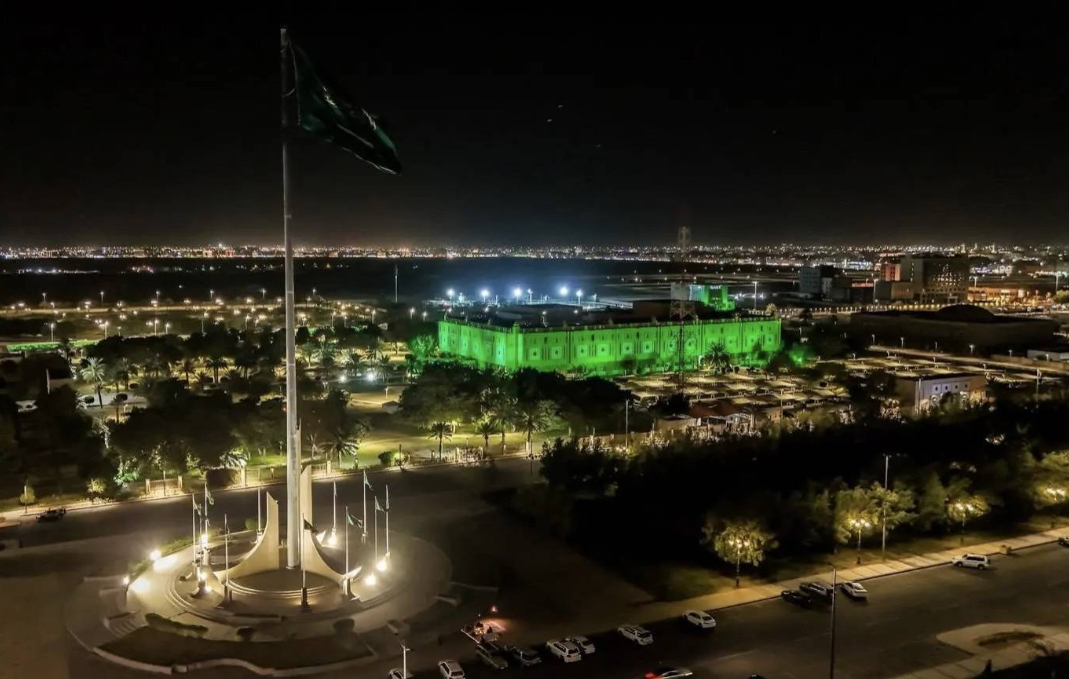
Saudi Arabia Revives Centuries of Heritage in Founding Day Celebrations

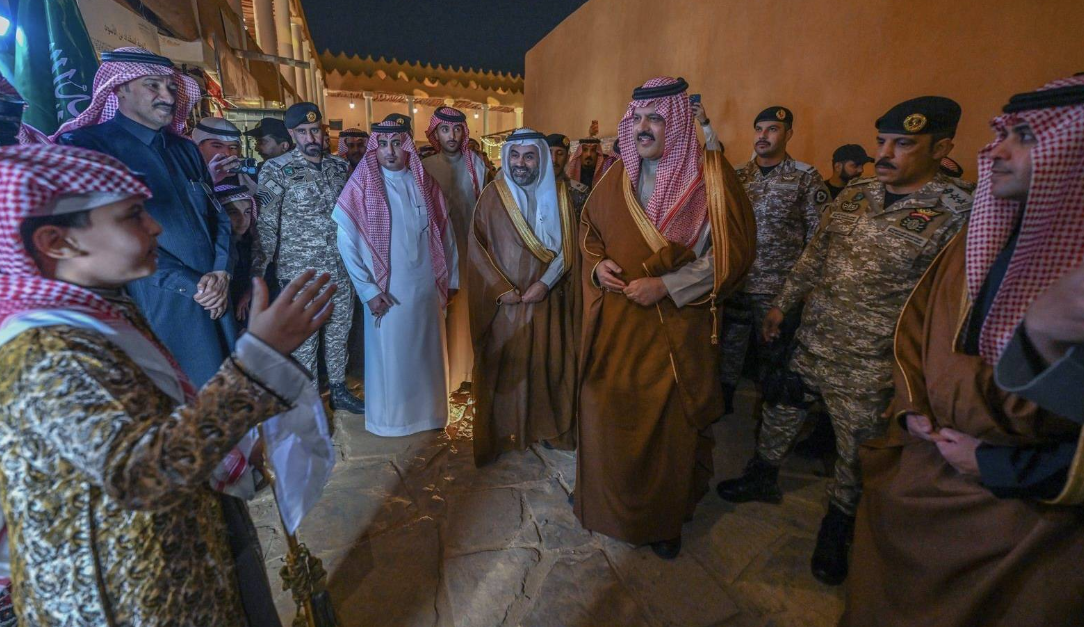
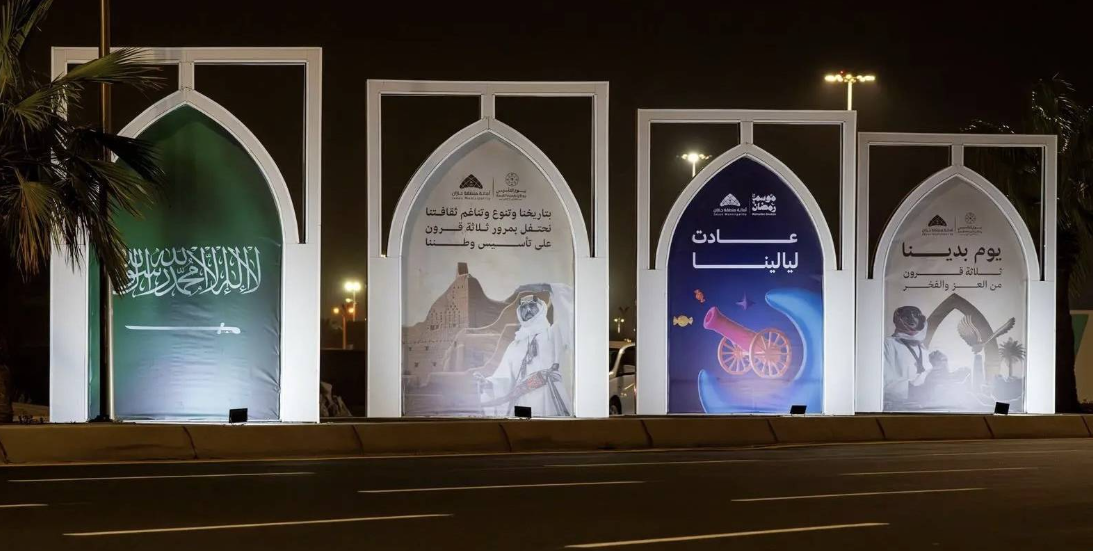
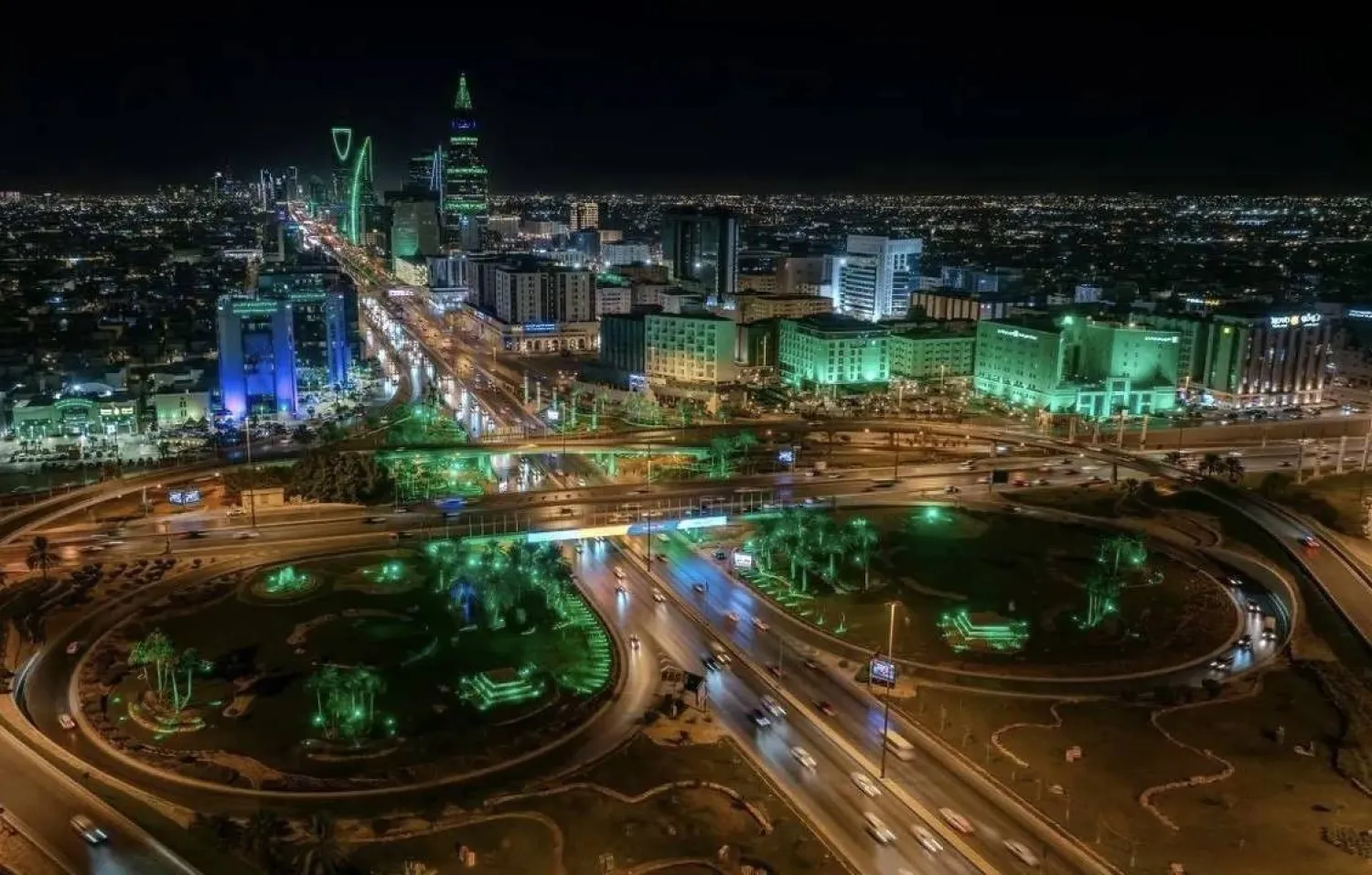
The Riyadh Municipality decorates the capital's roads and squares with more than 5,000 aesthetic illuminations in celebration of Founding Day (SPA)
TT

Saudi Arabia Revives Centuries of Heritage in Founding Day Celebrations

The Riyadh Municipality decorates the capital's roads and squares with more than 5,000 aesthetic illuminations in celebration of Founding Day (SPA)

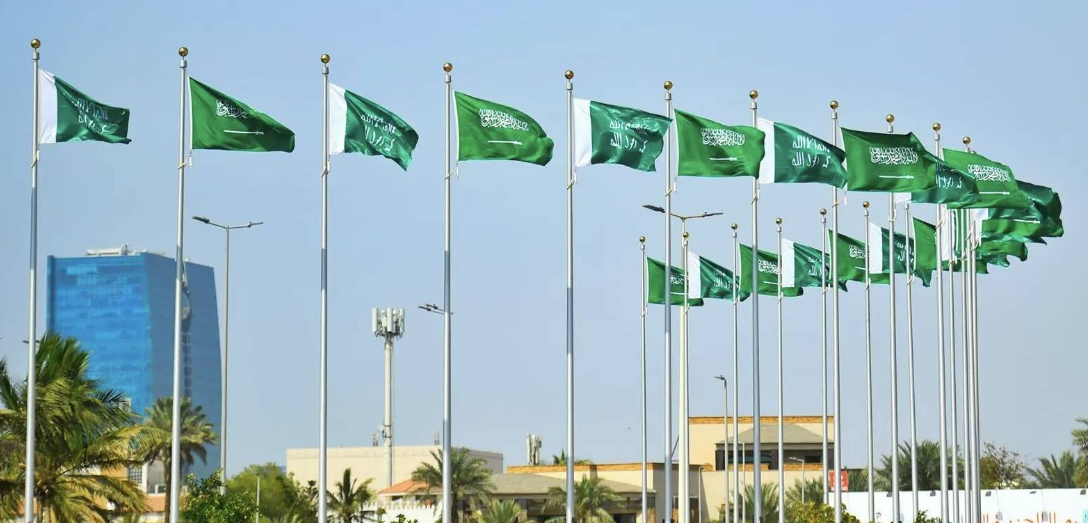
As streets across Saudi cities were adorned in green and traditional attire, a series of major cultural and entertainment events were under way on Sunday across the Kingdom to mark Founding Day. Riyadh and cities nationwide were transformed into cultural and tourism destinations, attracting thousands of citizens, residents, and visitors who came to witness the legacy and impact of the epic nation-building journey that shaped the history of the Arabian Peninsula.

This year’s Founding Day coincided with the nights of the holy month of Ramadan, giving the celebrations a distinct national and cultural character, with evening events held in a Ramadan atmosphere. Cities across Saudi Arabia commemorated Founding Day by expressing pride in the state’s deep-rooted origins, its historical depth, and the enduring bond between citizens and their leaders since the establishment of the First Saudi State three centuries ago.

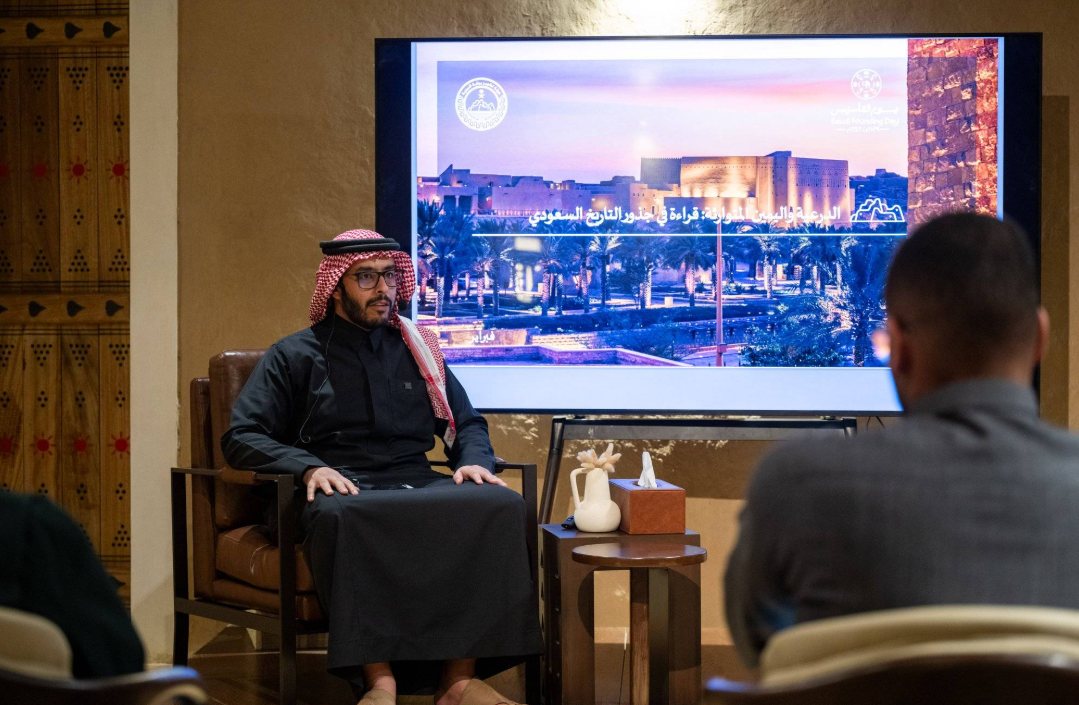
Academic sessions on the history of the Saudi state (Diriyah Development Authority)

Diriyah...The Beating Heart of History

Historic Diriyah took center stage in the celebrations, as the At-Turaif district, listed as a UNESCO World Heritage Site, hosted a range of distinctive events organized by the Diriyah Gate Development Authority.

Founding Day activities in At-Turaif brought visitors closer to history through immersive experiences set in the birthplace of the Saudi state. At the At-Turaif Majlis, children were introduced to the stories of Diriyah through dedicated workshops, while storyteller Nawaf Al-Huwaimil captivated audiences with rich historical narratives delivered in a distinctive style.

In the “Misyan Sessions,” Dr. Faisal Al-Amer led in-depth academic discussions on Diriyah’s legacy and the expansion of the Saudi state. The program also included Arabian horse displays and specialized Founding Day guided tours along a historical route highlighting leadership, community partnership, and collective contribution during the founding era.

Saudi regions decorated in celebration of Founding Day (SPA)

The Capital...Where Modernity Meets Heritage

In the heart of Riyadh, the Qasr Al-Hukm district and Al-Adl Square hosted national events under the patronage of the Royal Commission for Riyadh City. Activities included the “Mikhayal Hal Al-Awja” exhibition, which showcased the stages of state formation using contemporary visual techniques.

Prince of Hail sponsors the region’s education sector celebration of Founding Day (SPA).

The Riyadh Municipality decorated streets and major roads to mark Founding Day, installing more than 5,000 decorative light features across key routes, squares, and public spaces. The initiative enhanced the visibility of the occasion across neighborhoods, creating a cohesive visual identity that reflects pride in the Kingdom’s history and underscores the significance of Founding Day.

Street decorations conveyed a deep sense of belonging and pride, as light blended with national identity across the capital. Roads and squares became living canvases of national pride, marking 299 years of building and achievement and expressing loyalty to the leadership and the nation’s enduring journey.

Saudi regions decorated in celebration of Founding Day (SPA)

The municipality also continued its Founding Day activities in parks and public squares, reinforcing the occasion’s presence in communal spaces, strengthening pride in historical roots, and encouraging community engagement across Riyadh

Celebrations across the Kingdom

Celebrations were not limited to the capital. Festivities took place across 13 regions of Saudi Arabia as the country marked Founding Day for the fifth time since King Salman issued a royal order designating February 22 each year as Founding Day.

In Jeddah, a multi-day program was launched, featuring decorations across main roads, squares, gates, and parks throughout the city. Prince Majed Park hosted on-the-ground events on February 22, including falconry and horse displays, handicrafts, children’s activities, drawing, and henna.

The celebrations reflected the historical depth of Founding Day and reinforced pride in national identity.

In the Tabuk region, Founding Day was marked through 23 national, cultural, and heritage events across cities and governorates, with participation from government and private entities. The activities highlighted the historical significance of the occasion and strengthened values of belonging and pride in Saudi identity.


The Saudi Riyal: Tracing Three Centuries from Diriyah’s Markets to Global Financial Icon

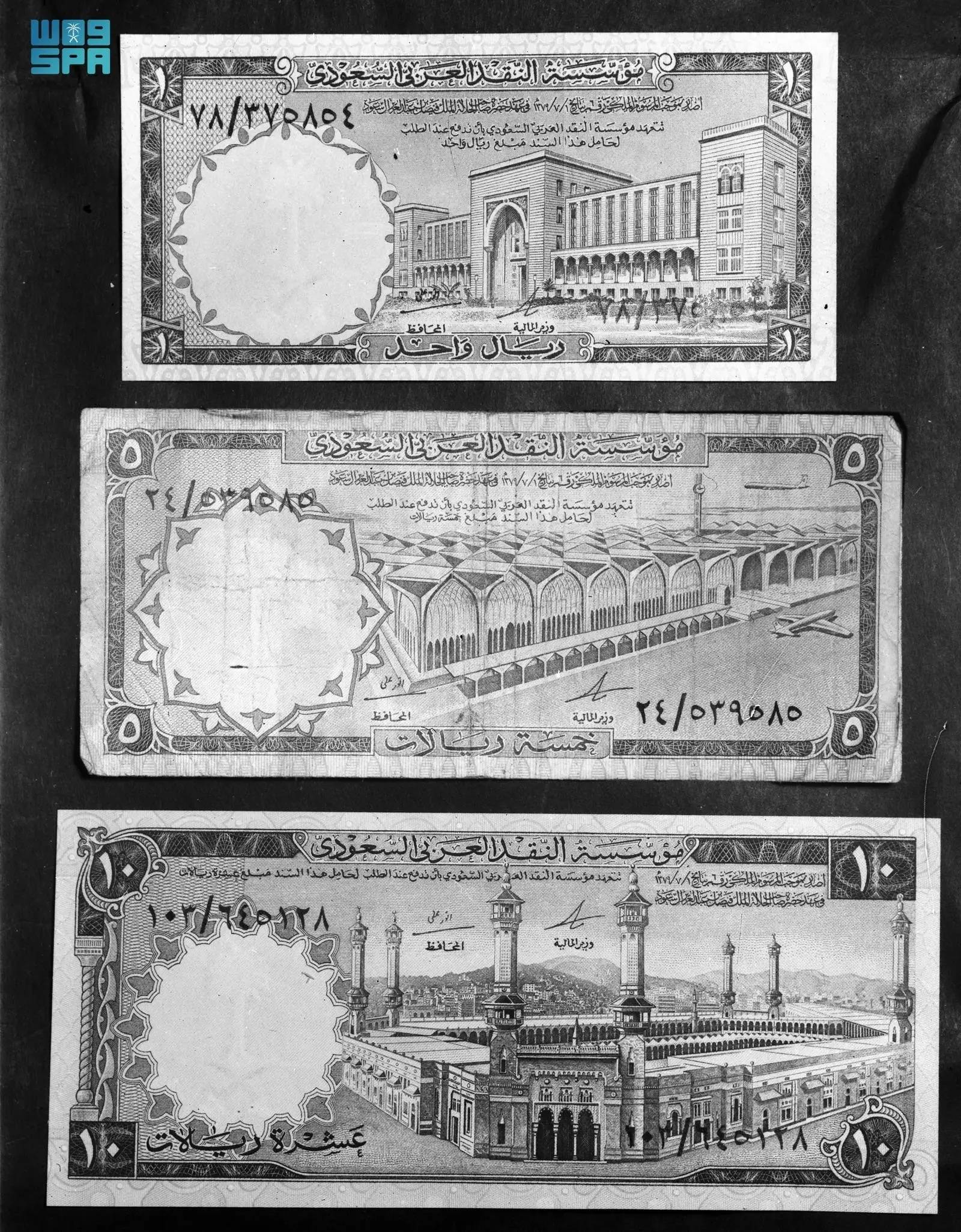
The Saudi riyal serves as a living record of three centuries of progress, representing not merely a unit of value but a document of the nation’s journey and renaissance. (SPA)
TT

The Saudi Riyal: Tracing Three Centuries from Diriyah’s Markets to Global Financial Icon

The Saudi riyal serves as a living record of three centuries of progress, representing not merely a unit of value but a document of the nation’s journey and renaissance. (SPA)

The history of the Saudi riyal is deeply intertwined with the evolution of the Saudi state, evolving from its early days as a fluctuating medium of exchange to its modern, regulated form through significant political, social, and economic transformations, reported the Saudi Press Agency on Saturday.

A comprehensive overview of this trajectory begins with the diverse currencies of the First Saudi State, passes through the regulatory milestones of the unification era, and culminates in today’s sophisticated monetary structure.

First Saudi State: Vibrant markets and multiple currencies

With the establishment of the First Saudi State in the mid-12th century AH (mid-18th century CE), the Arabian Peninsula lacked a unified monetary system, and a variety of currencies circulated, driven by trade across a vast geography.

According to the historical guide for Founding Day published by the King Abdulaziz Foundation for Research and Archives (Darah), First Saudi State founder Imam Muhammad bin Saud bin Muhammad bin Muqrin focused on building a robust economic foundation by securing financial resources and encouraging trade between Diriyah and other regions. Consequently, markets in Diriyah and Najd flourished, attracting merchants who traded in gold, silver, and barter.

As noted in Dr. Abdullah Al-Saleh Al-Uthaimin’s "History of the Kingdom of Saudi Arabia," popular currencies included the Austrian silver Maria Theresa thaler, locally known as Al-Riyal Al-Fransi (literally the French riyal), which became a staple due to its consistent purity and weight.

According to Dr. Mohammed Al-Manshat’s "Organizations of the First Saudi State," Diriyah’s markets reached a peak of prosperity during the reign of Imam Saud bin Abdulaziz. Political and security stability allowed merchants to move freely, facilitating smooth and reliable financial transactions.

The history of the Saudi riyal is deeply intertwined with the evolution of the Saudi state. (SPA)

Regional diversity and variety of coins

Monetary patterns varied by region. In Najd, denominations such as Al-Jadeeda, Al-Khurda, Al-Muhammadiya, and Al-Mushakhas were used according to market needs. Al-Khurda served as the smallest unit, while Al-Jadeeda was used for everyday transactions.

In Al-Ahsa, an agriculturally vital hub, a local currency called Al-Tawila, a bent copper bar combined with silver, was commonly used. Meanwhile, the Hijaz experienced a high degree of currency diversification, as Makkah and Madinah welcomed pilgrims carrying various coins from across the Muslim world.

The reign of King Abdulaziz: Foundations of organization

The entry of King Abdulaziz bin Abdulrahman Al Saud into Riyadh in 1319 AH (1902) marked a pivotal economic turning point. Initially, he maintained the existing currencies to preserve market stability while gradually introducing a unified currency.

According to the Saudi Central Bank (SAMA), an early significant step was counterstamping circulating coins with the word "Najd" to indicate official adoption. After the unification of the Hijaz and Najd in 1343 AH (1925), the word "Hijaz" was added to reflect the expanding political unity.

By 1343 AH, monetary reform shifted from stamping to minting. SAMA records show the issuance of the first Saudi copper coins in half- and quarter-qirsh denominations, bearing King Abdulaziz’s name and the mint location, Umm Al-Qura. These were the first legal-tender coins of the Saudi state.

In 1346 AH (1927), King Abdulaziz abolished all foreign circulating currencies and introduced the first pure Saudi silver riyal. To support this, he issued a royal decree - published in the Umm Al-Qura gazette - outlining the state’s new monetary policies. After the formal unification of the Kingdom in 1351 AH (1932), the riyal became the official currency. By 1354 AH (1935), a new silver riyal bearing the name "Kingdom of Saudi Arabia" was issued, symbolizing national unity and stability.

Saudi Arabian Monetary Agency: Regulation and supervision

To manage the expansion of economic activity, King Abdulaziz issued two royal decrees in 1371 AH (1952) establishing the Saudi Arabian Monetary Agency (SAMA), now the Saudi Central Bank. SAMA was tasked with regulating currency issuance, maintaining its value, and supervising the banking system. It began operations in 1372 AH (1953), focusing on introducing the Saudi gold pound and completing the minting of the silver riyal.

With the establishment of the First Saudi State in the mid-18th century CE, the Arabian Peninsula lacked a unified monetary system. (SPA)

Pilgrim receipts and paper currency

Recognizing that heavy coins were becoming impractical for a modernizing economy and burdensome for pilgrims, King Abdulaziz sought a more efficient solution. This led to the introduction of "pilgrim receipts" by SAMA in 1372 AH (1953). Initially issued in 10-riyal denominations, these receipts were printed in Arabic, Persian, English, Urdu, Turkish, and Malay.

Though intended as a temporary convenience to be exchanged for silver, the receipts quickly gained the trust of merchants, citizens, and pilgrims alike. This success led SAMA to issue five-riyal notes in 1373 AH (1954) and one-riyal notes in 1375 AH (1956).

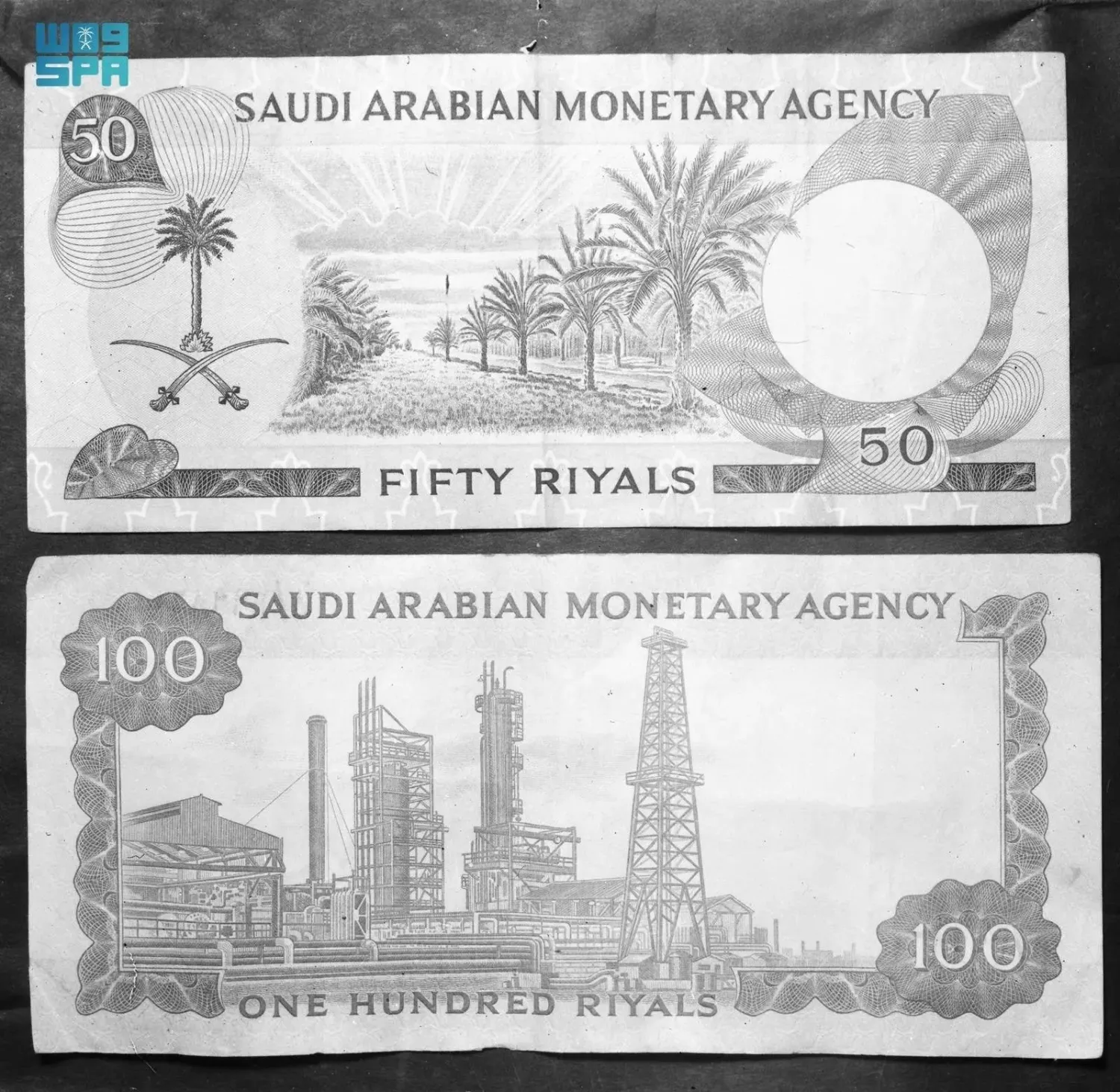
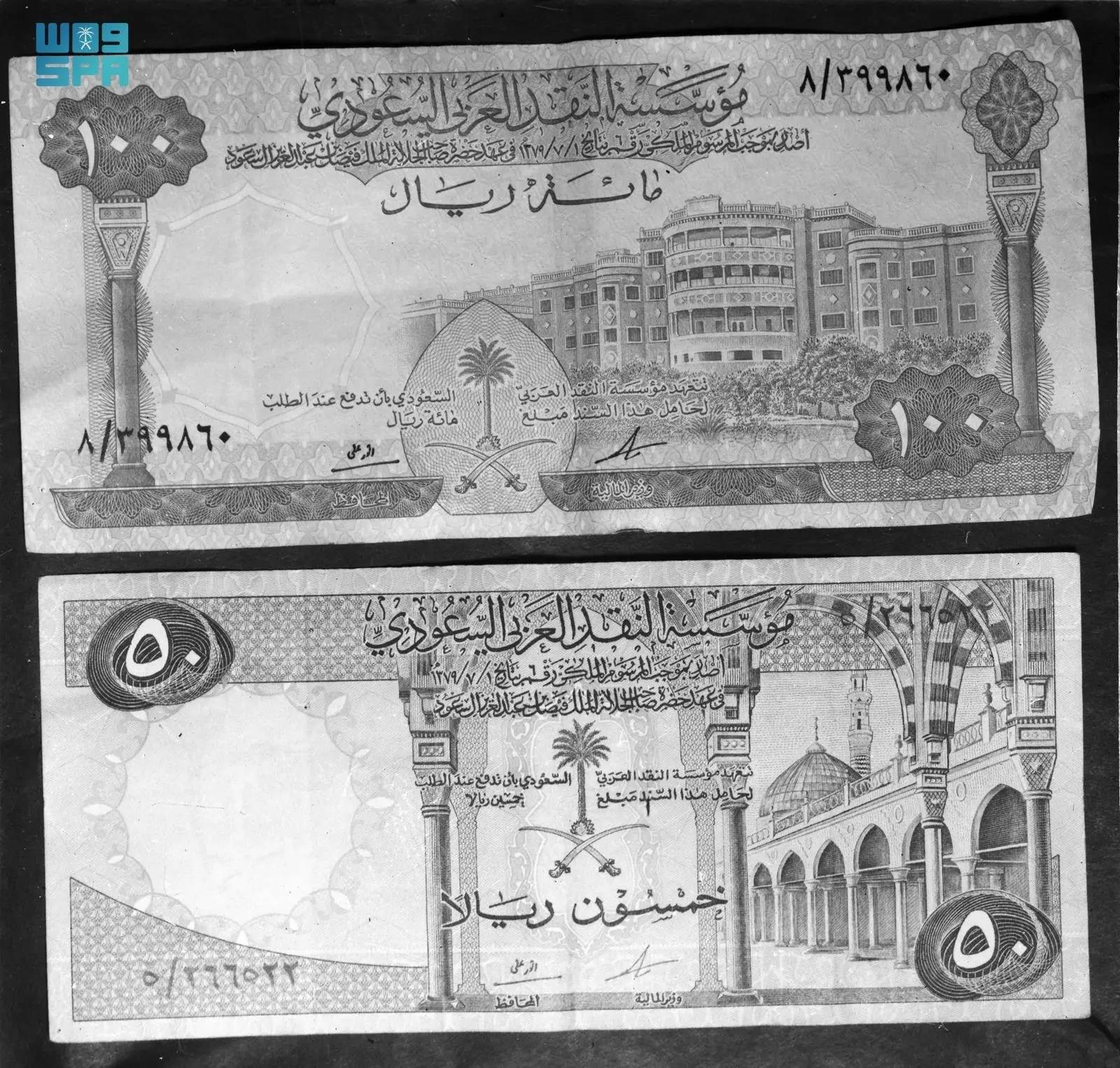
The public’s preference for these receipts over heavy coins paved the way for a permanent transition to paper currency. In 1381 AH (1961), the first official paper issue of the Saudi riyal was released during the reign of King Saud bin Abdulaziz, featuring enhanced security and depictions of historical landmarks.

The sixth issue: Trust and security

The sixth issue of the Saudi currency was released in 1438 AH (2016) under the reign of Custodian of the Two Holy Mosques King Salman bin Abdulaziz Al Saud, bearing the slogan "Trust and Security." This series incorporated the latest global technologies and security standards for both paper and metal denominations.

Furthermore, the adoption of the official Saudi Riyal Symbol on February 20, 2025, reinforced the Kingdom’s financial and national identity. The symbol’s design, inspired by Arabic calligraphy, reflects pride in the cultural heritage that defines the nation.

From the barter systems of Diriyah to the internationally recognized symbol of today, the Saudi riyal serves as a living record of three centuries of progress, representing not merely a unit of value but a document of the nation’s journey and renaissance.


Ukrainians, Scattered across Europe, Trapped in Limbo by War

A man walks past snow-covered plants at the Gryshko National Botanical Garden of the National Academy of Sciences of Ukraine in Kyiv on February 11, 2026, amid the Russian invasion of Ukraine.  (Photo by Genya SAVILOV / AFP)
A man walks past snow-covered plants at the Gryshko National Botanical Garden of the National Academy of Sciences of Ukraine in Kyiv on February 11, 2026, amid the Russian invasion of Ukraine. (Photo by Genya SAVILOV / AFP)
TT

Ukrainians, Scattered across Europe, Trapped in Limbo by War

A man walks past snow-covered plants at the Gryshko National Botanical Garden of the National Academy of Sciences of Ukraine in Kyiv on February 11, 2026, amid the Russian invasion of Ukraine.  (Photo by Genya SAVILOV / AFP)
A man walks past snow-covered plants at the Gryshko National Botanical Garden of the National Academy of Sciences of Ukraine in Kyiv on February 11, 2026, amid the Russian invasion of Ukraine. (Photo by Genya SAVILOV / AFP)

Maryna Bondarenko says she has three suitcases packed in her apartment in Poland, waiting for the day when peace returns to Ukraine.

The 51-year-old journalist fled Kyiv with her son and mother after Russia launched its invasion on February 24, 2022. She thought they would be abroad for a month or two until the war ended, reported Reuters.

Four years later, she is still there, working in a Ukrainian-language newsroom that caters to a community of more than 1.5 million Ukrainians living in Poland.

"There were so many moments when we thought: 'This is it, we're finally going back.' We went to the post office several times, packed our belongings into boxes, absolutely certain that we were going back," she said.

Russia’s full-scale invasion of Ukraine has triggered the largest refugee crisis in Europe since World War Two. More than 5 million Ukrainians are scattered across Europe, according to UN figures, many of them in Central and Eastern Europe.

SEPARATED FROM ‌HUSBAND

Roughly three-quarters of ‌the refugees are women and children, after Ukraine imposed martial law prohibiting men of military ‌age from ⁠leaving the ⁠country.

Bondarenko longs to be reunited with her husband, Andrij Dudko, a 44-year-old former TV cameraman who is serving as a drone operator on the front line. But waves of Russian air strikes - which have cut power to tens of thousands of people in Kyiv during a bitter winter - convinced her to stay.

"We get ready to leave, and then there's another massive attack. We get ready again, and then cold winter comes and there is no heating, no power, no water. And I just can't bring my child there, under the rockets."

In Poland, large Ukrainian communities have sprung up in cities such as Warsaw and Krakow, sometimes prompting tensions with local residents ⁠who complain of the new arrivals taking welfare benefits and jobs.

"I want to go home, ‌I really do. I know it won’t be easy," said Bondarenko, adding ‌that the country she returns to will be profoundly changed.

Ukrainian President Volodymyr Zelenskiy’s government hopes that 70% of Ukrainians abroad will return, once ‌the war ends. But surveys have shown that, over time, the share of Ukrainians who say they want to go back ‌is declining.

For many among the younger generation of Ukrainians abroad - like Bondarenko's 11-year-old son Danylo - the country is a distant memory.

He likes Poland, despite experiencing some hostility toward Ukrainians in school.

"I don't really remember anyone from Ukraine. I remember I had one friend, but I do not really remember him and I’ve lost contact with him," he said. "I don't think that I will return to Ukraine."

'LIFE TURNED OUT DIFFERENTLY'

Iryna Kushnir ‌and Olga Yermolenko, who were friends at high school in the eastern Ukrainian city of Kharkiv, rekindled their friendship after they both fled to Istanbul at the start of ⁠the war, part of a ⁠far smaller number of Ukrainians who sought shelter in Türkiye.

"I thought the war would end quickly, so I didn't plan to stay in Istanbul for long," said Kushnir, 42, who left her 19-year-old daughter Sofia behind in Ukraine to study.

But four years later, she is married to a Turkish man and has a teaching job at the Ukrainian department of Istanbul University.

"Like all Ukrainians, I planned to return home, but life turned out differently," said Kushnir, who says she is proud that her daughter has chosen to remain in Ukraine.

Her friend, Yermolenko, 43, works remotely from Istanbul as a financial specialist for Ukrainian clients. Her mother Tetyana, 73, still lives in Kharkiv and they are constantly in touch.

"I cannot say I am involved 100% in Turkish life. It is a bit strange feeling to be caught between your previous life and a possible future life," said Yermolenko, who has started learning Turkish. She still closely follows events in Ukraine but tries not to think about how long the war will last.

"I open the news - there's a Telegram channel that reports what's happening in Kharkiv in real time - and I see a missile flying toward my home," she said. "In that moment, the feeling is terrifying. I’m very scared. And of course, I immediately call my mom to make sure she's okay."