
In the first week of September 2025, Iraq’s Kataib Hezbollah concluded it had no option but to release Israeli-Russian researcher Elizabeth Tsurkov even if it meant surrendering a valuable bargaining chip without reward, multiple officials and faction insiders told Asharq Al-Awsat.
According to sources, the decision marked the end of the group’s fraught relationship with what is known as the “Iraqi resistance coordination,” and followed weeks of increasingly complex arrangements for her handover. These included security contacts, factional negotiations and discreet transfers between sites.
On Sept. 9, Tsurkov was left alone for four hours in one Baghdad property before a government-designated force arrived to collect her.
Asharq al-Awsat spoke with a US State Department official, Iraqi government advisers, security personnel and members of two armed factions to piece together what was described as a “liberation operation.”
Those interviews suggested Iraq’s government opened a security track against the abductors in parallel with “tough” American warnings over the consequences of prolonged detention. Kataib Hezbollah, sensing it had exhausted potential gains from holding her longer, delivered her under pressure.
Advisers and militia elements told Asharq Al-Awsat that Kataib Hezbollah was effectively forced into releasing Tsurkov “after a political siege and negotiations that escalated since August, under pressure from the Iraqi government and the United States.”
“The release of Princeton University student Elizabeth Tsurkov came after a decisive partnership with Prime Minister Mohammed Shia al-Sudani,” a US State Department spokesperson told the newspaper.
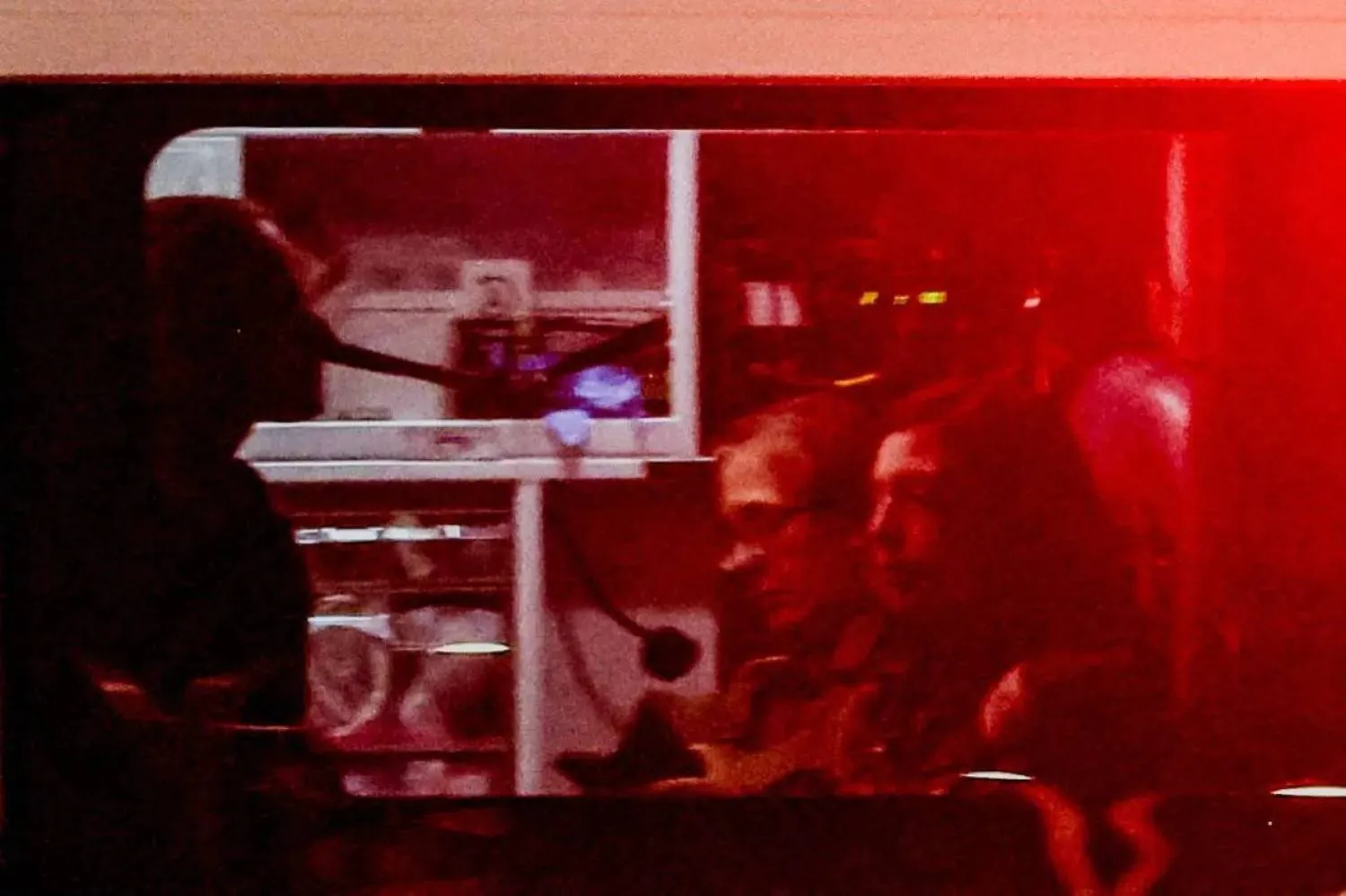
On Sept. 11, as photographs circulated showing Tsurkov en route to an Israeli hospital, a Kataib Hezbollah official said the faction had made “a concession for the sake of public security, to avoid embarrassing the government and to support it.”
Tsurkov, a Princeton doctoral student, had vanished in Baghdad in March 2023. Israel later accused Kataib Hezbollah of abducting her. In May 2025, Asharq Al-Awsat reported that negotiations for her release were in their final stage.
After she was handed to the US embassy in Baghdad, supporters of Kataib Hezbollah spread word that the release was part of a wider bargain: a US troop withdrawal pledge and an Israeli prisoner swap. Iranian outlet Tasnim cited Iraqi sources to claim Israel would release Lebanese and Iraqi detainees, including naval officer Imad Amhaz, captured in Lebanon in late 2024.
But political sources told Asharq Al-Awsat that Lebanon had received no notice of any such return. Hezbollah officials did not mention Amhaz in a speech on Sept. 10.
A commander of another Iraqi faction allied with Kataib Hezbollah confirmed to the newspaper that Tsurkov was freed “without any deal.”
A politician within the Coordination Framework – the coalition of Shiite parties that dominates government and is aligned with the “resistance axis” – told Asharq al-Awsat the handover to Israel heralded “an unprecedented split” inside the camp.
“For years, these factions operated together under Revolutionary Guard direction,” he said. “Now some are siding with the government, while Tehran has shown no reaction. Kataib Hezbollah feels bitter, even toward pro-Iran Shiite factions.”
Accounts gathered by Asharq Al-Awsat reveal that multiple actors became involved in the handover, and their competing agendas produced conflicting narratives. Still, most agreed on one key detail: Tsurkov spent her last hours in Baghdad alone in a rented house in Jadriya, an affluent district by the Tigris River favored by Shiite leaders and militia commanders.
Sources said she was moved there on the final day, near the new Iraqi central bank headquarters. The property was owned by a retired politician and leased by a senior militia figure for sensitive meetings, according to the paper.
Armed men in military garb brought her in, one helping her down from a tinted car due to severe back pain. She had undergone spinal surgery a week before her abduction, and months of shifting between safehouses worsened her condition, Iraqi officials told Asharq Al-Awsat.
The armed men left, later alerting a security body to the location. Initially hesitant, a government unit eventually entered the house and “found Tsurkov alone.”
During her captivity she had been moved between buildings, sometimes disguised by decoy façades. US forces twice located her, but failed to reach her, officials said.
Israeli channel i24 aired footage on Sept. 11 of Tsurkov struggling to walk in a Tel Aviv hospital, leaning on a companion.
Negotiations intensified in recent months, according to a political adviser and a security official who spoke to the paper. Kataib Hezbollah’s leverage had ebbed after a July clash with the Iraqi army in southern Baghdad, in which Sudani accused the militia of “breaking the law.”
Two sources from armed factions said Quds Force advisers urged Kataib Hezbollah not to escalate against the government. Political intermediaries floated swap proposals, but the group concluded Tsurkov had become a burden.
By Sept. 9, both sides “reluctantly reached the end,” an Iraqi mediator said. The government pressed its advantage with US backing.
On Sept. 6, President Donald Trump signed an executive order sanctioning hostage-takers. Secretary of State Marco Rubio warned of “severe” penalties for state or non-state actors. The same day, new US Chargé d’Affaires Joshua Harris met Sudani, raising expectations of a breakthrough.
“The message to Kataib Hezbollah was clear: the government was ready to confront them, backed by Washington,” a government adviser told Asharq Al-Awsat.
Inside Baghdad’s ruling coalition, fears spread of looming US sanctions targeting the Shiite-led political system. While no major measures materialized, some parties began quietly signaling pragmatic readiness to adjust their stance, a Shiite politician told the newspaper.
A US State Department spokesman said the release was “a practical embodiment of peace through strength.” A senior militia commander stressed: “Not a single shot was fired in this liberation.”
One member of Sudani’s team said the government applied “political and security pressure” to block ransom or prisoner-exchange demands. An Iraqi politician called it “a battle in which no trigger was pulled.”
On Sept. 9, government forces and senior officials arrived to take custody of Tsurkov. Exhausted, she listened warily as one officer explained: “You are free now... you can trust everyone in this room.”
Only when reassured in English did she comply. Iraqi authorities checked her documents, ran medical tests, and asked the US embassy to conduct further examinations.
Armored vehicles escorted her to the embassy, and later to the airport. Before departure, she retrieved books and belongings she had bought in Baghdad markets, Asharq Al-Awsat said.
While she rested in a Baghdad hotel under government protection, US diplomats hesitated to receive her without Washington’s green light. Trump abruptly announced her release, catching officials by surprise.
A source close to Sudani said he “resented the US rush” but chose to let Trump “reap the benefits” rather than risk derailing the outcome.
Analysts told the paper that Sudani aims to secure a second term and saw the case as strengthening his credentials with Washington. “The governing coalition is now laying mines for him after the Tsurkov bomb was defused,” one said.
For Kataib Hezbollah, the ordeal ended with humiliation. “They lost their bargaining chip and got nothing,” a Baghdad security official told Asharq Al-Awsat.
The episode, Iraqi politicians say, may mark a realignment. Some factions are tilting toward cooperation with the government, while others cling to Iran’s “resistance” camp.
“This was a battle without gunfire,” a senior official said. “But it may ignite a deeper political war inside the Shiite camp – over Iraq’s future direction.”
Tsurkov, reunited with her family in Israel, thanked those who helped secure her release, Israeli media reported. For Iraq, the affair has underscored Sudani’s precarious balancing act: keeping US ties alive while managing fractious allies who once marched in lockstep under Tehran.