
As Israel maintains that its troops carried out a deadly raid in the Syrian town of Beit Jin as part of a counterterrorism operation on Friday, analysts said the real driver was the collapse of the latest talks between Damascus and Tel Aviv.
They argued that Israel sought to force concessions by pressing for the annexation of Syrian territory under what it calls peace through force.
According to these analysts, Israeli negotiators presented two options to the government of Syrian President Ahmed Al-Sharaa. The first was a full peace agreement that would require Damascus to give up the Golan Heights, which Israel has occupied since 1967. The second was a phased understanding that would allow Israel to keep its occupation of ten positions deep inside Syrian territory from Mount Hermon in the north to the southern border.
The core of this dispute was spelled out by Israeli Defense Minister Israel Katz in his recent comments, saying he sees no path for peace with Syria.
In a closed session of the Knesset Foreign Affairs and Defense Committee on Wednesday, Katz said Syria demands an Israeli withdrawal from the Golan Heights, which he called impossible.
Katz added a series of arguments to justify keeping Israeli forces in Syria and continuing military operations there. He said there are forces inside Syria “that are considering an invasion of towns in the Golan Heights to use them as launchpads for attacks on Israeli towns, referring to settlements in the Golan.”
He listed among these forces several Islamist groups, including the Houthis, Iranian militias, ISIS, Hamas and other Islamic factions, saying they pose a threat of a “ground invasion” of northern Israel.
The remarks drew criticism even in Tel Aviv. The newspaper Yedioth Ahronoth wrote that Israel has never before spoken of attempts by the Yemeni Houthi group to operate against Israel from Syrian territory.
It said there is no information about any Houthi activity in Syria, even though the group has launched rockets and drones from Yemen at Israel over the past two years in response to its war on the Gaza Strip.
Katz also revisited the issue of the Druze in Syria, calling it a “matter of concern” for Israeli officials.
He warned that the Israeli army has a ready plan and that if there are renewed airstrikes on Jabal Al-Druze in southern Syria, Israel will intervene again, including by closing the border.
In parallel, the Israeli army reinforced its presence in the wide area it has occupied in Syria since the fall of Bashar al-Assad’s regime in December 2024.
This area covers 450 square kilometers. Israel has also taken control of all the peaks of Mount Hermon and built ten large military posts there.
After Israeli air forces carried out a sweeping attack on Syrian airports and military bases immediately after the collapse of the Assad government about a year ago, destroying 85 percent of its defensive capabilities, Israel continued to strike different parts of Syria from Deir Ezzor to Homs and from Aleppo to Daraa, and carried out raids to arrest what it calls terror suspects.
The Israeli army has also intervened in internal conflicts in southern Syria on the grounds of defending the Druze, demanding an Israeli corridor from the Golan Heights to Sweida, which has a majority Druze population.
Israel has divided southern Syria into two zones. The first is a security belt along the border with a depth of five to seven kilometers, where no armed presence is allowed. The second is a demilitarized area where Syrian army heavy vehicles are prohibited, stretching from Damascus to Daraa.
Israel carried out various attacks in these border areas while high level delegations from both countries were meeting in different capitals under the supervision of mediators including the United States, Türkiye and Azerbaijan.
Analysts believe the latest Israeli military strikes were part of its negotiating tactics and its pressure campaign to force concessions from Damascus.
In recent weeks Israel deployed Force 55 of the Israeli army, known as the commandos, transferring the unit from the Khan Younis area in the Gaza Strip to conduct operations similar to those carried out in the enclave and in Bint Jbeil in Lebanon.
The unit stormed the town of Beit Jin in the Damascus countryside in southern Syria early Friday with large forces to arrest three men it says were involved in preparing attacks on Israel.
After detaining the three while they were asleep in their homes and beginning to withdraw, the force came under fire.
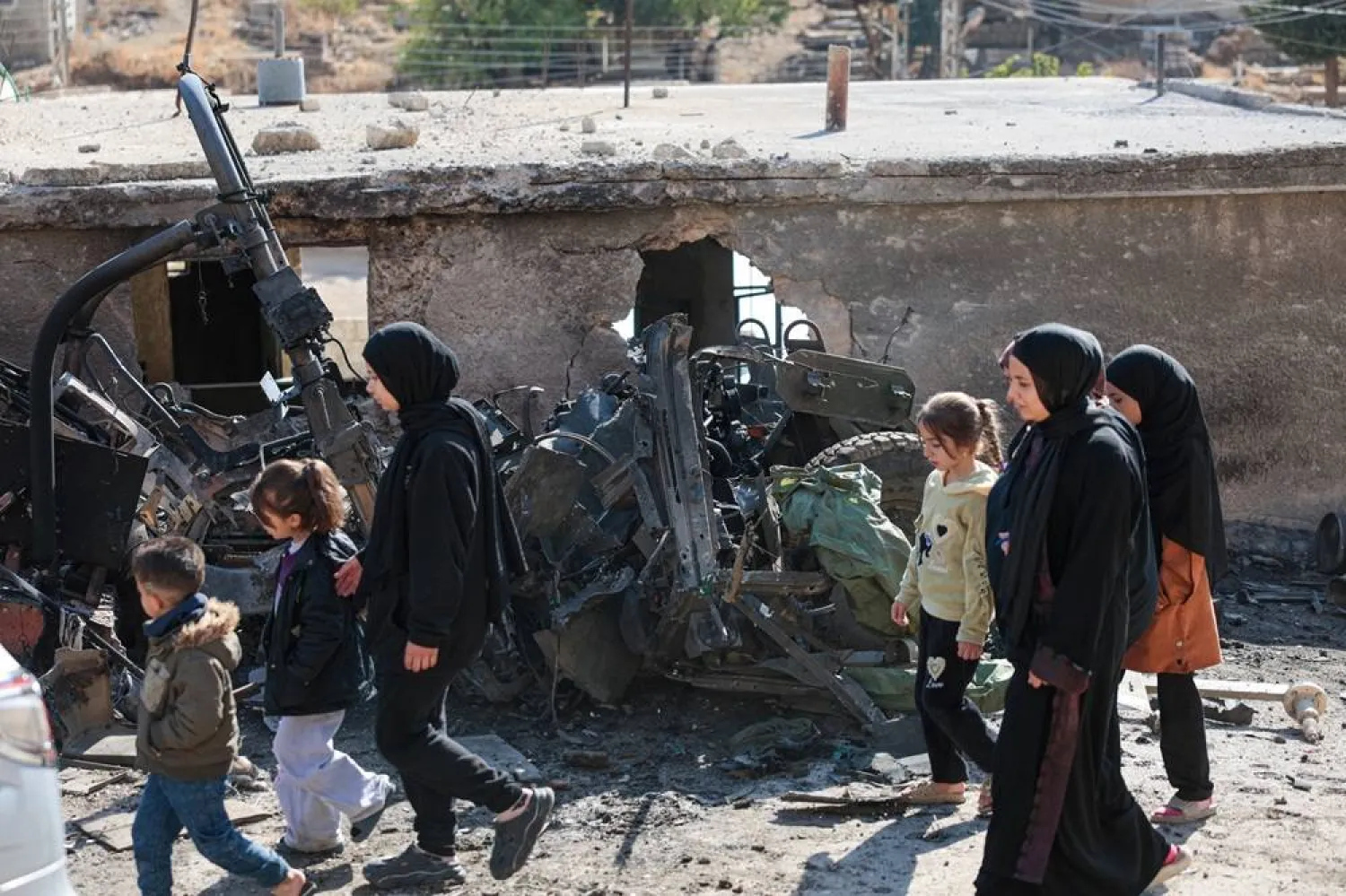
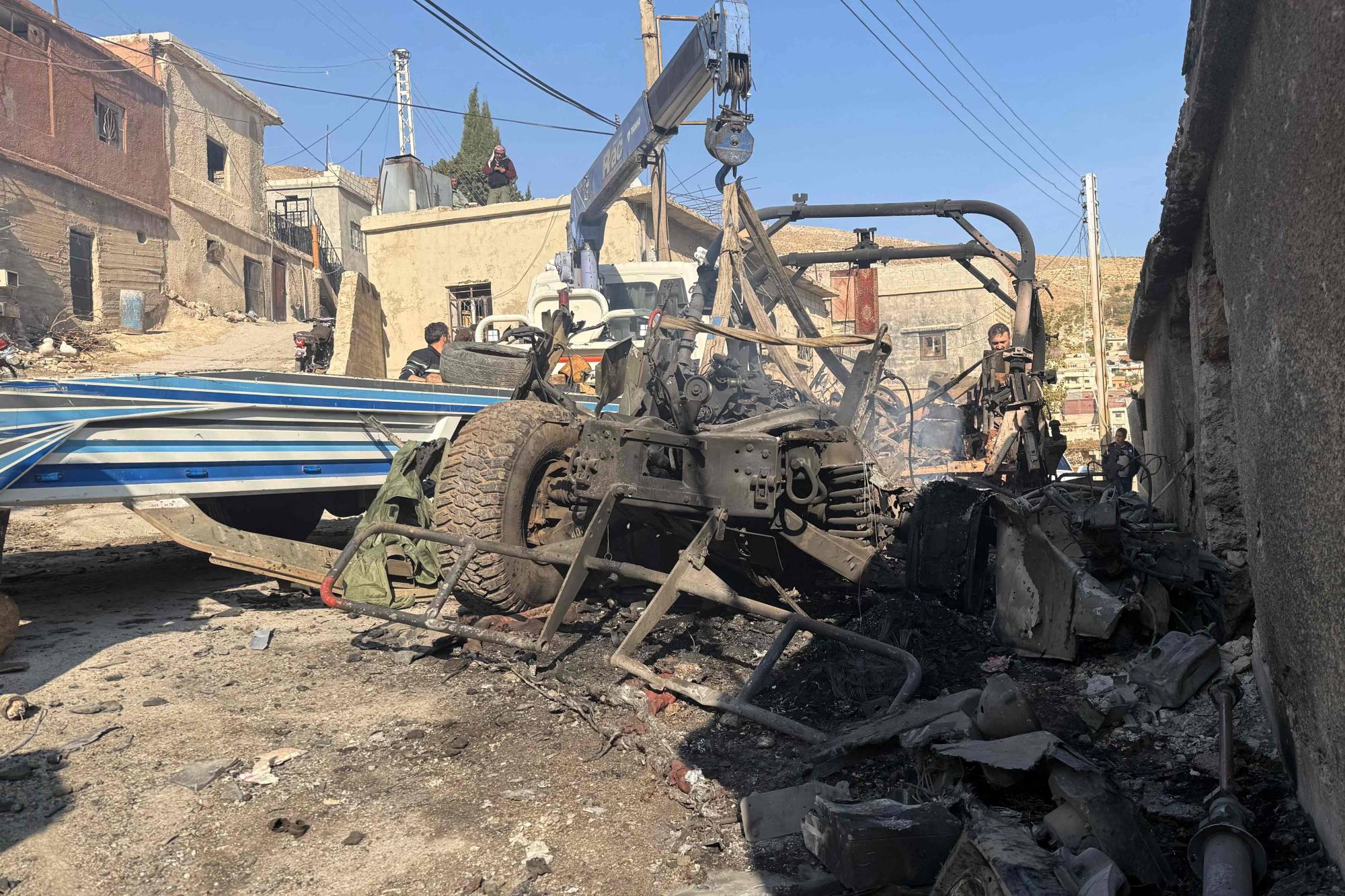
The sudden shooting caused panic and confusion, one armored personnel carrier sank in mud and the Israeli unit fled, leaving behind a large Hammer military jeep, similar to a tank, which Israel then destroyed from the air to prevent it from falling into the hands of gunmen.
The army said six of its soldiers and officers were wounded, including two in critical condition and a third with moderate injuries. Syrians reported that 13 people were killed and insisted the Israeli shelling targeted civilians only.
The Israeli army said its operation was complete, the wanted men were arrested and several terror operatives were killed.
Although Israeli officials said the wounded Syrians were fighters from the Jamaa Islamiya group, local sources said the detainees had no known organizational or security ties and were civilians working in agriculture and livestock.
Israeli forces launched retaliatory attacks after the incident.
In Quneitra, Israeli forces shelled Tel Ahmar in the eastern countryside with artillery and renewed their incursion near Um Batnah junction in northern Quneitra, where three military vehicles entered the area.
Israel said it has a “bank of targets” to respond to the wounding of its soldiers in Beit Jin.