


Israel Follows Iran Negotiations amid its Broadest Escalation in Eastern Lebanon

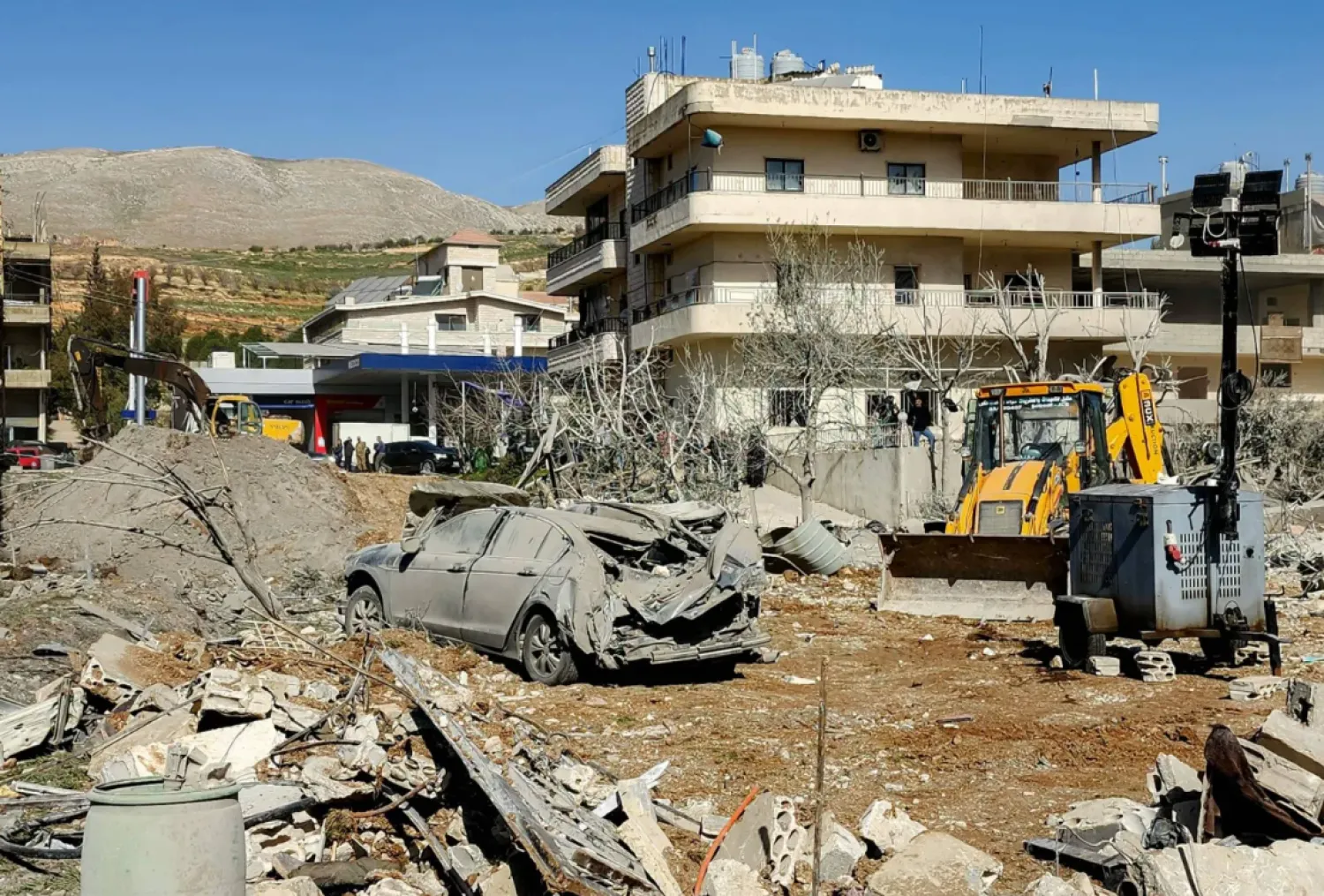
A bulldozer clears debris near heavily damaged buildings in the village of Bednayel in the eastern Bekaa plain of Lebanon (AFP).
TT

Israel Follows Iran Negotiations amid its Broadest Escalation in Eastern Lebanon

A bulldozer clears debris near heavily damaged buildings in the village of Bednayel in the eastern Bekaa plain of Lebanon (AFP).

The intense Israeli airstrikes that targeted the Bekaa in eastern Lebanon on Thursday evening marked the broadest aerial escalation against the Bekaa since the ceasefire agreement entered into force. This came a week after the killing of eight members of Hezbollah, including a commander, whom Israel said were responsible for launching rockets.

The pace of events does not reflect a clear upward military trajectory, but is instead linked to domestic and regional political calculations, at a moment coinciding with US-Iranian negotiations and the possibility of changes to the rules of engagement, according to experts following the developments.

Fire map... intensity and rapid succession

On Thursday evening, Israeli aircraft carried out eight strikes on the outskirts of Shmustar in the Western Mountain Range. The raids also hit the outskirts of Budai and Harbata. Less than half an hour later, shelling resumed heavily on the outskirts of Budai and the surroundings of Baalbek, amid low-altitude drone activity. The strikes extended to the outskirts of the city of Hermel, while the vicinity of the town of Taminine was also targeted, in addition to another strike on the outskirts of Budai, before new raids were launched on the outskirts of Nabi Sheet.

What stood out was not only the number of strikes, but the speed of their succession and the breadth of the geographic area, suggesting the management of concentrated fire rather than isolated attacks.

Local sources described the raids as “highly explosive,” telling Asharq Al-Awsat that “the tremors were heard in towns far from the strike locations, which caused panic and led some residents to believe that war had effectively begun, especially amid the charged regional atmosphere.”

The Ministry of Public Health announced that the strikes resulted in two deaths, including a Syrian child and a woman, and left 29 people wounded.

A political message

In an analytical reading linking the battlefield to politics, retired Brig. Gen. Naji Malaeb said that targeting the Bekaa in the recent phase was not a tactical detail, but carried clear political indications. He told Asharq Al-Awsat that “the Israeli escalation in Lebanon has two main objectives.

The first is to send a message to those betting on the Lebanese Army’s ability to carry out the task of disarming Hezbollah, as Israel is trying to say it will intervene if it sees that the army has not done what it wants. The second is linked to expanding the margin of military action in areas it considers less costly in terms of official Lebanese reactions.”

Malaeb pointed to the development in the use of concussion bombs, considering that “Israel is seeking through this to show that the targeted sites are weapons or ammunition storage areas.” He noted, however, that “the Radwan Force that Israel claimed to have targeted in Thursday’s raids is an elite unit that relies on rapid movement and guerrilla warfare, and uses medium weapons that can be carried, not a traditional artillery or missile force that requires large depots or fixed infrastructure.”

Malaeb said that “Israel’s focus on naming the Radwan Force in its statements serves an internal objective, namely reassuring settlers in the Upper Galilee that the threat is under control,” adding: “Israelis talk about the redeployment of the Radwan Force and the possibility of it storming areas inside Israel; therefore, the focus is on targeting it to give residents there a sense of security.”

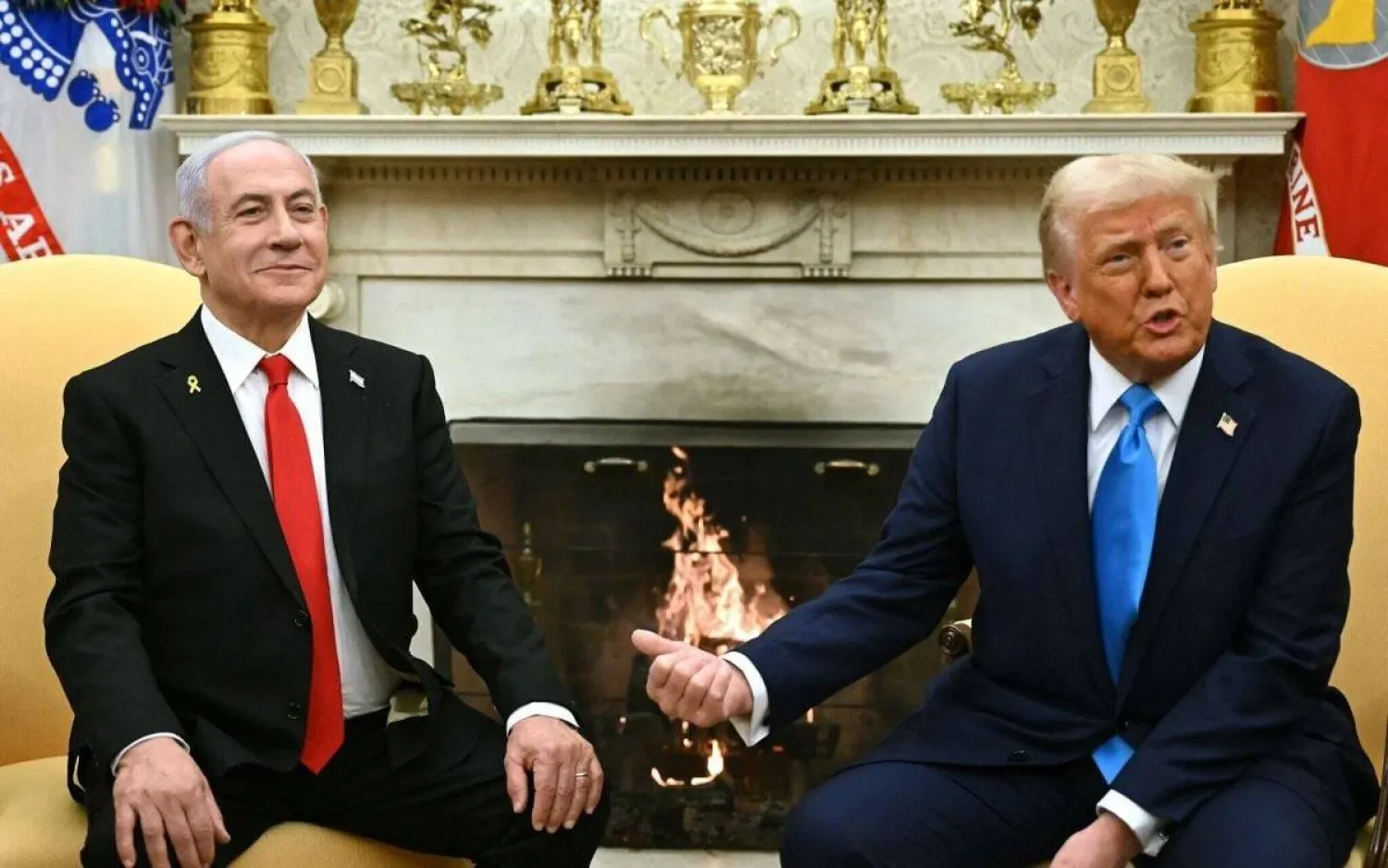
In a broader context, Malaeb said that “the three-hour meeting between Israeli Prime Minister Benjamin Netanyahu and US President Donald Trump constituted a pivotal moment, as European information indicates that Israel was given a free hand in Lebanon in particular, within a wider margin of maneuver in the Middle East.”

He added: “The decision in the region is US by nature, of course, but in Lebanon it appears to be Israeli, and this is what we have observed on the ground, whether through the performance of envoys who come to Beirut, or through what was called the mechanism, whose role has effectively been canceled.”

He said that “the role that was supposed to be headed by an American party has turned into a tool of nullification rather than activation, as we have not seen a single objection to any of the Israeli attacks, which means that Israel is the one deciding how escalation unfolds in Lebanon.”
Israel’s conditions

The escalation in the Bekaa coincided with political and security rhetoric raising the level of possibilities in the region. The Israeli daily Yedioth Ahronoth reported that “the possibility of Hezbollah entering the fighting against Israel if Iran is attacked is worrying and is being dealt with.”

Malaeb said that “giving Israel a free hand in Lebanon is linked to what will take place between the United States and Iran,” adding: “The decision between Washington and Tehran is American in essence, and could lead to understandings if interests converge, but Israel’s interest is different, as it views long-range missiles and Iran’s nuclear program as an existential threat.”

He noted that “if the elements of Iran’s nuclear capability remain in place, and a final halt to enrichment is not achieved as Israel demands, then the likelihood of war remains. Israel may be the one to initiate it, while the US side may intervene later to rein in its pace, because any Iranian response would be wide-ranging, and it cannot be ruled out that Hezbollah would become involved in the confrontation within this context.”



What Is Israel’s Multi-Layered Defense Against Iranian Missiles? 

A fragment falls through the sky after Israel's Iron Dome intercepted a missile launched from Iran towards Israel, amid the Iran-Israel conflict, as seen from Ashkelon, Israel June 20, 2025. (Reuters)
TT

What Is Israel’s Multi-Layered Defense Against Iranian Missiles? 

A fragment falls through the sky after Israel's Iron Dome intercepted a missile launched from Iran towards Israel, amid the Iran-Israel conflict, as seen from Ashkelon, Israel June 20, 2025. (Reuters)

Israel has multi-layered air defenses against attacks by Iranian ballistic missiles, an umbrella it may need to lean on as the United States and Iran teeter toward potential military conflict that could draw Iranian attacks on Israeli territory. Here are details of Israel's defenses against drones and missiles:

ARROW

The long-range Arrow-2 and Arrow-3 interceptors, developed by Israel with an Iranian missile threat in mind, are designed to engage incoming targets both in and outside the atmosphere respectively. They operate at an altitude that allows for safe dispersal of any non-conventional warheads.

State-owned Israel Aerospace Industries is the project's main contractor while Boeing is involved in producing the interceptors.

DAVID'S SLING

The mid-range David's Sling system is designed to ‌shoot down ballistic ‌missiles fired from 100 km to 200 km (62-124 miles) away.

Developed ‌and ⁠manufactured jointly by Israel's ⁠state-owned Rafael Advanced Defense Systems and RTX Corp, a US company previously known as Raytheon, David's Sling is also designed to intercept aircraft, drones and cruise missiles.

IRON DOME

The short-range Iron Dome air defense system was built to intercept the kind of rockets fired by Palestinian group Hamas in Gaza.

Developed with US backing, it became operational in 2011. Each truck-towed unit fires radar-guided missiles to blow up short-range threats such as rockets, ⁠mortars and drones in mid-air.

A naval version of the Iron Dome, ‌to protect ships and sea-based assets, was deployed ‌in 2017.

The system determines whether a rocket is on course to hit a populated area. If ‌not, the rocket is ignored and allowed to land harmlessly.

Iron Dome was originally ‌billed as providing city coverage against rockets with ranges of between 4 km and 70 km (2.5-43 miles), but experts say this has since been expanded.

IRON BEAM

Developed by Israel for more than a decade and declared fully operational in late 2025, the ground-based, high-power Iron Beam laser system ‌is designed to intercept smaller aerial threats, such as UAVs and mortars.

Using lasers to super-heat and disable aerial threats, Iron ⁠Beam's operation is ⁠expected to be substantially cheaper than some of the other aerial defense systems that use intercepting missiles to shoot down incoming threats.

US THAAD SYSTEM

The US military said in October 2024 that it had sent the advanced anti-missile system THAAD - Terminal High Altitude Area Defense - to Israel.

THAAD is a critical part of the US military's air defenses and is designed to intercept and destroy short, medium and intermediate-range ballistic missile threats in their terminal phase of flight.

The US military helped to shoot down Iranian missiles fired at Israel, using ground-based systems, one US official said in June 2025, after Israel attacked Iranian nuclear facilities. A US Navy destroyer in the Eastern Mediterranean also helped to shoot down incoming ballistic missiles, Israeli media has reported.

AIR-TO-AIR DEFENSE

Israeli combat helicopters and fighter jets have fired air-to-air missiles to destroy drones that were heading to Israel, military officials have said.


Iranian Agents Obstructed Care at Hospitals Packed with Wounded Protesters 

This image from video taken between Jan. 9 and Jan. 11, 2026, and verified by AP, shows bodies and mourners outside a morgue in Iran, following a crackdown on protests in Kahrizak, Tehran province. (UGC via AP, File)
TT

Iranian Agents Obstructed Care at Hospitals Packed with Wounded Protesters 

This image from video taken between Jan. 9 and Jan. 11, 2026, and verified by AP, shows bodies and mourners outside a morgue in Iran, following a crackdown on protests in Kahrizak, Tehran province. (UGC via AP, File)

As wounded anti-government protesters poured into an Iranian hospital during last month’s crackdown, a young doctor hurried to the emergency room to help treat a man in his 40s who had been shot in the head at close range.

When the doctor and others tried to resuscitate the man, a group of armed, plainclothes security agents blocked their way, pushing some back with their rifles, the doctor told The Associated Press.

“They surrounded him and didn’t allow us to move further,” the doctor in the northern city of Rasht said.

Minutes later, the man was dead. The agents put his body in a black body bag. Later, they piled it and other bodies into the back of a van and drove away.

This wasn’t an isolated incident.

Over the course of a few days in early January, plainclothes agents swarmed hospitals in multiple cities treating the thousands wounded by Iranian security forces who fired on crowds to quash massive protests against the regime. These agents monitored and sometimes obstructed care to protesters, intimidated staff, seized protesters and took away the dead in body bags. Dozens of doctors were arrested.

This story is based on AP interviews with three doctors in Iran and six Iranian medical professionals living abroad who are in contact with colleagues on the ground; reports from human rights groups; and AP’s verification of more than a dozen videos posted on social media. All of the doctors inside Iran spoke on condition of anonymity for fear of retaliation.

The AP worked with Mnemonic, a Berlin-based organization, to identify online videos, posts and other material relating to violence in hospitals.

The doctors in Iran and abroad said the level of brutality and militarization of health facilities was unprecedented in a country that for decades has experienced crackdowns on dissent and surveillance of public institutions.

The Iran Human Rights Center, based in Oslo, has documented multiple accounts from inside hospitals of security agents preventing medical care, removing patients from ventilators, harassing doctors and detaining protesters.

The government has blamed the protests and ensuing violence on armed foreign-backed “terrorists.”

Health Ministry spokesman Hossein Kermanpour denied reports of treatment being prevented or protesters being taken from hospitals, calling them “untrue, but also fundamentally impossible.” He was quoted in state media as saying all injured were treated “without any discrimination or interference over political opinions.” The Iranian mission at the United Nations did not immediately reply to a request for comment on the doctors’ accounts.

Doctors tried to protect the wounded

The crackdown, which reached its height on Jan. 8 and 9, was the deadliest since the regime took power in 1979. Details have been slow to emerge because of internet restrictions imposed by authorities.

The Human Rights Activists News Agency says it confirmed more than 7,000 deaths and that it is investigating thousands more. The government has acknowledged more than 3,000 killed, though it has undercounted or not reported fatalities from past unrest.

Once the crackdown began, the doctor in Rasht said he worked through 66 hours of hell, moving each day to a different facility to help with the wounded — first a trauma center, then a hospital and finally a private clinic.

Armed agents brought in wounded protesters and stood watch over them as staff worked, the doctor said. When it came time to discharge a patient, he said, “they would take anyone who was confirmed to be a protester.”

The doctor said he and other staff tried to hide wounded protesters by recording false diagnoses in hospital records.

“We knew that no matter what we did for the patients, they wouldn’t be safe once they stepped out of the hospital,” he said.

The AP could not independently confirm the doctor’s account of events at the hospital in Rasht. But it conformed with AP’s other reporting.

AP’s reporting focused on what happened at four hospitals, a snapshot of the Iranian security forces’ activity. Mnemonic gathered dozens of videos, posts and other accounts it says showed forces were present in and around nine hospitals, in some cases firing guns and tear gas. Mnemonic has been preserving digital evidence of human rights violations in Iran since 2022, creating with partners an archive of more than 2 million documents.

One video verified by AP shows security agents breaking through glass entrance doors into Imam Khomeini Hospital in the western city of Ilam. They then barged through the halls with their guns, yelling at people.

The Health Ministry told state media it was investigating the incident, saying it was committed to protecting medical centers, staff and patients.

Treating the wounded in hiding

On the night of Jan. 8, a 37-year-old general surgeon was out for dinner in Tehran when he received a call from a professional friend, an ophthalmologist. The fear in her voice made clear she needed his help urgently. She gave him an address.

Just before midnight, he drove to the address, a clinic for cosmetic procedures. Inside, he found the lobby transformed into a trauma ward, with more than 30 wounded men, women, children and elderly on the couches and blood-covered floor, shouting and crying,

The surgeon spent nearly four days there, treating more than 90 people, he estimates. At first, it was just him, the ophthalmologist, a dentist and two nurses. Eventually, the surgeon summoned three other doctors to help.

He used cardboard boxes and pieces of soft metal as splints for broken bones. With no anesthesia or strong painkillers, he used weaker suppository analgesics. The clinic had no blood supplies or transfusion capabilities.

They couldn’t send patients to hospitals for fear they’d be arrested.

A young man in his 20s had been shot with live ammunition in his elbow, shattering it. The surgeon sutured the wounds but knew the arm would have to be amputated.

A family of four — a mother, father and their 8- and 10-year-old children — were all riddled with pellets, the surgeon said.

On the morning of Jan. 9, the surgeon reached out to doctors he trusted to refer patients to them. First he had to make sure to remove all bullets and pellets from their bodies so they wouldn’t be detained at the hospital. He wrote referral letters saying the patients had been in car accidents.

None of the wounded died at the clinic, he said. The AP could not independently confirm the surgeon’s account of events at the clinic.

Doctors targeted for arrest

Since Jan. 9, at least 79 health care professionals have been detained, including a dozen medical students, according to Homa Fathi, an Iranian dentist pursuing a Ph.D. in Canada and member of IIPHA who has been monitoring Iranian government action against health professionals since 2022.

Around 30 have been released, most on bail, but many of them still face charges, including one accused of “waging war against God,” a charge that carries a death penalty, Fathi said.

The surgeon who treated protesters at the secret clinic said he was surprised security forces never stormed that location to make arrests.

But arrests have come since. Two health care workers who volunteered at the clinic were seized from their homes, the surgeon said.

“I am waiting, too.”


What's Behind the Latest Fighting between Afghanistan and Pakistan?

A Pakistani army tank stands at the Pakistan-Afghanistan border in Chaman on February 27, 2026, following overnight cross-border fighting between the two countries. (Photo by Abdul BASIT / AFP)
TT

What's Behind the Latest Fighting between Afghanistan and Pakistan?

A Pakistani army tank stands at the Pakistan-Afghanistan border in Chaman on February 27, 2026, following overnight cross-border fighting between the two countries. (Photo by Abdul BASIT / AFP)

Pakistan carried out air strikes on Afghanistan's ‌major cities overnight, officials in Islamabad and Kabul said on Friday, escalating months of border clashes between the Islamic neighbors.

The air and ground strikes, which hit Taliban military posts, headquarters and ammunition depots in multiple sectors along the border, came after Afghanistan launched an attack on Pakistani border forces, the officials said.

Both sides reported heavy losses in the fighting, which Pakistan's defense minister said amounted to an "open war".

Tensions have heated up since Pakistan launched air strikes on militant targets in Afghanistan last weekend.

Earlier, border clashes between the two countries killed dozens of soldiers in October until negotiations facilitated by Türkiye, Qatar and Saudi Arabia ceased the hostilities and a fragile ceasefire was put in place.

WHY ARE THE NEIGHBOURS AT ODDS?

Pakistan welcomed the return to power of the Taliban in 2021, with then-Prime Minister Imran Khan saying that Afghans had "broken the shackles of slavery".

But Islamabad soon found that the Taliban were not as cooperative ‌as it had ‌hoped.

Islamabad says that the leadership of militant group Tehreek-e-Taliban Pakistan (TTP) and many of ‌its ⁠fighters are based in ⁠Afghanistan, and that armed insurgents seeking independence for the southwestern Pakistani province of Balochistan also use Afghanistan as a safe haven.

Militancy has increased every year since 2022 with attacks by the TTP and Baloch insurgents growing, according to Armed Conflict Location & Event Data, a global monitoring organization.

Kabul for its part has repeatedly denied allowing militants to use Afghan territory to launch attacks in Pakistan.

The Afghan Taliban say Pakistan harbors fighters from its enemy, ISIS, a charge Islamabad denies.

Islamabad says the ceasefire did not hold long due to continued militant attacks in Pakistan from Afghanistan, and there have been ⁠repeated clashes and border closures since then that have disrupted trade and movement ‌along the rugged frontier.

WHAT SPARKED THE LATEST CLASHES?

The day before last ‌weekend's strikes, Pakistani security sources said they had "irrefutable evidence" that militants in Afghanistan were behind a recent wave of attacks and ‌suicide bombings which targeted Pakistani military and police.

The sources listed seven planned or successful attacks by militants since ‌late 2024 that they said were connected to Afghanistan.

One attack last week that killed 11 security personnel and two civilians in Bajaur district was undertaken by an Afghan national, according to Pakistani security sources. This attack was claimed by the TTP.

WHO ARE THE PAKISTANI TALIBAN?

The TTP was formed in 2007 by several militant outfits active in northwest Pakistan. It is commonly known ‌as the Pakistani Taliban.

The TTP has attacked markets, mosques, airports, military bases, police stations and also gained territory - mostly along the border with Afghanistan, but also deep ⁠inside Pakistan, including the Swat ⁠Valley. The group was behind the 2012 attack on then schoolgirl Malala Yousafzai, who received the Nobel Peace Prize two years later.

The TTP also fought alongside the Afghan Taliban against US-led forces in Afghanistan and hosted Afghan fighters in Pakistan. Pakistan has launched military operations against the TTP on its own soil with limited success, although an offensive that ended in 2016 drastically reduced attacks till a few years ago.

WHAT HAPPENS NEXT?

Pakistan is likely to intensify its military campaign, analysts say, while Kabul's retaliation could come in the way of raids on border posts and more cross-border guerrilla attacks to target security forces.

On paper, there is a wide mismatch between the military capabilities of two sides. At 172,000, the Taliban have less than a third of Pakistan's personnel.

The Taliban do possess at least six aircraft and 23 helicopters but their condition is unknown and they have no fighter jets or effective air force.

Pakistan's armed forces include more than 600,000 active personnel, have more than 6,000 armored fighting vehicles and more than 400 combat aircraft, according to 2025 data from the International Institute for Strategic Studies. The country is also nuclear armed.