


Have Hezbollah’s Drones Changed the Rules of Engagement with Israel?

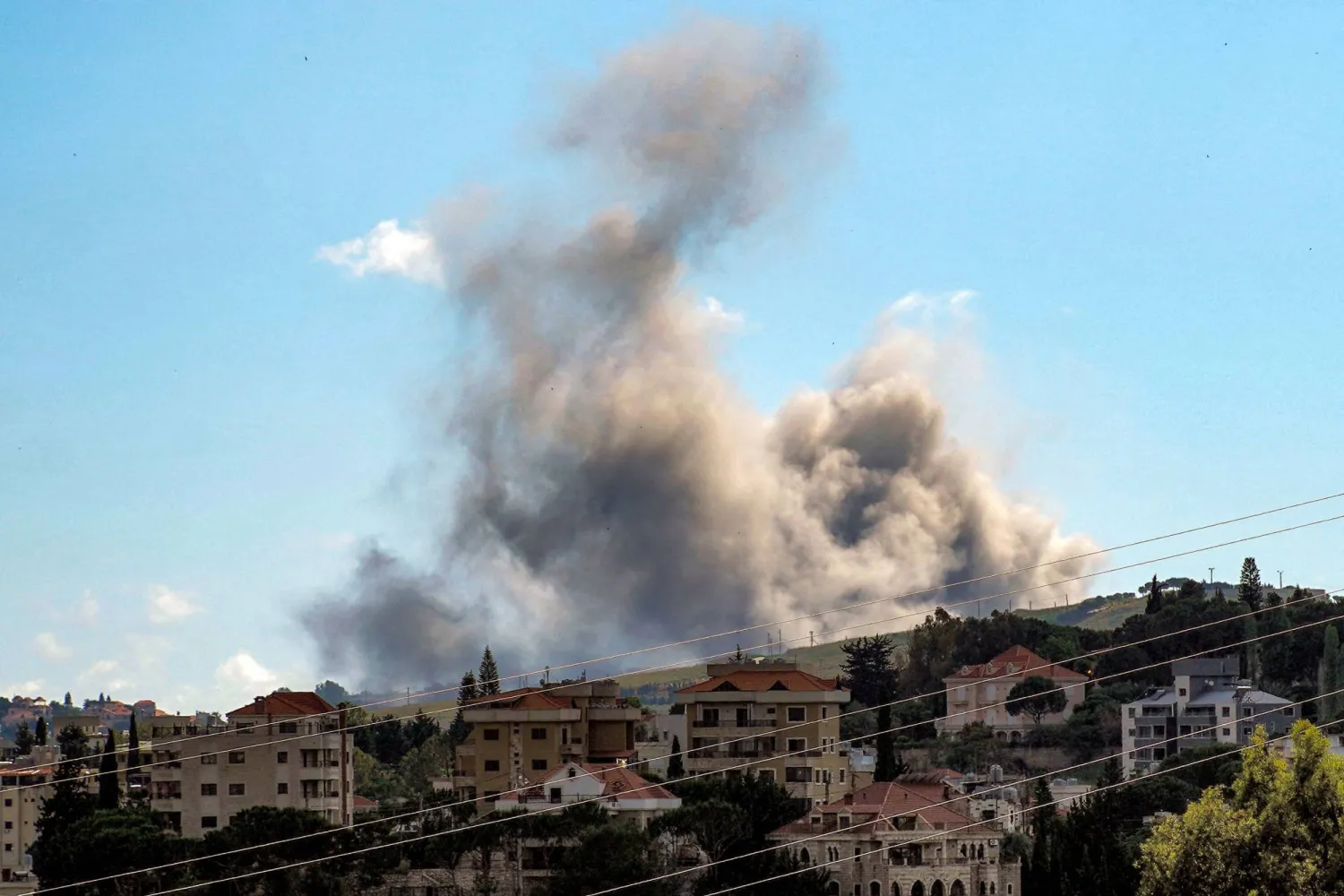
Smoke rises following Israeli bombardment on the village of Jibchit in southern Lebanon on May 23, 2026. (AFP)
TT

Have Hezbollah’s Drones Changed the Rules of Engagement with Israel?

Smoke rises following Israeli bombardment on the village of Jibchit in southern Lebanon on May 23, 2026. (AFP)

The “support war” waged by Lebanon’s Hezbollah in backing Hamas in late 2023 shattered the doctrine of “deterrence” that the Iranian-backed group had embraced and promoted for nearly two decades in its confrontation with its traditional adversary, Israel. Israel, for its part, also helped reinforce this assumption, which proved entirely mistaken the following year. The new round of fighting in 2026 then offered both sides an opportunity to establish a new set of rules governing the conflict.

Israeli patience and cunning

Israel did not rush into a direct war with Hezbollah after the group launched a wave of largely “performative” attacks, beginning with rockets fired at the outskirts of Israeli military positions in the Shebaa Farms. Instead, it quietly steered the confrontation in a different direction, displaying notable restraint and considerable strategic calculation.

This approach was reflected in diplomatic efforts undertaken by Tel Aviv through Washington to persuade Hezbollah to separate the Lebanese front from the Palestinian one. In July 2024, then US envoy Amos Hochstein reportedly told Lebanese officials that he was prepared to deliver what would amount to a political victory for Hezbollah Secretary-General Hassan Nasrallah if the group halted its operations.

Nasrallah immediately rejected the proposal. According to those who relayed the message to him, he replied that the war in Gaza would first have to end. After that, other matters could be discussed.

This was not Hezbollah’s first strategic misjudgment. The shape of the new conflict unfolding in Lebanon’s border villages quickly revealed a clear Israeli technological and military advantage. A senior Hezbollah official later disclosed that in previous confrontations, fighters could launch a rocket, calmly gather their equipment after informing command that the launch had been successful, and leave the site before Israeli aircraft arrived.
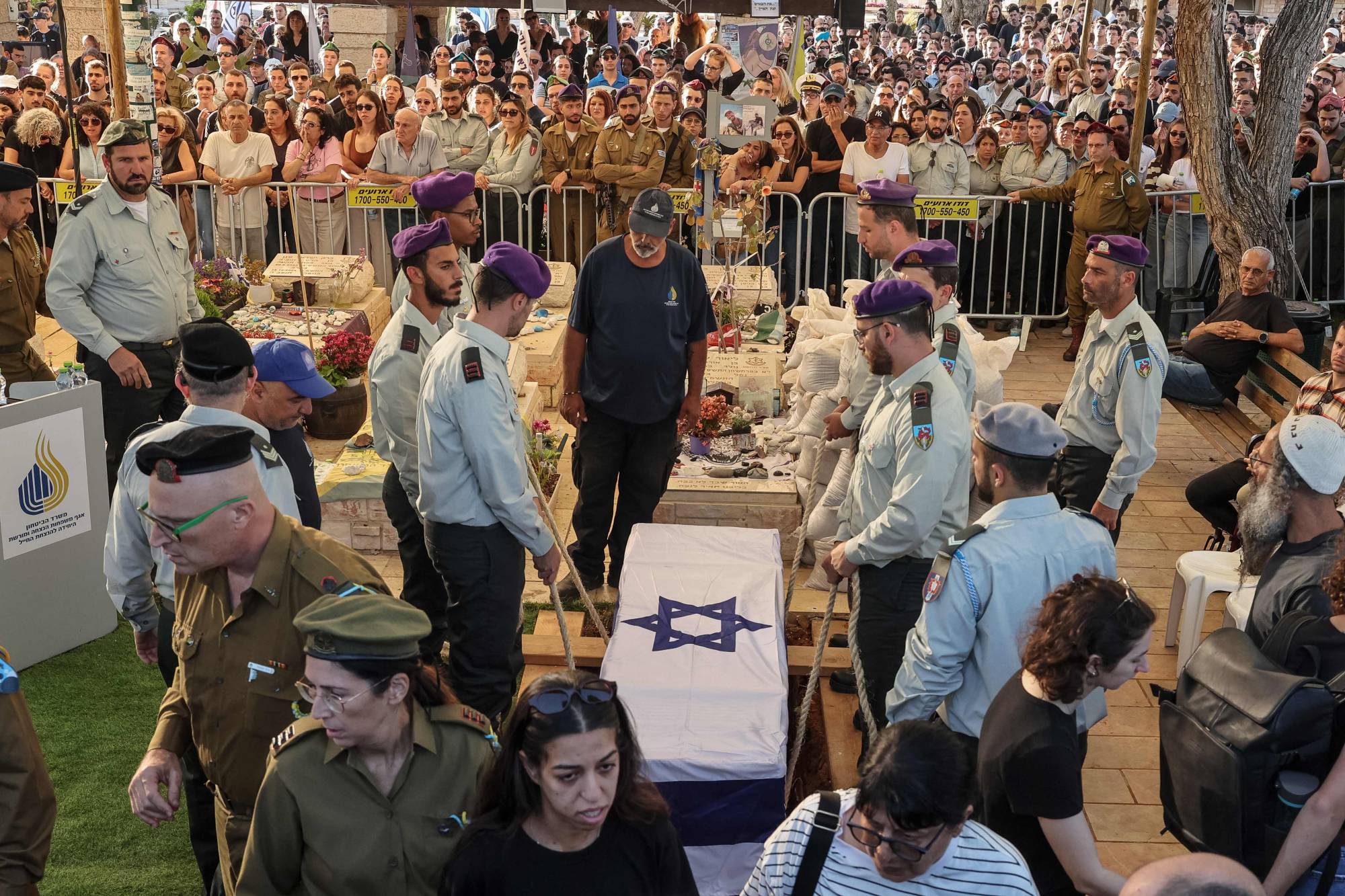
People react while attending the funeral of an Israeli soldier Captain Doctor Ori Yosef Silvester, a 30-year-old army doctor for the Givati Brigade's Shaked Battalion, who was killed in southern Lebanon, at the Segula Cemetery in Petah Tikva on June 2, 2026. (AFP)

In the new conflict, however, the window between launch and retaliation had narrowed to between five and twenty seconds. As a result, the official said, fighters often dug into the ground and sought immediate cover after firing in the hope of surviving. Every launch effectively became a near-suicidal operation.

Subsequent developments underscored Israel’s superiority even more clearly. Israeli forces carried out a series of precise assassinations targeting Hezbollah military commanders, culminating in a strike that eliminated most of the leadership of the Radwan Force, the group’s elite unit.

Israel then killed Hezbollah’s military commander and launched the “pager operation,” which put thousands of Hezbollah operatives out of action at the push of a button. This was followed by the assassination of Nasrallah in a massive airstrike on Beirut’s southern suburbs and, later, the killing of his successor, Hashem Safieddine.

Instruments of war

According to field sources, the weapons and tactics employed by both sides suggest that they prepared for a prolonged war of attrition rather than a decisive battle.

Beginning in the first week after the latest ceasefire agreement, Hezbollah reduced its reliance on rockets, scaled back the use of suicide drones, and curtailed the deployment of guided anti-tank missiles, whose operators were often vulnerable to detection. Instead, it introduced first-person-view (FPV) drones.

These drones are typically operated within a range of 10 to 15 kilometers in southern Lebanon and are guided through fiber-optic cables linking the aircraft directly to its operator. A thin wire connects the control station to the drone carrying the explosive payload, allowing it to evade electronic jamming.
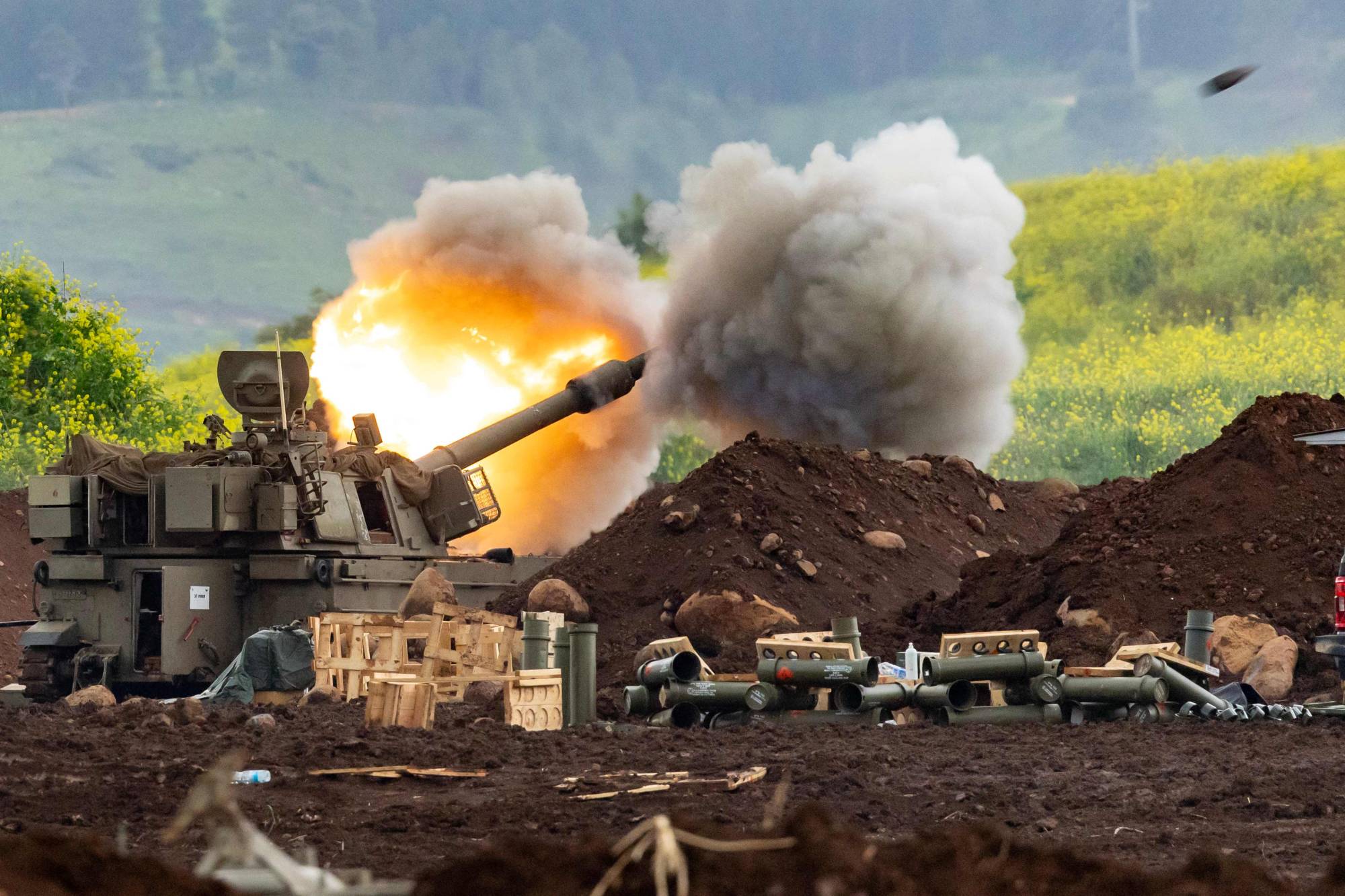
An Israeli self-propelled howitzer artillery gun fires rounds towards southern Lebanon from a position in the upper Galilee in northern Israel near the border on March 15, 2026. (AFP)

Hezbollah in 2026: A war of drones

Hezbollah sought to regain the initiative in the latest conflict, which erupted in March and coincided with the war with Iran. Israel conveyed a message that it was not interested in opening a front with Lebanon so long as Hezbollah remained on the sidelines.

The group reassured officials in Beirut that it would not initiate hostilities. It nevertheless surprised observers by launching rockets toward northern Israel, prompting a fierce Israeli response.

Unlike the image it initially projected through the launch of six rudimentary rockets, Hezbollah appeared far more organized and capable in the fighting that followed, revealing capabilities that had remained concealed during 15 months of relative calm. The group claimed to be carrying out as many as 100 operations a day against Israeli forces and introduced new weapons systems to the battlefield.

Its ground strategy also evolved. Rather than relying on static defenses or attempting to halt Israeli advances outright, Hezbollah focused on inflicting the greatest possible damage on advancing forces.

Rise of drones

Rockets no longer dominate the battlefield between Israel and Hezbollah. After weeks of fighting that erupted in the spring of 2026, a notable shift emerged in the military operations, with attack and suicide drones moving to the forefront and becoming one of the most influential factors shaping combat on both sides of the border.

For years, Hezbollah’s military identity was closely associated with its vast rocket arsenal, which represented Israel’s primary security concern. The current conflict, however, has shown that the group no longer relies exclusively on rockets. Instead, it has expanded its use of drones on a large scale.

According to Israeli assessments, a substantial share of Hezbollah’s recent attacks has involved attack and suicide drones, while conventional rockets have assumed a less prominent role than before.

Israeli researchers argue that this shift reflects lessons drawn from recent conflicts, particularly the war in Ukraine, where inexpensive drones demonstrated their ability to inflict significant losses on technologically superior forces.

According to Israeli reports and military studies published since the outbreak of the war in March, Hezbollah’s principal weapon is no longer its rocket arsenal alone but the attack and suicide drones that have become the primary threat facing Israeli forces in southern Lebanon.
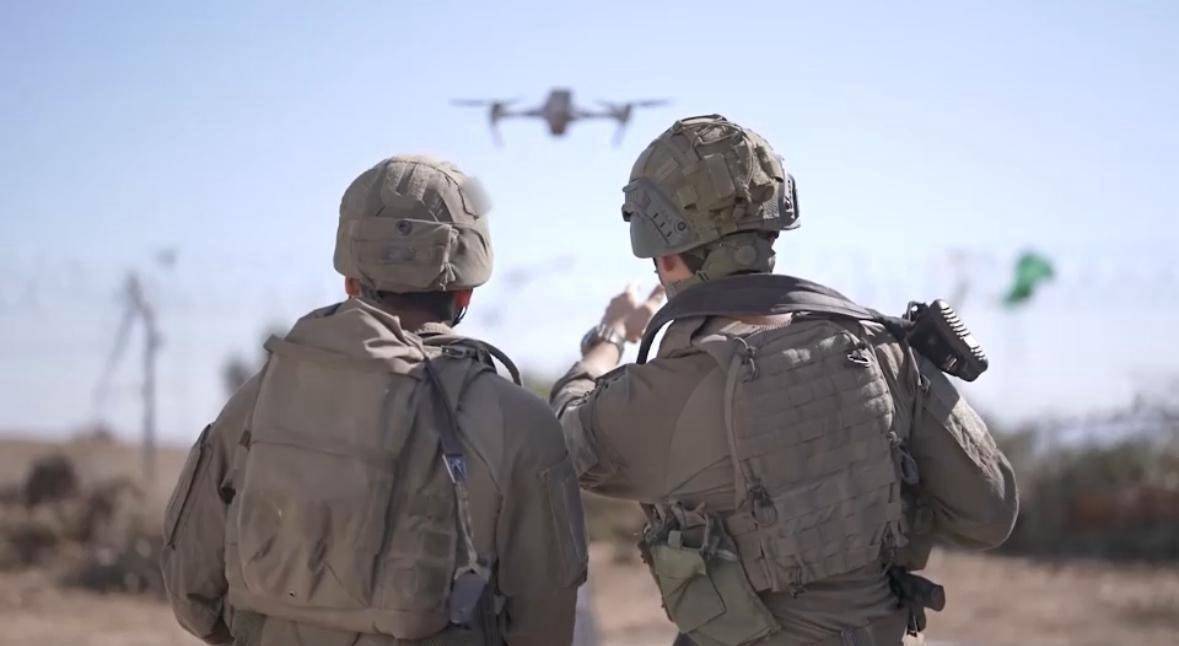
Israeli soldiers operate a drone. (Israeli army)

Foremost among these are FPV suicide drones guided by thin fiber-optic cables, making them effectively immune to electronic jamming. Their small size, low-altitude flight profiles, and erratic maneuverability pose additional challenges for Israeli radar and air-defense systems.

These drones carry relatively small explosive payloads, typically weighing no more than five kilograms. A Lebanese security source told Asharq Al-Awsat that Hezbollah employs three different types of warheads depending on the intended target—whether a tank, a conventional vehicle, or personnel.

Former Israeli officers say the threat posed by these drones extends beyond fixed military targets. They are also capable of tracking moving forces and striking tanks, vehicles, and field command centers, placing continuous pressure on Israeli ground units in southern Lebanon.

No definitive figures are available regarding the number of suicide drones Hezbollah has used since the beginning of the war. Unofficial Israeli estimates, however, suggest that the number may range from several hundred launches to more than a thousand.

Israel recently stated that Hezbollah had launched more than 120 drones of this type. The group, meanwhile, has released dozens of videos purporting to show drones striking vehicles, armored platforms, electronic systems, and personnel in the field.

Israel says Hezbollah’s operations have killed 20 soldiers and wounded dozens more since March.

In addition, Hezbollah has claimed responsibility for detonating explosive devices against Israeli vehicles deep inside operational areas and for repelling Israeli incursions using light and medium machine guns, as well as rocket-propelled grenades (RPGs).
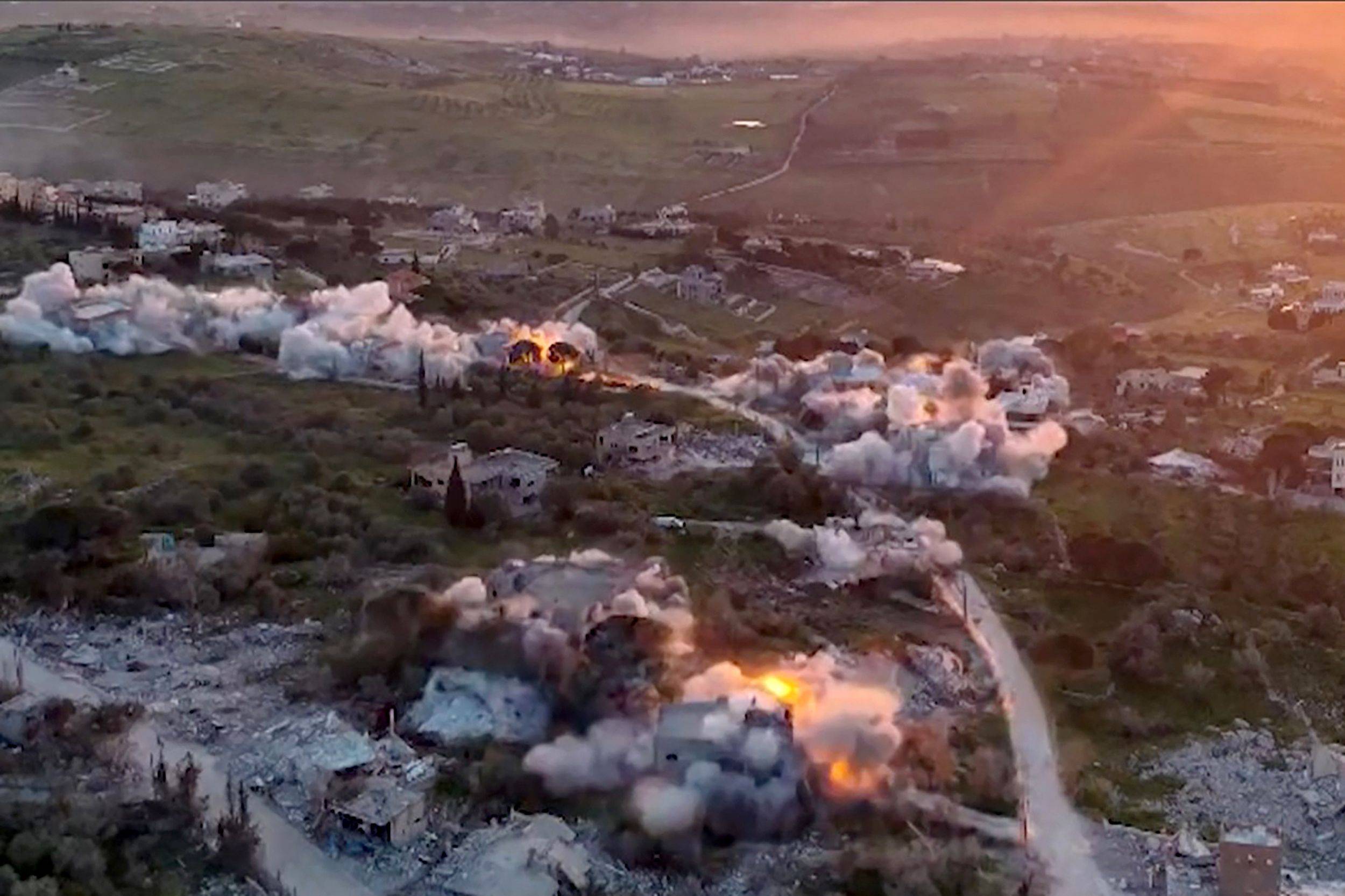
A screengrab image taken from a handout video released by the Israeli army and created on April 27, 2026, shows Israeli army footage of what it says is the destruction of Hezbollah infrastructure in Lebanon, where a ceasefire has been in place since mid-April. (Israel Army / AFP)

Anti-armor missiles

Anti-armor missiles remain the backbone of Hezbollah’s ground warfare capability and have been used against Israeli tanks, vehicles, and fortifications.

Israeli sources point in particular to the Almas missile family, derived from Israel’s Spike missile system. According to those sources, Iran reverse-engineered the weapon after Hezbollah fighters captured an Israeli missile during the 2006 war. Russian-made Kornet systems and other anti-tank platforms also remain in service.

A third category of weapons consists of short- and medium-range rockets and artillery projectiles used extensively against military positions, troop concentrations, and bases in the Galilee and northern Israel. Their use, however, declined relative to drones during many phases of the 2026 conflict.

Reconnaissance and attack drones

Reconnaissance and attack drones rank fourth among Hezbollah’s principal battlefield systems.

Not all of them are suicide drones. Some are used for surveillance, fire correction, and target acquisition, while others carry small munitions and return to base after completing their missions.

Israeli sources have also reported limited use of anti-aircraft missiles and air-defense fire directed at Israeli aircraft.

Nevertheless, these systems have not proven as decisive as drones and anti-armor missiles in the current conflict.
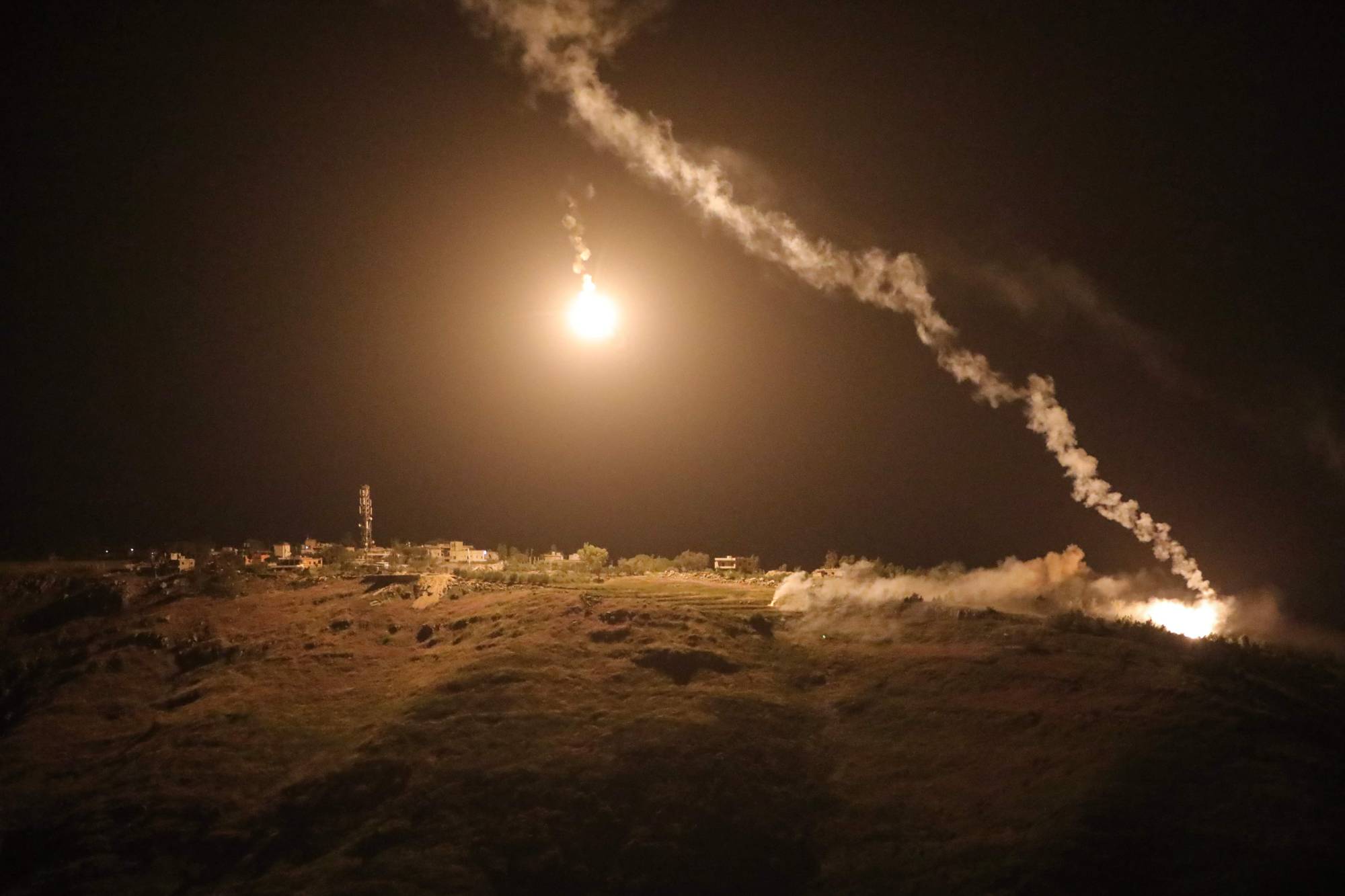
A photograph taken from the southern area of Marjeyoun shows flares fired by the Israeli military descending over the village of Arnoun late on May 13, 2026. (AFP)

Evolving tactics

Israel, too, has adapted its methods of warfare.

Rather than relying primarily on armored formations advancing under air cover, it has sought to reduce casualties and increase mobility.

Lebanese security sources said the Israeli military has adopted tactics centered on small special forces teams moving along unpaved routes to avoid mines and ambushes. At the first sign of resistance, these units withdraw while combat aircraft strike hostile firing positions.

Alongside heavy air raids conducted by fighter jets and precision strikes carried out by drones against individuals traveling in cars and motorcycles, Israel has introduced two additional systems to the battlefield.

The first consists of loitering munitions, which have appeared in footage targeting motorcycles and personnel in the field.

The second is the extensive use of guided artillery rounds in 155 mm and 240 mm calibers, according to field sources in southern Lebanon. These systems have been employed against villages located well beyond the border zone.

The sources described the rounds as laser-guided, providing greater accuracy and enabling strikes at distances reaching up to 30 kilometers inside Lebanese territory.

According to Israeli statements and observations by military research centers during the 2026 war, unmanned aerial systems have been among the most heavily utilized assets in Lebanon. Israel maintains an extensive drone network covering both front-line and rear areas, including the Hermes 900 and Hermes 450 platforms, as well as smaller Skylark reconnaissance drones.

These systems have been used for surveillance, target acquisition, fire direction, and precision strikes against both mobile and fixed targets.

A beachgoer stands in the water against the backdrop of smoke rising from the site of an Israeli strike that targeted the southern Lebanese village of al-Mansouri on May 22, 2026. (AFP)

Precision munitions and guided missiles

Israel has also employed long-range missiles from the Spike NLOS family, as well as precision-guided aerial munitions launched from aircraft and drones against command centers and launch sites.

Tanks and armored units remain central to Israeli ground operations in southern Lebanon, although many have come under attack from drones and anti-armor missiles.

Israel has also employed artillery, surface-to-surface missiles, long-range rocket launchers, and self-propelled guns to strike targets deep inside Lebanon, along with precision ground-to-ground missiles against preselected objectives.

Air-defense systems

Israel possesses several major air-defense systems, most notably Iron Dome, David’s Sling, and Arrow.

Yet Israeli reports themselves acknowledge that these systems have faced difficulties countering the small suicide drones used by Hezbollah, particularly those guided through fiber-optic cables.

Israeli media previously reported that the military had introduced the Ro’em artillery system into service in southern Lebanon. The Israeli-made 155 mm system is wheel-mounted for enhanced mobility, features automatic loading, requires a crew of only three rather than seven personnel, offers a firing range of up to 40 kilometers, and incorporates advanced command-and-control capabilities.
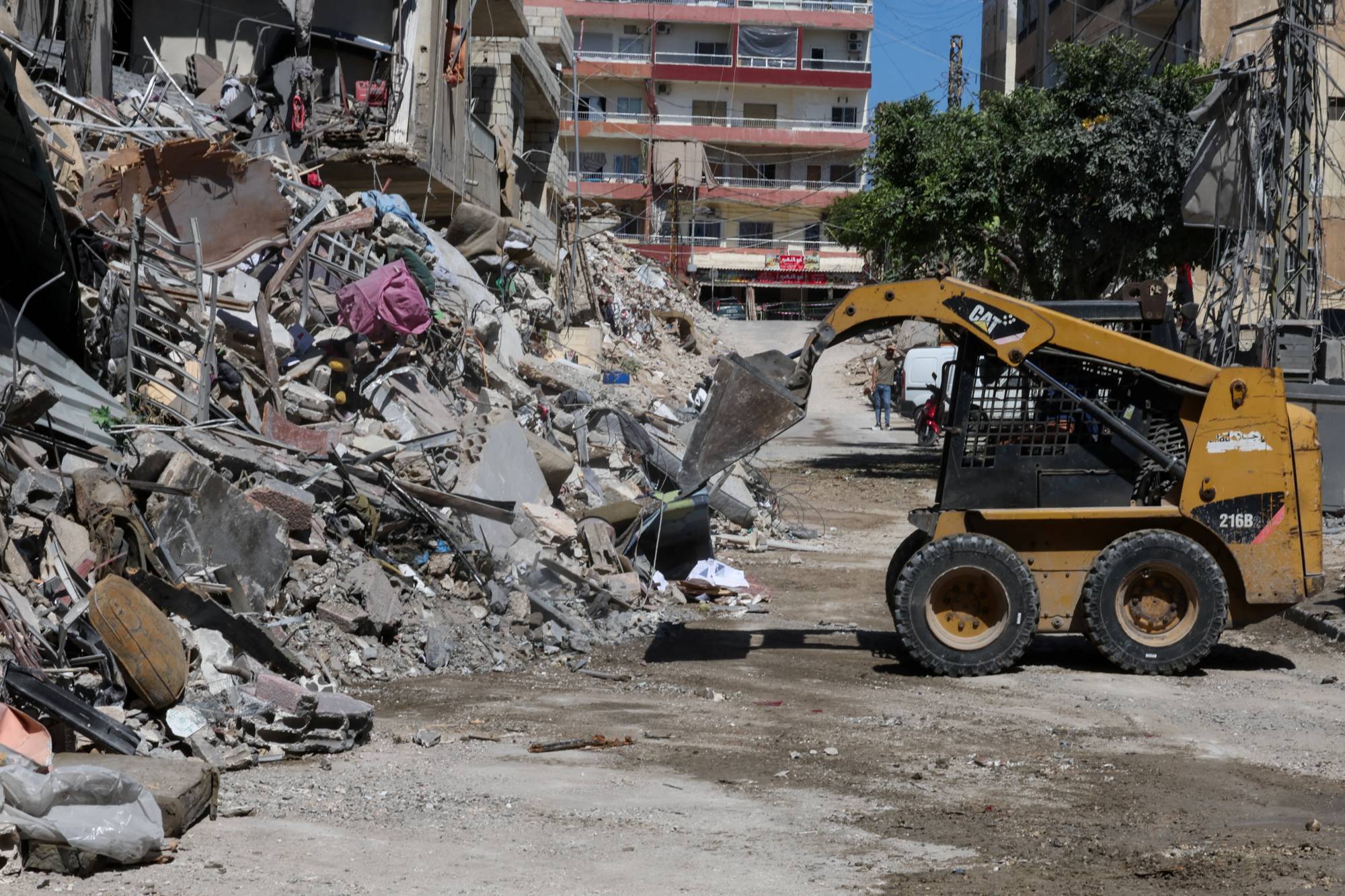
Heavy machinery clears the rubble at the site of an overnight Israeli strike in the southern city of Tyre, Lebanon, May 23, 2026. (Reuters)

Rules of engagement

Since the ceasefire took effect, Hezbollah has sought to establish rules of engagement that would confine the fighting to occupied territory by refraining from targeting Israeli towns and settlements in the north. The Israeli military, however, gradually expanded the battlefield through sustained airstrikes and bombardment reaching the outskirts of Sidon.

Speaking to Asharq Al-Awsat, retired Brig. Gen. Said Kozah said Hezbollah has been attempting since the ceasefire to establish a new operational equation with Israel based on the principle that every Israeli strike should trigger a response. However, he argued, Israel continues to work against this.

Kozah noted that describing the situation as “rules of engagement” is not entirely accurate because the term is generally used between regular armies or within a clearly defined military framework.

“In practice,” he said, “Hezbollah is attempting to entrench a new set of rules under which any Israeli attack would be met with retaliation—whether through strikes against Israeli positions in occupied Lebanese territory or through rocket fire directed into Israel.”

He added that Hezbollah had recently carried out operations against Israeli positions in the border area, some involving drones and others consisting of infiltration attempts or direct attacks.

He also remarked that rocket launches into Israel had declined in recent days and that many had been intercepted because of the relatively limited numbers employed.

According to Kozah, Hezbollah seeks through these operations to reinforce the legitimacy of retaining its weapons under the banner of resisting occupation within Lebanese territory. At the same time, the group avoids addressing the factors that led to the current level of escalation and occupation.

As for whether Hezbollah has succeeded in imposing this new equation, Kozah said the situation suggests Israel remains the one setting the rules.

“The Israeli military is not limiting its operations to the buffer zone or the so-called ‘Yellow Line,’” he said. “It continues to conduct operations, clearing activities, and strikes against villages north of that line, effectively rejecting the balance Hezbollah is trying to establish.”



Lebanon-Israel Deal May Entrench Stalemate Rather Than End War, Analysts Say

An Israeli helicopter flies on patrol near the Israel-Lebanon border, 23 June 2026, amid a ceasefire between Israel and Hezbollah. (EPA)
TT

Lebanon-Israel Deal May Entrench Stalemate Rather Than End War, Analysts Say

An Israeli helicopter flies on patrol near the Israel-Lebanon border, 23 June 2026, amid a ceasefire between Israel and Hezbollah. (EPA)

A security deal between Lebanon and Israel risks entrenching a stalemate rather than resolving Israel's underlying conflict with Hezbollah by tying Israel's pullout from southern Lebanon to the Iran-aligned group's disarmament, a condition regional analysts and politicians say is unattainable.

At its core is a bargain few see as workable: Hezbollah has flatly rejected disarmament, and no Lebanese government has the power to enforce it.

With Hezbollah unlikely to disarm, analysts say Israel has political cover to keep an open-ended military presence in southern Lebanon, which it invaded after Hezbollah fired at Israel on March 2 in solidarity with Tehran over the war in Iran.

The deal leaves the Lebanese state trapped between obligations it cannot meet and sovereignty it cannot fully reclaim, the analysts say.

The framework deal also collides with Lebanon’s political realities, asking a fragile sectarian state to confront the most powerful armed faction in the country despite a post–civil war system built on power-sharing rather than coercion.

"This is not an agreement, it is an imposed settlement," said a senior Lebanese politician who ‌declined to be ‌named, according to Reuters.

The Lebanese army, he said, was neither structured nor equipped to disarm Hezbollah, and expecting it ‌to do ⁠so ignored both the ⁠group’s entrenched military capacity and the fragile sectarian balance on which Lebanon's stability rests.

'BURDEN' PLACED ON LEBANON

Political analysts say the imbalance is built into the agreement’s design, with sweeping obligations placed on Lebanon but no reciprocal guarantee of Israeli withdrawal.

"This agreement has put all the burden on Lebanon," said Michael Young, a Beirut-based analyst, adding that it "creates a structure that allows the Israelis to remain (in southern Lebanon) indefinitely."

Fawaz Gerges, a Lebanese scholar at the London School of Economics and Political Science, said the deal was "born dead" and is structurally flawed, hinging on a condition that is impossible to meet in practice.

Gerges said Israel had already occupied a buffer zone in southern Lebanon about eight to 10 km (five to six miles) deep while tying any future withdrawal to Hezbollah’s ⁠disarmament.

The terms of the deal risk the buffer zone becoming long-term and giving it diplomatic legitimacy, he ‌said, describing it as a political "gift" to Israel.

The conflict in Lebanon has been a ‌central part of diplomacy towards ending the wider US-Iran war.

Gerges said Washington’s deliberate decoupling of the conflicts gave Israel greater freedom of action in Lebanon.

FEAR OF ‌CIVIL CONFLICT

The framework agreement signed in Washington affirms that Israel has no claim to Lebanese territory and makes Lebanese army authority in the ‌south contingent on the verified disarmament of non-state armed groups, including Hezbollah.

Israeli Prime Minister Benjamin Netanyahu portrays the deal as a historic achievement that could lead to broader peace, while Israeli troops remain deployed in a so-called security zone which Israel says is designed to protect its north from potential attack.

"We will continue to hold it (territory in the security zone) until Hezbollah and other terrorist organizations are disarmed, and until no further threat to Israel is posed from Lebanon," Netanyahu said on Saturday.

Three senior Israeli ‌officials said Israel has little faith in Lebanon's ability to disarm Hezbollah but sees the deal as a vital diplomatic step towards building peace with Lebanon in the long run.

About 4,000 people have been ⁠killed in Lebanon and a ⁠million displaced during Israel’s military campaign against Hezbollah.

Lebanese President Joseph Aoun welcomed the agreement as a first step towards restoring Lebanon's sovereignty, saying it should allow Lebanese people to return to fully liberated land.

Parliament Speaker and key Hezbollah ally Nabih Berri said it amounted to an "agreement of dictates, not one that preserves Lebanon's rights" and said it would not be implemented.

Hezbollah chief Naim Qassem declared the deal "null and void" and a "surrender" and said his group would keep fighting until Israel is forced to leave. Hezbollah lawmaker Hassan Fadlallah warned of "internal conflict" in Lebanon.

Any attempt to forcibly disarm Hezbollah would risk deepening sectarian tensions.

Young said the deal "won't lead us anywhere except to civil conflict, and maybe an insurrection by the Shiite community."

DEAL'S IMPLEMENTATION IN QUESTION

Danny Citrinowicz, a regional analyst and former Israeli military intelligence officer, said Hezbollah's dismantlement was "something that would never happen" and the deal in effect legitimized an open-ended Israeli military presence.

"Nothing will happen. Israel won't withdraw, and Hezbollah won't dismantle," he said.

Citrinowicz said no Israeli prime minister has the domestic political space to withdraw while Hezbollah is still armed and northern Israeli communities remain displaced.

A narrower pact focused on Hezbollah's pullout from south of the Litani River, an expanded Lebanese army deployment and an extension of state authority, would have stood a better chance of success, he said.

Pro-Hezbollah analyst Mohammed Obeid also said the deal was unlikely to be implemented, adding that its provisions were "like explosives", capable of detonating Lebanon's internal stability, as they hinge on state action to disarm Hezbollah.


13 Years Since 'June 30' in Egypt... The Muslim Brotherhood Has Suffered Severe Setbacks

The Muslim Brotherhood headquarters burning in Cairo in summer 2013 (Getty)
TT

13 Years Since 'June 30' in Egypt... The Muslim Brotherhood Has Suffered Severe Setbacks

The Muslim Brotherhood headquarters burning in Cairo in summer 2013 (Getty)

Thirteen years after the ouster of the Muslim Brotherhood's rule in Egypt during the events of "June 30" 2013, the group has suffered major setbacks locally and internationally.
The group, whose rule lasted for one year since its member Mohamed Morsi ascended to the presidency in 2012, is now experiencing a domestic blow amidst judicial and security prosecutions.

Its international presence has also shrunk due to decisions by Western countries to pursue and label it as terrorist, with observers and analysts predicting that "the organization and its ideology will soon disappear.”

A Pivotal Day

June 30, 2013, is considered a pivotal day in modern Egyptian history. One year after Morsi assumed the presidency, massive demonstrations erupted across Egypt's governorates demanding the removal of the Muslim Brotherhood from power and Morsi's ouster. On July 3 of that year, his removal was announced in response to these demands.

In the same year, Egyptian authorities banned the Muslim Brotherhood and placed it on the list of "terrorist entities." Now, hundreds of its leaders and supporters are imprisoned, headed by its Supreme Guide Mohammed Badie.

Some have received sentences of execution, harsh imprisonment, and life in prison. The group's presence is now only known in cyberspace through platforms abroad, mainly in Türkiye and the United Kingdom.

Disappearance Domestically

Egyptian researcher specializing in extremist groups Munir Adib states that when discussing the disappearance of the Muslim Brotherhood on the thirteenth anniversary of the June 30 events, "it is necessary to differentiate between two things: the disappearance of the organization and the disappearance of the ideology."

"In both cases, the Egyptian state and its security agencies have succeeded over 13 years in dismantling, neutralizing the organization, and refuting many of its ideas to the extent that it no longer has the influence it had before 2013 or even before 2011,” he adds in a statement to Asharq Al-Awsat.

He predicted that the organization would disappear soon, saying: "The organization, which is now 98 years old, has only two more years left, for its hundredth year to be its last... to become merely a line in history books."

Ahmed Ban, an analyst specializing in religious and extremist groups, states that the group has shifted from a tangible existence to a mere presence on media platforms, specifically non-traditional media such as social media platforms, digital platforms, and artificial intelligence technologies to spread messages of frustration and chaos.

International Moves

Internationally, the organization's situation is no different than in Egypt, with official movements in Austria, Germany, France, and the Netherlands witnessing radical shifts in their stances over the past years, moving from a phase of monitoring and caution to prosecution.

In May 2026, the administration of US President Donald Trump unveiled a new national counter-terrorism strategy, which at its core focused on the Muslim Brotherhood as the ideological source of modern "militant terrorism."

This was preceded last January by Washington's designation of the Muslim Brotherhood in Egypt, as well as its branches in Jordan and Lebanon, as "terrorist organizations." This was followed in March by placing its Sudanese branch on the same list.

Moreover, a majority in the French Parliament agreed last January to call on the European Commission to add the Brotherhood and its leaders to the list of terrorist organizations. This was followed in March by the Dutch Parliament's approval of a proposal calling for a ban on the Muslim Brotherhood and its affiliated organizations, though it has not yet been implemented.

Adib believes that these international moves are "an essential part of the confrontation that will lead to the disappearance of the organization, especially since the international community, Europe, and the United States represented the lifeline it breathed from."

He noted that the situation has now changed with the European move to re-evaluate the presence of the Muslim Brotherhood and its institutions, which has tightened the noose on the group, contributed to its neutralization, and consolidated predictions of its complete disappearance, along with its ideology, within the coming years.


US Sees Lebanon and Israel Framework Agreement as a Step Toward ‘Lasting Peace’

US Secretary of State Marco Rubio (C, back) looks on as (L/R, front row) Israeli Ambassador to the US Yechiel Leiter, State Department Chief of Staff Daniel Holler, and Lebanese Ambassador to the US Nada Hamadeh sign a framework agreement at the US Department of State in Washington, DC, on June 26, 2026. (AFP)
TT

US Sees Lebanon and Israel Framework Agreement as a Step Toward ‘Lasting Peace’

US Secretary of State Marco Rubio (C, back) looks on as (L/R, front row) Israeli Ambassador to the US Yechiel Leiter, State Department Chief of Staff Daniel Holler, and Lebanese Ambassador to the US Nada Hamadeh sign a framework agreement at the US Department of State in Washington, DC, on June 26, 2026. (AFP)

The fifth round of Lebanese-Israeli negotiations ended in Washington on Friday with the signing of a framework agreement that US Secretary of State Marco Rubio said could help lay the foundation for “lasting peace and security” between the two countries.

At a ceremony where the flags of the United States, Lebanon and Israel stood side by side, Rubio announced a framework agreement between the sovereign government of Lebanon and the government of Israel, mediated and supported by Washington.

The US-sponsored talks shifted the discussion from a ceasefire to a field-based model under which Israel would gradually withdraw from areas it occupies in southern Lebanon. The Lebanese Army would then take control of those areas and prevent the return of Hezbollah’s military presence.

Behind closed doors, and despite talk from Tehran and its allies about “victories” and “resistance,” leaks from negotiating rooms in Washington and Switzerland point to a different picture: firm US pressure, Israeli efforts to secure substantial security gains, and Iranian concessions that could reshape Tehran’s regional influence from Beirut to Baghdad.

Before the agreement was announced, Rubio said Israel and Lebanon had made progress and were close to a “declaration of intentions.” Lebanese President Joseph Aoun said the talks focused on security measures needed to restore stability and extend state authority to Lebanon’s internationally recognized borders. Israeli and Lebanese officials, however, denied US claims that Israel had withdrawn from part of the “buffer zone” as a goodwill gesture.

What emerged on Friday was an initial understanding on direction, not an agreement on implementation. The talks therefore appear to mark the start of a new political and security track rather than the end of the current military phase.

The Lebanese track has also become connected, though not fully merged, with US negotiations with Iran. Washington insists Lebanon’s future is being discussed with its government, while also holding Tehran responsible for restraining Hezbollah and ending its funding and armament. The round has thus become part of a broader test of a regional order that did not exist before the war.

Israeli military APCs parked in northern Israel, near the border with Lebanon, Saturday, June 27, 2026 after Israel and Lebanon sign a framework agreement, described as a first step toward peace following months of conflict between Israel and the Lebanese group Hezbollah. (AP)

Army deployment

The main outcome was preliminary acceptance of “pilot zones.” The plan calls for selecting a defined area from which Israeli forces would withdraw after Hezbollah’s military infrastructure is removed. Lebanese Army units would then deploy and secure the area before the model is repeated elsewhere.

The formula combines Lebanon’s demand for withdrawal and restored sovereignty with Israel’s demand that evacuated territory not become a platform for Hezbollah to rebuild its capabilities.

But Rubio’s phrase “commitment of intentions” also reveals the limits of the achievement. It signals agreement on the broad goal, not on maps, timetables or monitoring rules.

Disagreement also remains over the location of the first zone: whether it begins north of the Litani River, as Lebanese information suggests, or inside the buffer zone established by Israel.

Another unresolved question is whether withdrawal would be part of a comprehensive roadmap or decided case by case according to Israeli security assessments.

The confusion over withdrawal underscored that these questions remain unsettled.

A US official said Israel had pulled forces from part of the area without specifying where. An Israeli security official noted that the army had not withdrawn, while a senior Lebanese official stressed that Beirut knew nothing about such a step.

This may mean Washington announced Israeli political approval before implementation, or that a limited redeployment took place that Israel does not consider a withdrawal and that Lebanon has no information about.

Either way, Washington appears to be trying to prevent the talks from collapsing under the pressure of skirmishes and strikes.

Southern Lebanon remains, in practice, a war zone for tens of thousands of displaced residents unable to return because of Israeli forces or widespread destruction. The success of the agreement will be measured by whether it produces the first clear, documented handover of land to the Lebanese army.

A security wall in northern Israel on the border with Lebanon , Saturday, June 27, 2026 after Israel and Lebanon sign a framework agreement, described as a first step toward peace following months of conflict between Israel and the Lebanese group Hezbollah. (AP)

‘Pilot zones’

The plan means different things to each side. For Lebanon, a pilot zone should be the first step toward full Israeli withdrawal, an end to strikes and assassinations, the return of residents, and the deployment of the state up to the international border.

For Israel, it is a test of the Lebanese army’s ability to dismantle Hezbollah infrastructure, control supply routes and prevent the group’s fighters from returning under civilian cover.

Israel is therefore insisting on a “zone-by-zone” approach. It does not want to commit in advance to a comprehensive withdrawal before seeing the results of the first phase.

It is also linking any pullback to Hezbollah’s disarmament, or at least to clearing the relevant area of military infrastructure and weapons capable of threatening northern Israeli communities.

Beirut fears the plan could yield another form of the occupation: withdrawal from secondary positions while Israel keeps a narrower security strip.

This leaves a central question unanswered: what does Hezbollah’s disarmament actually mean? Does the first phase only require removing weapons and fighters from areas where the state deploys, or does it include Hezbollah’s arsenal across Lebanon? Which weapons come first: precision and long-range missiles, drones, air defenses, anti-tank missiles, tunnels or command centers?

Nothing announced so far proves there is a final agreement on the type of weapons to be collected or the timetable.

Washington appears to be trying to break the problem into stages: first establishing areas free of military presence, then moving to heavy and strategic weapons, while leaving small arms and organizational structures to a longer Lebanese process.

Israel fears this approach will give Hezbollah time to regroup. Lebanon fears a domestic confrontation the army cannot contain.

The US guarantee

This is where the US guarantee becomes essential. The model requires a verification mechanism that determines who decides an area is weapons-free, how violations are monitored, what happens if Hezbollah tries to return, and what limits are placed on Israel’s right to act.

Without agreement on these rules, every violation could become a pretext for renewed Israeli strikes, and every strike could trigger a return to fighting.

Separating Lebanon from Iran’s influence

At first glance, US policy toward Lebanon appears dual-track. Rubio says Lebanon-Israel negotiations are separate from talks with Iran because Lebanon is a sovereign state with a government Washington deals with directly.

In parallel, Vice President JD Vance is leading talks with Tehran that include ending the fighting in Lebanon, while President Donald Trump has threatened to strike Iran again if it fails to stop Hezbollah from “causing trouble.”

Rubio’s track identifies the legitimate decision-maker: the Lebanese government, not Iran or Hezbollah. Vance’s track deals with the actor capable of obstructing the US efforts.

In that sense, Washington is negotiating Lebanon’s future with Beirut, while negotiating with Tehran over support for the force that could derail any arrangement. It is using Iran’s need to stabilize the ceasefire and ease sanctions to pressure it on Hezbollah without granting it guardianship over Lebanon.

Trump’s warnings are therefore more than just threats. They shift responsibility for Hezbollah’s actions to its sponsor, Iran, suggesting that continued violence in Lebanon could carry a direct cost for Tehran.

The strategy is risky. Including Lebanon in a US-Iran understanding could allow Tehran to claim that any Israeli withdrawal resulted from its pressure, not from the Lebanese track.

It also raises fears in Beirut and Tel Aviv that Lebanese security details could become bargaining chips in talks over the nuclear file, sanctions and the Strait of Hormuz.

That is why Rubio insists publicly on separation, even as he acknowledges that Iran’s relationship with Hezbollah cannot be ignored.

Washington may be unable to separate the two tracks completely, but it is trying to prevent their political merger.

Its success depends on using Iranian influence to restrain Hezbollah without turning Iran into a partner in shaping the Lebanese state or its arrangements with Israel.

Israeli tank maneuvers as United Nations Interim Force in Lebanon (UNIFIL) convoy drive between destroyed houses in the south Lebanon village of Mais al-Jabal, as seen from the Israeli side of the border in the upper Galilee, 26 June 2026. (EPA)

Israeli concerns

Israel’s concern is that a US-Iran understanding could save Hezbollah from the consequences of the war. Israeli officials fear Washington’s priority may shift from dismantling the group and reducing Iranian influence to simply preserving a ceasefire and preventing conflict, while pressuring Israel to withdraw before durable security guarantees are in place.

Israel therefore is insisting on freedom to act against what it sees as rearmament or imminent threats and has not offered an unconditional commitment to return to the border. The buffer zone has become both a negotiating card and a security guarantee. Giving it up without disarmament would expose Prime Minister Benjamin Netanyahu to domestic criticism.

The Lebanese army, meanwhile, faces a test that goes beyond entering territory vacated by Israel. It must prove it can remain there, control it, prevent Hezbollah’s return, deal with weapons depots and tunnels, and avoid being dragged into civil strife.

It also needs manpower, equipment, funding and political cover, all of which remain uncertain, especially amid widespread destruction and the need to protect returning residents and secure the border.

The United States is studying training for Lebanese units and ways to verify their readiness and reliability. Reports have suggested a possible role for US Central Command, or CENTCOM, in supervision or monitoring, but no final announcement has clarified whether CENTCOM would directly vet personnel or limit itself to support and coordination.

Analysts say the deeper problem is that army deployment is not the same as disarmament.

The army may be able to control a specific area after an Israeli withdrawal if it receives enough support. But dismantling Hezbollah’s network across Lebanon requires a national political decision, a gradual mechanism, guarantees for the Shiite community and steps to prevent Iran from rebuilding funding and weapons channels.

If Washington burdens the army with more than it can carry, the model may turn from a test of state sovereignty into a test that exposes the limits of the state.