
Syria’s New Army: Renaming Units or Institutional Restructuring?

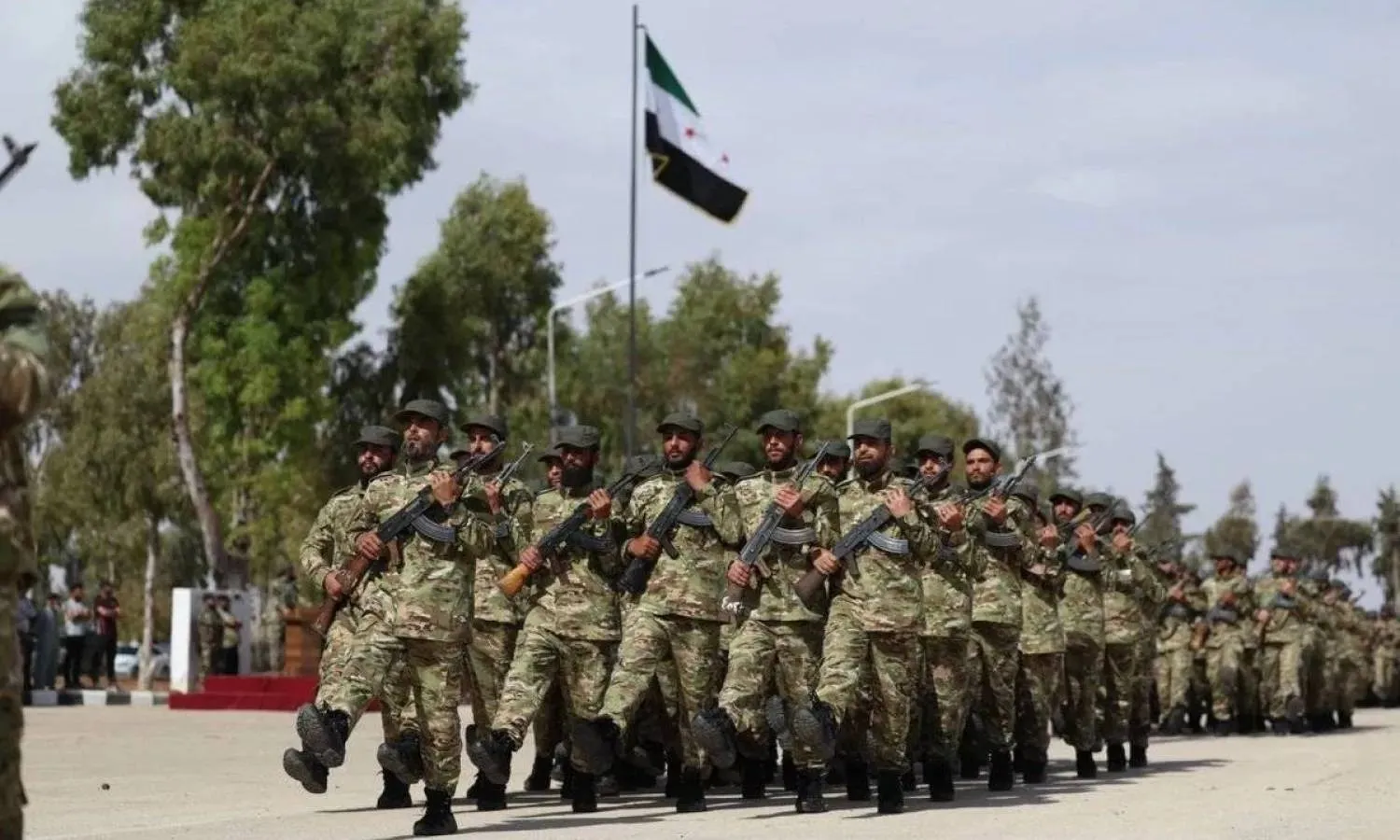
A military parade during a graduation ceremony for personnel of the Syrian army’s 56th Division on June 1, 2025. (Defense Ministry)
TT

Syria’s New Army: Renaming Units or Institutional Restructuring?

A military parade during a graduation ceremony for personnel of the Syrian army’s 56th Division on June 1, 2025. (Defense Ministry)

Syria's drive to build a national army has entered its most difficult phase: dismantling the armed factions that were formally absorbed into the Defense Ministry after the fall of Bashar al-Assad but retained their commanders, local loyalties, and financial networks.

The first stage of the process grouped more than 100 former factions into about 22 army divisions, according to Syrian reporting. That created a formal chain of command without fully eliminating the organizations that had fought the war. In practice, some units remained closely tied to their former leaders, strongholds, and economic interests.

Damascus is now reassigning commanders and fighters, changing deployments, and placing divisions under a proposed five-corps structure divided by region. The objective is to prevent former factions from operating as power blocs inside the army and to make military decisions answerable to the state.

That arrangement, however, did not end factionalism. It was the first stage of a difficult integration process.

The factions adopted new labels, including divisions and brigades, within the ministry's new structure, but did not fully shed their old organizations or the networks of influence and loyalty they had built during the war.

In many cases, they remained tied to their former strongholds, loyal to their commanders and connected to economic, administrative, and social networks.

The process, therefore, resembled the grouping of factions under one umbrella more than the creation of a unified institutional army.

Dismantling factional blocs

Damascus later moved into a clearer second phase of rebuilding the military: reorganizing units, combining them into new formations, and dismantling factional blocs from within.

This more sensitive phase seeks to break up the power blocs inherited by the new army. Personnel have been reassigned across formations to limit groups’ ability to retain their old structures or to recreate separate centers of influence within the military.

Sources who spoke to Asharq Al-Awsat said this was among the most difficult stages of restructuring the army.

The challenge was no longer simply to bring factions into an entity called the army, but to "clip the factions' wings inside that army." Some factions that became Defense Ministry divisions after Assad's fall retained their organizational cohesion and regional character.

Loyalty to commanders also endured to varying degrees, alongside financial, administrative, and social networks built over more than a decade.

An unfinished transition

The process has not reached its final goal. Some army divisions still retain elements of their previous structures, while plans continue to redistribute them, appoint new commanders, and change their deployment areas and missions.

The Syrian army is therefore caught between two models: the limited administrative absorption of factions that followed Assad's fall, and an institutional army in which factional and regional loyalties disappear and the chain of command and military decisions are tied to the Syrian state.

An informed source told Asharq Al-Awsat that "the Syrian state is completing the compulsory integration of all factions and weakening the sources of power they enjoyed in recent years."

The source said the step was essential because Damascus could not establish a unified army or a stable state without it.

The source, who asked not to be named, said the recent dismantling of military blocs included Jaysh al-Islam, which was folded into the 70th Division, as well as the Sultan Suleiman Shah group, commonly known as al-Amshat, the Hamza Division and Ahrar al-Sharqiya.

Similar moves had already affected Ahrar al-Sham and the Levant Front, the source said. Those cohesive factions held economic and regional interests, but President Ahmed al-Sharaa's administration had gradually and quietly dismantled them, reducing their weight within the army.

Factions inside the state

The central task now is to restructure the security and military institutions after the factions joined them, and then dismantle factional structures within the Syrian state.

Some factions remain in the army, but most formations that belonged to the former Syrian National Army have been dismantled, the source said. The Syrian Free Army, a former key US ally based at al-Tanf near the Jordanian border, is also being dismantled, according to the source.

The source said al-Sharaa's administration was fully coordinating with Türkiye and the United States to break up factions within the new army.

Figures such as Abu Amsha, Hatem Abu Shaqra, and Saif Bakour Bolad were Turkish allies, and officials had once expected that sidelining them might prompt Ankara to object. The opposite occurred, the source said, with Türkiye now supporting the dismantling of groups it had previously backed.

HTS in the new structure

Despite efforts to integrate the factions and build a cohesive military, the source said the final structure of the army and security services was intended to keep officers and commanders from Hayat Tahrir al-Sham, as well as prominent former Nusra Front commanders, in key command and decision-making posts.

The source said defected officers and leaders of dissolved factions who were appointed to new positions would ultimately report to an HTS figure.

The source described the approach as logical during a sensitive period in which the state faced major internal and external challenges. Political action required a solid core and internal cohesion, the source said, arguing that institutions would remain vulnerable to infiltration and internal rivalry unless the authorities could rely on pivotal military and security decisions.

The commanders' account

Colonel Abdul Muti al-Halabi, a commander in the new Syrian army who was formerly among the Nusra Front's senior ranks, told Asharq Al-Awsat that dismantling the factions was "not aimed at anyone" but was "an existential necessity for building a real military institution."

Keeping factions together as cohesive blocs inside the army would preserve multiple loyalties within the institution, threatening military and security decisions and leaving the state fragile, he said.

"We cannot build a national army if every group continues to regard itself as an independent entity with its own economy and loyalties," Halabi said, adding that the state was reassigning commanders and personnel.

Halabi disputed reports that corps commanders were being selected exclusively from HTS. He said HTS was the first group to dissolve itself and merge into the state, and that it had more organizational, security and administrative experience than other factions. It had governed Idlib, managed complex security operations and developed the ability to control territory and institutions, he said.

"If we kept the previous arrangement, regional sensitivities and old loyalties would return," Halabi said. "At this stage, we want a unified, solid leadership that is not subject to rival pressures, with everyone taking part without discrimination."

Five corps and expected changes

Rashid Hourani, a military affairs specialist at the Jusoor Center for Studies, told Asharq Al-Awsat that the new structure would probably retain a five-corps model, although commanders, troop composition, deployment areas and operational duties could change.

The previous phase had shown the need to make the formations more mobile in responding to internal and external threats, he said. The next structure could therefore change commanders and adapt each corps' methods to its assigned mission.

Hourani said the reorganization was part of a broader effort to rebuild the Syrian army and develop its working methods for the state's next phase.

Syrian news outlets reported that the proposed arrangements would place the eastern corps under Brigadier General Ahmed Mohammed al-Jassem, known as Abu Mohammed Shoura, whose name had previously been associated with command of the 66th Division.

Other reports said Brigadier General Awad al-Jassem, known as Abu Qutaiba al-Shami and previously linked to the 60th Division, would command the northern region as its four divisions were reorganized.

Some sources named Brig. Gen. Haitham al-Ali, known as Abu Muslim Afes, as the prospective commander of the central corps. Other reports said the Damascus corps would be led by Brigadier General Omar Mohammed Jaftashi, known as Mukhtar al-Turki, who currently commands the Damascus Division.

Local platforms reported that Brig. Gen. Munir al-Sheikh, known as Abu Osama, would oversee the western region and the coast through a corps comprising four recently reorganized divisions.

The problem of more radical factions

Halabi said the state was dealing carefully with more radical factions and would distribute their personnel among the corps to prevent them from forming blocs inside the army.

"These factions have important combat experience, but they must operate within an institution, not with the mentality of a group or organization," he said. "They will therefore be distributed carefully among the corps so that they are absorbed into the new military structure."

The main challenge was to move from a factional mentality to a state mentality, Halabi said.

Hourani said foreign fighters, including Turkistanis and others, had joined the army, particularly the 84th Division, and were in principle subject to the same military rules and laws as other units.

"Foreign Islamist groups joined the army, particularly the 84th Division, and the rules that apply to all military units now apply to them," he said. "Any violations are handled under the military law in force."

Asked whether international demands could lead to further moves against radical factions inside military formations, Hourani said the issue would remain part of the army-building process and its effort to draw lessons from earlier phases. He said two main considerations governed the matter, but the source text did not specify them.

How the factions view restructuring

Hourani said factions that joined the Defense Ministry understood the difference between formations created during the campaign to overthrow Assad and the requirements of an army operating through state institutions.

The factions had largely accepted integration even though Western reports warned about the method and its effects, he said. Their shared objective had eased the task and allowed the army formation to proceed smoothly.

Hourani said the continued presence of some commanders associated with particular factions reflected the experience accumulated by HTS's military wing before Assad's fall.

HTS's military wing had developed substantially in training, organization and methods of warfare, and the leadership now wanted to use that experience, he said.

Syrian Turkish coordination and a US role

Hourani said Syrian-Turkish military coordination was public and included organization and training, as reflected in repeated visits by senior military officials from both countries.

He said Washington had accepted that cooperation. He also referred to US congressional scrutiny of the Syrian government's counterterrorism performance as part of the consideration of future security cooperation.

Türkiye's aims

Hourani said Türkiye's role in building the Syrian army served objectives tied to Turkish national security as well as Ankara's political and military position in Syria and the region.

He said the aims included building a unified Syrian army that would prevent separatist entities from threatening Türkiye, citing the former presence of the Kurdish-led Syrian Democratic Forces in eastern Syria.

He also cited Türkiye's desire to strengthen its political and military influence, draw on its experience training armed forces in African states and support a Syrian administration it had backed during the uprising.

Building an army rather than merely merging factions

Syria's military restructuring shows that Damascus faces a challenge that goes beyond merely placing former armed factions under the Defense Ministry. It must also end their ability to operate as independent blocs within the armed forces.

The first phase brought factions under the state umbrella. The current phase focuses on dismantling their internal structures, reassigning personnel and commanders, and adjusting deployments and missions to prevent regional and factional loyalties from re-emerging.

Military officials say the goal is a unified army for all Syrians. Questions remain, however, about the authority that figures drawn from HTS will retain, the doctrine of the new military and the limits of Turkish and international influence over its development.

The restructuring is ultimately a test of whether Syria's new state can move from an alliance of victorious factions to a military institution subordinate to the state. The process remains unfinished, and its outcome will help shape Syria's government and security.

Sudan’s Day Laborers Struggle to Survive as War Devastates Livelihoods

Farmers harvest arugula in Khartoum on Oct. 5, 2026. (AP)
TT

Sudan’s Day Laborers Struggle to Survive as War Devastates Livelihoods

Farmers harvest arugula in Khartoum on Oct. 5, 2026. (AP)

In Khartoum, where life is struggling to regain its rhythm after years of war, many doors remain closed to day laborers who once lived on each day's earnings.

A day without work can leave a family without food, a child without money for school or a patient forced to stop treatment because medicine is out of reach.

On sidewalks, in markets and at workshops, day laborers search for any job to get them through the day. More people are competing for fewer jobs, while rising prices and a weakening Sudanese pound erode their wages.

As the gap between earnings and living costs widens, many face a stark choice: accept less pay or go home empty-handed.

Compounding burdens

Labor unionist Abdullah Youssef says the vast majority of workers "lost their jobs because of war, displacement and homelessness." Daily work available before the war is now scarce.

Most workers support families with five or six children at different stages of schooling, he told Asharq Al-Awsat. Economic hardship has pushed some families into debt. Some people have been jailed for failing to meet their financial obligations.

For day laborers, a wage is measured not just in hours worked but in the needs of an entire family. With food and service prices climbing, their earnings have lost much of their purchasing power before they reach home.

Babiker Khalifa, a day laborer and father of three, says the war "destroyed the economy." His family gets by mainly on small meals of fava beans and lentils. Meat, fruit and vegetables are beyond their reach much of the time.

His children need money each day for school, but there is not enough food at home to meet their needs, he told Asharq Al-Awsat. On some nights, they "cry from hunger."

Babiker al-Taher faces much the same hardship. He fled to Gedaref after the war broke out, then returned to Khartoum to find even harsher economic conditions.

"Sometimes we eat, and other times we don't," he said of his family, which includes four children. Rising prices and inflation have sharply cut the real value of a day laborer's pay.

With more people seeking work, laborers often have to accept lower wages to avoid returning to their families empty-handed, he said.

“We need a miracle”

Even tradespeople and craftspeople still in work face shrinking purchasing power and rising living and production costs.

Abdul Karim Ibrahim, a tailor supporting two sons and two daughters, says his daily earnings no longer meet his family's needs.

The economic situation "needs a miracle," he said. Food is now unaffordable for many families, and medical treatment adds to the burden.

Young barber Othman Ali says rising prices and a weakening currency have left his income insufficient for basic needs.

Long power outages and disruptions to the banking apps his customers use for transfers also make it harder to collect payments.

The war forced Ali to leave secondary school and work to help support his large family. He is part of a generation whose education has paid a direct price for the conflict.

The war is no longer the only source of pressure on citizens, Youssef said. Higher levies and fees, a higher exchange rate used to calculate customs duties and bans on some imported goods have compounded the strain and widened the gap in markets, he said.

He called for higher wages and better conditions for pensioners. Some employees receive very little pay, while some retirees receive sums that do not reflect their years of service, he said.

Youssef urged the government to act quickly to help workers and their families. The persistent gap between wages and prices is leaving millions of families facing severe hardship, he said.

“The most vulnerable”

Day laborers are among those hardest hit by Sudan's war, economist Mohammed al-Nayer said. Halted construction and declining craft activity have stripped large numbers of their livelihoods.

"These groups face extremely difficult living conditions amid lost job opportunities and unprecedented increases in the prices of goods and services, alongside a decline in the national currency's value and rising inflation, unemployment and poverty," he told Asharq Al-Awsat.

A comprehensive reconstruction program could employ large numbers of day laborers in construction and related activities, he said. But they remain among the hardest hit as their sources of income remain disrupted.

Al-Nayer said the state must fulfill its responsibility to protect vulnerable and poor people. He called for a comprehensive social protection program to address current economic challenges and support those most affected by the war.

These accounts echo International Labor Organization warnings about the war's deep impact on Sudan's labor market: lost jobs, shrinking economic activity and disrupted livelihoods. Workers in the informal economy are among the most vulnerable.


Olive Trees in S. Lebanon Under Israeli Fire: Deprivation of Harvest Seasons Erodes Village Memory

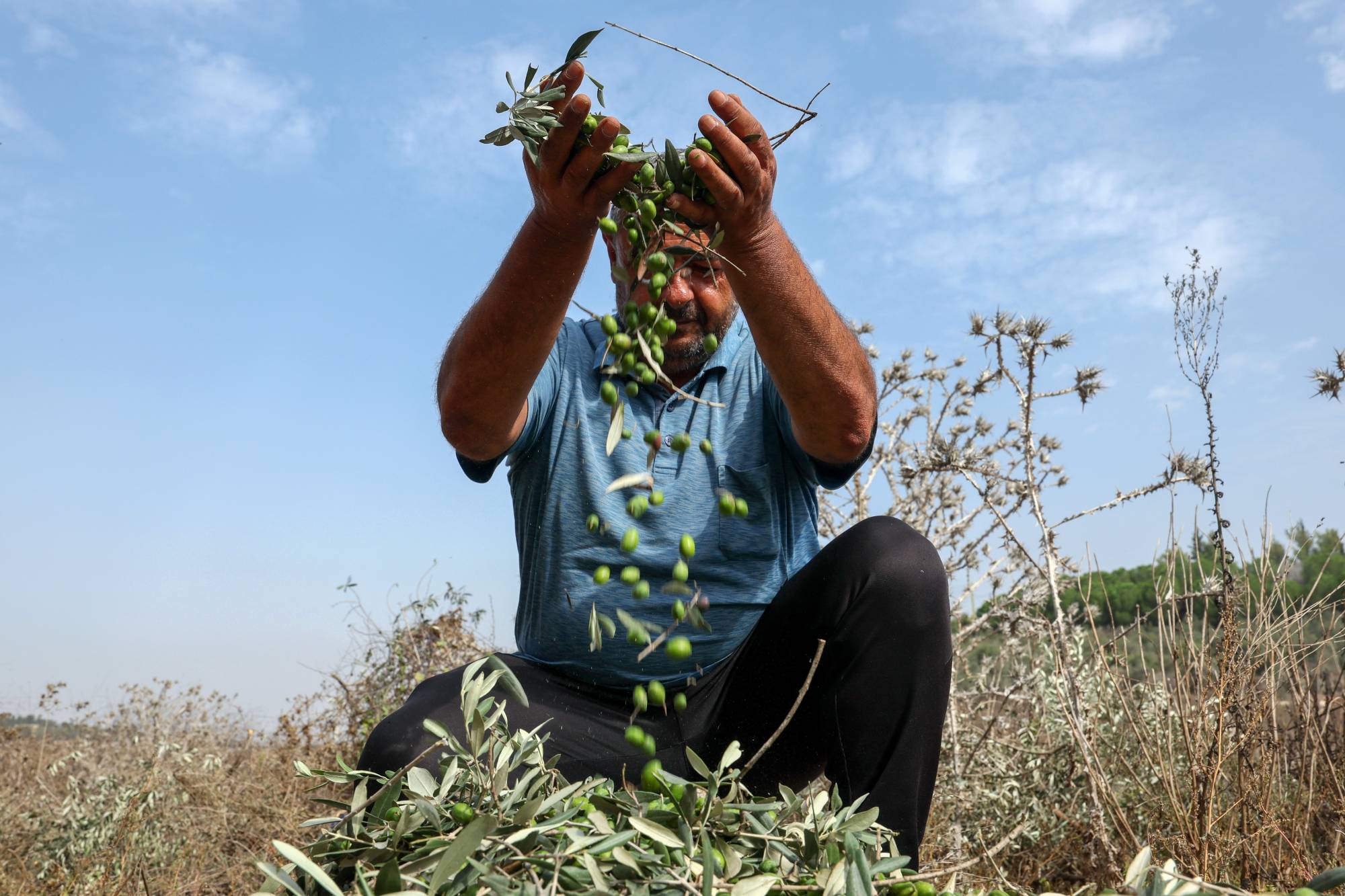
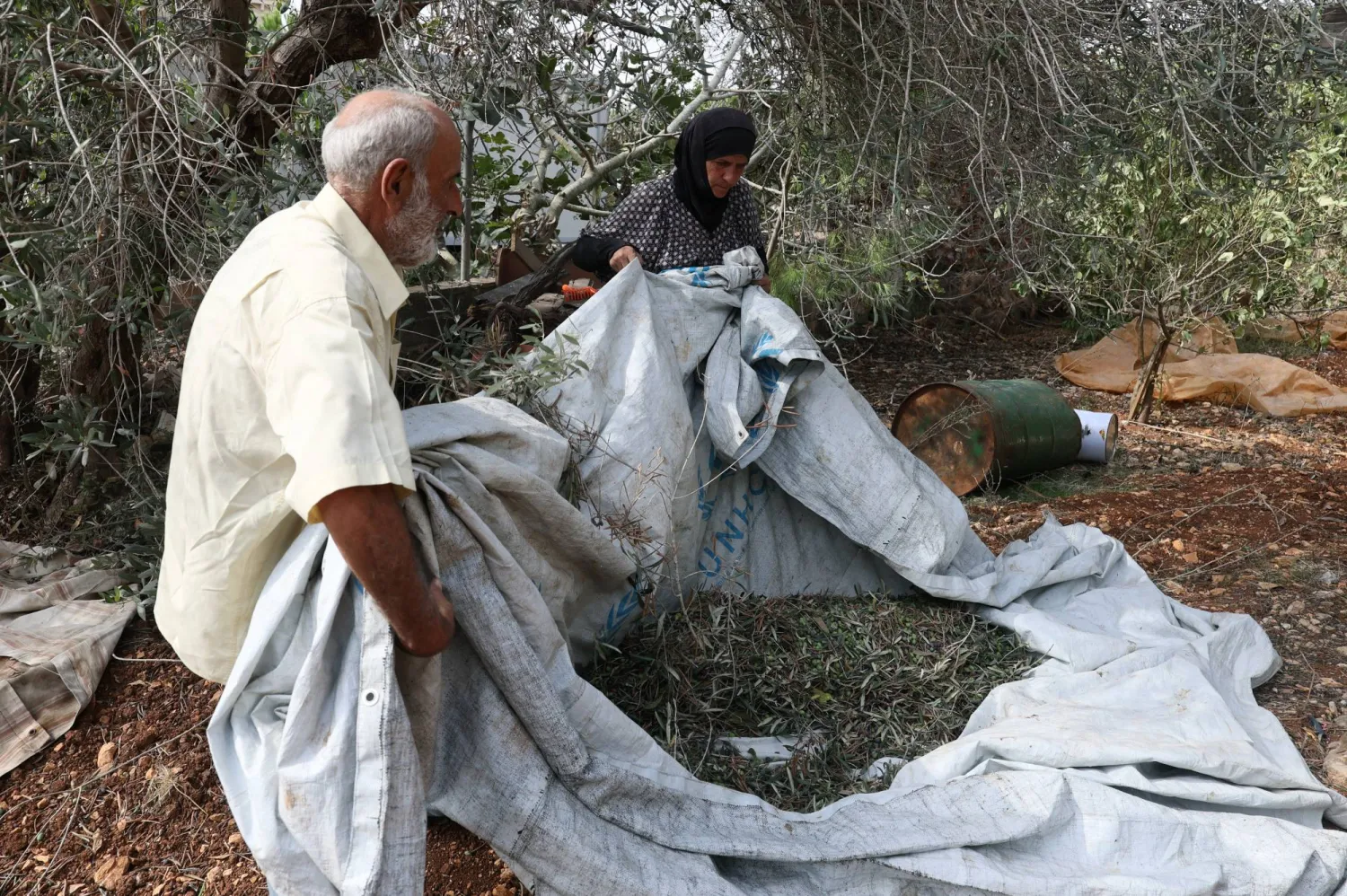
Lebanese farmers pick olives in the southern Lebanese village of Zawtar al-Gharbiyah, near the neighboring village of Zawtar al-Sharqiyah, where Israeli forces are stationed, in southern Lebanon, 10 October 2026. EPA/WAEL HAMZEH
TT

Olive Trees in S. Lebanon Under Israeli Fire: Deprivation of Harvest Seasons Erodes Village Memory

Lebanese farmers pick olives in the southern Lebanese village of Zawtar al-Gharbiyah, near the neighboring village of Zawtar al-Sharqiyah, where Israeli forces are stationed, in southern Lebanon, 10 October 2026. EPA/WAEL HAMZEH

The killing of a retired Lebanese Army chief warrant officer by Israeli tank fire in Yater has underscored the perilous reality for southern farmers. Targeted while inspecting his home and olive grove, his death has turned this year's harvest season into a stark symbol of the dangers facing those attempting to reach their land.

The incident comes as residents of border villages continue to be deprived of their harvests for nearly three years. It also coincides with a lawsuit filed in France accusing the Israeli military of uprooting around 600 ancient olive trees in Zawtar al-Sharqiyah. Local officials warn of economic and social repercussions that extend far beyond the loss of crops.

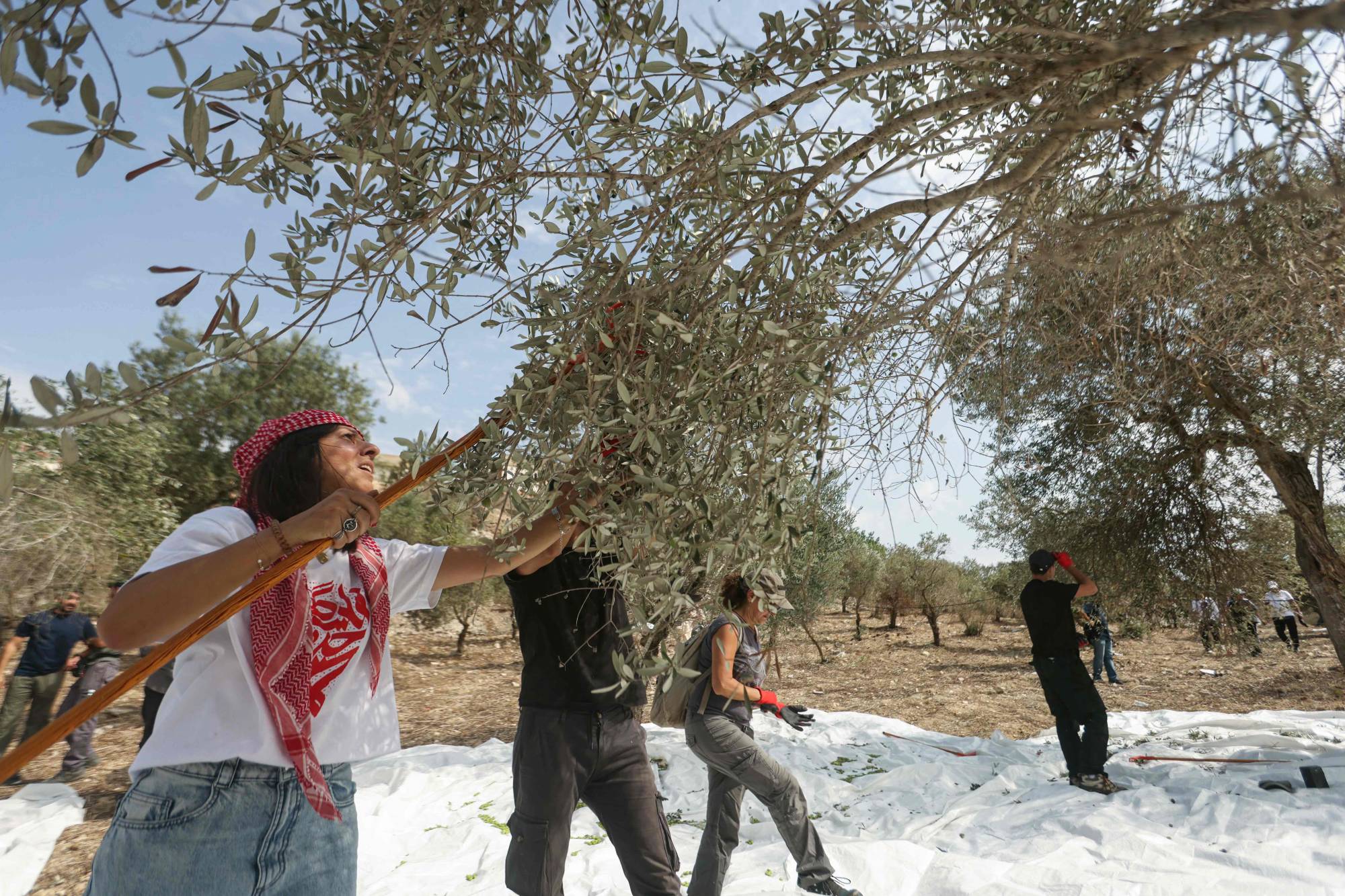
Volunteers from Lebanon's northernmost province of Akkar and the city of Sidon take part in an olive-picking initiative in the southern Lebanese village of Jibshit near Nabatieh on October 11, 2026, in a show of solidarity with Southern Lebanon and its farmers. (Photo by MAHMOUD ZAYYAT / AFP)

Targeted While Inspecting His Land

The Lebanese Army announced on Sunday the death of retired Chief Warrant Officer Ali Abdel Hassan Sweidan after being directly targeted by Israeli tank fire while inspecting his property in Yater in the Bint Jbeil district.

The army said a military unit supervised the recovery of his body after contact with him was lost. The municipality of Yater stated that he had been checking on his home and olive grove on the outskirts of the town when he came under fire from the direction of Sarbine, warning residents against approaching unsafe areas.

The incident once again highlights the obstacles facing farmers during a season when families traditionally head to their groves to gather their harvests, as access to parts of agricultural land has become fraught with ongoing security risks.

600 Trees at the Center of a Lawsuit

In Paris, a 37-year-old French businessman of Lebanese origin filed a complaint against unknown persons on September 22, accusing the Israeli military of uprooting roughly 600 olive trees from his family's land in Zawtar al-Sharqiyah.

According to his lawyers, cited by Agence France Presse (AFP), some of the trees are approximately 500 years old, while the family has cultivated the land for about 250 years.

The complaint includes allegations of theft, destruction, and damage to property as potential war crimes. The complainant suspects that the trees were transported to Israel, though this has not been established judicially. He stated that his family home was destroyed in an Israeli strike in April, before the trees were uprooted following Israeli control of the area.

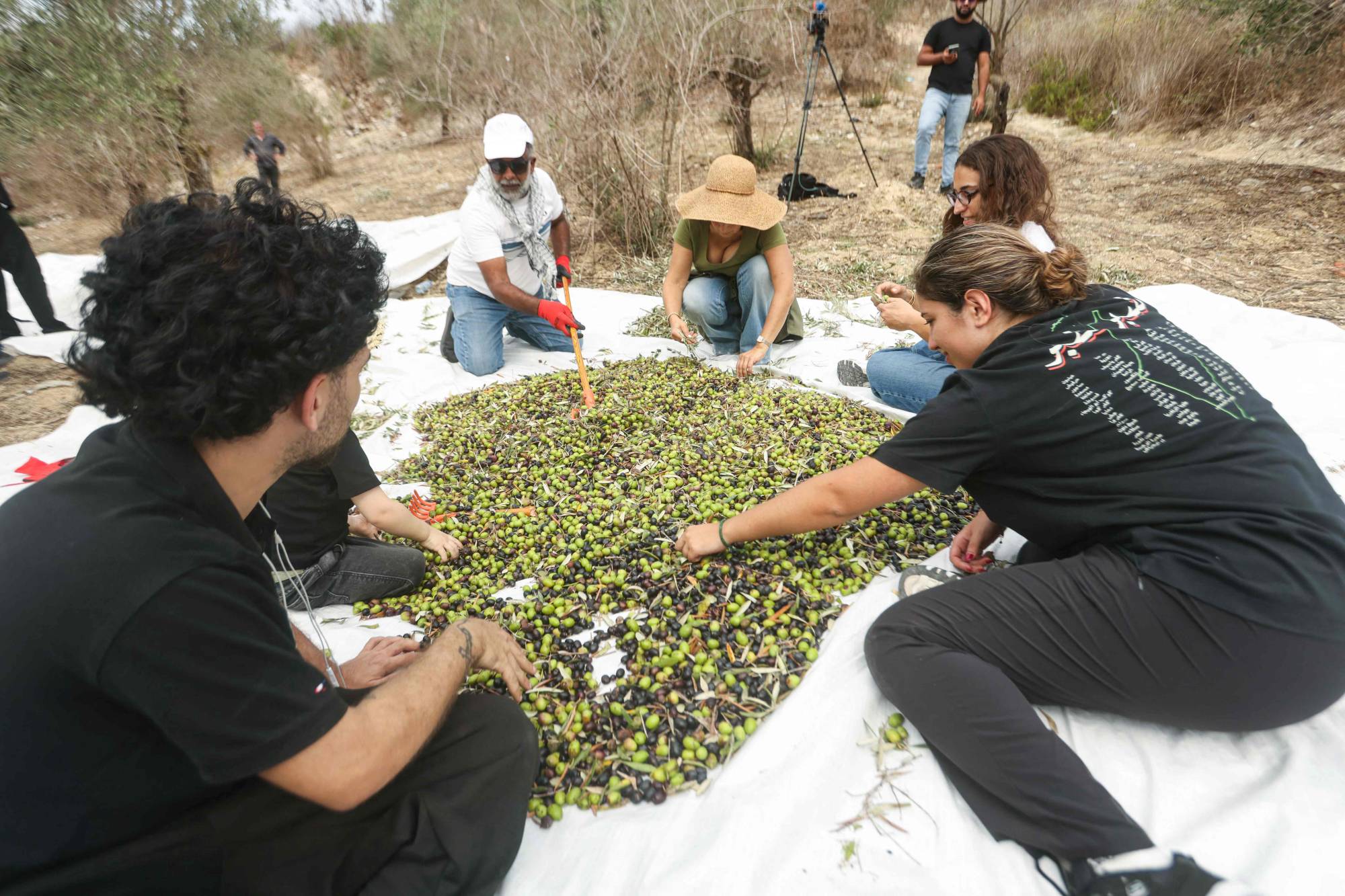
Volunteers from Lebanon's northernmost province of Akkar and the city of Sidon sort olives during an olive-picking initiative in the southern Lebanese village of Jibshit near Nabatieh on October 11, 2026, in a show of solidarity with Southern Lebanon and its farmers. (Photo by MAHMOUD ZAYYAT / AFP)

Half the Fields Out of Reach

Hanna Al-Amil, head of the municipality of Rmeish, told Asharq Al-Awsat that since the beginning of the war nearly three years ago, residents have been deprived of access to a large part of their olive fields “because most of them lie along the border, where security conditions do not permit locals to reach them and harvest their crops.”

“Even today, we do not know whether we will be able to harvest olives this year, especially since the season has not yet started and security risks continue to prevent access to the land."

He explained that roughly three-quarters of Rmeish's territory lies along the border and that more than 50 percent of its olive groves have remained unharvested for the past three years.
This deprives families of a basic source of income, he added.

Al-Amil stressed that agricultural losses are not limited to olives but also affect tobacco cultivation, the town's primary agricultural activity. "This year's tobacco production reached only about 60 percent of pre-war levels, meaning families have lost a significant portion of the income on which they relied."

A Memory Shared by Families and Generations

Mohammad Ismail, head of the municipality of Zawtar al-Sharqiyah, told Asharq Al-Awsat that the town's olive groves are “more than just trees or a source of income. They are heritage, history, and the memories of generations. They embrace the hills and fields, shade the alleys of Zawtar, and provide cool breezes that ease the summer heat."

He noted that olive trees also provide heating wood for many residents.

According to Ismail, the olive harvest is an annual occasion that brings entire families together. "Not merely to gather the crop, but to renew their connection to the land and to the ancestors who planted and cared for these trees, keeping a shared memory alive across generations."

"Today, the occupier seeks to strip us of our spirit and sever our connection to history, our ancestors, and life itself. It seeks to erase the traces of life from our hearts and minds and wipe away its fragrance from our memory,” he said.

"What is happening is not merely the uprooting of trees. It is the uprooting of hearts from chests and an attempt to erase the people's memory and their bond with the land,” he added.

Olive Trees as Part of Southern Identity

Ibrahim Sweidan, deputy head of the municipality of Yater, told Asharq Al-Awsat that "olive groves have become part of the identity of southern Lebanon. For southerners, the olive tree is not merely a tree but part of who they are and their attachment to the land."

A Lebanese farmer shows harvested olives in the southern Lebanese village of Zawtar al-Gharbiyah, near the neighboring village of Zawtar al-Sharqiyah, where Israeli forces are stationed, in southern Lebanon, 10 October 2026. EPA/WAEL HAMZEH

He said the strongest evidence of that attachment is the return of residents to their villages and homes despite difficult security conditions and their determination to remain on their land.

According to Sweidan, attacks on agricultural land, public facilities, and homes all form part of the same pattern: "A strategy aimed at undermining the foundations that allow people to remain in their villages and weakening everything that connects southerners to their land and identity."


Al-Haddad Predicted an 80-Day Israeli War... Saad Called for It to End

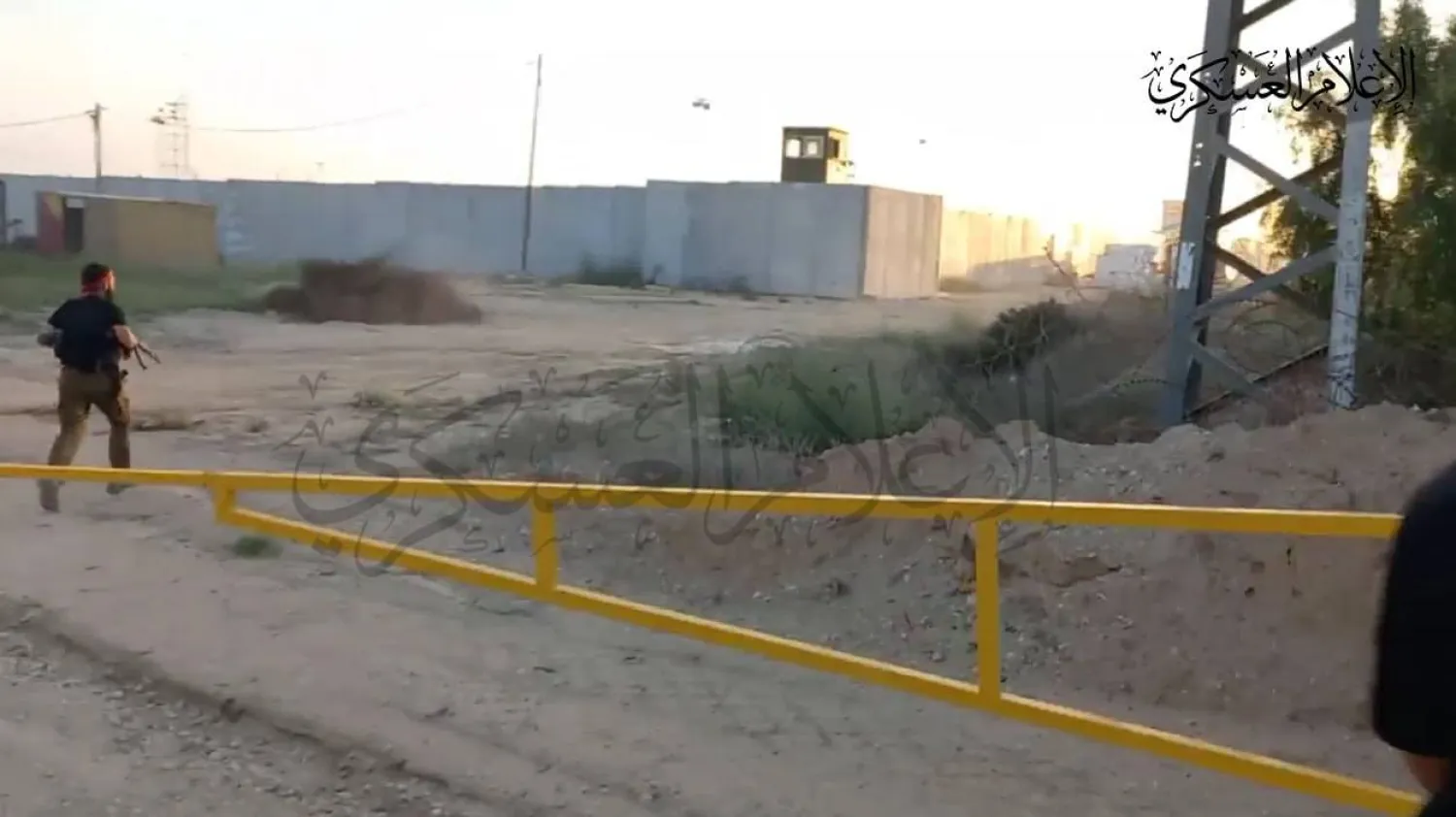
Qassam Brigades fighters infiltrated Israeli territory in an unprecedented attack on Israel, dubbed “Al-Aqsa Flood.” (File photo: Qassam Brigades website)
TT

Al-Haddad Predicted an 80-Day Israeli War... Saad Called for It to End

Qassam Brigades fighters infiltrated Israeli territory in an unprecedented attack on Israel, dubbed “Al-Aqsa Flood.” (File photo: Qassam Brigades website)

Details and behind-the-scenes accounts of the October 7, 2023, attack continue to emerge day by day, although many secrets were buried with those who planned the attack and whom Israel pursued and ultimately killed. They include Yahya Sinwar, the former head of Hamas’s political bureau; his brother Mohammed, one of the most prominent commanders of the Qassam Brigades; the brigades’ commander-in-chief, Mohammed Deif; and other figures.

Last July, Israeli intelligence agencies disclosed the contents of a letter they claimed belonged to Sinwar, reportedly seized from Hamas premises in Gaza. In it, he allegedly anticipated a major Israeli response to the attack, including the possibility of using nuclear weapons to strike Gaza. New Palestinian information is now emerging about the planning behind the attack and expectations of Israel’s response.

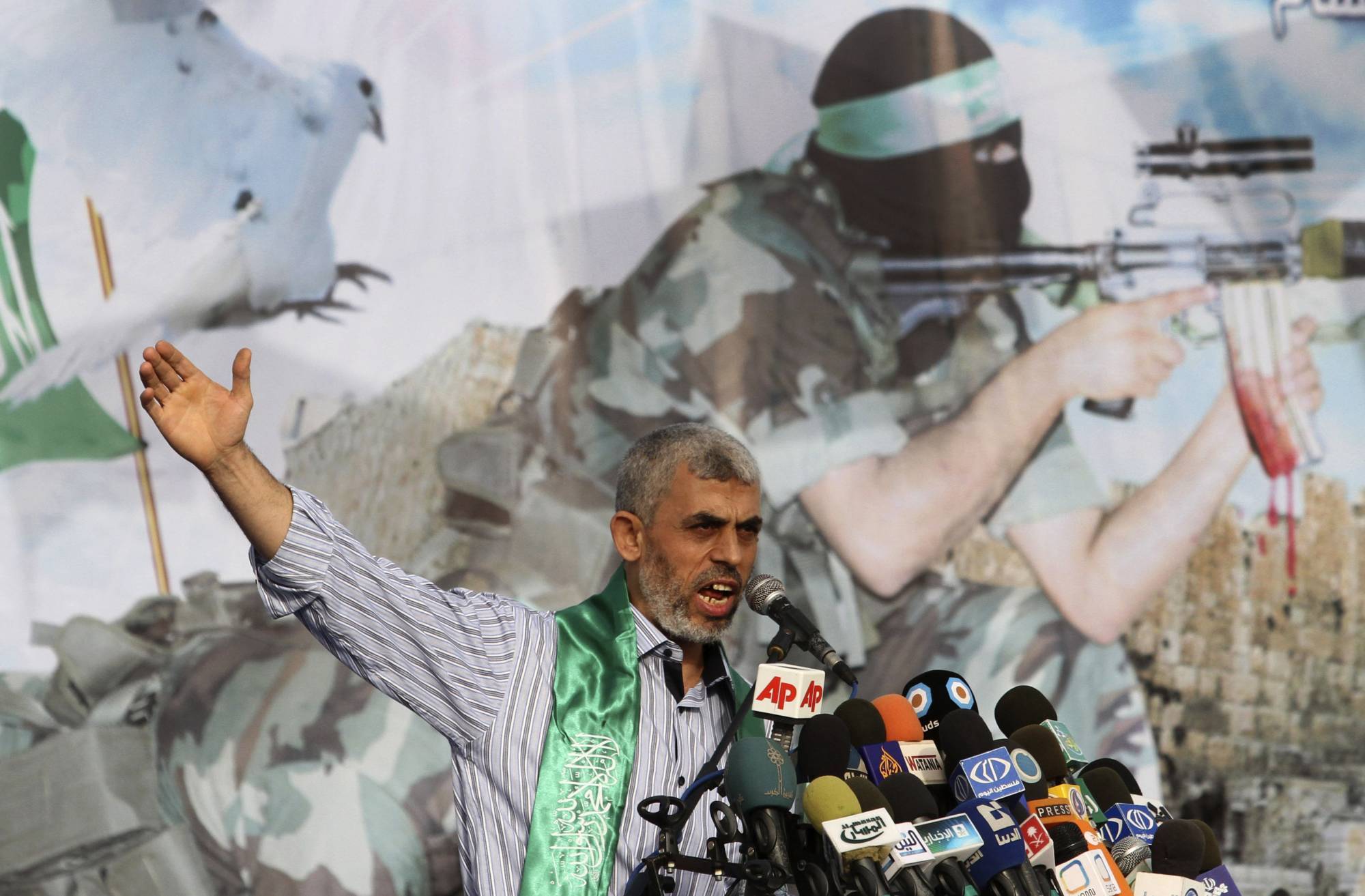
Yahya Sinwar in an archive photo taken in Gaza on October 21, 2011. (AP)

Ezzedine Al-Haddad

Two Hamas sources in Gaza told Asharq Al-Awsat that Ezzedine al-Haddad, the commander of the Qassam Brigades who assumed responsibility for the brigades after the assassinations of Mohammed Deif and Yahya Sinwar, had predicted in a message sent on the first day of the war that it would last only 80 days, after which an agreement would be reached to exchange prisoners and secure Israel’s withdrawal from the Gaza Strip.

According to one source, al-Haddad, who was among the planners and overseers of the attack, had assigned defensive tasks to certain field commanders, instructing them not to exceed specific limits during their participation in the assault on the morning of October 7. However, the sudden collapse of the Gaza Division prompted Qassam fighters to expand their incursion and reach areas that the brigade leadership had not expected them to reach inside the Israeli communities surrounding Gaza. The leadership had overseen the operation from several command centers.

The source said some units had been tasked with advancing deep into Israeli territory and disrupting Israeli forces, while others had been assigned limited objectives before withdrawing to take up defensive positions later. However, the plan did not unfold as intended in several respects because of the collapse of Israeli defenses.

Another source noted that the deaths of numerous field commanders during clashes or in the intense Israeli bombardment in the attack’s opening hours undermined the defensive plan prepared for parts of Gaza Governorate, where al-Haddad was then responsible for a brigade.

The source said al-Haddad was one of the figures who had the greatest influence on the execution of the October 7 attack. He had overseen efforts to increase production of the Yasin 105 launcher for defensive as well as offensive operations. He also authorized field commanders to launch the operation just hours before it began. They had not been briefed on the plan or informed about the attack in advance. During the operation, he had urged them to capture as many Israelis as possible to secure the release of Palestinian prisoners held in Israeli jails.

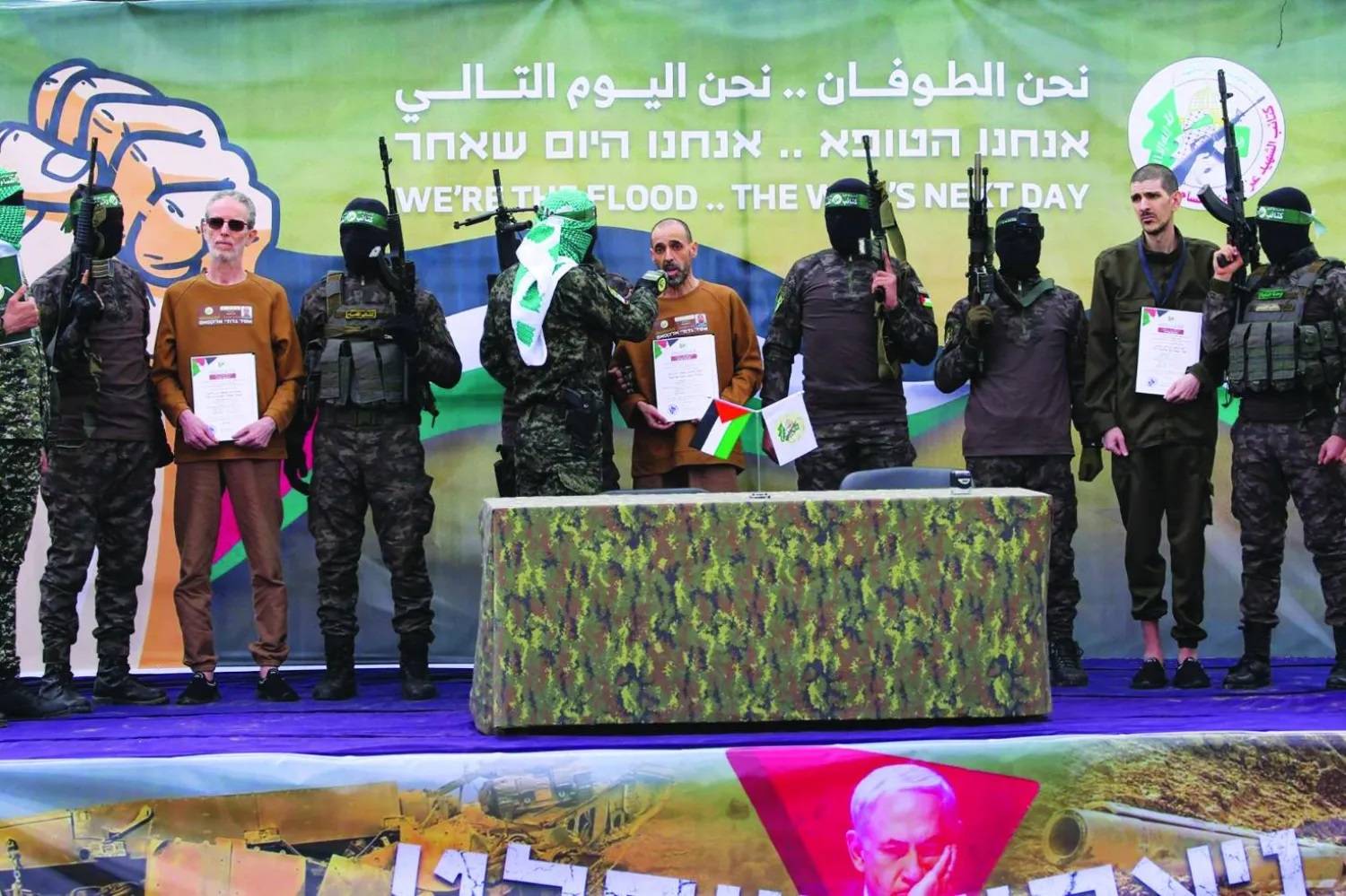
A Hamas banner bearing the slogan “We Are the Flood... We Are the Day After” during the handover of a group of Israeli hostages. (File photo: AFP)

​​​​​​​The Defensive Plan

The source explained that al-Haddad was responsible for defending Gaza City and the northern Gaza Strip. He led the defensive plan alongside field commanders and did not leave the northern part of the territory after Israel separated it from central and southern Gaza. He continued moving among his fighters at the most advanced positions where clashes with Israeli forces were taking place, while also focusing on protecting Israeli hostages.

Assessments within the Hamas and Qassam Brigades leadership that the war could last several months reflected a more optimistic expectation of Israel’s response, given that the group held hostages. However, observers believe these assessments failed to account for the scale of the events, particularly after Israel felt that its security and national pride had been wounded and that it had been humiliated. This prompted Israel to seek revenge by every means available and to continue the war to this day.

A third source said the collapse of the defensive plan forced al-Haddad to find replacements quickly among the leadership. However, the limited experience of some of them led the Qassam commander to adopt a strategy of launching surprise attacks while allowing Israeli forces to advance deep into areas where fighters had set up ambushes. The aim was to inflict unexpected casualties on the Israeli military and focus on capturing soldiers to undermine their morale.

One aspect al-Haddad appears to have failed to anticipate in his defensive plan for northern Gaza was Israel’s ability to reach certain military positions and weapons, missile, and drone storage facilities quickly.

At the same time, the sources believe that al-Haddad and prominent field commanders succeeded in thwarting what became known as the “Generals’ Plan.” The plan aimed to carry out a very large-scale military operation in northern Gaza after separating it from the center and south of the Strip. It involved coordinated attacks by air, land, and sea; taking control of hospitals, shelters, and other facilities; killing, wounding, and arresting hundreds of people and transferring them into Israel; and displacing residents to the southern part of the Strip.

However, after more than 107 days, the plan had failed, and Israel withdrew from those areas amid fierce surprise attacks that killed dozens of Israeli troops.

Raed Saad

Another revelation from behind the scenes of the war concerns divisions within Hamas and the Qassam Brigades leadership over ceasefire proposals. According to one source, prominent Qassam Brigades commander and military council member Raed Saad called in the early months of the war for efforts to end the fighting at any cost.

According to several sources, Saad was among the leaders taken by surprise by the October 7 attack and did not know when it would be carried out, despite being one of the commanders who had helped develop the plan. Israel calls the plan “Jericho Wall,” based on intelligence it had obtained years earlier. Saad was then responsible for operations and had drawn up the plan in 2016. Its implementation was postponed several times over the following years.

According to the first source, Saad sent a written message to the military council leadership during the first four months of the war, urging it to reach an agreement and accept a ceasefire. He stressed that continuing the war did not serve Hamas or the Qassam Brigades, particularly given the high number of fatalities and the possibility that the toll would rise over time.

However, Israel’s repeated rejection of proposals and insistence on continuing the war sidelined those voices, and the fighting continued, the source told Asharq Al-Awsat.

The source added that Saad oversaw numerous areas of responsibility and tasks during the war that strengthened the Qassam Brigades’ ability to withstand the fighting. He continued supporting field commanders in combat and remained in close and regular contact with al-Haddad and other leaders to determine military operations, confront Israeli forces, and keep Israeli hostages in a way that could help secure a prisoner-exchange deal.