


Kuwaiti PM Tackles Bilateral Relations with Visiting Iranian FM

Kuwaiti Prime Minister Sheikh Ahmad Nawaf Al-Ahmad Al-Sabah receives on Wednesday Iranian Foreign Minister Hossein Amir-Abdollahian. (KUNA)
TT

Kuwaiti PM Tackles Bilateral Relations with Visiting Iranian FM

Kuwaiti Prime Minister Sheikh Ahmad Nawaf Al-Ahmad Al-Sabah receives on Wednesday Iranian Foreign Minister Hossein Amir-Abdollahian. (KUNA)

Kuwaiti Prime Minister Sheikh Ahmad Nawaf Al-Ahmad Al-Sabah reviewed on Wednesday with Iranian Foreign Minister Hossein Amir-Abdollahian the bilateral relations between the two countries and the means to promote them.

“The Kuwaiti PM received on Wednesday visiting Iranian Foreign Minister Hossein Amir-Abdollahian and they discussed the latest regional and international relations,” the Kuwaiti official news agency, KUNA, said.

The meeting was attended by Kuwait’s Foreign Minister Sheikh Salem Abdullah Al-Jaber Al-Sabah.

Iran's top diplomat arrived in Kuwait Wednesday, the third leg of a Gulf tour that saw him hold “constructive” talks with his Omani counterpart in Muscat earlier in the day.

Amir-Abdollahian also held discussions in Doha on its nuclear program with Qatari and European Union officials.

Before he left Muscat on Wednesday, Amir-Abdollahian called the meeting with his Omani counterpart as “constructive” and praised the effective cooperation between the two sides, the official Oman News Agency, ONA, said.

The Omani minister said they discussed “continued consultations and cooperation” on issues of bilateral concern.

“There is great consensus in the visions of the two states on a series of issues... that will contribute to stability, security and peace,” he said, quoted by ONA.

Amir-Abdollahian’s visit to Oman came three weeks after Oman's Sultan Haitham bin Tariq al-Said met with Iranian President Ebrahim Raisi in Tehran.

“The Ministers discussed relations between the two friendly countries and followed up on the results of the visit of His Majesty Sultan Haitham bin Tarik to Tehran in May,” the Omani Foreign Ministry said in a statement.

It added that the two ministers reviewed ways to activate and enhance cooperation in culture, trade, economic and investment affairs, energy projects, and transportation with a view to supporting economic diversification and serving the interests of the two countries and their peoples.

For his part, Amir-Abdollahian said he discussed different bilateral issues with the Omani FM including the implementation of agreements signed during the recent visit of the Omani monarch to Tehran.

He then thanked the constructive efforts and initiatives of Oman and its sultan to facilitate and resolve regional and international matters.

The remarkable progress in Oman-Iran relations was emphasized during the talks, particularly in areas of economic and trade cooperation, transportation, energy, science and tourism.

Amir-Abdollahian then highlighted the United Nations Secretary General’s initiative to convene a meeting of foreign ministers from eight Gulf countries in New York, an initiative strongly supported by Oman and Qatar.

The two ministers actively explored opportunities to enhance joint cooperation in cultural, trade, economic and investment fields. They reaffirmed full support for all endeavors that promote global peace and stability.

However, both ministers did not address Oman's mediation efforts between Tehran and Washington to reach a new deal that could see Iran free US prisoners in return for the release of billions of dollars worth of Iranian assets.

On Wednesday morning, the Iranian FM also met Sultan bin Mohammed al Numani, minister of Oman’s royal office, for talks on ties between their countries and “several areas of cooperation,” ONA said.

The Iranian government says it attaches importance to strengthening diplomatic and trade relations with neighboring countries. This came as the Iranian economy is suffering under the repercussions of the US sanctions imposed by the administration of former US President Donald Trump, following his withdrawal from the nuclear deal.

“The resolution of challenges with the collective participation of countries in the region is the best way to achieve the progress of nations and ensure security in the Persian Gulf,” Amir-Abdollahian tweeted before he left Kuwait.

Last week, European and Iranian officials said Muscat is a mediator in indirect talks between Iran and its sworn enemy the United States over its suspect nuclear program and a possible prisoner swap.

Amir-Abdollahian discussed developments in the nuclear agreement with his Qatari counterpart, according to the official Qatar News Agency.



Saudi Foreign Minister, Egyptian Counterpart Discuss Regional Developments

Saudi Minister of Foreign Affairs Prince Faisal bin Farhan bin Abdullah/File Photo
TT

Saudi Foreign Minister, Egyptian Counterpart Discuss Regional Developments

Saudi Minister of Foreign Affairs Prince Faisal bin Farhan bin Abdullah/File Photo

Saudi Minister of Foreign Affairs Prince Faisal bin Farhan bin Abdullah received a phone call on Monday from Egypt's Minister of Foreign Affairs, Emigration and Egyptian Expatriates Dr. Badr Abdelatty.

During the call they discussed the latest developments in the region and stressed the importance of continuing bilateral coordination and consultation in this regard.


GCC Secretary-General Meets with Uzbekistan’s Foreign Minister

Secretary-General of the Gulf Cooperation Council (GCC) Jasem Albudaiwi. SPA
TT

GCC Secretary-General Meets with Uzbekistan’s Foreign Minister

Secretary-General of the Gulf Cooperation Council (GCC) Jasem Albudaiwi. SPA

Secretary-General of the Gulf Cooperation Council (GCC) Jasem Albudaiwi met on Sunday with Uzbekistan’s Minister of Foreign Affairs Bakhtiyor Saidov at the General Secretariat headquarters in Riyadh.

During the meeting, they reviewed the strategic relations between the GCC and Central Asian states. They also discussed ways to strengthen GCC-Uzbekistan relations and enhance investment and economic cooperation.

Additionally, they exchanged views on international and regional issues, including developments related to Iran and their implications for regional security, underlining the significance of intensifying joint efforts to enhance stability both regionally and globally.


Development Projects at Holy Sites Seek to Improve Services for Pilgrims

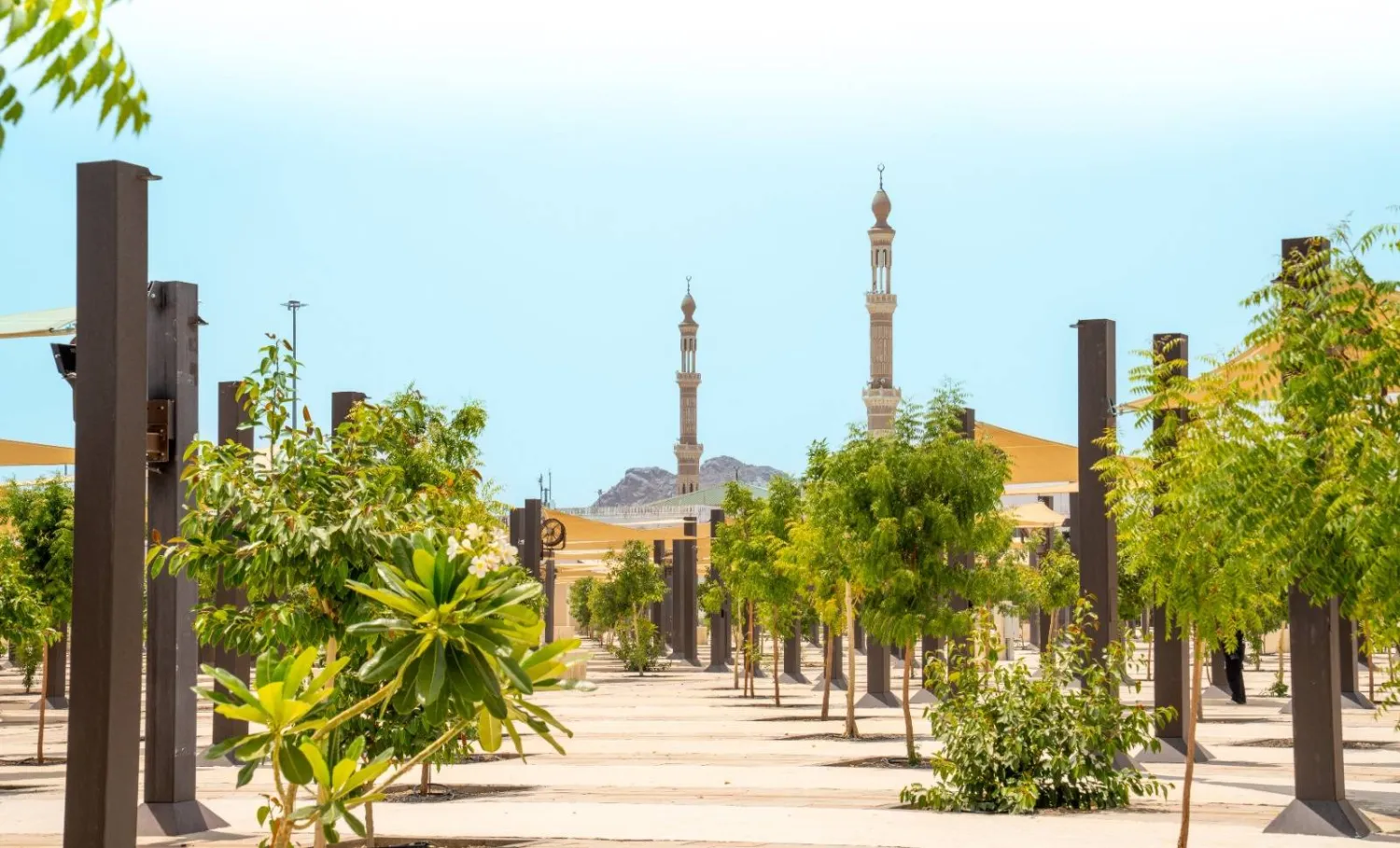
Green spaces tripled by planting of 40,000 trees to reduce heat stress (Kidana)
TT

Development Projects at Holy Sites Seek to Improve Services for Pilgrims

Green spaces tripled by planting of 40,000 trees to reduce heat stress (Kidana)

Saudi Arabia’s holy sites are undergoing a wide range of development projects for this year’s Hajj, including infrastructure upgrades as well as service and digital initiatives aimed at ensuring pilgrims can perform their rituals with ease and comfort in a safe and spiritual environment.

The projects include expanding green spaces, upgrading rest areas along pedestrian routes, building new two-story restroom complexes in Mina and improving drinking water systems. Together, they are designed to enhance infrastructure efficiency and service facilities in line with pilgrims’ needs and to deliver a more comfortable Hajj experience to the highest standards.

Kidana Development Company, the executive arm of the Royal Commission for Makkah City and Holy Sites, announced Sunday the completion of the second phase of a project to build two-story restroom complexes in Mina.

The phase included replacing existing single-story restroom facilities with 18 new two-story complexes in the Al-Shuaibain area, adding to 61 complexes completed and upgraded during last year’s Hajj season.

With the completion of the second phase, the total number of upgraded complexes has reached 79, comprising 7,838 restrooms - a fourfold increase compared with last year - while reducing waiting times by 75 percent without affecting pilgrims’ accommodation space.

Al-Shuaibain, located in the northern part of Mina, is considered a key area that has seen major development projects to expand capacity and improve services. It is a strategic accommodation zone for pilgrims, with both its eastern and western sections featuring housing complexes and upgraded tents.

The two-story restroom project aims to double the capacity of sanitary facilities in line with the number of pilgrims, reducing waiting times and easing pressure on existing infrastructure while ensuring high-quality, clean and sustainable services.

The initiative is part of broader efforts to develop an integrated system of health services capable of meeting the heavy operational demands of the Hajj season, in line with Saudi Vision 2030 and the Pilgrim Experience Program, which aim to improve public facilities and provide a smoother, more comfortable pilgrimage.

Green spaces and integrated facilities

Green areas at the holy sites have also been tripled through the planting of 40,000 trees to reduce heat stress, building on an initial phase that saw more than 20,000 trees planted during last year’s Hajj. The total number of trees has now exceeded 60,000 as part of a project aimed at enhancing vegetation cover, supporting environmental sustainability and improving pilgrims’ experience.

Authorities have also developed 36,000 square meters of rest areas along pedestrian routes, adding to more than 30,000 square meters completed in the first phase last year. These areas are equipped with integrated facilities to provide shaded, comfortable environments for pilgrims as they move between ritual sites.

Rest areas include seating zones, service kiosks and modern canopies fitted with misting fans, along with advanced rubber flooring designed to improve comfort. These upgrades are part of broader infrastructure improvements aimed at easing movement and supporting efforts to provide a more comfortable and seamless Hajj journey.

Rubber flooring and modern cooling systems

Traditional misting columns have been replaced with 400 advanced misting fan units in the western plaza of the Jamarat facility, following the replacement of 200 columns last year and the installation of an additional 200 units for this Hajj season.

The new technology provides enhanced cooling capacity, helping to moderate temperatures for up to 180,000 pilgrims per hour as they head to perform the stoning ritual.

Rubber flooring has also been introduced across the holy sites as an innovative engineering solution to improve pilgrims’ comfort, particularly along long pedestrian routes and in high-density areas. The material absorbs shock, reduces strain on ankles and feet, and is designed to be environmentally friendly by lowering surface temperatures, creating cooler and more comfortable walking conditions.