Saudi Crown Prince, Brazilian President Hold Talks, Witness Signing of Bilateral MoUhttps://english.aawsat.com/gulf/4696716-saudi-crown-prince-brazilian-president-hold-talks-witness-signing-bilateral-mou
Saudi Crown Prince, Brazilian President Hold Talks, Witness Signing of Bilateral MoU
Saudi Prince Mohammed bin Salman bin Abdulaziz Al Saud, Crown Prince and Prime Minister, received President Luiz Inacio Lula da Silva of the Federative Republic of Brazil at the Royal Court at Al-Yamamah palace. (SPA)
Saudi Crown Prince, Brazilian President Hold Talks, Witness Signing of Bilateral MoU
Saudi Prince Mohammed bin Salman bin Abdulaziz Al Saud, Crown Prince and Prime Minister, received President Luiz Inacio Lula da Silva of the Federative Republic of Brazil at the Royal Court at Al-Yamamah palace. (SPA)
Saudi Prince Mohammed bin Salman bin Abdulaziz Al Saud, Crown Prince and Prime Minister, received President Luiz Inacio Lula da Silva of the Federative Republic of Brazil at the Royal Court at Al-Yamamah palace, SPA said on Tuesday.
An official welcome ceremony was held for the Brazilian president.
The Crown Prince extended a warm welcome to the Brazilian President at the beginning of their meeting and wished him and his accompanying delegation a pleasant stay.
The Brazilian president expressed his gratitude and appreciation for the warm hospitality and gracious reception received.
The two men reviewed aspects of relations between the Kingdom of Saudi Arabia and the Federative Republic of Brazil and discussed joint coordination to enhance cooperation in various fields.
They explored promising investment opportunities in both nations to serve mutual interests. They also addressed the regional and international developments, as well as issues of common interest and the efforts directed towards them.
Attending the talks were Prince Abdulaziz bin Salman bin Abdulaziz, Minister of Energy; Prince Turki bin Mohammed bin Fahd bin Abdulaziz, Minister of State and Cabinet Member; Prince Abdulaziz bin Turki bin Faisal bin Abdulaziz, Minister of Sports; Prince Abdulaziz bin Saud bin Naif bin Abdulaziz, Minister of Interior; Prince Abdullah bin Bandar bin Abdulaziz, Minister of the National Guard; and Prince Khalid bin Salman bin Abdulaziz, Minister of Defense.
The meeting was also attended by the Saudi Minister of State, Cabinet's Member and National Security Advisor, Musaed bin Mohammed Al-Aiban; Minister of Commerce, Majid bin Abdullah Al-Qasabi; Minister of Environment, Water and Agriculture, Abdulrahman bin Abdulmohsen Al-Fadhli; Minister of Investment, Khalid bin Abdulaziz Al-Falih; Minister of Finance, Mohammed bin Abdullah Al-Jadaan; and the Saudi Ambassador to Brazil, Faisal bin Ibrahim Ghulam.
From the Brazilian side, the attendees included President of the National Congress Rodrigo Otavio Soares Pacheco; Chief of Staff of the Presidential Office Rui Costa; Minister of Finance Fernando Haddad; Minister of Ports and Airports Silvio Costa Filho; Minister of Agriculture Carlos Favaro; Minister of Mines and Energy Alexandre Silveira; and various other senior Brazilian officials.
Afterwards, the Crown Prince and the Brazilian President witnessed the signing ceremony of a bilateral memorandum of understanding (MoU) in the field of energy between the Saudi Ministry of Energy and the Brazilian Ministry of Mines and Energy.
Prince Abdulaziz signed the MoU from the Saudi side while Silveira signed from the Brazilian side.
Political, Economic Stability Went Hand in Hand in Founding of the Saudi Statehttps://english.aawsat.com/gulf/5243472-political-economic-stability-went-hand-hand-founding-saudi-state
Political, Economic Stability Went Hand in Hand in Founding of the Saudi State
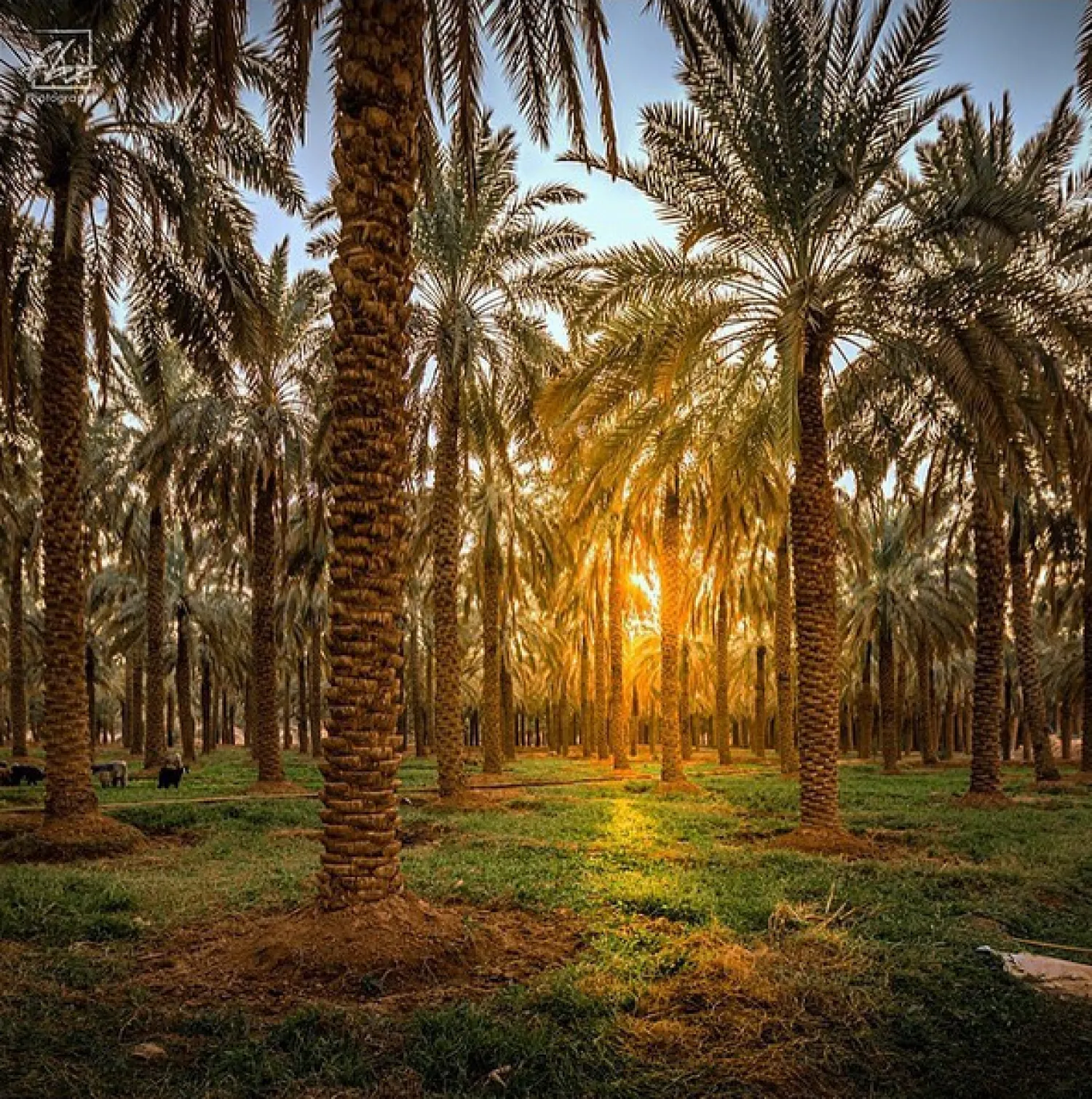
Agricultural activity in Diriyah formed the primary pillar of the First Saudi State’s economy (Ministry of Tourism).
Dr. Hala bint Dhiab Al-Mutairi, Secretary-General of the Saudi Historical Society, said the experience of Imam Muhammad bin Saud demonstrates that economic revival in the First Saudi State was inseparable from social and political reform.
She stressed that security was the decisive factor behind the prosperity that followed, particularly in agriculture, the backbone of the early state’s economy.
Speaking to Asharq Al-Awsat, Al-Mutairi explained that the First Saudi State arose in central Arabia at a time of deep political and economic fragmentation. Prior to its establishment, Najd was divided among rival local powers, with no central authority capable of maintaining order or protecting public interests.
This instability weighed heavily on economic life. Agriculture and trade declined amid frequent conflicts, raids, and highway robbery. Caravans were exposed to danger, weakening commercial links between Najd and neighboring regions. Economic activity was limited and unregulated, and residents relied largely on modest individual efforts to sustain themselves, in the absence of organized financial structures or reliable public revenues.
Security First
When Imam Muhammad bin Saud assumed leadership in Diriyah, he recognized that a durable state could not be built without security and disciplined management of resources. He worked to consolidate authority in surrounding areas, secure trade and pilgrimage routes, and protect caravans from attack.
As order was restored, confidence returned to Najd’s trade routes, many of which had been abandoned or considered unsafe. Merchants resumed overland journeys, stimulating internal trade and strengthening links with other parts of the Arabian Peninsula.
Al-Mutairi noted that the impact of security was particularly evident in agriculture. Diriyah and Wadi Hanifa experienced notable agricultural expansion once stability took hold. Production of staple crops - grains, dates, and vegetables - increased, strengthening food supplies for the population.
Farmers were encouraged to reclaim land, improve irrigation systems, and adopt better cultivation practices. A degree of self-sufficiency emerged, reducing reliance on imports. Agricultural surpluses supported local markets and provisioned caravans, reinforcing economic ties between settled communities and surrounding tribes.
Diriyah’s Commercial Rise
As agricultural output grew, Diriyah’s markets flourished and became among the most important commercial hubs in Najd. Merchants from across the region were drawn to its markets, where local produce, handicrafts, and imported goods were exchanged.
Craft industries expanded alongside trade. Carpentry, blacksmithing, and the manufacture of farming tools created new employment opportunities and improved living standards. Markets also functioned as centers of social interaction and knowledge exchange, enhancing Diriyah’s stature as both an economic and cultural center.
Al-Mutairi noted that the First Saudi State’s financial system was marked by simplicity, organization, and adherence to Islamic principles. Revenue was derived primarily from zakat and charitable contributions, collected and administered in an orderly manner. Additional income came from modest market levies, agricultural production, trade activity, and resources from territories under state authority.
The system avoided excessive taxation, sparing merchants and residents undue burden. At the same time, it provided sufficient revenue to fund administration and defense, maintain security, and ensure a measure of financial stability. This balance strengthened public confidence in the emerging state.
Economic Policy as Statecraft
Financial stability enabled Imam Muhammad bin Saud to invest in infrastructure and public order. Roads were secured and improved, markets were developed, and agriculture was supported. Crucially, political expansion was pursued without draining local resources or undermining economic vitality.
The resulting prosperity had tangible social effects. Living standards improved, disputes over resources declined, and bonds between tribes and the people of Diriyah were reinforced. Economic strength also bolstered political authority, allowing gradual territorial expansion without exclusive reliance on military force.
According to Al-Mutairi, this experience underscores how closely economic development was intertwined with social cohesion and political stability. As agriculture expanded and markets thrived, social solidarity deepened and loyalty to the state increased.
Diriyah’s strategic location along Wadi Hanifa further contributed to its success. The valley supported agricultural activity, while its position along caravan routes connected internal markets to wider regional networks. The steady movement of goods and capital generated employment and enhanced Diriyah’s role as a key economic center in the Arabian Peninsula.
Building Trust Between State and Society
Al-Mutairi emphasized that examining the economic foundations of the First Saudi State during Imam Muhammad bin Saud’s rule reveals the central role of economic management in state-building.
Security, agricultural growth, active markets, and organized financial administration collectively fostered social and political stability. Balanced economic policies addressed immediate challenges while laying the groundwork for sustainable development.
By promoting the values of work and productivity and linking economic discipline to religious and ethical principles, commercial dealings became more regulated. Fraud and monopolistic practices declined, while predictable zakat collection and equitable distribution strengthened social solidarity. Those with means supported the poor, narrowing disparities and reducing social tensions.
This framework fostered mutual trust among merchants, communities, and the state. Clear and straightforward economic regulations encouraged broader participation in productive activity, expanding the state’s economic base.
Al-Mutairi added that these policies were not merely tools for increasing revenue, but instruments for building a cohesive society and a resilient economy. In the formative years of the Saudi state, political and economic stability were not separate tracks, but mutually reinforcing pillars that ensured its endurance.
Saudi Arabia Appoints Saleh Al-Maghamsi as Imam of the Prophet’s Mosquehttps://english.aawsat.com/gulf/5243464-saudi-arabia-appoints-saleh-al-maghamsi-imam-prophet%E2%80%99s-mosque
Saudi Arabia Appoints Saleh Al-Maghamsi as Imam of the Prophet’s Mosque
Sheikh Saleh Al-Maghamsi in a photo published by Arrajol magazine during a previous interview (Asharq Al-Awsat).
A royal decree has appointed Sheikh Saleh Al-Maghamsi as an imam at the Prophet’s Mosque in Madinah, according to the Saudi Press Agency (SPA).
Dr. Abdul Rahman Al-Sudais, head of religious affairs at the Grand Mosque and the Prophet’s Mosque, said Saturday that the directive reflects the Saudi leadership’s strong commitment to the Two Holy Mosques and its ongoing support through the appointment of qualified scholars.
He added that such decisions strengthen the mosques’ mission of promoting guidance and moderation, while serving worshippers and visitors.
Al-Sudais congratulated Sheikh Al-Maghamsi on the appointment, praying for his success in carrying out what he described as a great responsibility in line with the aspirations of the Kingdom’s leadership and the message of the Prophet’s Mosque.
Al-Maghamsi is a prominent Saudi preacher known for his contemporary approach and broad engagement in education, sermons and religious lectures. In recent years, he served as imam and preacher of Quba Mosque in Madinah.
He has also lectured at the Higher Institute for Imams and Preachers at Taibah University and headed the Al-Bayan Center for Reflecting on the Meanings of the Quran. Over the course of his career, he has held several academic and administrative posts and is widely regarded for his humility and scholarly depth.
Born in 1963 in Wadi Al-Safra village in Badr Governorate, west of Madinah, Al-Maghamsi later moved to Madinah, where he was raised in a scholarly environment. He specialized in Quranic exegesis during his academic studies.
He completed his primary, intermediate and secondary education in Madinah before earning a bachelor’s degree in Arabic language and Islamic studies from King Abdulaziz University (Madinah branch). He later pursued postgraduate studies.
Al-Maghamsi began his professional career as a teacher before moving into educational supervision and academic instruction. He became a faculty member at the Teachers College — now the College of Education at Taibah University — and went on to serve in several key roles, most notably as imam and preacher of Quba Mosque in Madinah.
He has delivered numerous lectures in Quranic interpretation and Islamic sciences, and has produced widely known recorded programs and scholarly series.
First Saudi State Seal: Official Recognition, Administrative Recordhttps://english.aawsat.com/gulf/5243463-first-saudi-state-seal-official-recognition-administrative-record
First Saudi State Seal: Official Recognition, Administrative Record
Dr. Faris Almushrafi, head of the History Department at King Saud University (Asharq Al-Awsat)
Dr. Faris Almushrafi, head of the History Department at King Saud University, said Founding Day is not only a moment to recall events or celebrate beginnings, but an opportunity to scrutinize the very tools through which the state defined and asserted itself.
Chief among them is the seal, a compact material document that distills the idea of the state into a single imprint.
Almushrafi told Asharq Al-Awsat that because a seal cannot be read in isolation from its political and administrative context, examining its structure and formulation opens the door to a deeper understanding of the nature of the state that produced it.
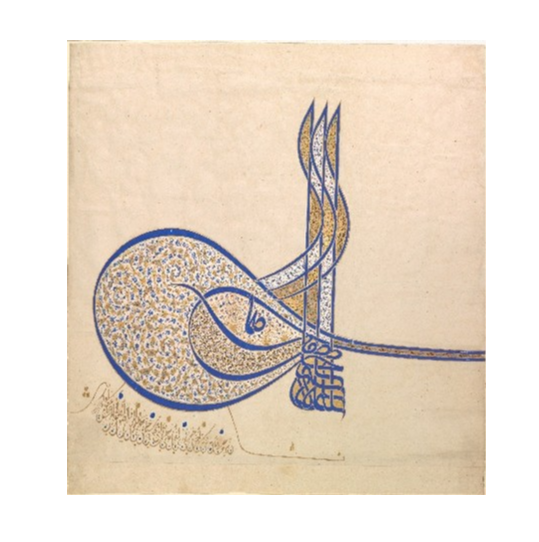
The tughra of Sultan Suleiman the Magnificent (r. 1520–1566)
The seal attributed to Imam Saud bin Abdulaziz (1229 AH/1814), the third imam of the First Saudi State, was used to authenticate official correspondence, including a letter addressed to the Governor of Damascus in the first decade of the 13th century AH.
The seal bears the central inscription “His servant Saud bin Abdulaziz,” and includes the date 1223 AH, set within a circular frame suggesting completeness and order.
A seal, he said, is not created for ornamentation but for formal recognition. Its presence signals a central authority that needs to document its decisions and correspondence, and an administration conscious of representation. Every sealed letter implicitly declares: this is a state speaking in its own name. Legitimacy is not derived from content alone, but from the imprint affixed to it.
Almushrafi said the phrase “His servant Saud” transcends a personal dimension and enters the language of political legitimacy. The choice of the word “servant” reflects a conception of authority inseparable from religious reference, presenting leadership as a moral duty before it is a political privilege.
This language, he said, is not spontaneous but expresses a model of governance that views political power as incomplete without value-based legitimacy, and sees the state as operating within a system of belief rather than above it.
The seal and state functions: inside and out
The head of the History Department at King Saud University stressed that the seal’s importance increases when one considers that it was used in correspondence beyond the local sphere, addressed to the governor of Damascus.
In this context, the seal became an instrument of external political relations, reflecting the First Saudi State’s awareness of itself as a political actor communicating and defining itself in a formal language recognized in the world of political correspondence at the time. The seal was thus not directed inward only, but also performed a sovereign function externally.
At the same time, the inclusion of the Hijri date on the seal is not a mere formal detail but an indicator of the temporal ordering of administrative work.
A state that dates its documents, he said, understands the importance of sequence, precedence and proof, and recognizes that political action is incomplete without being fixed in time. Here, early features of what could be called the administrative mind of the First Saudi State begin to emerge.
Almushrafi placed the seal in its contemporary regional context, saying its significance becomes clearer when compared with the seals of other Islamic states in the late 18th and early 19th centuries.
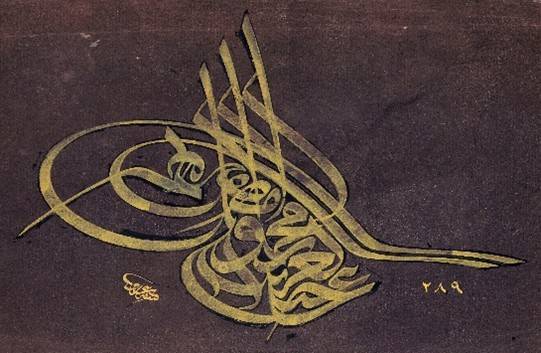
In the Ottoman Empire, the imperial tughra functioned as a composite sovereign signature, bearing the sultan’s name and titles in a dense visual form.
It carried a highly symbolic function that emphasized imperial rank and hierarchical authority before any procedural dimension, turning the seal into a visual declaration of sovereignty as much as a tool of authentication.
In Qajar Iran, official seals were likewise tied to the shah’s name and titles, with a clear emphasis on personal mark and royal legitimacy, making the seal an extension of the ruler’s prestige and symbolic representation of the state more than a neutral administrative device.
In Egypt under Muhammad Ali Pasha, despite early features of administrative modernization, the official seal continued to operate within a language of authority and rank derived not solely from its wording but from the sovereign structure to which the ruler belonged as an Ottoman governor.
Even when Muhammad Ali used the phrase “His servant Muhammad Ali,” Almushrafi said, it did not serve as a foundational definition of legitimacy but functioned as a procedural courtesy within Ottoman writing conventions, softening the tone of rank within the seal while full titles were restored outside it through the system of official ranks and designations - including “Pasha,” a high rank in the Ottoman administrative and military hierarchy, and “Governor of Egypt,” the legally and sovereignly recognized title, along with protocol formulations such as “Governor of Protected Egypt.”
In the Egyptian case, the seal remained as much a declaration of political standing as an instrument of documentation, inseparable from a higher structure of authority defining the ruler’s position.
By contrast, Almushrafi said, the Saudi seal presents a different formulation. The phrase “His servant Saud bin Abdulaziz,” coupled with the Hijri date, suffices to perform the function of official recognition and administrative authentication without symbolic display, inflation of titles, or reference to a higher sovereignty outside the framework of the state itself.
Here, the function of the seal as a state instrument takes precedence over its role as a statement of rank, reflecting a sovereign model based on economy of symbols, clarity of representation and administrative discipline. This distinction, he said, is significant in understanding the nature of the First Saudi State and the logic of its early formation as a state that defines itself through its function and practice rather than through the grandeur of symbols alone.
The tughra of Sultan Abdulaziz
The seal and the function of the emerging Saudi state
In light of this regional comparison, Almushrafi said the seal of Imam Saud bin Abdulaziz should not be read as an isolated administrative tool but understood in the context of the emerging Saudi state at the time.
It was not formed as a ceremonial or symbolic entity, but as an authority concerned with regulation, implementing rulings, securing its domain and organizing relations between inside and outside.
In this context, the seal becomes a direct reflection of the state’s function: a tool for endorsing decisions, fixing correspondence and regulating political action within a clear legal framework.
The simplicity of the seal’s wording, its economy in titles and its association with the Hijri date all point to a state that sees authority as responsible practice before sovereign display. A state that reduces its symbols to a minimum, he said, prioritizes action over rhetoric, organization over ornamentation and function over representation.
Thus, the seal is read not as a mark of the imam’s person, but as an instrument of a state that operates, communicates, binds and records.
In this sense, the seal of Imam Saud bin Abdulaziz stands as testimony to the nature of the First Saudi State as a state of practice, defining itself by what it executes rather than what it displays, and affirming its presence through administrative and legal discipline rather than symbolic grandeur alone.
Almushrafi concluded that the seal teaches that a state is not read only in battles or major treaties, but in its silent details: a seal, a signature and a linguistic formulation.
On Founding Day, recalling this seal is not merely a celebration of an old artifact, but a conscious reading of a moment that shaped the Saudi state as an organized entity with legitimacy and awareness of political representation.
In this way, the seal becomes a historical testimony declaring: here is a state, and here is an authority that knows itself and knows how to assert its presence.
لم تشترك بعد
انشئ حساباً خاصاً بك لتحصل على أخبار مخصصة لك ولتتمتع بخاصية حفظ المقالات وتتلقى نشراتنا البريدية المتنوعة