


KSrelief Signs Agreements to Strengthen Education and Healthcare Sectors in Yemen

King Salman Humanitarian Aid and Relief Center (KSrelief) signed on Wednesday a cooperation agreement to carry out the third phase of the Back to School Project in Al-Mukha district in Taiz Governorate (SPA)
TT

KSrelief Signs Agreements to Strengthen Education and Healthcare Sectors in Yemen

King Salman Humanitarian Aid and Relief Center (KSrelief) signed on Wednesday a cooperation agreement to carry out the third phase of the Back to School Project in Al-Mukha district in Taiz Governorate (SPA)

King Salman Humanitarian Aid and Relief Center (KSrelief) signed on Wednesday various agreements to promote the educational and medical sectors in several Yemeni governorates, benefiting over 13,000 individuals.
At the educational level, the Center signed a cooperation agreement with a civil society organization to carry out the third phase of the Back to School Project in Al-Mukha district in Taiz governorate, Thamud district in Hadramaut governorate, as well as in the governorates of Shabwah, Abyan, and Lahj, Yemen, benefiting some 6,000 individuals.
Assistant Supervisor General of Operations and Programs at KSrelief Engineer Ahmed Al Baiz signed the agreement on the sidelines of the International Conference on Conjoined Twins in Riyadh.
The agreement entails providing 60 fully equipped classrooms and outfitting 10 schools to create a suitable learning environment for students, and distributing 6,000 school uniforms and bags containing school supplies.
Furthermore, job opportunities will be created for low-income families (beneficiaries of previous training and empowerment projects) by having them make school bags and uniforms.
This initiative is part of the relief and humanitarian endeavors carried out by the Kingdom through KSrelief to bolster the safety and continuity of the educational process, and tackle student dropout rates in the specified regions in Yemen.

At the medical level, KSrelief and the International Wars and Disasters Victims' Protection Association (IRVD) signed a cooperation agreement to establish a prosthetic and rehabilitation center in Yemen’s Marib governorate.
This collaboration will offer physical rehabilitation services to individuals with disabilities, focusing on their integration into society.
It will involve personalized treatment plans, provision of various prosthetic limbs, occupational rehabilitation services, continuous follow-up care, and the enhancement of medical and technical staff skills to handle specialized cases.
The project aims to curb the emigration of specialized personnel and is expected to benefit 7,174 individuals.
Separately, the World Health Organization (WHO) signed a €3.4 million agreement with the German government to sustain lifesaving health and nutrition services in Yemen.
According to a WHO statement, the initiative comes at a critical time: Yemen is grappling with a protracted, grade 3 emergency – the highest level of WHO health emergency response.
It said Yemen faces multiple and parallel outbreaks of vaccine-preventable diseases, including circulating vaccine-derived poliovirus type 2 (cVDPV2), acute watery diarrhea and cholera, measles, diphtheria, malaria and dengue fever.
According to WHO, Yemen reported 204 000 suspected cases and 710 deaths between the outbreak of cholera in March 2024 and the end of September 2024.
Since the beginning of the year, 33,000 suspected measles cases have been reported, with 280 associated deaths.
By the end of 2024, it is projected that over 223,000 pregnant and breastfeeding women and more than 600,000 children will be malnourished.
Among these children, nearly 120,000 are expected to suffer from severe acute malnutrition (SAM), a 34% increase on the previous year.



King Salman: We Thank God for Honoring Us With Serving the Two Holy Mosques and Caring for Pilgrims

Custodian of the Two Holy Mosques King Salman bin Abdulaziz (Asharq Al-Awsat)
TT

King Salman: We Thank God for Honoring Us With Serving the Two Holy Mosques and Caring for Pilgrims

Custodian of the Two Holy Mosques King Salman bin Abdulaziz (Asharq Al-Awsat)

Custodian of the Two Holy Mosques King Salman bin Abdulaziz on Wednesday expressed “gratitude to Almighty God for honoring us with the service of the Two Holy Mosques and the care of pilgrims to His Sacred House.”

King Salman prayed that God accept the pilgrims’ Hajj, rituals and acts of worship.

“With the advent of the blessed Eid al-Adha, we congratulate our people in this blessed homeland and our Islamic nation on this occasion, and pray to Him Almighty to make it an Eid of goodness, peace and stability for our nation and the entire world. May you all be well every year,” the king said.

Since dawn on the first day of Eid al-Adha, pilgrims have begun performing the stoning ritual at Mina, casting seven pebbles at the Grand Jamarat (Jamarat al-Aqaba), amid smooth crowd movement under the prepared dispatching plan.

About 1.7 million pilgrims departed to Muzdalifah after sunset on Tuesday following their standing at Arafat to perform the greatest pillar of Hajj, in safety and dressed in unified white garments.

Security and service teams were deployed across the holy sites to oversee pilgrims’ movement from Arafat to Muzdalifah, where they remained until dawn on Wednesday, the morning of Eid al-Adha, in preparation for proceeding to Mina to perform the stoning of Jamarat al-Aqaba, Tawaf al-Ifadah, the sacrificial offering, and the shaving or trimming of hair, before staying in Mina for the remainder of the Hajj rites.

Saudi Interior Minister Prince Abdulaziz bin Saud bin Naif said the level of security, organizational and service integration across the Hajj system, along with its advanced capabilities and preparations, reflects the scale of care provided to pilgrims and enhances the efficiency of implementing security and operational plans to ensure their safety and enable them to perform their rituals with ease and reassurance.

On Tuesday, the interior minister inspected the Special Security Forces of the Presidency of State Security participating in the Hajj security forces, praising the specialized efforts carried out by the units.


Pilgrims Perform Tawaf Al-Ifadah in Spiritual Atmosphere

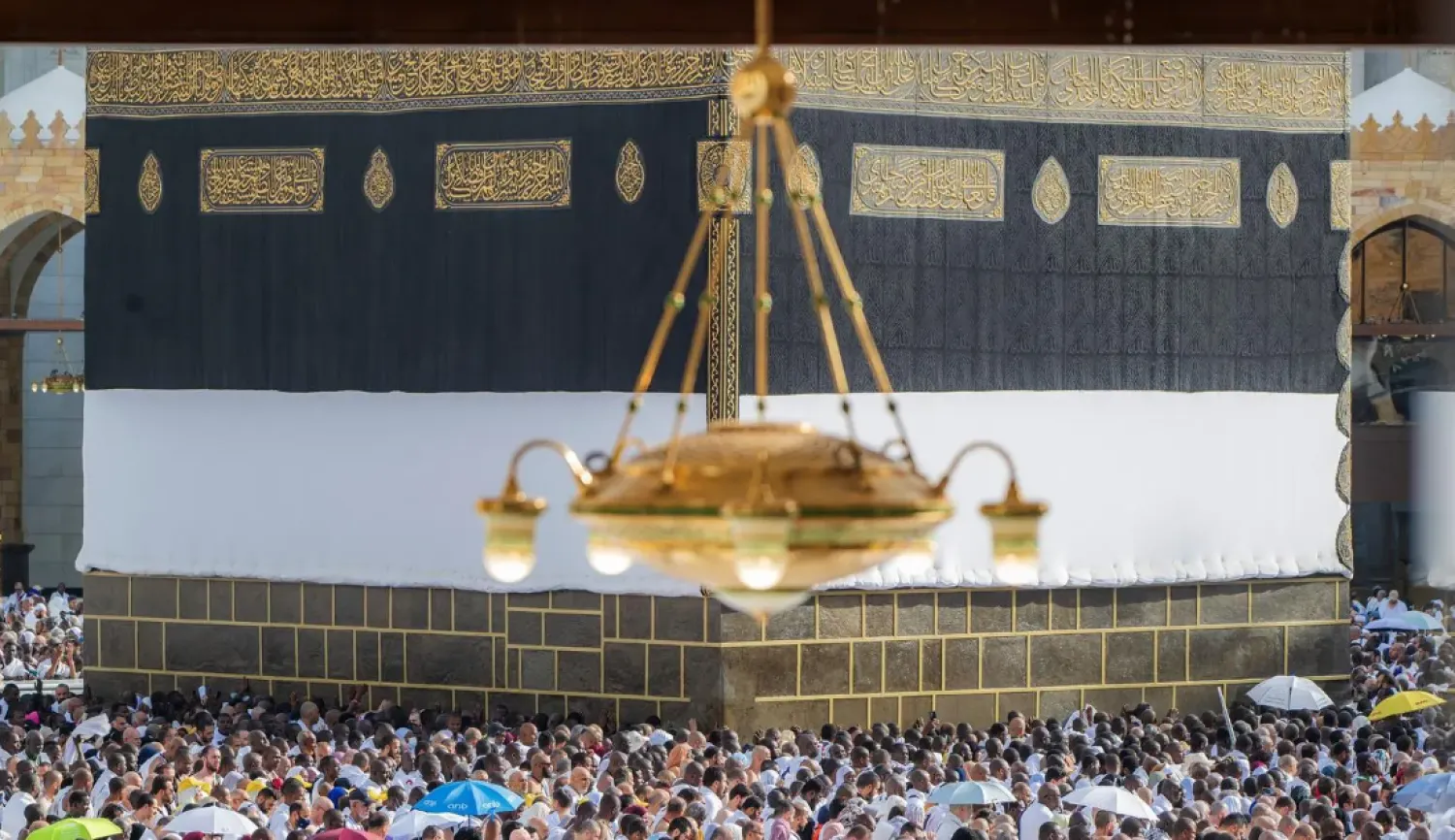
The Grand Mosque witnessed a large influx of pilgrims performing Tawaf Al-Ifadah under the direct supervision of the relevant sectors - SPA
TT

Pilgrims Perform Tawaf Al-Ifadah in Spiritual Atmosphere

The Grand Mosque witnessed a large influx of pilgrims performing Tawaf Al-Ifadah under the direct supervision of the relevant sectors - SPA

Pilgrims Wednesday performed Tawaf Al-Ifadah at the Grand Mosque after standing at Arafat, spending the night in Muzdalifah and performing the stoning of Jamrat Al-Aqaba, SPA reported.

This was facilitated through a comprehensive system of organizational, health, and security services provided by the relevant authorities to ensure the smooth movement and safety of pilgrims throughout their rituals.

The Grand Mosque witnessed a large influx of pilgrims performing Tawaf Al-Ifadah under the direct supervision of the relevant sectors, which mobilized their human and technological resources to serve worshippers and facilitate their movement with ease and efficiency.

Pilgrims will continue performing their rituals in Mina during the Days of Tashreeq, where they will stone the three Jamarat. They will then conclude their Hajj with the Farewell Tawaf before departing Makkah.


Pilgrims Perform Stoning Ritual at Jamrat Al-Aqaba in Mina

Muslim pilgrims cast stones at a pillar symbolizing Satan, during the annual hajj pilgrimage in Mina, Saudi Arabia, May 27, 2026. REUTERS/Ibraheem Abu Mustafa
TT

Pilgrims Perform Stoning Ritual at Jamrat Al-Aqaba in Mina

Muslim pilgrims cast stones at a pillar symbolizing Satan, during the annual hajj pilgrimage in Mina, Saudi Arabia, May 27, 2026. REUTERS/Ibraheem Abu Mustafa

Pilgrims arriving from Muzdalifah began at dawn Wednesday performing the stoning ritual at Jamrat Al-Aqaba in Mina on the first day of Eid Al-Adha, amid an integrated system of security, health, and organizational services provided by the relevant Saudi authorities to facilitate the performance of rituals.

The Jamarat facility witnessed smooth crowd movement supported by direct field monitoring and operational plans designed to regulate pedestrian flows and ensure safe mobility between the holy sites.

Authorities were on hand around the facility through the deployment of ambulance and medical teams, guidance and awareness services, and enhanced sanitation and cleaning operations to provide a safe and comfortable environment for pilgrims.

Meanwhile, shuttle buses and Al Mashaaer Al Mugaddassah Metro continued transporting pilgrims between the holy sites according to operational schedules aligned with traffic and crowd-management plans aimed at easing movement and reducing travel time.

Stoning of Jamrat Al-Aqaba marks one of the key Hajj rituals performed by pilgrims following their overnight stay in Muzdalifah, before continuing the remaining rites of the Day of Al-Nahr (Day of Sacrifice), including animal sacrifice, hair shaving or trimming, and Tawaf Al-Ifadah.