


Trump’s Saudi Visit to Cement Deeper Strategic Ties

US President Donald Trump during his visit to the Saudi capital Riyadh in May 2017 (SPA)
TT

Trump’s Saudi Visit to Cement Deeper Strategic Ties

US President Donald Trump during his visit to the Saudi capital Riyadh in May 2017 (SPA)

Analysts expect US President Donald Trump’s upcoming visit to Saudi Arabia in mid-May – his first foreign trip since taking office – to lay the groundwork for deeper strategic and security ties between Washington and Riyadh, while boosting economic and investment cooperation.

The White House has officially announced that Trump will visit Saudi Arabia from May 13 to 16, as part of a regional tour that also includes Qatar and the United Arab Emirates.

Analysts told Asharq Al-Awsat that Trump's agenda during his visit is expected to be dominated by the region’s most pressing and complex issues, including Iran’s nuclear program and broader tensions with Tehran, the ongoing war and humanitarian crisis in Gaza, as well as the current situation in Yemen.

In a previous interview with CBS News, Trump described his relationship with the Middle East as “good,” frequently praising Washington’s trade ties with Saudi Arabia and the kingdom’s regional role in promoting peace and stability.

Trump has also repeatedly lauded Saudi Arabia for hosting US diplomatic efforts and facilitating talks aimed at securing a ceasefire between Russia and Ukraine.

Dr. Abdulaziz Sager, chairman of the Gulf Research Center, said several key regional files require resolution or a clear US stance ahead of the president’s Gulf tour.

“Chief among them are Iran’s nuclear file and broader relations with Tehran, the current situation in Yemen, and the humanitarian crisis in Gaza,” he said.

Sager told Asharq Al-Awsat that alongside strategic and security matters, economic issues will also feature prominently during Trump’s visit.

These include Gulf investments in the US economy, the stability of the US dollar, and global oil prices, which he described as “core economic concerns.”

He noted, however, that US tariffs are unlikely to be a priority topic during the trip.

“Unlike with other countries, the trade balance with Gulf states favors the United States, so tariffs are not high on the regional agenda,” he said.

Saudi political analyst Dr. Khaled al-Habbas said the president’s visit is a clear signal of the strength of US-Saudi relations, which have spanned more than eight decades.

“These ties have been built on a solid foundation of mutual interests across political, economic, military, and social fields,” he told Asharq Al-Awsat.

He added that this long-standing partnership has proven vital to the interests of both countries, particularly during regional crises and on the international stage—from the Cold War era to more recent Saudi-led mediation between the US and Russia amid the Ukraine conflict.

Trump’s decision to make Riyadh the first stop on his foreign tour reflects the importance Washington places on its relationship with Saudi Arabia, given the kingdom’s growing influence both regionally and globally, the Saudi analyst said.

“The choice underscores how much weight the US administration gives to its ties with the Kingdom, due to Riyadh’s pivotal role on the regional and international stages, as well as its significant economic and political clout,” al-Habbas explained.

He said the talks between the two leaderships are expected to cover a wide range of shared concerns, including economic cooperation and current political developments across the region and beyond.

“This visit is likely to pave the way for deeper military and political coordination, as well as collaboration in the field of peaceful nuclear energy,” he added.

Saudi Arabia holds a key diplomatic position in the eyes of the White House.

Trump also chose the kingdom as the first destination of his inaugural foreign tour in 2017— a gesture seen by many as a strong signal of the administration’s appreciation and recognition of Riyadh’s regional and international role.

Saudi Arabia has hosted two rounds of talks between the United States and Russia, as well as between the US and Ukraine, as part of ongoing efforts to broker a ceasefire and end the war that has raged for more than three years.

Washington has also expressed appreciation for Riyadh’s role within OPEC, particularly its efforts to stabilize global oil prices.



Makkah Deputy Governor Carries Out Field Inspection of Grand Mosque Readiness for Ramadan 

Deputy Governor of the Makkah Region Prince Saud bin Mishaal bin Abdulaziz is seen during his inspection tour at the Grand Mosque in the holy city of Makkah. (SPA)
TT

Makkah Deputy Governor Carries Out Field Inspection of Grand Mosque Readiness for Ramadan 

Deputy Governor of the Makkah Region Prince Saud bin Mishaal bin Abdulaziz is seen during his inspection tour at the Grand Mosque in the holy city of Makkah. (SPA)

Deputy Governor of the Makkah Region Prince Saud bin Mishaal bin Abdulaziz inspected the readiness of the Grand Mosque and its facilities, conducting a field tour to review operational and service preparations for receiving worshippers and Umrah performers during the holy month of Ramadan, reported the Saudi Press Agency on Tuesday.

Prince Saud was briefed on the operational plans implemented by the relevant authorities, including crowd management mechanisms, service enhancements, and facility preparations aimed at ensuring smooth movement and enhancing comfort and safety levels for visitors to the Grand Mosque, particularly during peak times.

He reviewed developmental initiatives and smart services supporting the operational system, notably electric mobility carts for transporting the elderly, persons with disabilities, and those in need of assistance within the Grand Mosque.

The tour also included an overview of the efforts of guidance teams deployed across the corridors and courtyards of the Grand Mosque, providing multilingual assistance and direction.

Prince Saud reviewed the interactive map and digital mobility platform, which allows visitors to plan their routes in advance and identify service locations, entrances and exits, and less crowded pathways.

He was briefed on crowd management systems, including the visitor density sensor platform that measures human density in real time, and the Tawaf and Sa’i crowd status display service, which allows worshippers to select appropriate times to perform rituals with ease. Models of the modern multilingual guidance system were also reviewed.

Prince Saud also visited the Smart Engineering Command and Control Center, which serves as an advanced central platform linking operational systems and monitoring performance in real time, boosting operational efficiency and raising readiness levels during Ramadan.


Saudi Leadership Provides Two Donations Worth SAR150 Mln Through Jood Eskan Platform

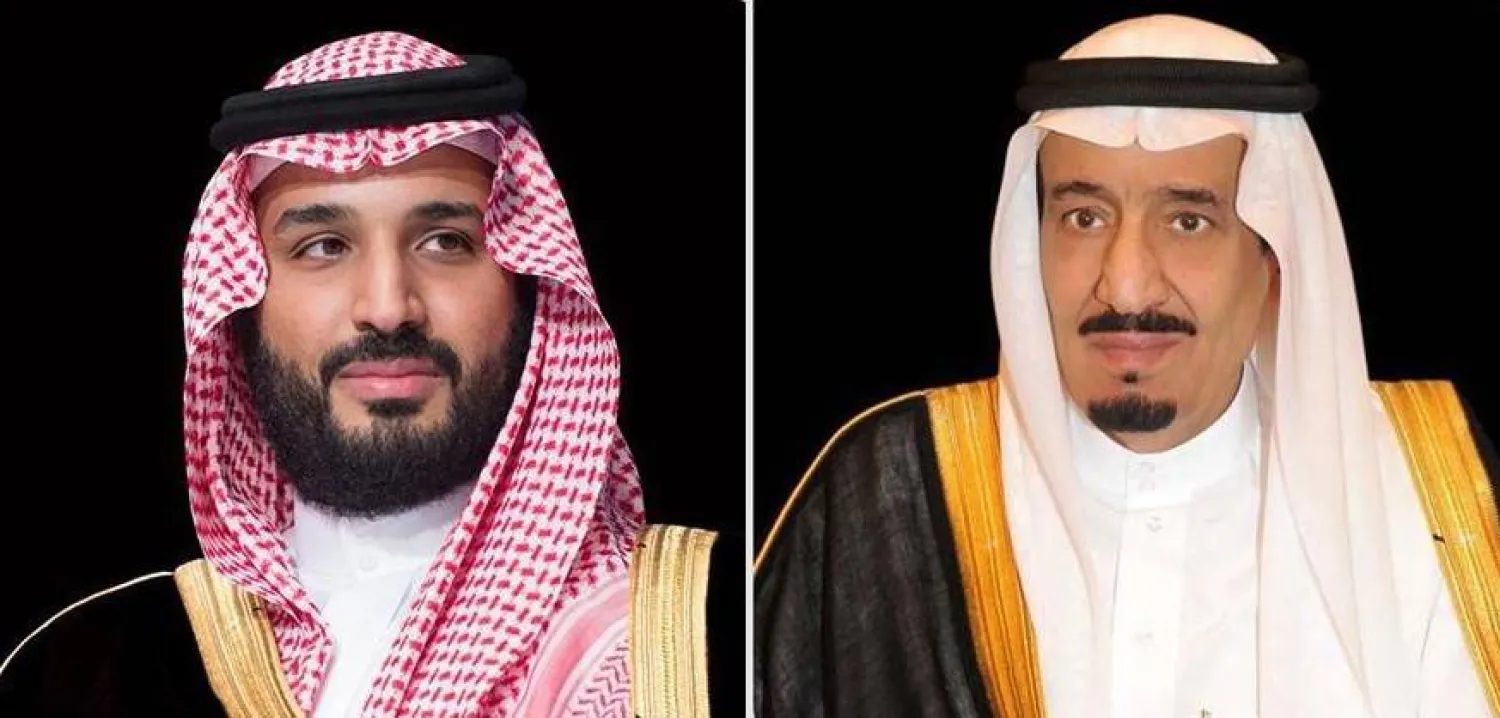
Custodian of the Two Holy Mosques King Salman bin Abdulaziz Al Saud and Prince Mohammed bin Salman bin Abdulaziz Al Saud, Crown Prince and Prime Minister. (SPA)
TT

Saudi Leadership Provides Two Donations Worth SAR150 Mln Through Jood Eskan Platform

Custodian of the Two Holy Mosques King Salman bin Abdulaziz Al Saud and Prince Mohammed bin Salman bin Abdulaziz Al Saud, Crown Prince and Prime Minister. (SPA)

Custodian of the Two Holy Mosques King Salman bin Abdulaziz Al Saud and Prince Mohammed bin Salman bin Abdulaziz Al Saud, Crown Prince and Prime Minister, have provided two generous donations amounting to SAR150 million through the Jood Eskan platform.

The move aligns with the leadership's commitment to supporting all national efforts and initiatives to provide suitable housing for deserving families.

Minister of Municipalities and Housing and Chairman of the Board of Trustees of the Developmental Housing Foundation (Sakan) Majed Al-Hogail expressed his deep gratitude to the leadership for its unwavering support to all national efforts and initiatives aimed at providing suitable housing for eligible families across the Kingdom.

He noted the effective impact of previous generous donations in achieving the goals of housing development, and motivating individuals and institutions to donate through the Jood Eskan platform that is based on community giving that helps provide decent housing and boosts stability and quality of life for deserving families.


Saudi Crown Prince Receives Message on Bilateral Ties from President of Kazakhstan

Prince Mohammed bin Salman bin Abdulaziz Al Saud, Saudi Crown Prince and Prime Minister. (SPA file)
TT

Saudi Crown Prince Receives Message on Bilateral Ties from President of Kazakhstan

Prince Mohammed bin Salman bin Abdulaziz Al Saud, Saudi Crown Prince and Prime Minister. (SPA file)

Prince Mohammed bin Salman bin Abdulaziz Al Saud, Saudi Crown Prince and Prime Minister, received on Tuesday a written message from President of Kazakhstan Kassym-Jomart Tokayev on bilateral relations between their two countries.

The message was received by Minister of Foreign Affairs Prince Faisal bin Farhan bin Abdullah during a meeting with his Kazakh counterpart Yermek Kosherbayev in Riyadh.