Saudi Crown Prince Receives Written Message from Russian President

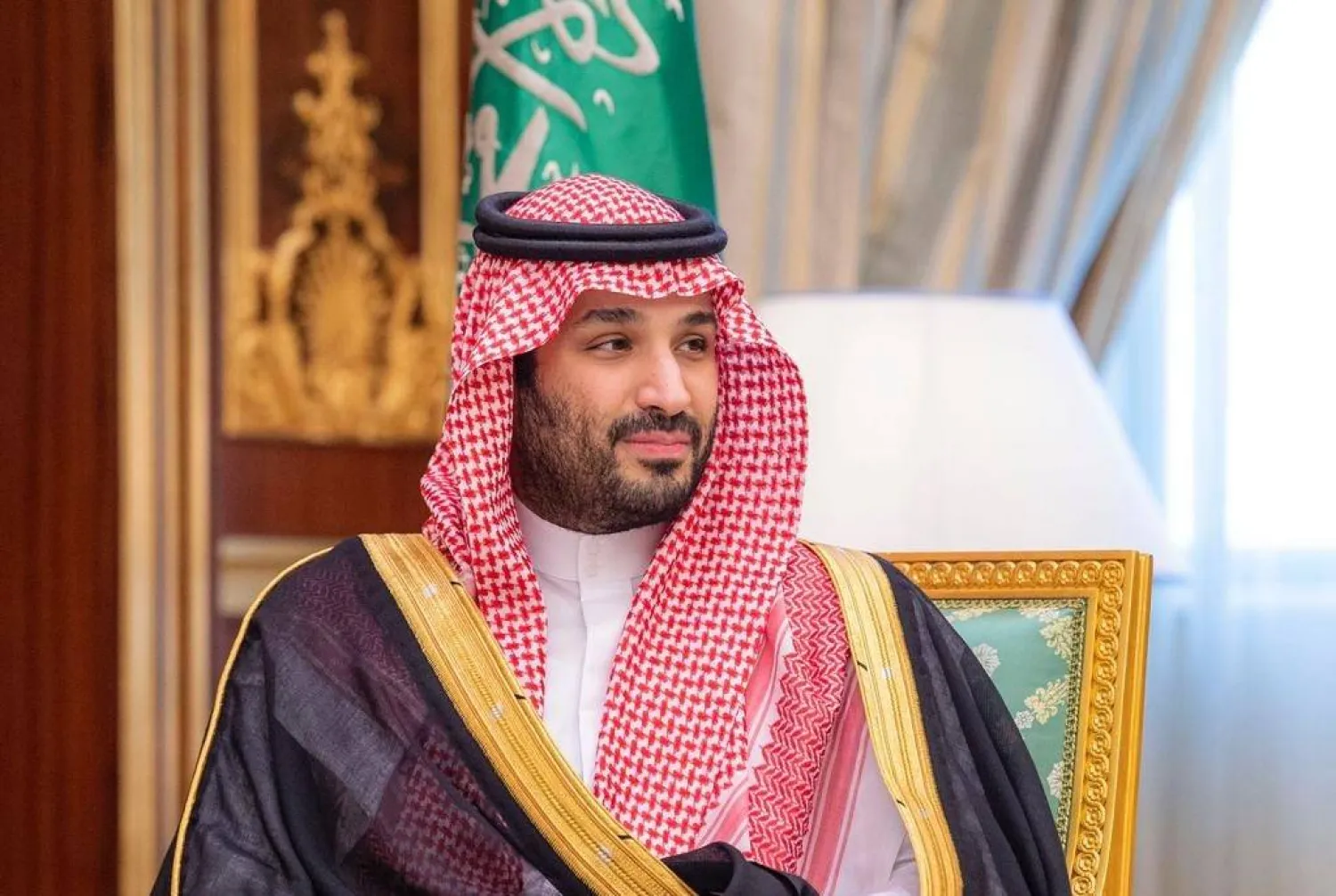
Prince Mohammed bin Salman bin Abdulaziz Al Saud, Saudi Crown Prince and Prime Minister. (SPA)
TT

Saudi Crown Prince Receives Written Message from Russian President

Prince Mohammed bin Salman bin Abdulaziz Al Saud, Saudi Crown Prince and Prime Minister. (SPA)

Prince Mohammed bin Salman bin Abdulaziz Al Saud, Saudi Crown Prince and Prime Minister, received on Wednesday a written message from Russian President Vladimir Putin concerning relations between the two countries.

The message was received by Deputy Minister for International Multilateral Affairs and General Supervisor of the Public Diplomacy Deputyship Dr. Abdulrahman Al-Rassi during his meeting in Riyadh with Russian Ambassador to the Kingdom Sergey Kozlov.

The officials reviewed bilateral relations and discussed ways to develop cooperation in various fields.


Saudi Arabia Dedicates Integrated Health System for Hajj Pilgrims

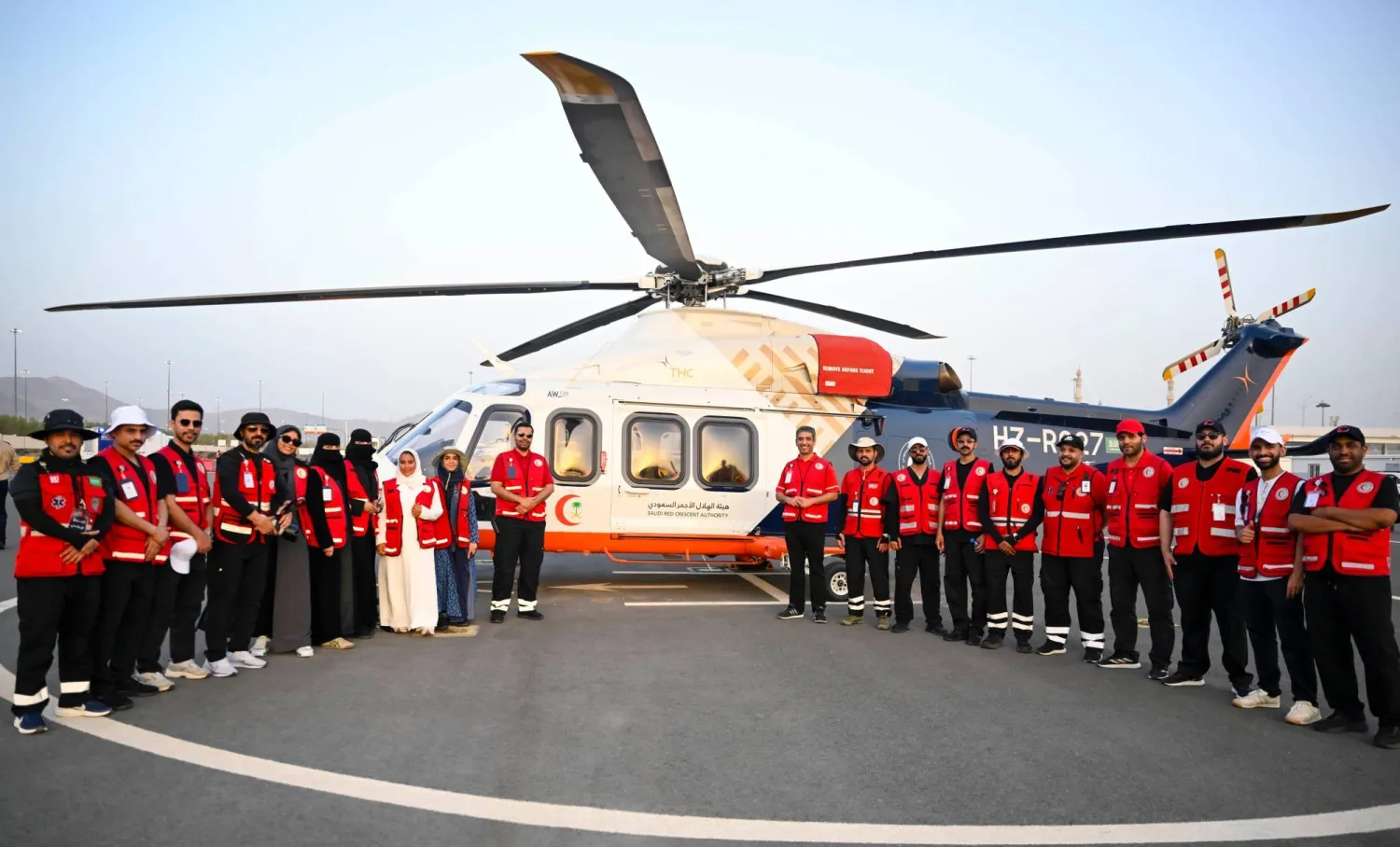
Saudi air ambulances are lifelines in the sky that provide pilgrims with medical assistance. (Bashir Saleh)
TT

Saudi Arabia Dedicates Integrated Health System for Hajj Pilgrims

Saudi air ambulances are lifelines in the sky that provide pilgrims with medical assistance. (Bashir Saleh)

Saudi authorities have dedicated a unique health system that accompanies Hajj pilgrims every step of the way of their holy journey. They are surrounded with comprehensive and completely free medical care, without distinction between nationalities, placing human dignity and health above all else.

This is part of a system of services provided to the pilgrims to allow them to perform their rituals in an atmosphere filled with faith, security, and tranquility.

This humanitarian mission begins from the moment the pilgrims arrive in Saudi Arabia. Medical teams and volunteers are spread across all pedestrian paths and between the tents. They traverse the field on foot or using emergency motorcycles to provide immediate assistance, ensuring that no pilgrim is left alone in the face of illness, physical exhaustion, or the heat of the sun.

The Saudi Red Crescent Authority air ambulance helicopters are also present to provide the swift medical assistance when needed or to transport a pilgrim to hospital in case of an emergency.

Flight paramedic Dr. Mohammed al-Enezi told Asharq Al-Awsat that the air ambulance acts as an “airborne intensive care unit” that is equipped with the latest global medical technologies that allow doctors and paramedics to start resuscitating the patient, stabilizing their health, and monitoring their vital signs during flight.

He explained that the air ambulance also boasts a complete intensive care unit bag. Some are capable of transporting two intensive care patients simultaneously between healthcare facilities, with all the necessary medical equipment provided inside the aircraft.

Al-Enezi said medical teams are committed to achieving a standard response time, ensuring that the preparation and takeoff of the aircraft do not exceed 7 minutes, reaching the report site within less than 10 minutes and transferring the patient to the nearest healthcare facility in about 10 minutes.

The Saudi Red Crescent Authority has mobilized 2,771 emergency personnel and health volunteers and 100 qualified health volunteers, and provided 70 emergency points in Makkah.

The Authority's fleet includes more than 900 emergency vehicles, including 305 ambulances, 20 rapid response vehicles to support early access and initiate medical procedures, 119 golf carts, 23 motorcycles for quick access through crowded areas, 155 scooters, 200 electric stretchers, 80 bicycles and seven air ambulances.

The Saudi Ministry of Health has also harnessed smart technologies, such as the "Virtual Health Hospital," and digital applications that allow pilgrims to request medical assistance at the push of a button and accurately determine their location without needing to speak Arabic.


Albudaiwi: Stability of the Gulf Is Now a Common Int’l Interest

Secretary General of the Gulf Cooperation Council (GCC) Jasem Mohamed Albudaiwi speaks at the panel in Prague on Saturday. (GCC)
TT

Albudaiwi: Stability of the Gulf Is Now a Common Int’l Interest

Secretary General of the Gulf Cooperation Council (GCC) Jasem Mohamed Albudaiwi speaks at the panel in Prague on Saturday. (GCC)

Secretary General of the Gulf Cooperation Council (GCC) Jasem Mohamed Albudaiwi stressed on Saturday that the latest developments demonstrate that security of the Middle East and Europe are "unprecedentedly" connected.

He said the GCC member states consistently seek to bolster security, stability, development, and prosperity to serve the mutual interests of the people in the region and entire world, noting the rapid geopolitical shifts and growing security and economic challenges facing the globe.

Albudaiwi was speaking at a panel session on GCC-European strategic links on the sidelines of the GLOBSEC Global Security Forum 2026 in Prague.

"The GCC General Secretariat’s participation in the GLOBSEC Global Security Forum 2026 embodies its keenness to maintain an active presence in regional and international forums," he continued.

"This engagement aims to bolster communication and exchange perspectives with international partners, decision-makers, and experts, thereby supporting efforts to maintain regional and international security while keeping pace with rapid global changes."

On the conflict in the Middle East, he said: "GCC states have sustained their continuous diplomatic efforts to de-escalate and defuse tensions in the region, promoting paths of dialogue and diplomacy to protect regional security, stability, and the safety of its peoples."

He underscored the paramount importance of protecting the security of air and maritime corridors, ensuring freedom of navigation, the safety of supply chains, and the stability of global energy markets.

"The stability of the Gulf region remains a fundamental pillar for the stability of the global economy and international maritime security," added Albudaiwi.

Furthermore, he explained that recent developments have proven that the security of Europe and the Middle East has become unprecedentedly interconnected.

"Any disruption in the Gulf region and its surrounding maritime passages directly affects the European economy, global energy security, supply chains, and international stability as a whole," he remarked.

"Gulf stability is no longer merely a regional matter, but has become a shared international interest," he continued.

Discussing the future of Gulf-European relations, he said that both sides aspire to elevate their ties to broader horizons.

The upcoming GCC-EU Summit will help in cementing cooperation across numerous fields and achieving the mutual interests of both parties, he added, while underlining the significance of reaching tangible results that serve both sides and elevate their ongoing cooperation.



Saudi FM, Arab and Islamic States Condemn Israeli Actions against Gaza Flotilla Activists

Logo of the Saudi Ministry of Foreign Affairs
TT

Saudi FM, Arab and Islamic States Condemn Israeli Actions against Gaza Flotilla Activists

Logo of the Saudi Ministry of Foreign Affairs

The foreign ministers of Saudi Arabia, Jordan, the United Arab Emirates, Qatar, Indonesia, Pakistan, Egypt, and Türkiye strongly condemned the appalling conduct of extremist Israeli minister Itamar Ben-Gvir against activists in the Gaza-bound flotilla while they were held in Israeli detention.

The ministers stressed that Ben-Gvir’s deliberate public humiliation of detainees constitutes a disgraceful affront to human dignity and a blatant violation of Israel’s obligations under international law, including international humanitarian law and international human rights law.

The ministers further condemned in the strongest terms the illegal and extremist acts of incitement and violence by Ben-Gvir and other Israeli officials directed against Palestinians in the Occupied Palestinian Territory.

The ministers warned that Ben-Gvir’s provocative actions fuel hatred and extremism, and obstruct efforts to advance a just and lasting peace on the basis of the two-state solution.

The ministers demanded accountability for the actions of Ben-Gvir and called for concrete measures to end his repeated provocations, incitement, and violations. They also urged steps to prevent him from posing further threats, and to ensure that such actions are neither tolerated nor repeated.

They further stressed the imperative of protecting human rights, safeguarding the dignity and humane treatment of all detainees, and ensuring full respect for international law in the Occupied Palestinian Territory.