


Meloni to Attend Manama Summit, Signaling Stronger European Role in Energy and Security

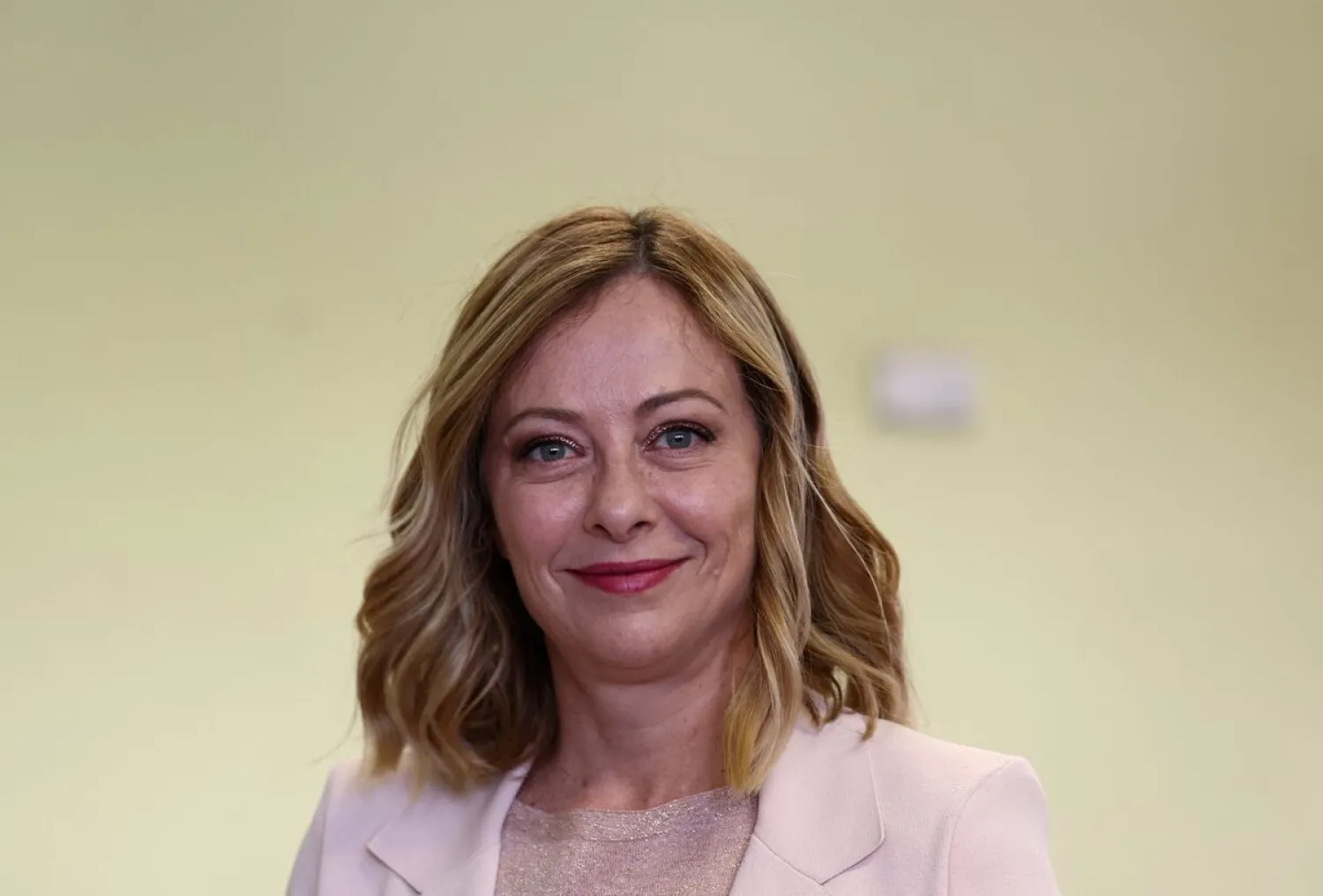
Italian Prime Minister Giorgia Meloni (Reuters)
TT

Meloni to Attend Manama Summit, Signaling Stronger European Role in Energy and Security

Italian Prime Minister Giorgia Meloni (Reuters)

Italian Prime Minister Giorgia Meloni is expected to participate on Wednesday in the 46th session of the Gulf Cooperation Council (GCC), following an invitation from Bahrain’s King Hamad bin Isa Al Khalifa.

The Manama Summit comes amid regional security shifts and economic pressures, and the strategic importance of maritime corridors.

These conditions, analysts say, underscore the need for deeper political coordination on Gaza, Syria, Iran, and Ukraine, and for expanding cooperation in trade and investment.

Daniele Ruvinetti, senior adviser at the Italian Med-Or Foundation, described Meloni’s participation as “a remarkable diplomatic achievement for Rome.”

Speaking to Asharq Al-Awsat, he said King Hamad’s invitation is “uncommon and signals that Italy is now viewed as a reliable and pragmatic actor across the broader Euro-Mediterranean space.”

Ruvinetti noted that Meloni’s attendance reflects a phase in which Gulf states are diversifying partnerships and increasingly regard Italy as a stable counterpart capable of sustained dialogue and cooperation.

Previous GCC summits have hosted leaders including Turkish President Recep Tayyip Erdogan, Chinese President Xi Jinping, former British Prime Minister Theresa May, ex-French President François Hollande, and former Iranian President Mahmoud Ahmadinejad.

For Italy, participation in the summit supports a long-term strategy centered on economic integration, energy diplomacy, security cooperation, and reviving the political channel between the European Union and the GCC.

According to Ruvinetti, Meloni’s presence highlights three broad themes. The first is a push to intensify political coordination on key regional crises, particularly in Gaza, Syria, Iran, and Ukraine. The second is the expansion of commercial opportunities for Italian companies in sectors such as energy, infrastructure, and technology. The third is growing Gulf interest in investing in Italy, especially in projects linked to the Mattei Plan and the India–Middle East–Europe Economic Corridor.

Bahrain, which hosted in November the 19th meeting of GCC parliamentary speakers on artificial-intelligence governance and political integration, continues to position itself as a hub for dialogue with Europe and Latin America.

Ruvinetti added that Meloni’s expected bilateral meeting with King Hamad aligns with the recently launched “Strategic Investment and Partnership Framework,” and reflects Italy’s broader engagement across the region, from Saudi Arabia to the UAE and Qatar.

Gulf-Italian economic ties have strengthened steadily. Italian exports to the region reached 13.3 billion euros in 2024, a 14.2 percent increase over the previous year. In late November, Riyadh hosted the Saudi-Italian Business Forum, which brought together more than 430 Italian companies and nearly 600 Saudi firms. The event resulted in the signing of 22 bilateral agreements in infrastructure, energy, technology, healthcare, cultural industries, and agrifood.



Etidal, Telegram Remove over 34 Million Extremist Items

The initiative is part of ongoing efforts to counter extremist propaganda and curb its spread across the digital space. SPA
TT

Etidal, Telegram Remove over 34 Million Extremist Items

The initiative is part of ongoing efforts to counter extremist propaganda and curb its spread across the digital space. SPA

Joint efforts by the Global Center for Combating Extremist Ideology (Etidal) and Telegram led to the removal of 34,290,268 items of extremist content and the closure of 1,275 channels used to disseminate and promote such material during the first half of 2026.

The initiative is part of ongoing efforts to counter extremist propaganda and curb its spread across the digital space.

Since the collaboration began in February 2022 through June 30, 2026, a total of 292,597,845 items of extremist content have been removed and 20,362 channels closed.

The continued cooperation underscores the effectiveness of joint efforts by Etidal and Telegram in curbing the spread of extremist propaganda and contributing to a safer digital environment.


Saudi Royal Orders Transform Ehsan Platform into Independent Non-Profit Foundation

Custodian of the Two Holy Mosques King Salman bin Abdulaziz. (SPA)
TT

Saudi Royal Orders Transform Ehsan Platform into Independent Non-Profit Foundation

Custodian of the Two Holy Mosques King Salman bin Abdulaziz. (SPA)

Custodian of the Two Holy Mosques King Salman bin Abdulaziz issued on Thursday a Royal Order to transform the National Platform for Charitable Work (Ehsan) into an independent non-profit foundation under the name "Ehsan Foundation for Charitable Work".

The foundation aims to strengthen charitable work and connect donors with beneficiaries by providing diverse donation opportunities, enabling individuals and companies to donate, and, in coordination with government and private entities, enhancing the efficiency of the non-profit sector in the Kingdom.

Another Royal Order was issued to form the Board of Trustees of the Ehsan Foundation for Charitable Work, chaired by Dr. Majid Al-Kassabi and his deputy Ahmed Al-Rajhi. The membership term is three years that can be renewed.

The board includes Dr. Abdullah bin Sharaf Al-Ghamdi, governor of the General Authority for Awqaf, Eng. Abdulrahman bin Ibrahim bin Abdulrahman Al-Ruwaitea, Adib bin Abdullah bin Hamad Al-Zamil, Princess Nouf bint Mohammed bin Abdullah bin Mohammed Al Abdulrahman, Dr. Abdulrahman bin Abdulmohsen bin Mohammed Al-Khalaf, and Emad bin Abdulqader bin Abdulmohsen Al-Muhaideb.

For more than five years, the Ehsan platform has received support and enabled contributions from all segments of society. As a result, the platform has received more than 440 million donations totaling SAR17 billion, underscoring society's confidence in the platform's role in empowering the Kingdom's charitable sector and its commitment to charitable giving across various fields.

This institutional transformation represents a major step toward achieving the objectives and future aspirations of charitable work in the Kingdom by strengthening the Ehsan Foundation for Charitable Work's ability to promote innovation and develop Ehsan platform services. It will also support programs, services and non-profit donation platforms and contribute to unifying technical and professional efforts in charitable and development work.


Saudi Ambassador Inaugurates 3rd Phase of Lebanese Land Exports to the Kingdom

Part of Thursday’s inauguration ceremony. SPA
TT

Saudi Ambassador Inaugurates 3rd Phase of Lebanese Land Exports to the Kingdom

Part of Thursday’s inauguration ceremony. SPA

Saudi Ambassador to Lebanon Fahd bin Abdulrahman Al-Dosari inaugurated on Thursday the third phase of Lebanese exports to the Kingdom.

Saudi Crown Prince and Prime Minister Mohammed bin Salman had ordered the resumption of Lebanese exports to the Kingdom.

The exports will pass through the Masnaa border crossing between Lebanon and Syria.

Thursday’s inauguration ceremony was attended by Lebanese Minister of Public Works and Transport Fayez Rasamny, representing the prime minister, along with several government officials.

Rasamny praised the Kingdom’s decision to resume imports of Lebanese products, describing it as a direct support for the national economy and a step that opens new opportunities for Lebanese producers.

The ceremony also included the activation of the scanner at Masnaa. This was followed by an inspection visit to the site designated for the establishment of a new land border crossing center.