The latest Houthi attacks have pushed Saudi Arabia toward a tougher strategy of decisive deterrence, political analysts said, warning that Riyadh will not tolerate threats to its citizens or vital infrastructure.
Speaking to Asharq Al-Awsat, analysts said the shift is being reinforced by deeper political, military and security coordination with Yemen’s legitimate government, strengthening its ability to confront threats and reshape the balance of power on the ground.
Saudi Foreign Minister Prince Faisal bin Farhan bin Abdullah said on Tuesday that the Kingdom would not hesitate to defend itself against attacks by the terrorist Houthi militia and would use all available means to protect its interests.
Speaking at a news conference with Russian Foreign Minister Sergei Lavrov in Moscow, Prince Faisal said Saudi Arabia was pursuing diplomatic solutions to avert further suffering for Yemen and its people and would not hesitate to support measures that served the interests of Yemen and the region.
He added that the door to diplomacy in dealing with the Houthis remained open.
Prince Faisal said the Houthis were putting their narrow personal interests ahead of those of Yemen and that Yemen’s legitimate government had given them an opportunity to negotiate responsibly. He described their latest escalation as part of their pattern of provocation.
Limits of Saudi patience
Abdulaziz bin Sager, chairman of the Jeddah-based Gulf Research Center, said Yemen’s legitimate government was fulfilling its responsibility to confront Houthi attacks targeting civilians and vital facilities inside Yemen.
He said the government had mobilized its capabilities and resources and unified its ranks, particularly at the military level.
“The Kingdom will not tolerate any attacks targeting its citizens, residents or vital facilities, and its patience has limits,” bin Sager said.
He expected Riyadh to respond “forcefully and decisively against the sources of fire, in proportion to the intensity of the attacks,” citing what had recently happened in Iraq.
Bin Sager said the Houthis had misread Saudi Arabia’s patience “because they do not act according to reason or logic and are still receiving instructions.”
He added that the group had been given several opportunities over the past few years but had failed to take advantage of them.
More decisive phase
Yemeni writer Saleh al-Baydani said the latest developments pointed to “a shift from managing and containing escalation to a more decisive phase aimed at deterring it.”
“Saudi Arabia offered ample opportunities for de-escalation and a political solution, but the Houthis misread this restraint,” al-Baydani told Asharq Al-Awsat.
“They treated it as a permanent constraint on Saudi action rather than a calculated political choice that could be reconsidered when circumstances changed.”
Al-Baydani said the latest attacks on Saudi territory and facilities had raised the threat to a level at which maintaining the previous approach had become difficult.
“When the Houthis shift from being a party to a Yemeni crisis into an instrument of regional pressure more clearly linked to Iran’s calculations and its conflict in the region, the way they are dealt with necessarily changes,” he said.
According to al-Baydani, the escalation was no longer confined to the Yemen conflict but now affected Saudi national security, Red Sea security, energy supplies and the safety of international shipping lanes.
Saudi-Yemeni coordination
He said coordination between Saudi Arabia and Yemen’s legitimate government had entered a new phase compared with previous years, politically, militarily and in terms of security.
“Saudi Arabia appears more aware of the importance of having a Yemeni partner capable of managing the confrontation on the ground, while the Yemeni government recognizes that any serious action against the Houthis requires regional cover as well as political, military and economic support,” he added.
Al-Baydani stressed that the success of the next phase would depend on the Yemeni side’s ability to unify its military and political decision-making and turn the presence of multiple forces and fronts from a weakness into a source of pressure on the Houthis.
“If that happens, we may be looking not at a temporary round of fighting, but at an attempt to reshape the balance of power that has prevailed over the past few years,” he said.
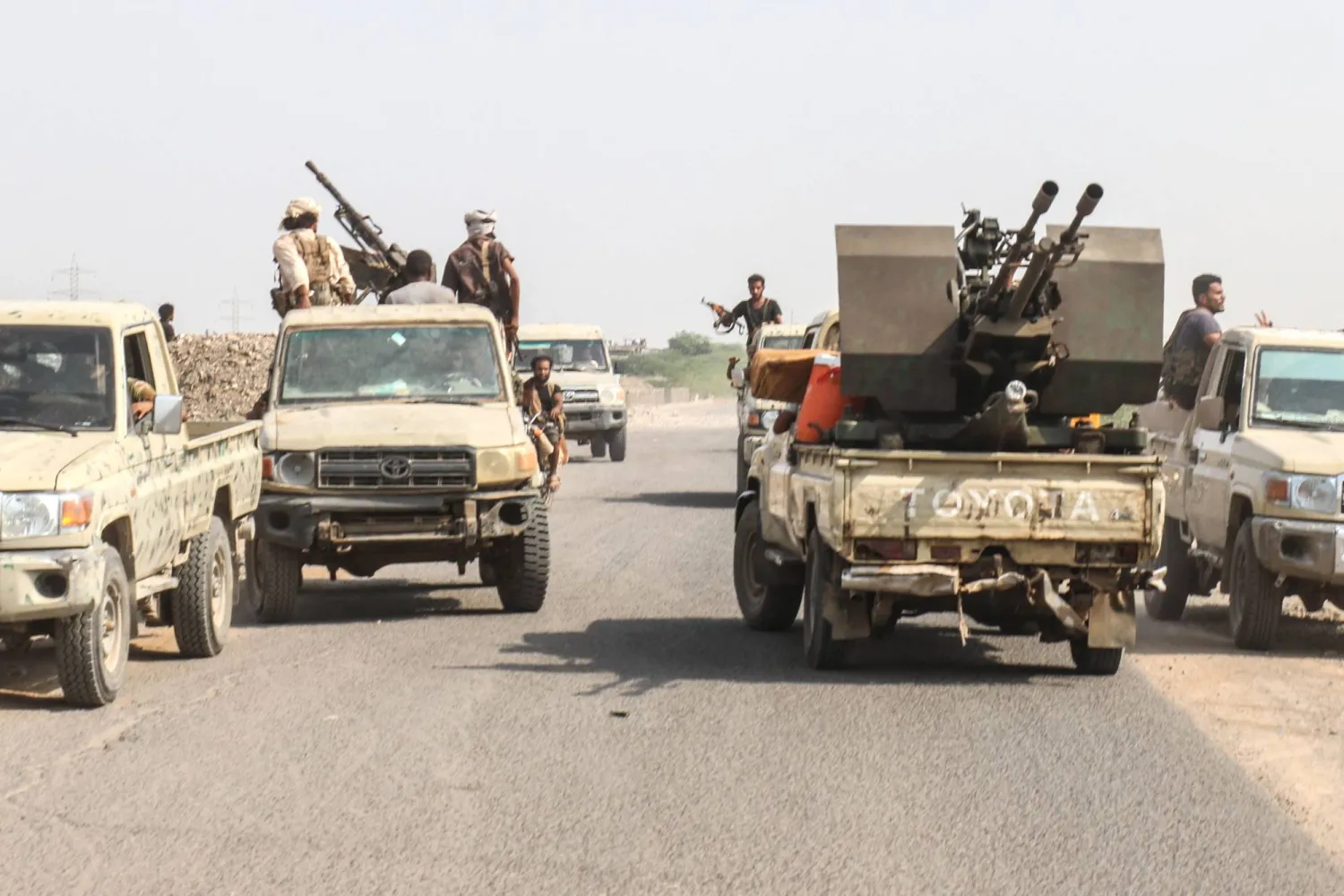
Yemeni government forces expanded their advances across several fronts on Tuesday, recapturing the al-Yatma area in the al-Jawf province, northeast of Sanaa.
The advance came a day after government forces retook the al-Labanat area in the same province and coincided with the launch of a large-scale military operation in al-Bayda province, southeast of Sanaa.
Fighting also continued along Yemen’s western coast and west of Taiz on the sixth day since the Houthi escalation began.
The advances came after government forces shifted in recent days from containing Houthi ground attacks to regaining the initiative on several fronts, taking advantage of the group’s retreat from some positions.
Army units, resistance forces and the Giants Brigades continued operations on several fronts.