


Qatar Declares Iran’s Security, Military Attache as Persona Non Grata

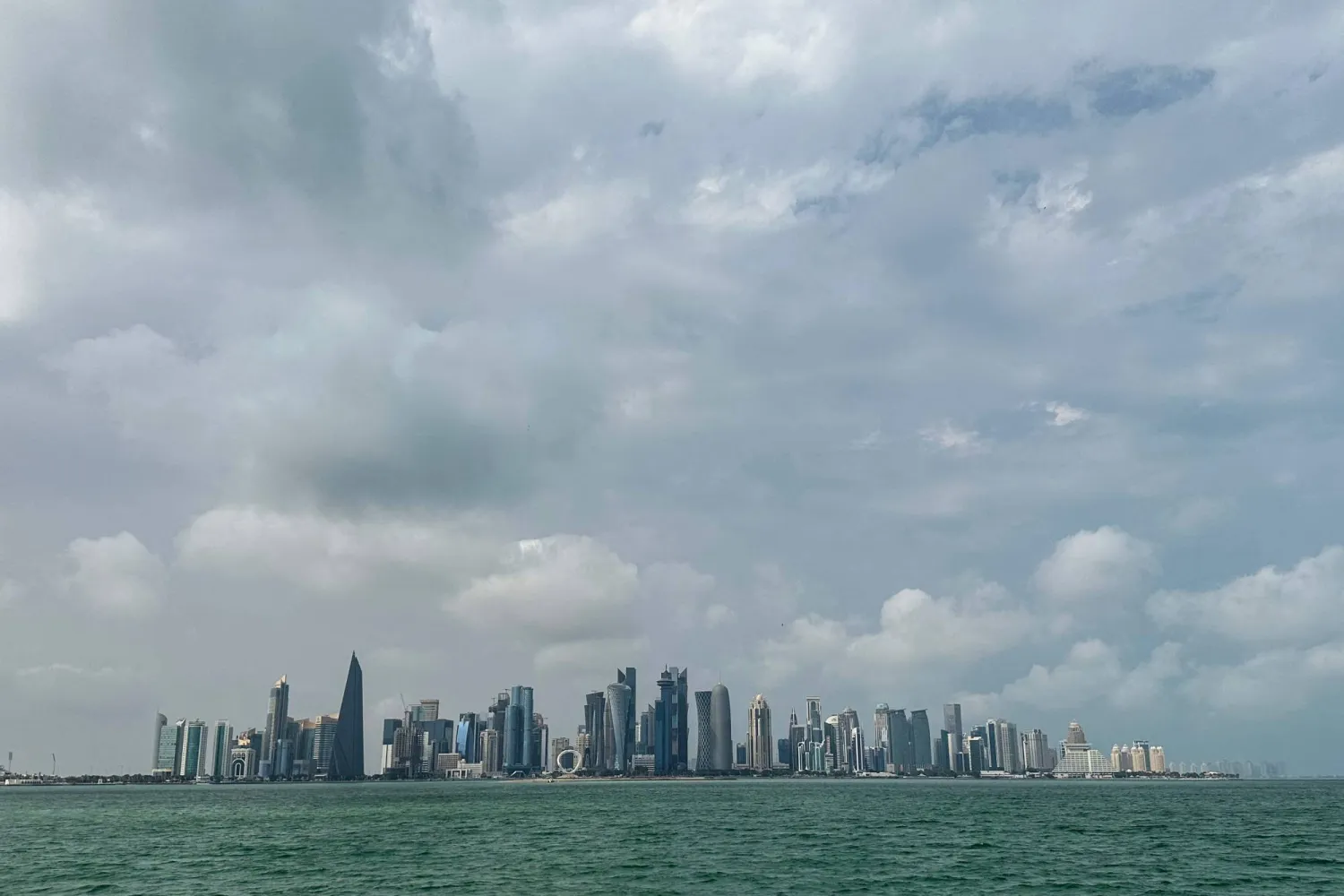
A photograph shows Doha's skyline on March 10, 2026. (Photo by AFP)
TT

Qatar Declares Iran’s Security, Military Attache as Persona Non Grata

A photograph shows Doha's skyline on March 10, 2026. (Photo by AFP)

Qatar has declared the security and military attache in Iran's embassy as "persona non grata,” asking them ⁠to leave the ⁠country within a period of maximum ⁠24 hours, the foreign ministry said on Wednesday.

Doha attributed the decision to Iran's repeated attacks on the ⁠country, ⁠the latest of which targeted Qatar's Rass Laffan industrial city.

The decision was announced during a meeting between the ministry’s Director of Protocol, Ibrahim Yousif Fakhro, and Iran’s Ambassador Ali Salehabadi.

The ministry warned that “the continuation of this hostile approach by the Iranian side will be met with additional measures” by Qatar.

It reaffirmed that Doha “reserves the right to take all necessary measures to protect its sovereignty and security, in accordance with the provisions of international law.”



Saudi Arabia Holds 9 Rounds of Regional Political Cosultations in 48 Hours

Saudi regional consultations focus on developments in the region. (SPA)
TT

Saudi Arabia Holds 9 Rounds of Regional Political Cosultations in 48 Hours

Saudi regional consultations focus on developments in the region. (SPA)

Over the past 48 hours, Saudi Arabia has intensified diplomatic activity, holding a series of consultations aimed at easing regional tensions and coordinating positions.

Saudi Foreign Minister Prince Faisal bin Farhan bin Abdullah conducted a round of intensive political consultations following the talks between the United States and Iran in Islamabad. According to the Saudi Foreign Ministry, nine rounds have been publicly disclosed so far.

The effort began with a phone call the minister received early on Monday from his Pakistani counterpart, Ishaq Dar, who attended the US-Iran talks.

The FMs reviewed the latest developments and stressed the need to sustain diplomatic efforts to restore regional stability. It was their third call in four days, underscoring a rise in coordination between the two countries amid fast-moving developments.

Backing the Pakistani mediation

In a statement, the Saudi Foreign Ministry voiced support for Pakistan’s mediation efforts to reach a lasting agreement that ensures security and stability and addresses the issues that have destabilized the region for decades.

Saudi Arabia had also held consultations in the days and hours leading up to the talks.

Earlier, Prince Faisal met Kang Hoon-sik, chief of staff to the South Korean president and special envoy, to discuss regional developments and their impact on regional security and the global economy, the Saudi Press Agency reported.

The Saudi minister also received a second call within 96 hours from Iranian Foreign Minister Abbas Araqchi. They discussed post-talk developments and exchanged views.

Saudi-Arab coordination intensifies

Prince Faisal also held five calls with Gulf and Arab counterparts, including those of Jordan, Egypt, Kuwait, Qatar, and the United Arab Emirates.

The discussions focused on the fallout from regional developments, ongoing efforts to address them, and ways to strengthen regional and international security and stability while reducing tensions.

The consultations included a Monday call with Kyrgyz Foreign Minister Jeenbek Kulubayev. The officials reviewed bilateral relations and discussed the latest developments in the region and the efforts being made in response.

Amid these developments, the Saudi Foreign Ministry summoned Iraq’s ambassador to the Kingdom, Safia Taleb al-Suhail, over what it described as “continued blatant attacks and threats” targeting Saudi Arabia and Gulf states through drones launched from Iraqi territory.

A Saudi deputy foreign minister, while delivering a protest note, condemned the attacks and stressed the need for Iraq to act responsibly in addressing such threats.

He reiterated the Kingdom’s firm rejection of violations of sovereignty and attempts to undermine regional security and stability, and said Saudi Arabia would take all necessary measures to defend its security and protect its territory.

The ministry also received Djibouti’s ambassador to the Kingdom, Dya-Eddine Bamakhrama, dean of the diplomatic corps in Saudi Arabia, where both sides reviewed issues of mutual interest.


Gulf Talks Focus on Containing Escalation, Boosting Regional, Global Security

Bahrain’s King Hamad bin Isa Al Khalifa and UAE President Sheikh Mohamed bin Zayed Al Nahyan meet in Manama on Monday. (BNA)
TT

Gulf Talks Focus on Containing Escalation, Boosting Regional, Global Security

Bahrain’s King Hamad bin Isa Al Khalifa and UAE President Sheikh Mohamed bin Zayed Al Nahyan meet in Manama on Monday. (BNA)

Recent hours have seen a flurry of bilateral contacts across the Gulf addressing Iran-US peace negotiations and wider Middle East developments, with officials emphasizing efforts to strengthen regional and international security and stability.

In Manama, Bahrain said its forces intercepted and destroyed seven hostile drones, stressing readiness to confront any threats.

Peace negotiations

Saudi Foreign Minister Prince Faisal bin Farhan bin Abdullah held a phone call on Monday with his Iranian counterpart Abbas Araghchi, reviewing developments following Iran-US peace talks and exchanging views.

Prince Faisal later spoke with Egyptian Foreign Minister Badr Abdelatty, discussing the regional situation and ways to boost stability.

He also received a call from Kyrgyz Foreign Minister Jeenbek Kulubaev, covering bilateral ties and regional developments.

In separate calls, Prince Faisal discussed the situation with Kuwaiti Foreign Minister Sheikh Jarrah Al-Sabah, Qatari Prime Minister and Foreign Minister Sheikh Mohammed bin Abdulrahman Al-Thani, and Emirati Foreign Minister Sheikh Abdullah bin Zayed Al Nahyan.

Qatar, for its part, warned against using freedom of maritime navigation as “a tool of pressure or bargaining,” during a call between Sheikh Mohammed and Araghchi.

Sheikh Mohammed stressed the need to keep sea lanes open and ensure freedom of navigation, warning of negative consequences for regional countries, global energy and food supplies, and international peace.

He urged Washington and Tehran to respond to ongoing mediation efforts, paving the way for a sustainable agreement that addresses the roots of the crisis and prevents renewed escalation.

The two ministers also discussed ceasefire developments and the need to consolidate it to support regional stability.

Bahrain’s King Hamad bin Isa Al Khalifa and UAE President Sheikh Mohamed bin Zayed Al Nahyan met in Manama on Monday to review regional developments and their impact on international navigation, energy supplies and the global economy.

King Hamad later received Admiral Brad Cooper, Commander of the US Central Command (CENTCOM), praising longstanding strategic ties and growing defense cooperation between their countries.

Talks covered regional and international developments, with the Bahraini monarch highlighting the United States’ role, alongside allies, in supporting global stability.

Crown Prince Salman bin Hamad Al Khalifa, Bahrain’s prime minister and deputy supreme commander, also met Cooper, reviewing regional developments and issues of mutual concern.

Separately, Bahrain’s foreign ministry summoned Iraq’s chargé d’affaires in Manama Ahmed Ismail Al-Karawi to protest continued drone attacks launched from Iraqi territory toward Bahrain and other Gulf Cooperation Council states.

The ministry urged Iraq to address the threats urgently in line with international law, reaffirming Bahrain’s right to take necessary measures to protect its security.

Bahrain’s defense forces later said air defenses had intercepted seven drones, bringing the total destroyed since the start of Iranian attacks to 523 drones and 194 missiles. It said all units remain at high readiness.

Security reassurances

In Kuwait, Foreign Minister Sheikh Jarrah Jaber Al-Ahmad Al-Sabah spoke by phone with Indian External Affairs Minister Subrahmanyam Jaishankar about regional developments.

Kuwait’s interior ministry said security and military agencies are closely monitoring the regional situation in coordination with relevant authorities to ensure safety.

South Korean support for Qatar

Qatar’s Emir Sheikh Tamim bin Hamad Al-Thani received a written message from South Korean President Lee Jae-myung expressing support and solidarity following Iranian attacks on Qatar and other regional states, and voicing hope for an agreement to end the crisis.

The message was delivered to Sheikh Tamim by presidential envoy Kang Hoon-sik during a meeting in Doha, where the sides reviewed bilateral cooperation, particularly in energy and economic sectors, as well as regional developments.

Meanwhile, Oman’s Sultan Haitham bin Tariq discussed regional developments in a phone call with British Prime Minister Keir Starmer following the conclusion of US-Iran talks in Pakistan without agreement.

The two sides stressed intensifying international efforts to prevent further escalation and exchanged views on containing tensions and addressing root causes to safeguard regional interests.

They also underlined the importance of continued coordination and support for de-escalation and diplomatic solutions based on international law.


Saudi Foreign Minister, Gulf Counterparts Discuss Regional Developments

Saudi Minister of Foreign Affairs Prince Faisal bin Farhan bin Abdullah
TT

Saudi Foreign Minister, Gulf Counterparts Discuss Regional Developments

Saudi Minister of Foreign Affairs Prince Faisal bin Farhan bin Abdullah

Saudi Minister of Foreign Affairs Prince Faisal bin Farhan bin Abdullah spoke by phone with UAE Deputy Prime Minister and Minister of Foreign Affairs Sheikh Abdullah bin Zayed Al Nahyan, during which they discussed developments in the region.

Prince Faisal also spoke by phone on Monday with Qatari PM and Foreign Minister Sheikh Mohammed bin Abdulrahman Al Thani to discuss regional developments.

Also Monday, Prince Faisal received a phone call from Kuwaiti FM Sheikh Jarrah Jaber Al-Ahmad Al-Sabah. They discussed developments in the region and exchanged views on them.