


Saudi FM: Trust in Iran Has Been Shattered

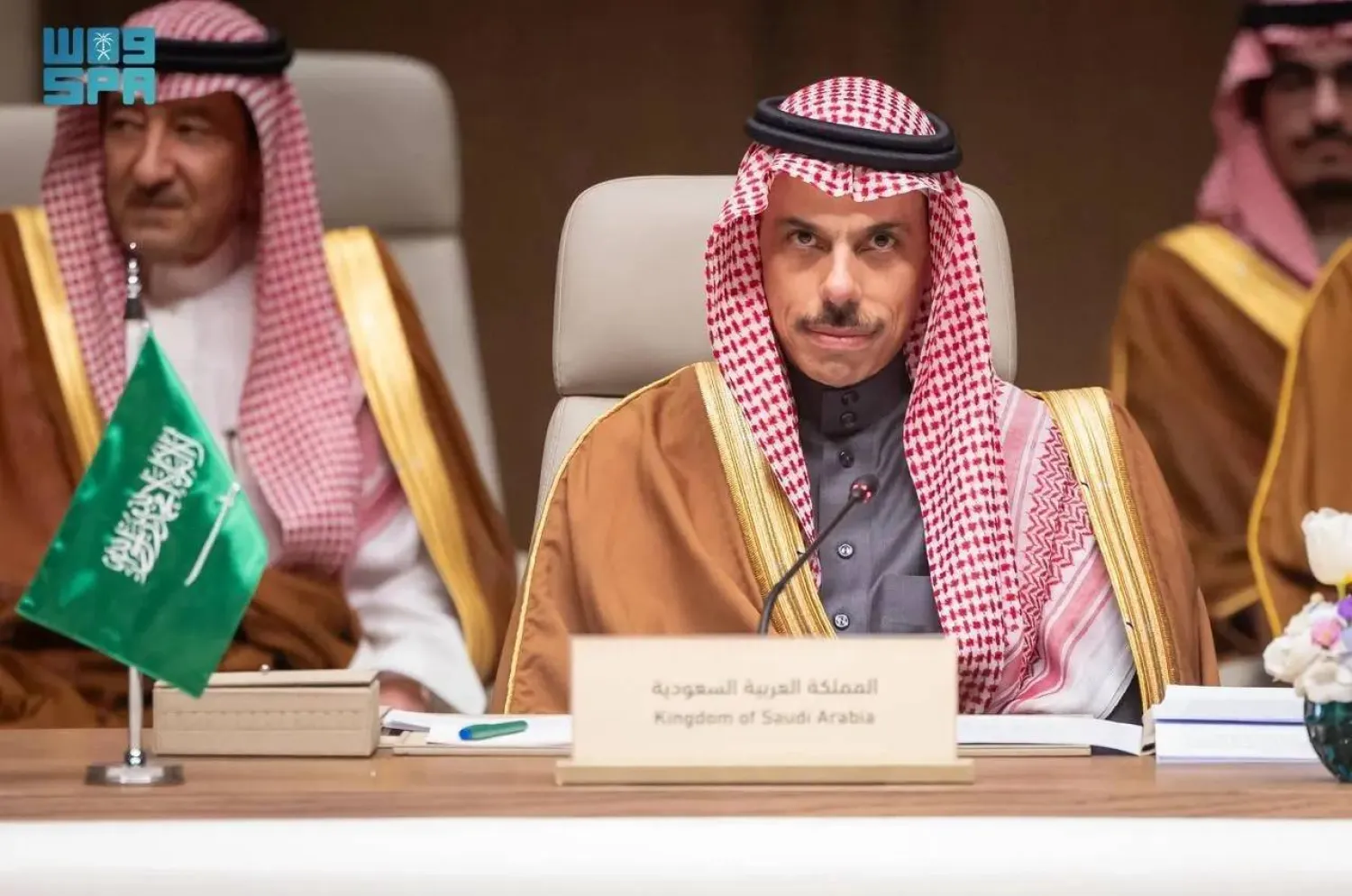
Saudi Foreign Minister Prince Faisal bin Farhan bin Abdullah at the Riyadh meeting. (SPA)
TT

Saudi FM: Trust in Iran Has Been Shattered

Saudi Foreign Minister Prince Faisal bin Farhan bin Abdullah at the Riyadh meeting. (SPA)

Saudi Foreign Minister Prince Faisal bin Farhan bin Abdullah called on Iran on Thursday to cease its attacks on Gulf and Arab countries, warning that its behavior will have a price.

Speaking to the press after a meeting between foreign ministers of the Gulf Arab states and others over the Iranian attacks in Riyadh, he strongly condemned the Iranian attacks, urging the need for collective work to avert further escalation with a focus on defending the security and stability of nations.

The FMs stressed the importance of bolstering joint coordination and consultations to confront the rising security challenges and work together to support regional stability and prevent the conflict from widening.

"What little trust there was before has completely been shattered," Prince Faisal said.

"The attacks on my country and on my neighboring countries that are not involved in this conflict — that’s all I’m interested in," Prince Faisal said. "We’re going to use every lever we have — political, economic, diplomatic and otherwise — to get these attacks to stop."

He criticized Iran’s attacks on Riyadh. "The targeting of Riyadh while a number of diplomats are meeting... I cannot see it as coincidental. I think that's the clearest signal of how Iran feels about diplomacy," Prince Faisal said.

"It tries to pressure its neighbors, and that’s not going to work. It doesn't believe in talking to its neighbors."

"The Kingdom is not going to succumb to pressure, and on the contrary, this pressure will backfire... and certainly, as we have stated quite clearly, we have reserved the right to take military actions if deemed necessary," he said.

The foreign minister condemned the repeated targeting of civilian sites across the Gulf, dismissing Iran's justification that it was targeting US interests in the region as "weak".

"Neither Saudi Arabia nor the Gulf states would accept... blackmail, and escalation will be met with escalation," he said.

These countries have repeatedly said that their territories will not be turned into a launchpad for any military actions against neighbors, he stressed.

Iran will not become a real partner for regional countries given its hostile behavior, he added.

Asked about Iran’s claim that it was targeting US military bases in the Gulf, Prince Faisal said Tehran "has been saying this for years. At the same time, it has repeatedly denied its relationship with armed militias in the region. It always uses weak excuses to target the American presence."

"We have clearly said this to Iran before, the Kingdom will not become a party in the is war. It will not allow its military assets to be used in the war even though our infrastructure has been attacked from day one of the conflict," he remarked.

"Iran had pre-planned these heinous attacks. They are an extension of its behavior that is based on extortion and sponsoring militias, threatening the security and stability of neighboring countries," he went on to say.

The Iranians are practicing political extortion and the Kingdom and Gulf countries reject this, he declared.

"Iran must realize that Gulf countries are capable of political and other forms of responses. They will not back down from defending their countries," he warned. "We hope they get the message of this meeting and cease to attack their neighbors, but I doubt that they are that wise."

"If Iran doesn’t immediately cease its attacks, then nothing will be able to restore trust with it," he continued. "The patience we have shown is not limitless and Iran’s escalation will be met with escalation, whether on the political level or others."

"Iran was never a strategic partner to the Kingdom. It could have had it abandoned its ideas of hegemony over the region, exporting the revolution and the use of force," said Prince Faisal.

"Saudi Arabia has repeatedly tried to extend its hand to the Iranian brothers, the last of which was the Beijing agreement, but the Iranians did not reciprocate," he added.

A joint statement from the foreign ministers' meeting in Riyadh condemned "the deliberate use of ballistic missiles and drones targeting residential areas and civilian infrastructure, including oil facilities, desalination plants, airports, residential facilities and diplomatic missions".

The ministers "affirmed that such attacks cannot be justified under any circumstances and reiterated the right of states to defend themselves", the statement added, calling on Iran to "immediately cease its attacks" and de-escalate tensions.

Saudi Arabia, Egypt, Türkiye, Pakistan Move to Deepen Partnership, Cooperation

 Foreign ministers attend a four-way meeting in Riyadh on March 20. (Egyptian Foreign Ministry)
Foreign ministers attend a four-way meeting in Riyadh on March 20. (Egyptian Foreign Ministry)
TT

Saudi Arabia, Egypt, Türkiye, Pakistan Move to Deepen Partnership, Cooperation

 Foreign ministers attend a four-way meeting in Riyadh on March 20. (Egyptian Foreign Ministry)
Foreign ministers attend a four-way meeting in Riyadh on March 20. (Egyptian Foreign Ministry)

Egypt will host a four-way meeting with the foreign ministers of Saudi Arabia, Türkiye and Pakistan, days after Washington and Tehran finalized a memorandum of understanding to stop the war that began in late February.

Egyptian Foreign Minister Badr Abdelatty will meet his Saudi counterpart, Prince Faisal bin Farhan, Türkiye’s Hakan Fidan and Pakistan’s Mohammad Ishaq Dar in Cairo on Sunday for a four-way meeting, Egypt’s state news agency reported late on Thursday.

The talks will be followed by an expanded session and a press conference.

A former Egyptian diplomat told Asharq Al-Awsat the meeting would focus on “ways to consolidate cooperation, deepen partnership and coordinate on regional issues, complete efforts to cement de-escalation in the region, and narrow differences during the next 60 days of negotiations between Washington and Tehran.”

The quartet played a prominent role in reaching the US-Iran agreement days ago. Its efforts formally began with a meeting in March in the Saudi capital, Riyadh, followed by meetings in Islamabad and Antalya as part of efforts to end the Iran war.

The meeting comes two days after the Swiss government said negotiations between the United States and Iran, due to begin on Friday in Switzerland, had been postponed indefinitely.

The announcement came hours after a planned visit by US Vice President JD Vance was canceled.

Iranian Supreme Leader Mojtaba Khamenei said earlier on Thursday that he had approved the memorandum of understanding signed by Washington and Tehran, despite expressing reservations about it.

US forces said they had lifted a naval blockade on Iranian ports after the memorandum was signed by the US and Iranian presidents on Wednesday.

Ambassador Mohamed Hegazy, a member of the Egyptian Council for Foreign Affairs and a former assistant foreign minister, told Asharq Al-Awsat the call for the four-way meeting marked an important step in regional consultations at a time of deep strategic shifts in the Middle East.

He cited the ceasefire, the containment of the US-Iran military confrontation, and the risks of the continuing war in Gaza and its impact on regional security and stability.

He said the “consultative quartet” of influential regional states had “proved its presence as an effective regional and international framework capable of addressing problems and issues in coordination with regional states and major powers to calm regional conditions and deal with their problems.”

Hegazy said the meeting’s importance went beyond traditional political coordination. He expected the agenda to include support for consolidating the “Washington-Tehran agreement,” continuing negotiations, discussing Gaza and Lebanon, and backing efforts to secure a sustainable regional calm.

The meeting is also expected to “open the door to deepening partnership and coordination among the quartet, and to studying the possibility of holding a regional or international conference on security and cooperation in the Middle East, similar to successful experiences in other regions,” Hegazy said.

Such a conference, he said, would aim to draft a declaration of principles governing regional relations and establish institutional mechanisms for dialogue, dispute settlement, and stronger economic, security and humanitarian cooperation among the region’s countries.

Egypt’s Foreign Ministry said on Friday that Abdelatty held separate phone calls with Pakistan’s Mohammad Ishaq Dar and Iranian Foreign Minister Abbas Araghchi to discuss regional developments after the US-Iran memorandum of understanding.

An official statement said the Egyptian and Pakistani ministers stressed “the importance of continuing coordination and joint consultation in the coming phase to ensure the implementation of the memorandum of understanding and reach a final and sustainable agreement that takes into account the interests and concerns of all parties and strengthens diplomatic solutions, in a way that achieves security and stability in the region.”

In his call with Araghchi, Abdelatty expressed hope that the memorandum of understanding would become “an important turning point in support of security and stability in the region, and contribute to opening the way to addressing all issues through dialogue and diplomatic means.”

He also voiced hope for a final and sustainable agreement that addresses the concerns of all parties and supports efforts to achieve lasting security and stability in the region.

Hegazy said it was important to maintain “serious dialogue among the main regional powers over the shape of the regional order that should govern relations among the countries of the region in the next phase, ensuring a shift from the logic of managing successive and recurring crises to building a stable system of security, cooperation and development.”

The current phase requires “the formulation of mutual understandings with Iran on the security of the Arabian Gulf, in a way that reassures all parties and lays the foundation for normal relations based on good neighborliness, common interests, and the non-use or threat of force,” Hegazy said.

He also called for strengthening political and security dialogue mechanisms to prevent the region from returning to cycles of escalation and confrontation, and for building frameworks to manage cooperation and development among the region's countries across various fields.


Saudi Foreign Minister Receives Written Message from Chinese Counterpart

Saudi Vice Minister of Foreign Affairs Waleed Elkhereiji and Chinese Ambassador to Saudi Arabia Chang Hua.(SPA)
TT

Saudi Foreign Minister Receives Written Message from Chinese Counterpart

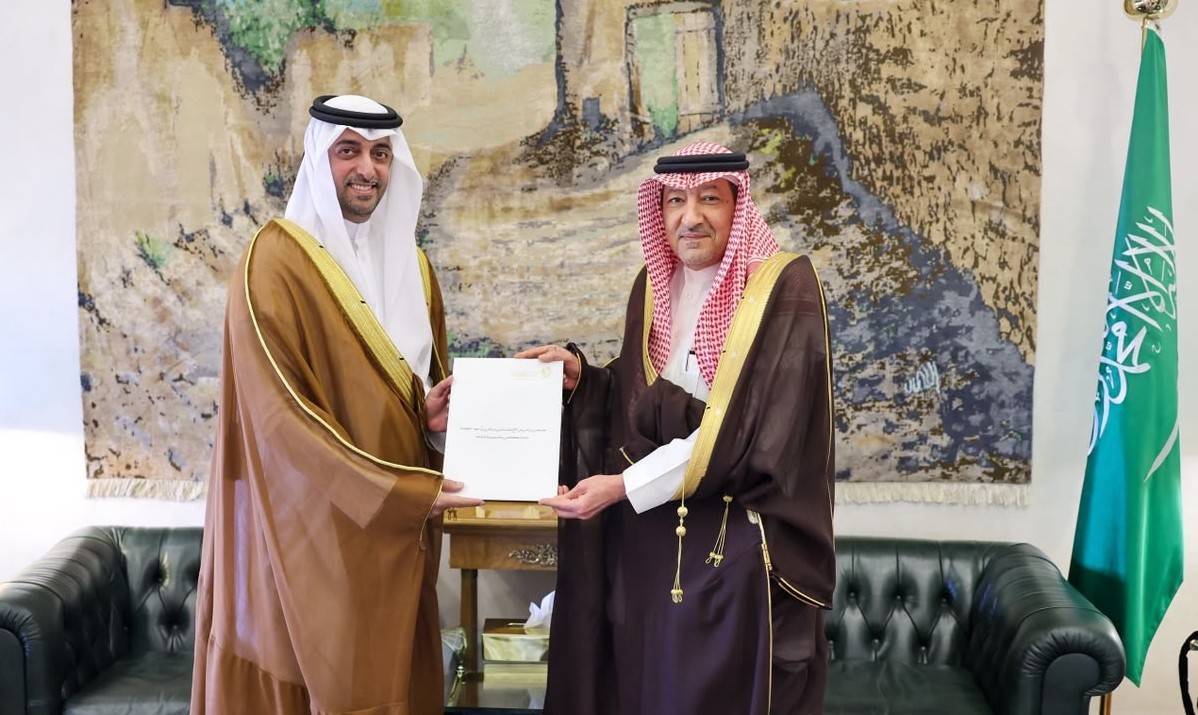
Saudi Vice Minister of Foreign Affairs Waleed Elkhereiji and Chinese Ambassador to Saudi Arabia Chang Hua.(SPA)

Saudi Minister of Foreign Affairs Prince Faisal bin Farhan bin Abdullah received a written message from Foreign Minister of the People's Republic of China Wang Yi concerning relations between the two countries, the Saudi Press Agency reported Thursday.

The message was received by Vice Minister of Foreign Affairs Waleed Elkhereiji during a meeting at the ministry's headquarters in Riyadh with Chinese Ambassador to Saudi Arabia Chang Hua.

During the meeting, the two sides reviewed bilateral relations and discussed regional and international developments.


MWL Condemns Escalating Israeli Settler Violence against Palestinians in West Bank

The Muslim World League (MWL) logo
TT

MWL Condemns Escalating Israeli Settler Violence against Palestinians in West Bank

The Muslim World League (MWL) logo

The Muslim World League (MWL) strongly condemned the continued attacks by Israeli settlers against Palestinians in the occupied West Bank, the Saudi Press Agency reported on Friday.

The latest Israeli aggression in the West Bank targeted the Grand Mosque in the village of Jiljilya and Al-Farouq Mosque north of Ramallah.

In a statement issued by the MWL General Secretariat, Secretary-General and Chairman of the Organization of Muslim Scholars Sheikh Dr. Mohammed Al-Issa denounced the escalating waves of violence carried out by settlers against Palestinians and their property and sacred sites in the occupied West Bank.

He said the attacks constitute a grave violation of the sanctity of places of worship and of all international and humanitarian laws and norms, undermine peace efforts, and threaten security and stability in the region.
