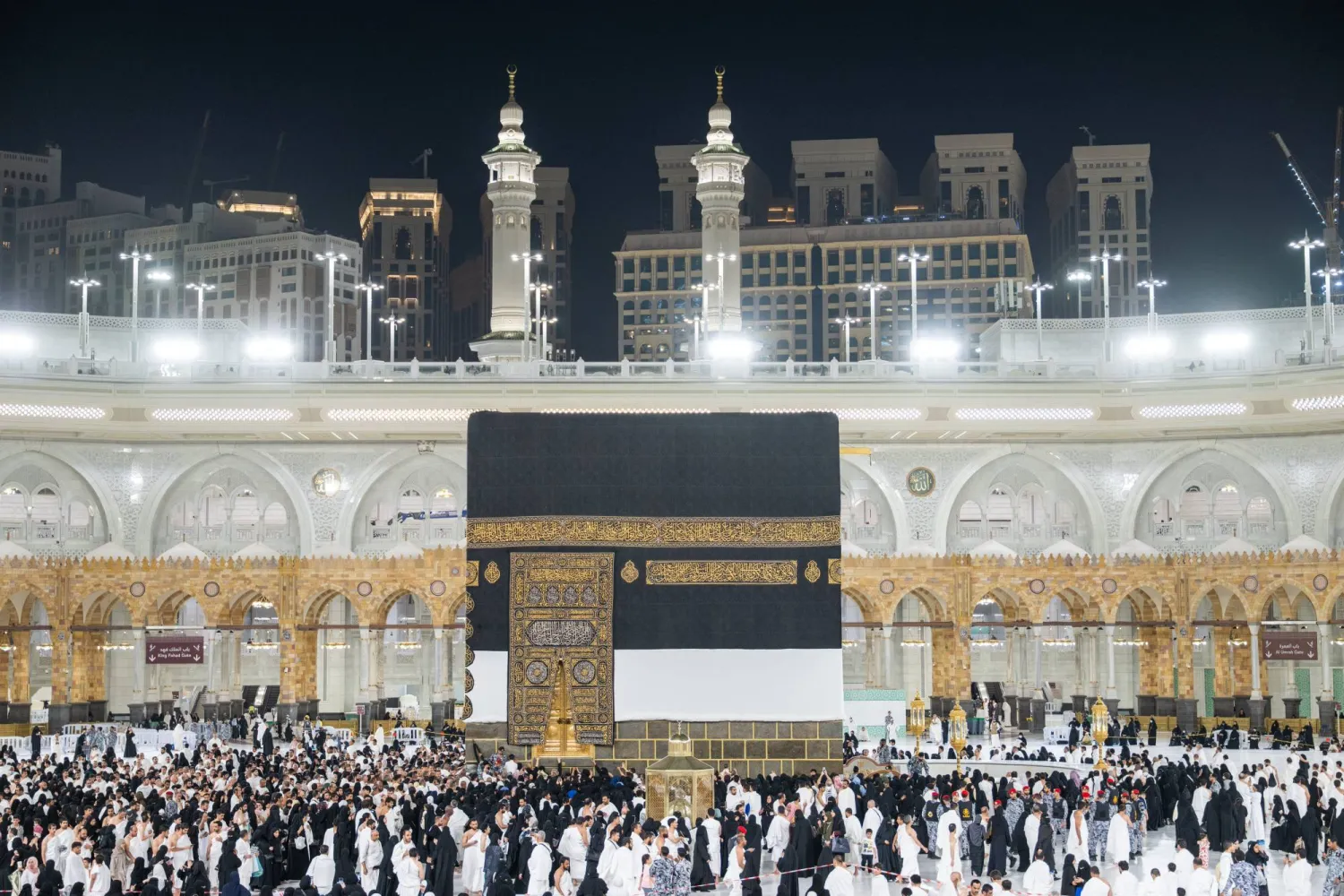

Mohammed Nour Araj, Director of Hajj and Umrah in Syria, said the services and care provided to pilgrims by the Saudi authorities responsible for Hajj are beyond description, noting that the Hajj system continues to see rapid annual development, directly improving the pilgrim experience.
In an interview with Asharq Al-Awsat, Araj said coordination with the relevant Saudi authorities has reached an advanced level of operational integration. He noted that all logistical and organizational arrangements were completed smoothly under a flexible system capable of responding to any developments. He added that any observations or challenges that arise are addressed within no more than 24 hours, alongside daily follow-up by the Saudi authorities with all Hajj missions.
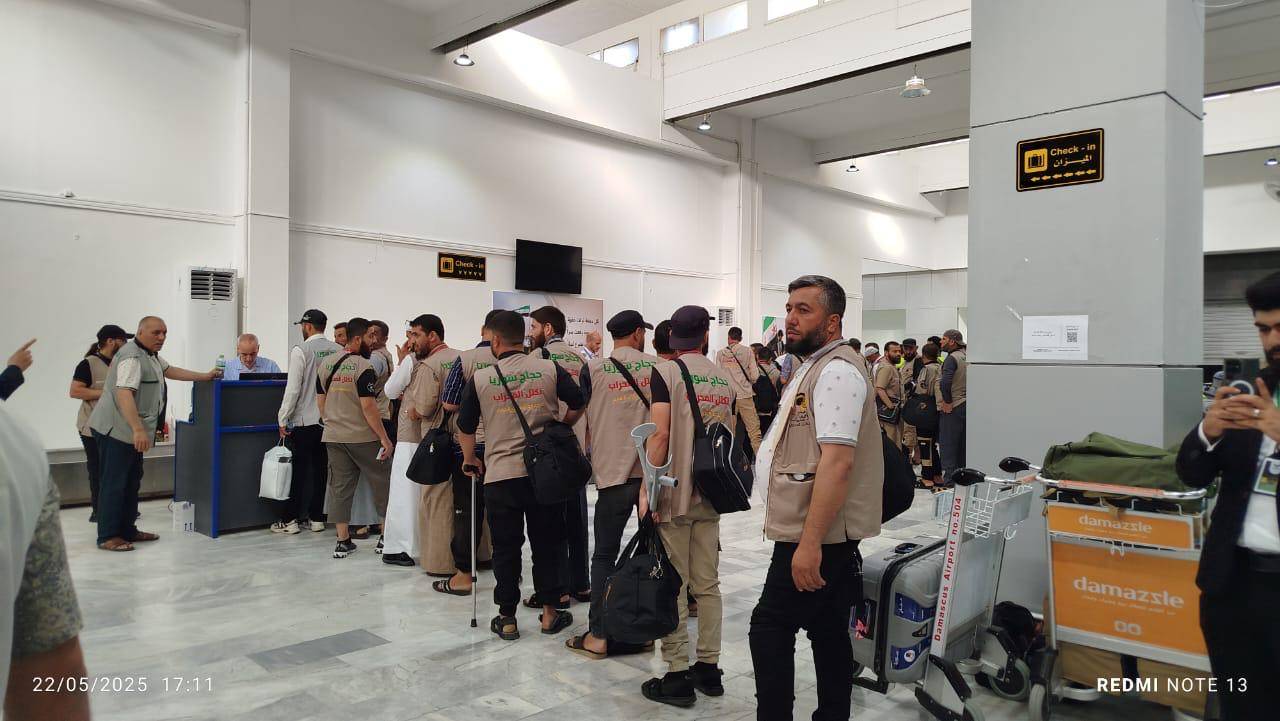
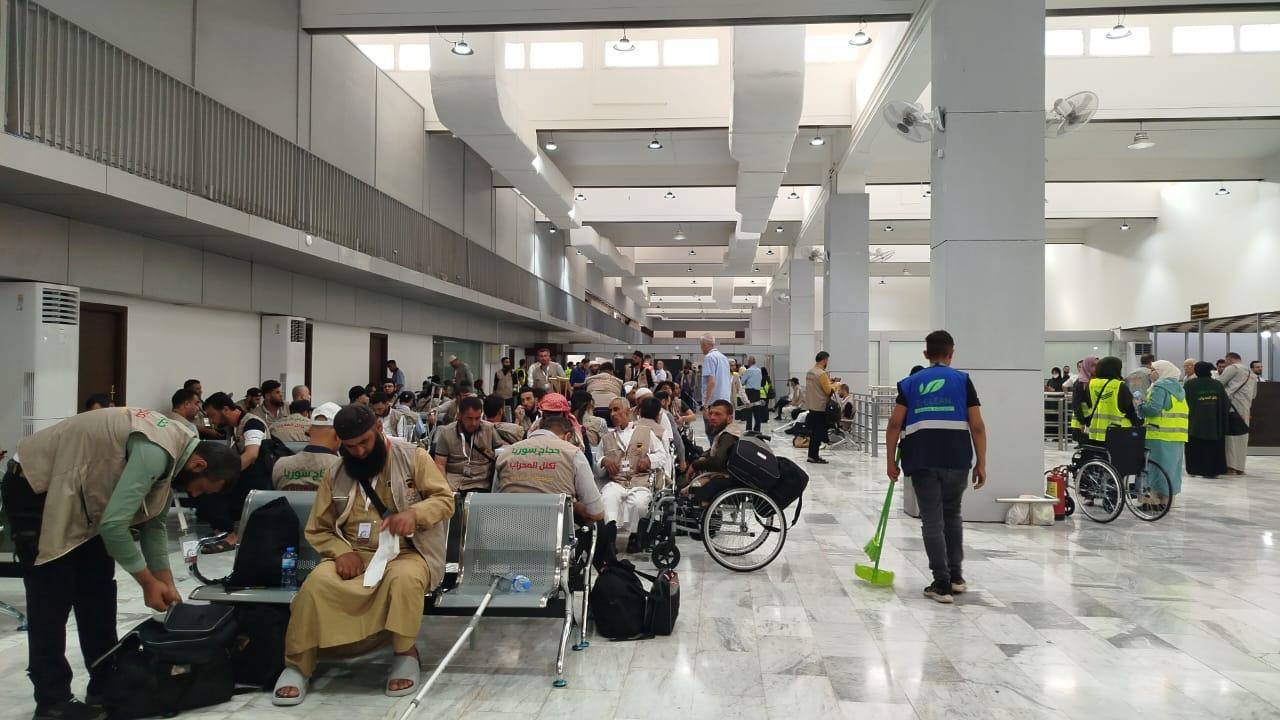
Regarding the number of Syrian pilgrims, Araj said this year’s total reached 22,500 pilgrims, distributed across several departure points. Around 12,000 will depart from Damascus Airport, 9,500 from Aleppo Airport, while the remaining pilgrims will travel through external transit points including Istanbul, Gaziantep, and Egypt. He added that the first flights are scheduled to arrive in Saudi Arabia next Saturday, at a rate of six flights per day, as part of an organized transport plan designed to ensure smooth movement and arrivals according to set schedules.
On the humanitarian side, Araj said 600 pilgrims are traveling under a presidential grant that includes families of those killed and wounded, as well as a number of former detainees and government employees. He explained that the selection of these groups is coordinated between Syria’s Ministries of Defense and Interior.
Araj also confirmed that Syrian pilgrims will be accommodated in 20 residential towers in Makkah, in addition to six towers in Madinah. He said the Syrian mission’s sites in Mina and Arafat have already been handed over and are fully prepared to receive pilgrims.
Regarding services, Araj explained that the Syrian delegation includes around 200 members across various specialties, including administration, media, religious guidance, and medical services. These teams accompany pilgrims from departure until their return, with each residential site assigned a full team including doctors and religious guides. He noted that the medical staff includes 40 male and female doctors.
On the mechanism for selecting pilgrims, Araj said around 65,000 people applied for Hajj this year. Following the selection process, 65 percent of accepted applicants were elderly, compared with 35 percent from younger age groups.
From Tadmor Prison to Makkah
From the depths of suffering emerged a testimony, not merely as a personal story, but as a human document carrying years of pain and reflecting an entire chapter of Syria’s history. Syrian pilgrim Samoual Abdul Qader Haj Ismail described the joy of making the first journey of his life after spending 15 years in Tadmor Prison, enduring a travel ban, and facing another arrest during the years of the Syrian uprising.
Speaking by phone to Asharq Al-Awsat, Samoual, born in 1962, said he was first arrested on September 19, 1979, in Aleppo while studying law. That marked the beginning of a series of detentions, most notably in August 1981 when he was held for two months by the military branch in Idlib before entering the longest phase of his imprisonment, which lasted nearly 15 years under State Security in Idlib.
He said his case passed through a field court operating under Law 49, where he, like many other detainees, was sentenced to death. Five years later, the sentence was reduced to life imprisonment. He spent most of his detention in Tadmor Prison, which he described as not merely a detention facility but “an open system of torture,” where life was governed by the moods of prison guards.
Inside overcrowded cells holding dozens of detainees, daily life became a constant struggle for survival, Samoual said. Food was extremely scarce, often limited to a loaf of bread or a few olives, while even sleeping carried risks, as any spontaneous movement could result in severe punishment. Beatings were carried out using metal and wooden tools.
He continued: “Food distribution itself often became a form of torture, whether through reducing portions or serving food at dangerously high temperatures that caused direct burns, as prisoners were forced to dip their fingers into the containers. Our clothes were worn out and torn, patched using primitive methods because sewing tools were prohibited.”
Mass Executions
The former political prisoner said trials were held regularly, with sentences, especially executions, issued within minutes.
“Tens of thousands were executed inside the prison, while thousands more died under torture or from disease amid the absence of medical care,” he said.
Serious diseases such as tuberculosis in its various forms and scabies spread widely because of overcrowding and poor sanitary conditions. Although there were doctors among the detainees, the lack of medication meant many cases ended in death.
After his release in 1995, Samoual said the suffering did not end. Security restrictions continued, from travel bans to being denied work opportunities and permits, in addition to repeated summonses by security agencies. With later developments in Syria, he was arrested several more times.
Humanitarian Work
Despite everything he endured, Samoual returned to his hometown of Kafr Takharim to begin a new chapter. He now works as an imam and established a school for orphan care that provides free services despite limited resources.
He said he was deeply happy to receive a Hajj visa, making Makkah his first destination after years of imprisonment and travel bans.