


One Killed in ‘Criminal’ Iranian Attack on Kuwait, Airport Partially Resumes Flights

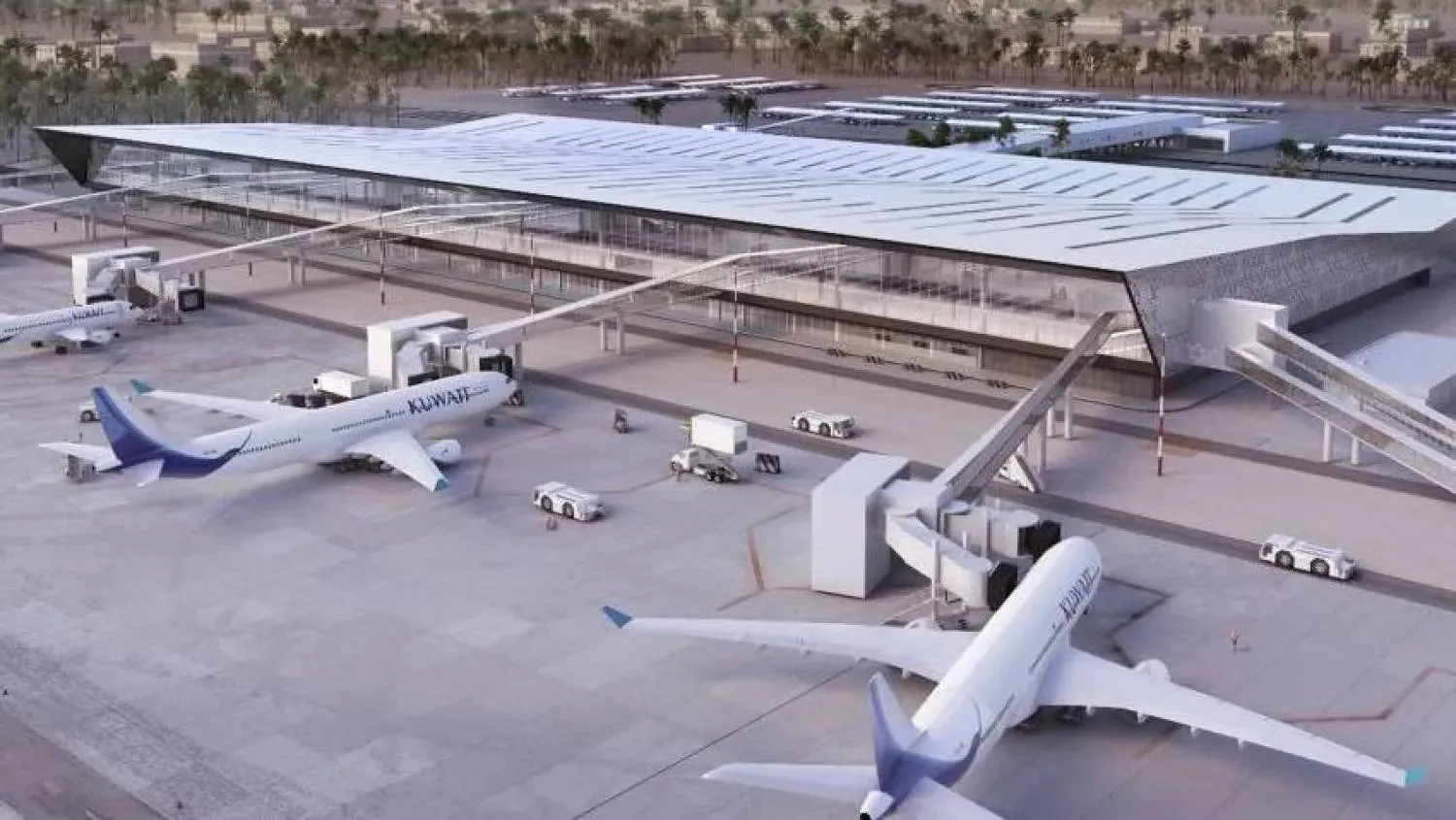
Planes are seen at Kuwait International Airport. (KUNA)
TT

One Killed in ‘Criminal’ Iranian Attack on Kuwait, Airport Partially Resumes Flights

Planes are seen at Kuwait International Airport. (KUNA)

One person was killed in an Iranian attack targeting civilian facilities in Kuwait, including the international airport and diplomatic missions, the foreign ministry said on Wednesday. 

The statement did not specify which diplomatic missions were damaged. 

Ministry of defense spokesman Brigadier General Saud Abdulaziz Al-Atwan described the attack as "criminal Iranian aggression which resulted in significant material damage to the building and injuries." 

The strike marks an escalation for the country, which had seen relative calm since a ‌ceasefire in ‌the Iran war was announced on ‌April ⁠8. Iran had ⁠launched a salvo of missiles and drones at Kuwait as well as at other Gulf states. 

The early morning attack on Kuwait International Airport injured several people and forced authorities to divert flights, the state news ⁠agency reported. The attack caused "severe damage" to ‌the airport's Terminal ‌1 building, it said, citing the General Civil Aviation ‌Authority. 

Kuwait Airways said it would reschedule its ‌Wednesday flights. Shortly afterwards, the civil aviation authority said the country's flagship carrier had resumed flights from Terminal 4, after evaluating damage and taking safety measures. 

Earlier, ‌the US military said two Iranian missiles fired at Kuwait fell short or ⁠broke ⁠apart mid-flight, while three missiles launched at Bahrain were intercepted by US and Bahraini forces. 

A further wave of Iranian drones targeting US forces in Kuwait failed to hit their intended targets, Central Command said in a post on X, adding that Iranian ballistic missiles fired toward regional neighbors did not strike their targets. 

In response, US forces carried out strikes on Qeshm Island and intercepted multiple Iranian ballistic missiles and drones. 


Abdullah bin Zayed, Araghchi Discuss US-Iran Agreement

Sheikh Abdullah bin Zayed Al Nahyan, UAE Deputy Prime Minister and Minister of Foreign Affairs, and Iranian Foreign Minister Abbas Araghchi. (WAM)
TT

Abdullah bin Zayed, Araghchi Discuss US-Iran Agreement

Sheikh Abdullah bin Zayed Al Nahyan, UAE Deputy Prime Minister and Minister of Foreign Affairs, and Iranian Foreign Minister Abbas Araghchi. (WAM)

Sheikh Abdullah bin Zayed Al Nahyan, UAE Deputy Prime Minister and Minister of Foreign Affairs, held a telephone conversation with Iranian Foreign Minister Abbas Araghchi to discuss regional developments following the conclusion and signing of the memorandum of understanding between the United States and Iran.

He stressed the importance of full commitment to the agreement's provisions to enhance security and stability across the region.

During the call, Sheikh Abdullah bin Zayed underscored the need for an immediate and comprehensive cessation of hostilities, respect for the sovereignty of states and the principles of good neighborliness, and strict adherence to international law.

The UAE foreign minister also stressed the importance of safeguarding maritime routes and freedom of international navigation, including ensuring the uninterrupted flow of shipping through the Strait of Hormuz.

He expressed hope that the ongoing negotiations would yield positive outcomes that contribute to lasting security and stability in the region.

Sheikh Abdullah bin Zayed further emphasized that serious diplomacy and responsible dialogue remain the optimal path to addressing regional and international crises in a way that fulfills the aspirations of the region's peoples for prosperity and development.


Saudi Arabia: Palestinian Cause Remains Central to Any Serious Vision for Regional Security

A view of the Gulf-Mediterranean Summit in Rome, attended by officials, diplomats, and experts. (SPA)
TT

Saudi Arabia: Palestinian Cause Remains Central to Any Serious Vision for Regional Security

A view of the Gulf-Mediterranean Summit in Rome, attended by officials, diplomats, and experts. (SPA)

Saudi Arabia stressed that the region is undergoing a profound strategic transformation that requires new approaches to security and stability, emphasizing that the Palestinian cause remains central to any serious vision for regional security.

The remarks came during the Gulf-Mediterranean Summit, titled Strategic Dialogue for Stability and Economic Cooperation, held in the Italian capital, Rome, with the participation of officials, diplomats, and experts from the Gulf Cooperation Council, the Middle East, and Europe.

Representing the Kingdom, Minister Plenipotentiary at the Ministry of Foreign Affairs Dr. Manal Radwan said the region's strategic restructuring requires comprehensive frameworks for dialogue, cooperation, and collective security rather than policies based on hegemony or military force alone.

Radwan warned that the continued humanitarian deterioration in the Gaza Strip, the expansion of Israeli settlements and annexation efforts in the West Bank, and the erosion of final status issues, foremost among them Jerusalem, undermine prospects for both regional and international stability.

She stressed that the legitimate national rights of the Palestinian people, foremost among them the right to self-determination and the establishment of an independent state, must form the foundation of any future political process. She added that ending the occupation and holding Israel accountable for its violations are essential prerequisites for achieving a just peace and sustainable regional security.

Radwan also underscored the importance of respecting state sovereignty, refraining from interference in the internal affairs of other countries, and ending attempts to weaken or undermine state institutions. She further highlighted the need to safeguard freedom of navigation, the security of maritime routes, and global supply chains.

The Saudi official also called for strengthening the Gulf-European partnership to address shared challenges in energy, the digital economy, and strategic infrastructure.

Concluding her participation, Radwan said that meaningful progress requires coordinated collective action and a cohesive regional and international partnership capable of addressing the root causes of crises while advancing security, stability, and development across the region.


Saudi Arabia Urges UN Action to Protect Children in Conflict Zones

The Saudi flag. Asharq Al-Awsat
TT

Saudi Arabia Urges UN Action to Protect Children in Conflict Zones

The Saudi flag. Asharq Al-Awsat

Saudi Arabia told the UN Security Council that protecting children in armed conflicts is a shared global responsibility requiring concerted efforts to address its root causes and repercussions.

Delivering the Kingdom's statement, Saudi Arabia’s Permanent Representative to the United Nations Abdulaziz Alwasil emphasized that Saudi Arabia prioritizes children's rights in conflict zones based on the noble principles of Islamic Sharia.

Alwasil highlighted Saudi Arabia's continuous support for global civilian protection through humanitarian and relief projects implemented by the King Salman Humanitarian Aid and Relief Center.

These initiatives span more than 90 countries, providing essential aid to those affected by conflicts and disasters without discrimination.

Addressing the situation in the Gaza Strip, the Kingdom stated that the ongoing crisis constitutes a flagrant violation of international humanitarian law and shared human values.

The statement called for urgent international action to stop the tragedy, protect children, and hold those responsible for these grave violations accountable, while reiterating Saudi support for all international efforts aimed at achieving security and stability.
