


Saudi Minister of Energy: SABIC Considering Investments in US

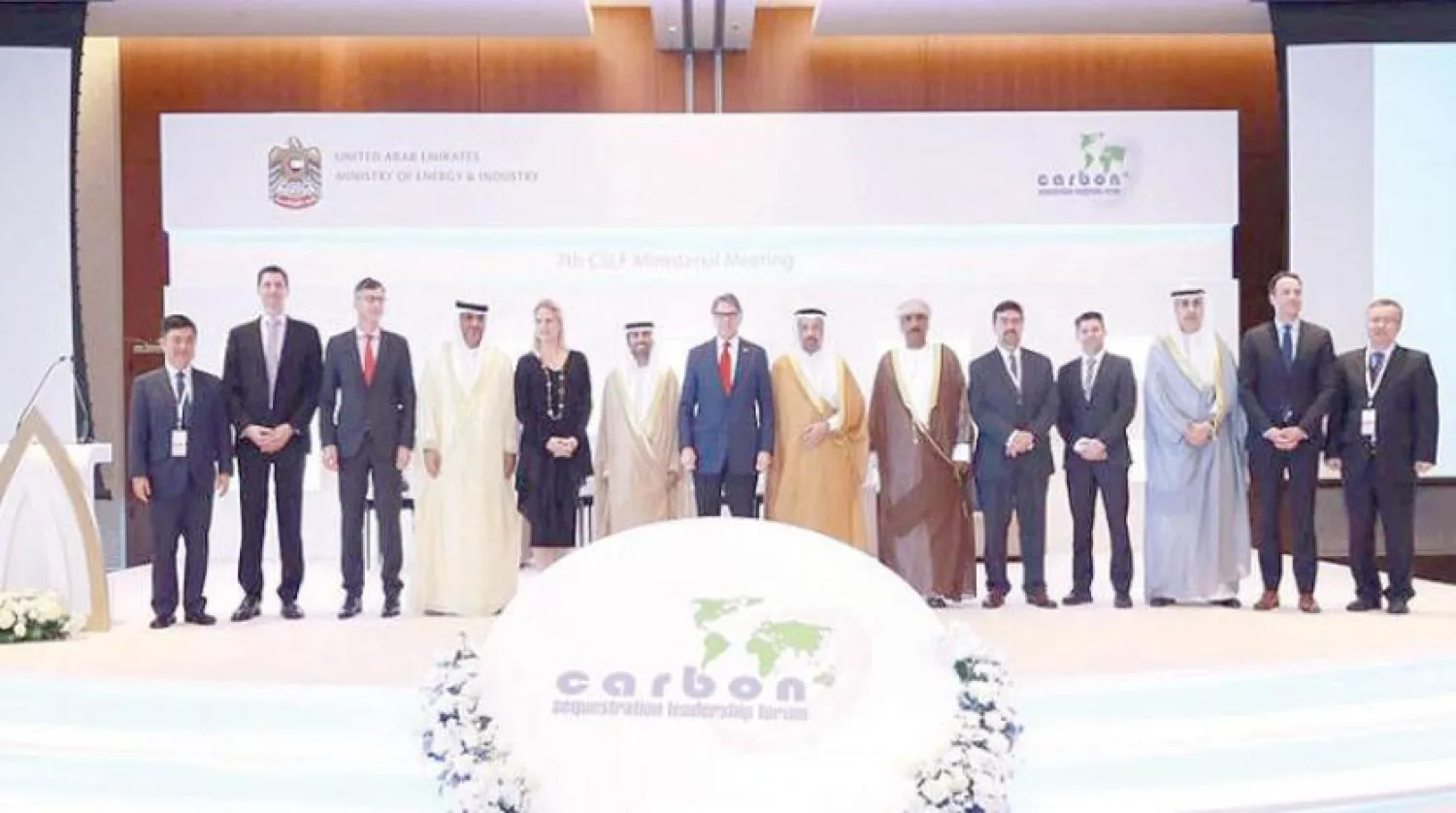
7th Ministerial Meeting of the Carbon Sequestration Leadership Forum (WAM)
TT

Saudi Minister of Energy: SABIC Considering Investments in US

7th Ministerial Meeting of the Carbon Sequestration Leadership Forum (WAM)

Petrochemicals company Saudi Basic Industries Corp (SABIC) is considering several investment opportunities in the United States, Saudi energy minister Khalid al-Falih said on Wednesday.

Falih told reporters, on the sidelines of 7th Ministerial Meeting of the Carbon Sequestration Leadership Forum (CSLF) held in Abu Dhabi, that while Aramco is looking at gas prospects abroad in areas closer to the Kingdom, like Africa and the Mediterranean.

“The US gas (market) is already saturated, there are plenty of investors. I don’t think US needs further investments from Saudi Aramco ... Aramco’s interest in international gas is probably elsewhere, closer to home perhaps in Africa or the Mediterranean,” Falih said on Wednesday.

Falih's statement came few days after SABIC’s chief executive, Yousef al-Benyan, revealed that the company is planning to investment between $3 billion and $10 billion over five years.

Speaking at a petrochemical conference in Dubai last week, Benyan stated that SABIC will take a decision concerning investing in a cracker plant in Texas with Exxon Mobil by the end of next year.

US Energy Secretary Rick Perry said on Wednesday that he has held discussions with Saudi Arabian officials on possible imports of liquefied natural gas (LNG) from US. Perry was speaking at the conference in Abu Dhabi during his first official visit to the region.

In related news, Russian Energy Minister Alexander Novak announced that Minister al-Falih will travel to the Russian Arctic to oversee the launch of a LNG plant. Both ministers will visit the plant this week, as Yamal LNG plant is expected to produce 17.5 million tons of gas per year. Yamal is controlled by Russia’s largest private gas producer Novatek.

Earlier in July, Novak stated that energy cooperation with the kingdom was of the utmost importance, and would deepen the collaboration between both countries if Riyadh took up an offer to participate in Russia’s Arctic gas project.

Aramco is preparing for a share listing next year, aimed at getting a valuation of up to $2 trillion for the company in what could be the world’s biggest initial public offering (IPO).

Falih reiterated on Wednesday that the IPO was being planned for the second half of 2018.

Meanwhile, UAE and United States discussed further collaboration and committing to a strong bilateral relation in the field of energy, including the possibility of LNG imports from the North American country.

UAE energy minister Suhail al-Mazrouei met with US energy secretary on Tuesday to “move forward joint cooperative efforts” to enhance their collaboration in development, oil trade, gas, and renewable energy, among other topics.

“The two ministers noted that the growing US LNG exports could provide an option for an additional source of gas supply to the region,” Mazrouei said in a statement.

During UAE-US Strategic Energy Dialogue held at the UAE’s Ministry of Energy in Abu Dhabi, both ministers emphasized their commitment to the development of safe, secure and responsible nuclear power in compliance with international agreements and in coordination with the International Framework for Nuclear Energy Cooperation.

"We strongly believe that carbon capture, utilization, and storage should be used commercially to replace natural gas as a commodity and therefore, projects should increase by five times at least over the coming 10 years," said the minister, adding that his country is committed to cut CO2 emissions by 70 percent by 2050.

Both ministers agreed on the importance of the strategic energy dialogue in increasing collaboration in the field of energy.

"The US is a reliable LNG exporter and the growing US LNG exports could provide an option for an additional source of gas supply to the region," said US Secretary who also offered hosting the next dialogue in Washington, US.



Syria Prepares to Launch New Currency Amid Major Challenges

Syrian Central Bank Governor Abdulkader Husrieh (X)
TT

Syria Prepares to Launch New Currency Amid Major Challenges

Syrian Central Bank Governor Abdulkader Husrieh (X)

Syria’s central bank governor, Abdulkader Husrieh, said the new Syrian pound is not merely a means of exchange but a symbol of the success of the Syrian revolution, national belonging, and confidence in the country’s ability to recover.

In a Facebook post, Husrieh said that with the launch of the new currency, Syrians were not just celebrating a banknote, but also celebrating their sovereignty and national identity, noting that many international experiences show that national currencies become strong when people rally around them, according to the Syrian Arab News Agency.

He pointed to Germany’s experience, where the introduction of the mark after the war marked the starting point of economic recovery, and to France, where the new French franc became the financial symbol of the new republic, known as the Fifth Republic.

Husrieh said the central bank would carry out its role with a clear understanding of the challenges and opportunities, while committing to responsibility, transparency, and the protection of the national currency. He added that the cornerstone remains public solidarity and trust, because a strong currency begins with the people's belief in it.

He called for turning the launch into a dignified national occasion through which Syrians express awareness, confidence, and adherence to the pound as a symbol of sovereignty and a national choice.

Husrieh added that supporting the pound is supporting the nation, and taking pride in it is a matter of pride in the future for Syrians and their children. He described the move as an opportunity for a new success following the success of the revolution in liberation and the lifting of economic sanctions that had shackled Syria’s economy for nearly fifty years.

Husrieh had recently announced that Jan. 1, 2026, would mark the launch of the new Syrian currency and the start of the exchange process for the old notes, with the exchange to be carried out through 66 companies and 1,000 designated outlets.

Restoring confidence

Political and economic researcher Bassel Kouwefi said the exchange plans, if well implemented, could serve as an entry point for rebuilding confidence in the national economy, encouraging domestic investment, and paving the way for broader reforms in the financial sector. However, he warned against failing to address the root causes of inflation and economic collapse during the previous regime's rule.

Speaking to Asharq Al-Awsat, Kouwefi described currency exchange and the removal of zeros as complex economic measures.

He said their main benefits include simplifying daily transactions, reducing the volume of banknotes in circulation, boosting confidence in stability, lowering printing and transportation costs, simplifying accounting records and financial software, and reducing currency speculation driven by corruption networks seeking to undermine stability in Syria.

Kouwefi said the exchange plans, if well-executed, could help restore confidence in the macroeconomy, but stressed the challenges posed by failing to tackle the fundamental causes of past inflation and collapse, including fiscal deficits, instability, and weak production. He said a comprehensive economic and financial program was therefore essential.

He added that the process also requires strong banking infrastructure, an organized transition period, and sufficient liquidity in the new denominations.

He said these remain major challenges under current Syrian conditions, alongside the need to mitigate social impacts that could lead to public confusion, market exploitation, and difficulties for less informed segments of society.


Russia Extends Ban on Gasoline Exports Until February

Gasoline tank trucks are seen outside the Rosneft Achinsk oil refinery plant, one of the biggest Siberian fuel suppliers, near the town of Achinsk, some 188 km (117 miles) west of Krasnoyarsk, April 28, 2011. REUTERS/Ilya Naymushin
TT

Russia Extends Ban on Gasoline Exports Until February

Gasoline tank trucks are seen outside the Rosneft Achinsk oil refinery plant, one of the biggest Siberian fuel suppliers, near the town of Achinsk, some 188 km (117 miles) west of Krasnoyarsk, April 28, 2011. REUTERS/Ilya Naymushin

Russia has extended the temporary ban on gasoline and fuel exports, including producers and intermediaries, until the end of next February, the Russian news agency Interfax said, citing a government website.

“The new decree extended the temporary ban on the export of gasoline outside the country until February 28, 2026, inclusive. It will be valid for all exporters, including direct producers,” the website wrote.

The decree also extends the ban on the export of marine fuel, vacuum gas oil and other types of gas oils, including volumes purchased at exchange auctions, until 28 February 2026. In this case, the restriction will not apply to direct producers of petroleum products.

Russia introduced the measures at the end of August due to the exacerbation of the fuel crisis.

Several major refineries were attacked by drones in August and September, including Surgutneftegaz's Kirishinefteorgsintez refinery, Lukoil's Volgograd refinery and Rosneft's Samara group of refineries.

Prices for gasoline, which are tightly monitored by authorities, were up 10.2%, above general inflation, since the start of the year, with the spike in part attributed to a step up in Ukrainian attacks on Russian refineries.

Last October, US President Donald Trump mentioned “long lines waiting for gasoline” and said the Russian “economy is going to collapse.”

Trump said his Russian counterpart Vladimir Putin should settle the war in Ukraine which was making Russia look bad.

Asked about Trump's remarks at an energy conference in Moscow, Deputy Prime Minister Alexander Novak, who oversees energy and the economy for the government, said that Russia had a stable supply of gasoline.

“We have a stable domestic market supply, we see no problems in this regard,” Novak said.

“The balance is maintained between production and consumption, and we, on the part of the government and the relevant ministries, are doing everything to ensure that this remains the case.”

Russia's seaborne oil product exports fell 17.1% in September from August to 7.58 million metric tons due to less fuel production as various refineries were impacted by drone attacks, data from industry sources and Reuters calculations showed.

The economy is slowing sharply this year and the government forecasts gross domestic product (GDP) growth of 1.0% after 4.3% growth in 2024 and 4.1% growth in 2023, though the International Monetary Fund has downgraded its 2025 forecast to 0.6% from 0.9%.


Hong Kong Expects 3.2% Growth this Year, Seeks to Maintain Momentum

FILE PHOTO: Tourists relax on the waterfront in front of Victoria Harbour, with the iconic skyline buildings as a backdrop, in Hong Kong, China June 28, 2023. REUTERS/Tyrone Siu/File Photo
TT

Hong Kong Expects 3.2% Growth this Year, Seeks to Maintain Momentum

FILE PHOTO: Tourists relax on the waterfront in front of Victoria Harbour, with the iconic skyline buildings as a backdrop, in Hong Kong, China June 28, 2023. REUTERS/Tyrone Siu/File Photo

Hong Kong Financial Secretary Paul Chan raised his 2025 economic growth forecast to 3.2% on Sunday, saying the city would bolster its role as a financial center, innovation hub and trade center to maintain the momentum.

In February, Chan had forecast growth of between 2% and 3%.

Hong Kong, the world's biggest venue for initial public offerings this year, will lure more listings from companies in areas such as Southeast Asia and the Middle East and will actively promote internationalization ⁠of China's yuan currency, Chan said in a blog post.

The city will also focus on developing artificial intelligence and biotech to lead the global race in technology and will strengthen its role as a trade hub by helping more Chinese companies expand overseas, Reuters quoted him as saying.

"Looking into ⁠next year, Hong Kong's economy is expected to keep the good trend of growth," Chan said. "Finance, tech innovation and trade will be Hong Kong's key engines of growth as the city actively embraces China's development strategy."

Hong Kong has one of the world's best-performing stock markets this year, with the Hang Seng Index up 30%.

Resilient exports, brisk fixed-asset investment and recovering consumption have helped Hong Kong's growth beat forecast, Chan said.

To ⁠bolster its status as a financial center, Hong Kong will strengthen the competitiveness of its stock market and develop areas including bonds, money market, fintech, commodities and gold trading, he said.

In terms of innovation, Hong Kong will develop AI into a "core industry,” as the technology will define economies' competitiveness and reshape the global economic landscape, he said.

The city is also establishing a center for cross-border supply chain management and trade finance, to better help Chinese companies expand offshore, Chan said.