


Japan Approves Expansion of Missile Defense System to Confront North Korea Threat

The Japanese government approved on Tuesday a decision to expand its ballistic missile defense system to counter North Korea’s missile threat. (Reuters)
TT

Japan Approves Expansion of Missile Defense System to Confront North Korea Threat

The Japanese government approved on Tuesday a decision to expand its ballistic missile defense system to counter North Korea’s missile threat. (Reuters)

The Japanese government approved on Tuesday a decision to expand its ballistic missile defense system to counter North Korea’s missile threat.

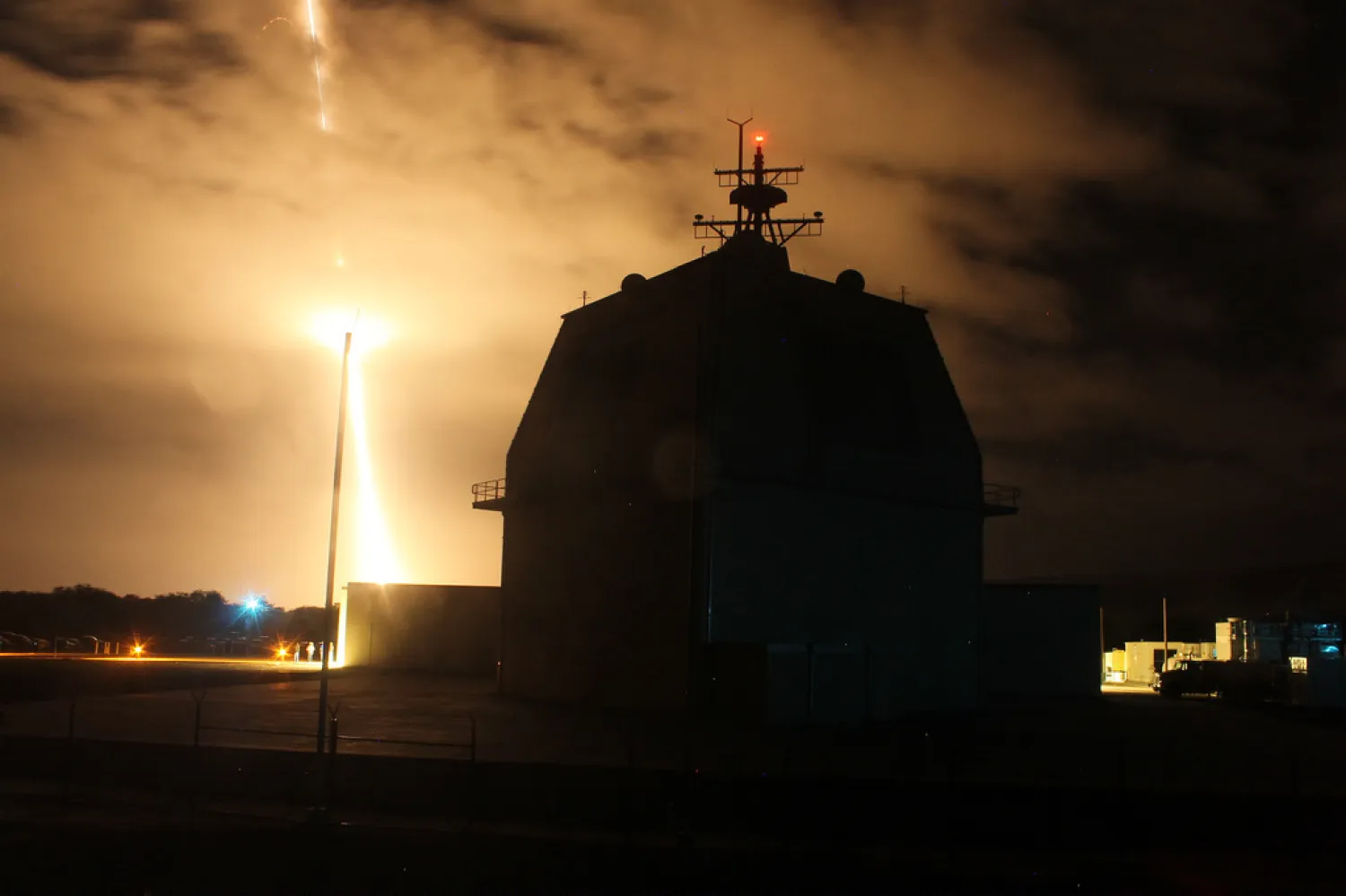
The system will be backed with US-made ground-based Aegis radar stations and interceptors. A proposal to build two Aegis Ashore batteries was approved by Prime Minister Shinzo Abe’s cabinet.

The sites without the missiles will likely cost at least $2 billion and are not likely to be operational until 2023 at the earliest, sources familiar with the plan told Reuters earlier.

The decision to acquire the ground version of the Aegis missile-defense system, which is already deployed on Japanese warships, was widely expected.

“North Korea’s nuclear missile development poses a new level of threat to Japan and as we have done in the past we will ensure that we are able to defend ourselves with a drastic improvement in ballistic missile defense,” Japanese Minister of Defense Itsunori Onodera told reporters after the cabinet meeting.

North Korea on November 29 tested a new, more powerful ballistic missile that it says can hit major US cities including Washington, and fly over Japan’s current defense shield.

That rocket reached an altitude of more than 4,000 km (2,485 miles), well above the range of interceptor missiles on Japanese ships operating in the Sea of Japan.

North Korea says its weapons programs are necessary to counter US aggression.

The new Aegis stations may not, however, come with a powerful radar, dubbed Spy-6, which is being developed by the United States.

Without it, Japan will not be able to fully utilize the extended range of a new interceptor missile, the SM-3 Block IIA, which cost about $30 million each.

A later upgrade, once the US military has deployed Spy-6 on its ships around 2022, could prove a costly proposition for Japan as outlays on new equipment squeeze its military budget.

Initial funding will be ring-fenced in the next defense budget beginning in April, but no decision has been made on the radar, or the overall cost, or schedule, of the deployment, a Ministry of Defense official said at a press briefing.

Japan’s military planners also evaluated the US-built THAAD (Terminal High Altitude Area Defense) system before deciding on Aegis Ashore.

Separately, Japan’s defense minister said this month Japan would acquire medium-range cruise missiles it can launch from its F-15 and F-35 fighters at sites in North Korea, in a bid to deter any attack.

The purchase of what will become the longest-range munitions in Japan’s military arsenal is controversial because it renounced the right to wage war against other nations in its post-World War Two constitution.

Earlier, Japan and South Korea urged China to do more to “pressure” North Korea to end its nuclear and missile programs, Japanese Foreign Minister Taro Kono said on Tuesday.

North Korea has boasted of developing a missile capable of carrying a nuclear warhead and reaching the mainland United States in defiance of UN Security Council resolutions and international condemnation, including from its lone major ally, China.

“China is currently implementing the United Nations Security Council resolutions (on North Korea), but China can probably do more,” Kono said after talks with South Korean Foreign Minister Kang Kyung-wha.

“We agreed on the need to put pressure firmly on North Korea.”

The US Navy’s top officer said on Tuesday said that vessels from eastern Pacific could be brought forward to reinforce US naval power in Asia as Washington contends with increased threats in the region.

US President Donald Trump and North Korean leader Kim Jong Un have exchanged bellicose rhetoric in recent weeks, with Trump threatening to destroy North Korea if provoked, while US diplomats have stressed the importance of diplomacy.

Trump on Monday unveiled a new national security strategy, again saying Washington had to deal with the challenge posed by North Korea’s weapons programs.


US Sanctions Cuban State Oil Company

An old car drives past debris from a demolished house occupying part of the seaside promenade in the Centro Habana neighborhood, in Havana on June 9, 2026. (Photo by Pablo PORCIUNCULA / AFP)
TT

US Sanctions Cuban State Oil Company

An old car drives past debris from a demolished house occupying part of the seaside promenade in the Centro Habana neighborhood, in Havana on June 9, 2026. (Photo by Pablo PORCIUNCULA / AFP)

The United States issued sanctions against Cuban state oil company Unión Cuba-Petróleo (CUPET), the Treasury Department website showed on Thursday.

The action freezes any US assets of the ⁠company and generally bars ⁠Americans from dealing with it.

"Today, I am designating Cuba's state-owned oil and gas company Union Cuba-Petroleo (CUPET), key assets of which were unlawfully expropriated from American owners years ago," US Secretary of State Marco Rubio said in a statement.

Washington has imposed sanctions on an array of ⁠Cuban entities and people, including the island nation's president, as it seeks to intensify pressure on Cuba's communist leaders.

The sanctions follow the United States' declaration of a national emergency this ⁠year ⁠that would impose tariffs on any country that supplies oil to the island, a move that has resulted in frequent power outages.


Hazardous Materials Incident Prompts Pentagon Lockdown

FILE PHOTO: The Pentagon is seen from the air in Washington, US, March 3, 2022. REUTERS/Joshua Roberts/File Photo
TT

Hazardous Materials Incident Prompts Pentagon Lockdown

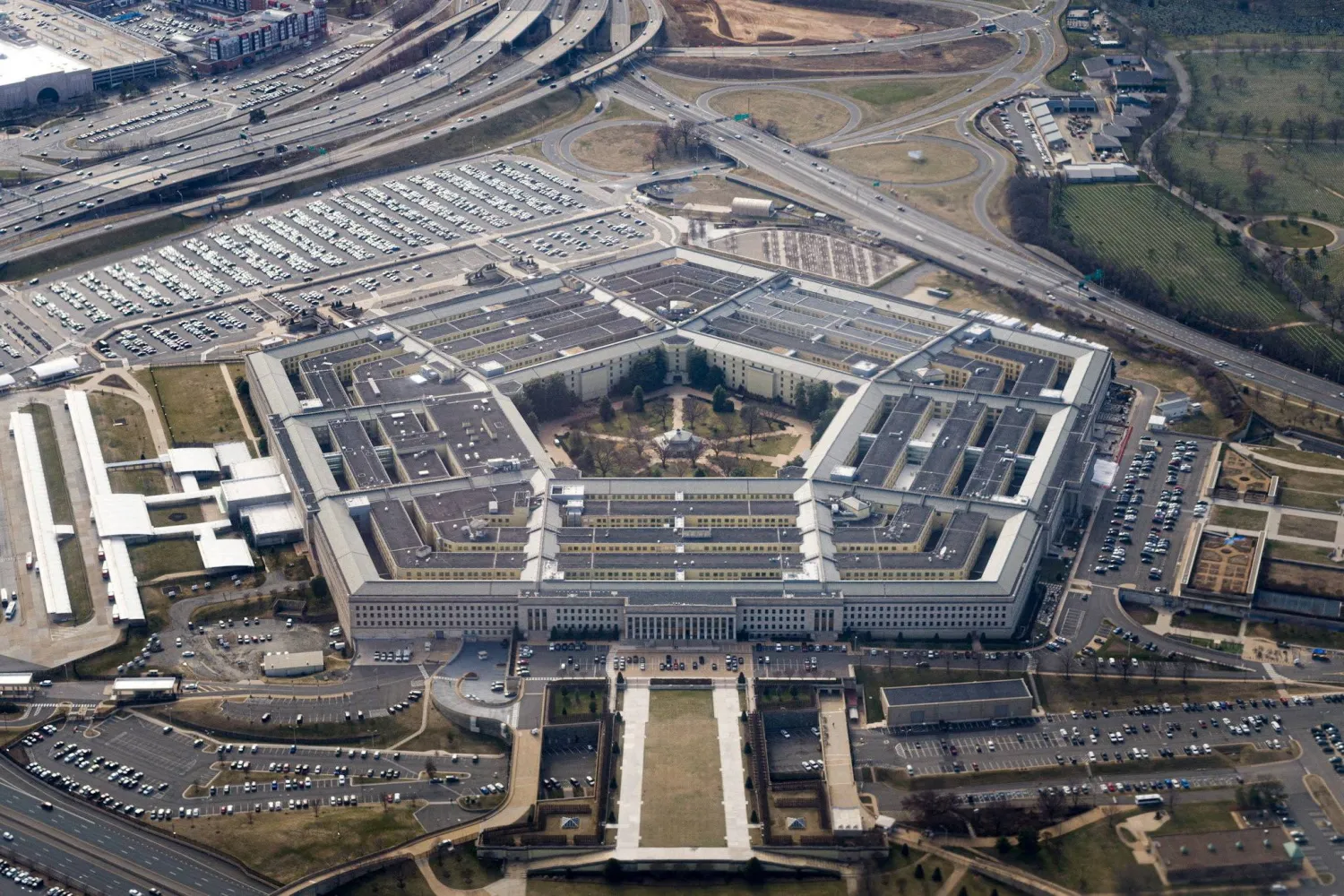
FILE PHOTO: The Pentagon is seen from the air in Washington, US, March 3, 2022. REUTERS/Joshua Roberts/File Photo

A hazardous materials incident put the Pentagon on lockdown on Thursday as fire officials investigated the air quality issue, defense and fire officials said.

"The Pentagon has sophisticated systems to ensure the safety of the building and its occupants. Those systems have detected an air quality issue ⁠necessitating precautionary measures ⁠until we determine its significance," Pentagon spokesman Sean Parnell said in an email.

"The Department is executing standard protection protocols, including a shelter-in-place order for the affected area. Response teams are ⁠in place and ready to support building occupants."

The building was under lockdown, with people evacuated from several floors, CNN reported, citing unidentified sources. Floors two through five in corridors four through seven have been locked down, CNN said, citing two sources.

Another source reported seeing emergency responders were wearing full gas ⁠masks ⁠and chemical protection suits, CNN said.

A message sent by the Pentagon’s security team said additional testing was needed to determine the source of the problem, according to CNN.

The five-sided Pentagon building, hit during the Sept. 11, 2001 al Qaeda attacks is one of the world's largest office buildings.


China Sanctions Philippine Defense Chief for 'Irresponsible Remarks'

Philippines' Defence Secretary Gilberto Teodoro Jr speaks at the IISS Shangri-La Dialogue security summit in Singapore, May 31, 2026. REUTERS/Caroline Chia
TT

China Sanctions Philippine Defense Chief for 'Irresponsible Remarks'

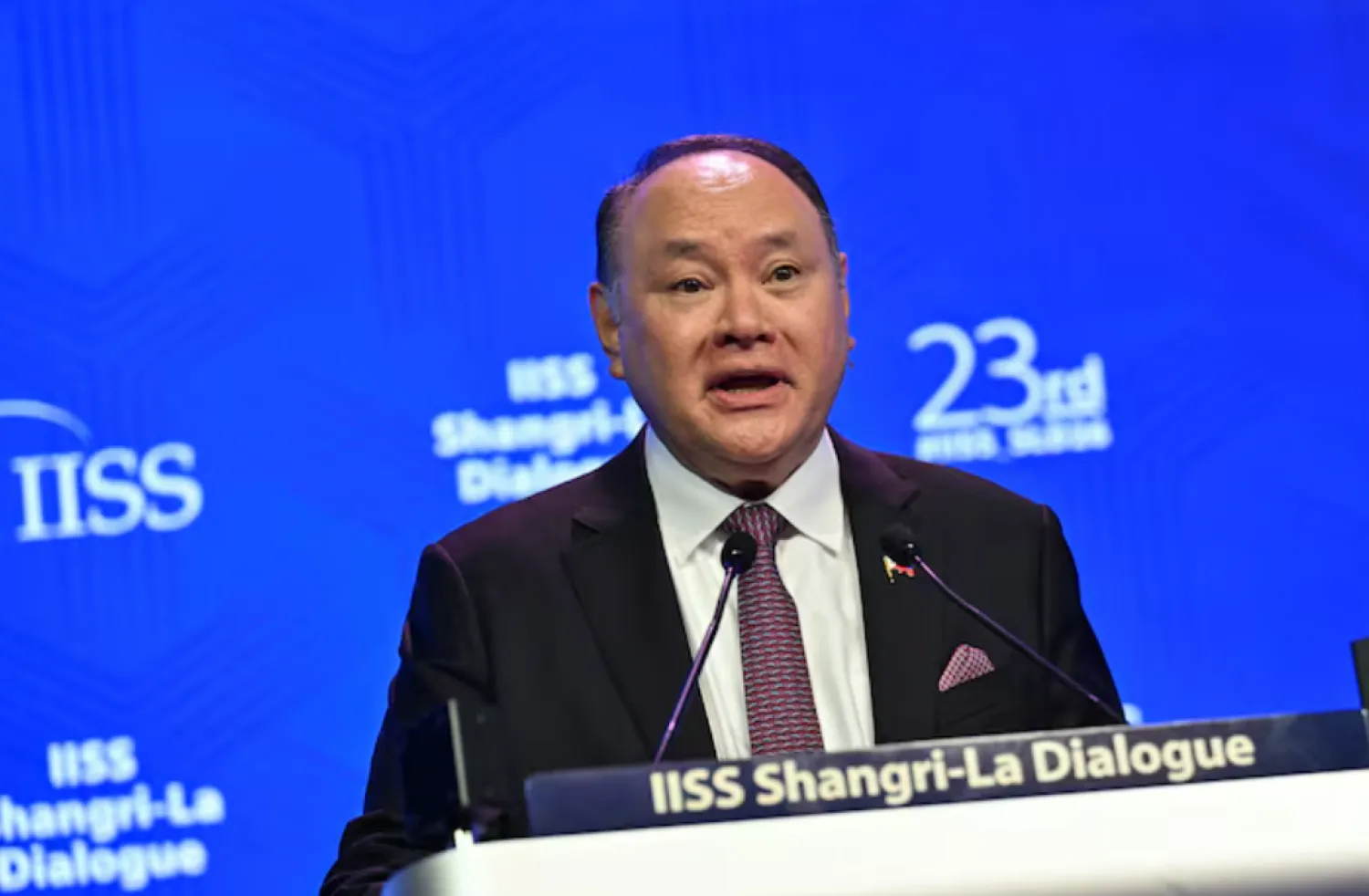
Philippines' Defence Secretary Gilberto Teodoro Jr speaks at the IISS Shangri-La Dialogue security summit in Singapore, May 31, 2026. REUTERS/Caroline Chia

China announced on Thursday sanctions against the Philippines' defence minister over "irresponsible remarks", escalating tensions between Beijing and Manila as they grapple with maritime disputes.

Gilberto Teodoro and his spouse and child will be banned from entering China's mainland, Hong Kong and Macau, an unnamed foreign ministry spokesperson said in an online statement.

It added that "organizations and individuals in China" will not be allowed to "engage in any transaction, cooperation or other activities with him and his spouse and child".

Teodoro's rhetoric "undermines China's legitimate interests and sabotages China-Philippines relations", the statement said, without specifying which remarks it was referring to.

The two countries have in recent years often dealt with flare-ups in ongoing confrontations in the disputed South China Sea.

Beijing claims the strategic waterway nearly in its entirety, despite an international ruling that said its assertions are baseless.

China regularly deploys navy and coast guard vessels to bar the Philippines from important reefs and islands in the area.

At a summit in Singapore last month, Teodoro criticised Beijing's activities in the disputed waters, saying Manila "will not sacrifice our territorial integrity and sovereignty".

Asked last week about Teodoro's remarks at the summit, Beijing's foreign ministry spokeswoman Mao Ning said that he "is known to vilify China".

"All he cares is selfish personal gains to the point that he would perform political theatrics even when people's well-being is at stake," Mao said.