

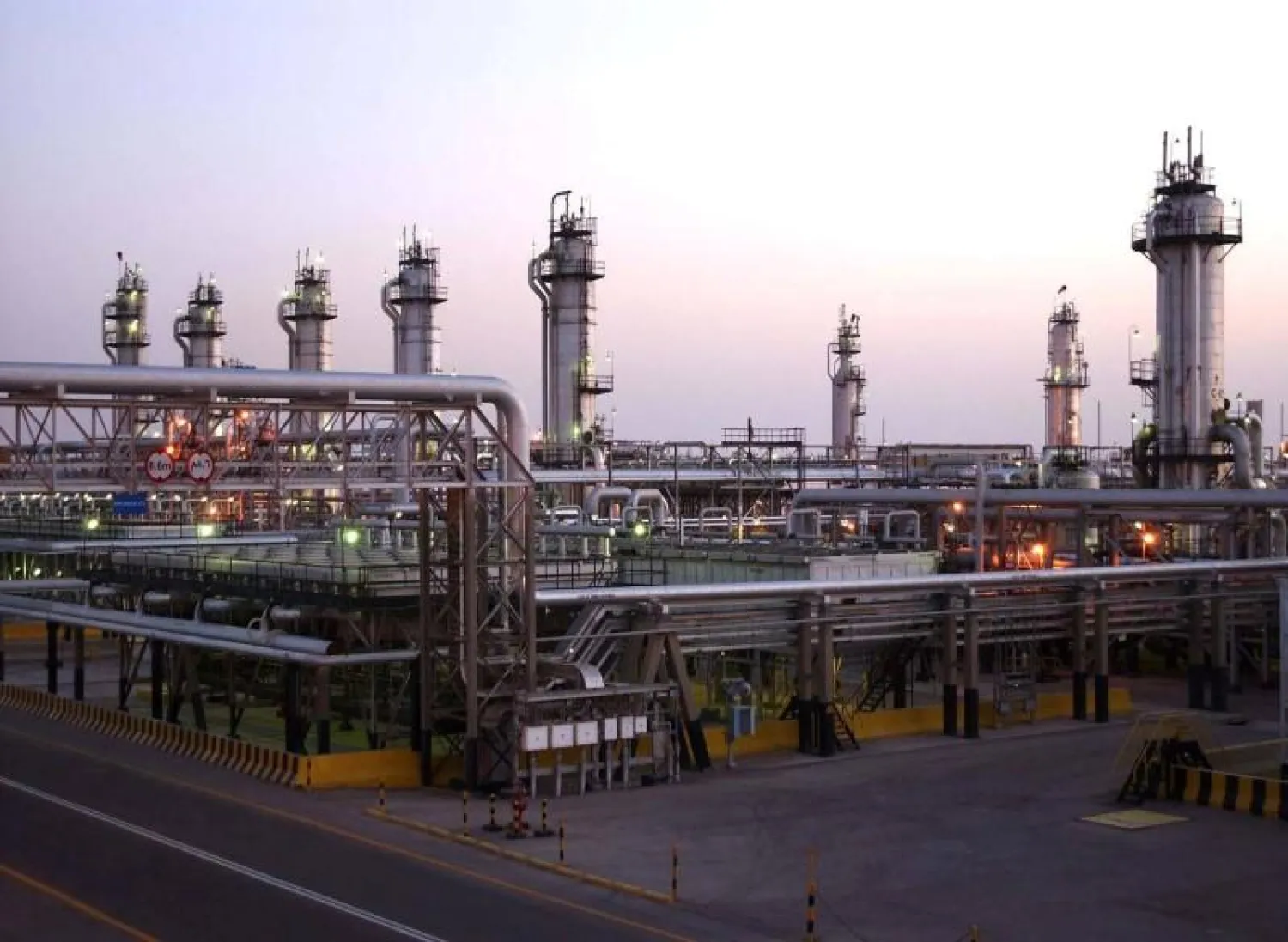

Saudi Aramco Becomes Joint Stock Company

FILE PHOTO: A view shows Saudi Aramco's Abqaiq oil facility in eastern Saudi Arabia in this undated handout photo. Saudi Aramco/Handout/File Photo via REUTERS
TT

Saudi Aramco Becomes Joint Stock Company

FILE PHOTO: A view shows Saudi Aramco's Abqaiq oil facility in eastern Saudi Arabia in this undated handout photo. Saudi Aramco/Handout/File Photo via REUTERS

The Saudi Arabian Oil Company – known as Saudi Aramco - has been for 30 years a company that does not fall under the corporate system imposed by the Ministry of Commerce.

Saudi Aramco has enjoyed a special status since the transfer of its ownership to the State in 1988, as it was established by Royal Decree no. 8 of 4-4-1409 AH (1988).

Saudi Arabia announced on Friday the transformation of Saudi Aramco into a joint stock company, in the preparation process for a planned 2018 initial public offering, which is expected to be the largest ever.

Friday’s official announcement said the Kingdom had changed Saudi Aramco’s status to a joint-stock company as of January 1, in accordance with the company’s statute, which was announced on Thursday in Umm al-Qura newspaper, the State official gazette.

The company will be able to issue shares and be regulated like other companies.

The newspaper said Saudi Aramco’s “capital is 60 billion Saudi Riyals paid in full and divided into 200 billion ordinary shares with equal voting rights and without nominal value.”

Saudi Aramco would have a board of 11 members, with six nominated by the state. The government will have the right to appoint or change the company’s chairman, a post currently occupied by Energy Minister Khaled al-Falih.

The announcement in the Official Gazette also said that the government would remain the main shareholder in Aramco and retain the ultimate decision on output levels and production capacity.

“The state will remain the only responsible entity to make the final decisions regarding the maximum levels of hydrocarbons that can be produced at any time,” it said.

According to Saudi officials, domestic and international exchanges such as New York, London, Tokyo and Hong Kong have been looked at for a partial listing of the state-run oil firm.



Hong Kong Expects 3.2% Growth this Year, Seeks to Maintain Momentum

FILE PHOTO: Tourists relax on the waterfront in front of Victoria Harbour, with the iconic skyline buildings as a backdrop, in Hong Kong, China June 28, 2023. REUTERS/Tyrone Siu/File Photo
TT

Hong Kong Expects 3.2% Growth this Year, Seeks to Maintain Momentum

FILE PHOTO: Tourists relax on the waterfront in front of Victoria Harbour, with the iconic skyline buildings as a backdrop, in Hong Kong, China June 28, 2023. REUTERS/Tyrone Siu/File Photo

Hong Kong Financial Secretary Paul Chan raised his 2025 economic growth forecast to 3.2% on Sunday, saying the city would bolster its role as a financial center, innovation hub and trade center to maintain the momentum.

In February, Chan had forecast growth of between 2% and 3%.

Hong Kong, the world's biggest venue for initial public offerings this year, will lure more listings from companies in areas such as Southeast Asia and the Middle East and will actively promote internationalization ⁠of China's yuan currency, Chan said in a blog post.

The city will also focus on developing artificial intelligence and biotech to lead the global race in technology and will strengthen its role as a trade hub by helping more Chinese companies expand overseas, Reuters quoted him as saying.

"Looking into ⁠next year, Hong Kong's economy is expected to keep the good trend of growth," Chan said. "Finance, tech innovation and trade will be Hong Kong's key engines of growth as the city actively embraces China's development strategy."

Hong Kong has one of the world's best-performing stock markets this year, with the Hang Seng Index up 30%.

Resilient exports, brisk fixed-asset investment and recovering consumption have helped Hong Kong's growth beat forecast, Chan said.

To ⁠bolster its status as a financial center, Hong Kong will strengthen the competitiveness of its stock market and develop areas including bonds, money market, fintech, commodities and gold trading, he said.

In terms of innovation, Hong Kong will develop AI into a "core industry,” as the technology will define economies' competitiveness and reshape the global economic landscape, he said.

The city is also establishing a center for cross-border supply chain management and trade finance, to better help Chinese companies expand offshore, Chan said.


China Passes Revised Foreign Trade Law to Bolster Trade War Capabilities

Containers are seen at the port in Shanghai, China, Oct. 13, 2025. (AFP)
TT

China Passes Revised Foreign Trade Law to Bolster Trade War Capabilities

Containers are seen at the port in Shanghai, China, Oct. 13, 2025. (AFP)

China on Saturday passed revisions to a key piece of legislation aimed at strengthening Beijing's ability to wage trade war, curb outbound shipments from strategic minerals, and further open its $19 trillion economy.

The latest revision to the Foreign Trade Law, approved by China's top legislative body, will take effect on March 1, 2026, state news agency Xinhua reported on Saturday.

The world's second-largest economy is overhauling its trade-related legal frameworks partly to convince members of a major trans-Pacific trade bloc created to counter China's growing influence that the manufacturing powerhouse ‌deserves a seat at ‌the table, as Beijing seeks to reduce ‌its ⁠reliance on the US.

Adopted ‌in 1994 and revised three times since China joined the World Trade Organization in 2001, most recently in 2022, the Foreign Trade Law empowers policymakers to hit back against trading partners that seek to curb its exports and to adopt mechanisms such as "negative lists" to open restricted sectors to foreign firms.

The revision also adds a provision that foreign trade should "serve national economic and social development" and help build China ⁠into a "strong trading nation", Xinhua said.

It further "expands and improves" the legal toolkit for countering external challenges, according ‌to the report.

The revision focuses on areas such ‍as digital and green trade, along ‍with intellectual property provisions, key improvements China needs to make to meet the ‍standards of the Comprehensive and Progressive Agreement for Trans-Pacific Partnership, rather than the trade defense tools the 2020 revamp honed in on following four years of tariff war with the first Trump administration.

Beijing is also sharpening the wording of its powers in anticipation of potential lawsuits from private firms, which are becoming increasingly prominent in China, according to trade diplomats.

"Ministries have become more concerned about private sector criticism," ⁠said one Western trade diplomat with decades' of experience working with China. "China is a rule-of-law country, so the government can stop a company's shipment, but it needs a reason."

"It's not totally lawless here. Better to have everything written out in black and white," they added, requesting anonymity, as they were not authorized to speak with media.

China's private exporting firms attracted global attention in November after the French government moved to suspend the Chinese e-commerce platform Shein.

The Chinese government increasingly could also find itself at odds with private enterprise when seeking to carry out sweeping bans, ‌such as Beijing's prohibition of all Japanese seafood imports, as Asia's top two economies continue to feud over Taiwan, trade diplomats say.


Lebanese Cabinet Approves Draft Law on Financial Crisis Losses

A photograph released by the Lebanese Government Press Office on December 26, 2025, show Prime Minister Nawaf Salam speaking during a press conference after a cabinet session in Beirut on December 26, 2025. (Photo by Handout / Lebanese Government Press Office / AFP)
TT

Lebanese Cabinet Approves Draft Law on Financial Crisis Losses

A photograph released by the Lebanese Government Press Office on December 26, 2025, show Prime Minister Nawaf Salam speaking during a press conference after a cabinet session in Beirut on December 26, 2025. (Photo by Handout / Lebanese Government Press Office / AFP)

Lebanon's government on Friday approved a draft law to distribute financial losses from the 2019 economic crisis that deprived many Lebanese of their deposits despite strong opposition to the legislation from political parties, depositors and banking officials.

The draft law will be submitted to the country's divided parliament for approval before it can become effective.

The legislation, known as the "financial gap" law, is part of a series of reform measures required by the International Monetary Fund (IMF) in order to access funding from the lender.

The cabinet passed the draft bill with 13 ministers in favor and nine against. It stipulates that each of the state, the central bank, commercial banks and depositors will share the losses accrued as a result of the financial crisis.

Prime Minister Nawaf Salam defended the bill, saying it "is not ideal... and may not meet everyone's aspirations" but is "a realistic and fair step on the path to restoring rights, stopping the collapse... and healing the banking sector.”

According to government estimates, the losses resulting from the financial crisis amounted to about $70 billion, a figure that is expected to have increased over the six years that the crisis was left unaddressed.

Depositors who have less than $100,000 in the banks, and who constitute 85 percent of total accounts, will be able to recover them in full over a period of four years, Salam said.

Larger depositors will be able to obtain $100,000 while the remaining part of their funds will be compensated through tradable bonds, which will be backed by the assets of the central bank.

The central bank's portfolio includes approximately $50 billion, according to Salam.

The premier told journalists that the bill includes "accountability and oversight for the first time.”

"Everyone who transferred their money before the financial collapse in 2019 by exploiting their position or influence... and everyone who benefited from excessive profits or bonuses will be held accountable and required to pay compensation of up to 30 percent of these amounts," he said.

Responding to objections from banking officials, who claim components of the bill place a major burden on the banks, Salam said the law "also aims to revive the banking sector by assessing bank assets and recapitalizing them.”

The IMF, which closely monitored the drafting of the bill, previously insisted on the need to "restore the viability of the banking sector consistent with international standards" and protect small depositors.

Parliament passed a banking secrecy reform law in April, followed by a banking sector restructuring law in June, one of several key pieces of legislation aimed at reforming the financial system.

However, observers believe it is unlikely that parliament will pass the current bill before the next legislative elections in May.

Financial reforms in Lebanon have been repeatedly derailed by political and private interests over the last six years, but Salam and Lebanese President Joseph Aoun have pledged to prioritize them.
