



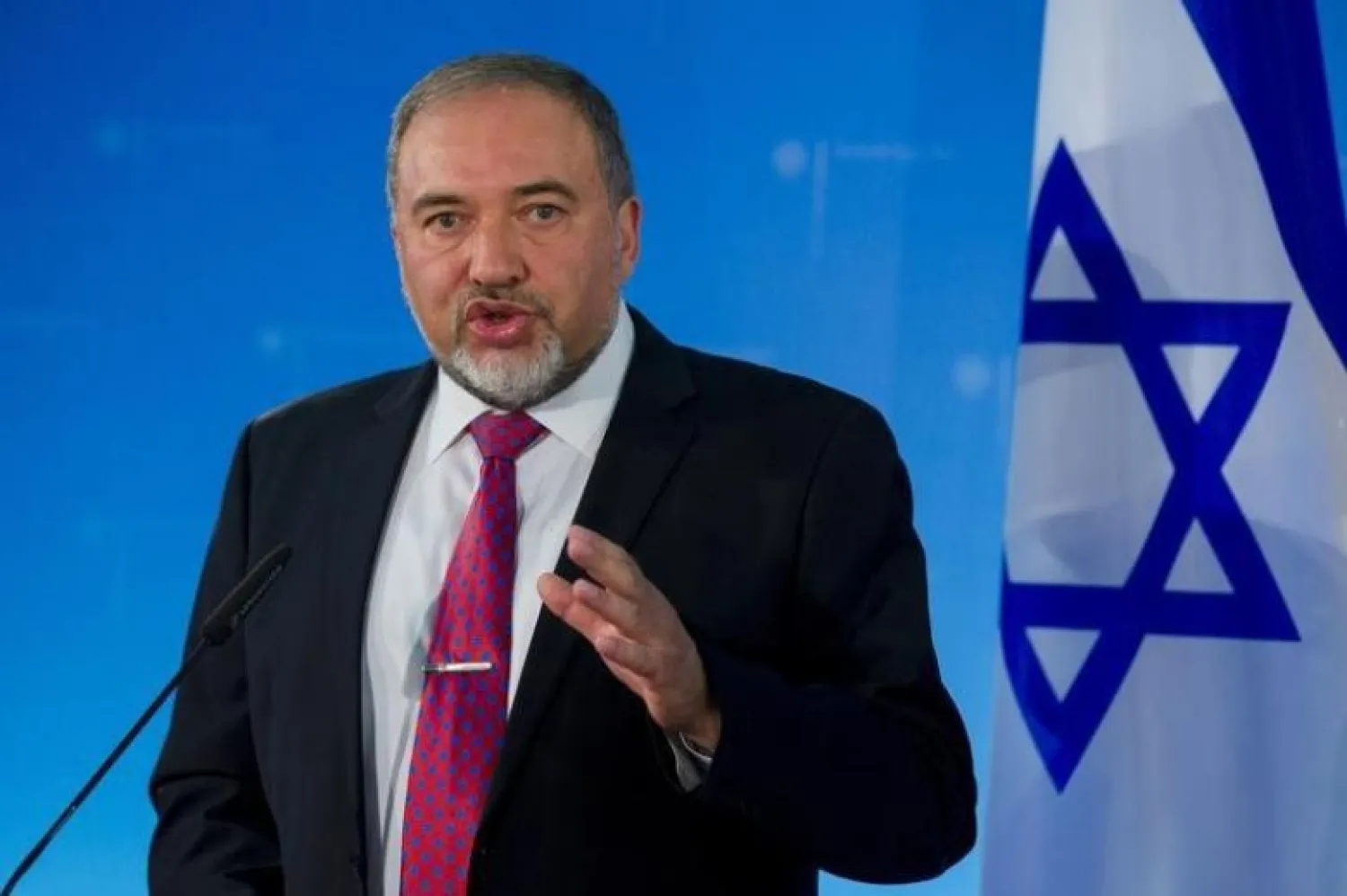

Israeli Defense Minister Avigdor Lieberman arrived in Washington on Wednesday for talks with his US counterpart James Mattis and National Security Advisor John Bolton, in addition to other officials, on the nuclear deal and Iran's role in the Middle East, especially Syria.
Lieberman is also scheduled to meet with members from the Senate Armed Services Committee and lawmakers from the US Congress who call for scraping the nuclear deal.
An Israeli defense ministry statement said that Lieberman’s talks will also focus on security coordination to confront Iranian expansion in the Middle East, namely Syria.
With Israel’s keenness not to get directly involved in the Syrian war, it is holding a thorough dialogue with Washington to prevent Iran from changing the course of events in the region, said security sources in Tel Aviv.
Their remark brought back to mind a statement made by Prime Minister Benjamin Netanyahu in which he said Israel is ready to pay any price for the sake of preventing Iran from jeopardizing its security.
Further, political sources in Tel Aviv and Moscow revealed that Russia is holding talks with Israeli and Iranian officials to limit tension. Secretary of Russia's Security Council Nikolai Patrushev met on Tuesday in Moscow with his Israeli and Iranian counterparts, respectively Eytan Ben-David and Ali Shamkhani.
Russia’s Ambassador to Israel Alexander Shein stated that his country seeks to maintain the balance in the region and dispel dangers, demanding both parties to preserve calm.
In a related matter, Israeli Transportation and Intelligence Minister Israel Katz said Wednesday that a prospective US-European deal on Iran's nuclear program might dissuade US President Donald Trump from abandoning the current agreement between world powers and Tehran.
Katz did not say whether Israel backed a separate arrangement put forward by French President Emmanuel Macron in talks with Trump on Tuesday.
Israel has in the past called for the deal, which was signed in Vienna and is officially known as the Joint Comprehensive Plan of Action (JCPOA), to be "fixed or nixed".
Katz said the West had signed the 2015 agreement "too soon" and should have maintained tough economic sanctions that were suspended in return for Tehran agreeing to roll back technologies with bomb-making potential.
"The president of France and his colleagues in Europe must understand that putting heavy pressure on Iran today can prevent violence and perhaps war tomorrow," the minister said.


