

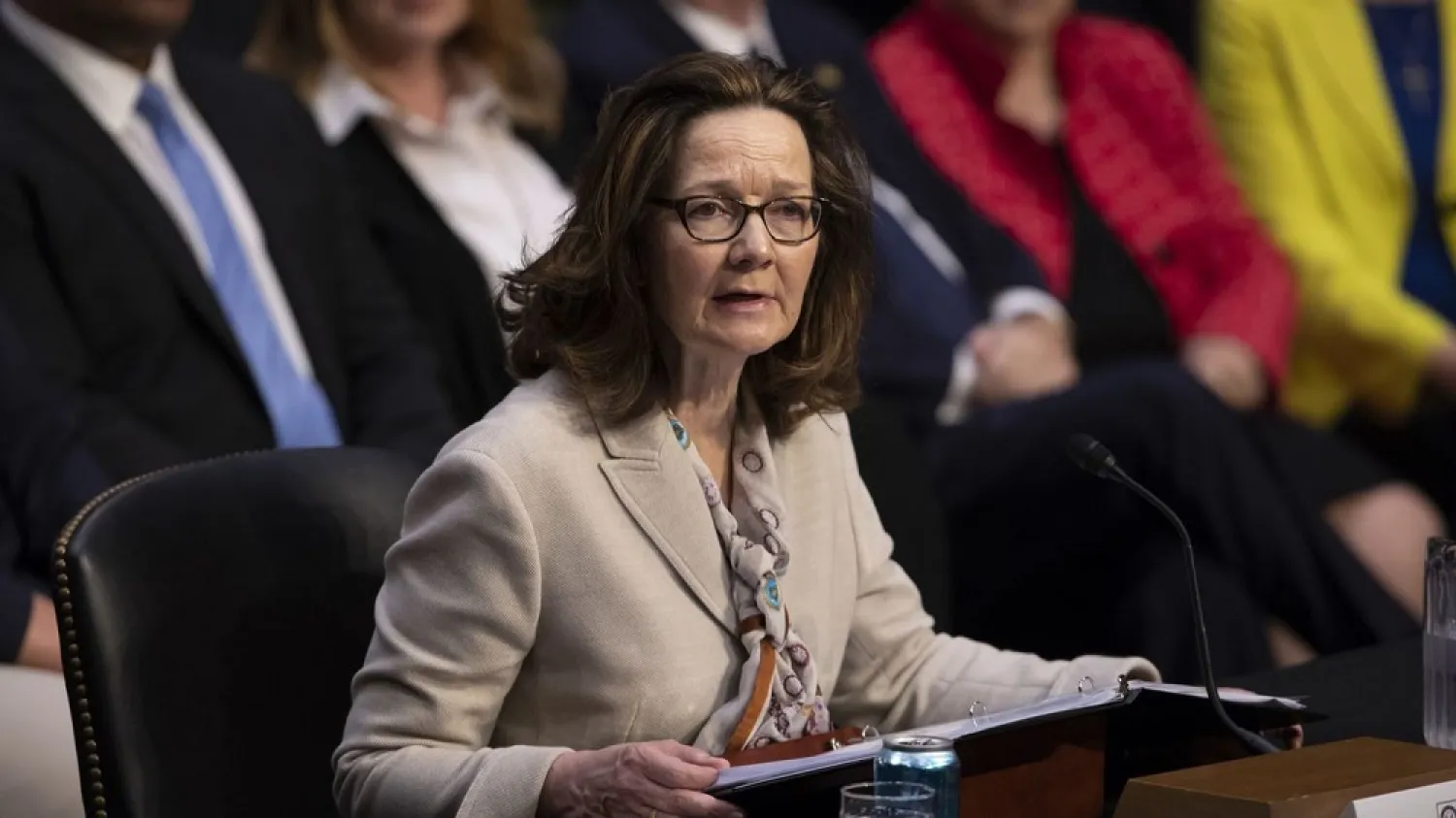

Gina Haspel Sworn in as First Woman CIA Director

New CIA director Gina Haspel. (AP)
TT

Gina Haspel Sworn in as First Woman CIA Director

New CIA director Gina Haspel. (AP)

Veteran CIA officer Gina Haspel was sworn in on Monday as the intelligence agency’s first female director.

Hailing the "heroines" who had gone before her and expressing hope she and her team would be "role models," she takes over from Mike Pompeo, whom President Donald Trump recently made his secretary of state.

The 61-year-old Haspel, a Russia specialist who spent her career in the Central Intelligence Agency's clandestine service, was confirmed by the Senate last week in a 54-45 vote, despite the deep reservations of some lawmakers about her past involvement in the torture of terror suspects in the post-9/11 era.

"I stand on the shoulders of heroines who never sought public acclaim, but served as inspirations to the generations they came after them," Haspel said after being sworn in by Vice President Mike Pence and introduced by Trump.

"I would not be standing before you today if not for the remarkable courage and dedication displayed by generations" of women officers, she said at CIA headquarters in Virginia. to cheers

Haspel added: "I want the current CIA leadership team to be role models and mentors for our next generation of officers."

She joked about her bruising confirmation hearing, which dug into her work overseeing a secret "black site" prison in Thailand.

It was there that Al-Qaeda suspects Abu Zubaydah and Abd al-Rahim al-Nashiri were water-boarded, an interrogation technique subsequently condemned as torture.

"It has been nearly 50 years since an operations officer rose up through the ranks to become the director and after the experience of the last two months, I think I know why that is," she told officers and invited guests.

Trump praised Haspel at her swearing-in ceremony, saying there was "no one in this country better qualified" for the job.

He added: "The exceptional men and women of this agency deserve exceptional leadership."

Until recently, almost nothing was known about Haspel, even after she rose to the top of the CIA in 2013 and then became deputy CIA director last year.

She is the Kentucky-born daughter of a former member of the US Air Force, and was raised on military bases. The oldest of five children, she graduated from the University of Louisville, studying journalism and languages -- Spanish and French.

She joined the CIA in 1985, and quickly found a love for the cloak-and-dagger life.

"I excelled in finding and acquiring secret information that I obtained in brush passes, dead drops, or in meetings in dusty back allies of third world capitals,” Haspel said.

Learning Russian and Turkish, in the 1990s, she became a Russia specialist, working in Eastern Europe and elsewhere.

As she rose up the ranks, she said she experienced some resistance from the male-heavy ranks of the spy corps. She credited "a very tough, old school leader" for naming her station chief over male rivals in "a small but important frontier post."

The posting, believed to be Azerbaijan, resulted in an agency award for leading an operation to capture two wanted terrorists tied to the 1998 bombings of US embassies in Tanzania and Kenya.

The September 11 attacks put her into the middle of the now heavily criticized interrogation program, much of which, if launched today, would be illegal under US law.

Haspel, who later helped in the destruction of tapes of waterboarding, proudly defended her role in the program -- even if she says she would not allow it again.

"After 9/11, I didn't look to go sit on the Swiss desk. I stepped up. I was not on the sidelines. I was on the front lines in the Cold War, and I was on the front lines in the fight against Al-Qaeda," she told the Senate Intelligence Committee.

"Like all of us who were in the counter terrorism center and working at CIA and those years after 9/11, we all believed in our work," she said.



Zelenskiy Says Ukraine Faces Foreign Aid Shortfall of up to 50 billion Euros Next Year

Ukrainian President Volodymyr Zelensky. File Photo/The AP
TT

Zelenskiy Says Ukraine Faces Foreign Aid Shortfall of up to 50 billion Euros Next Year

Ukrainian President Volodymyr Zelensky. File Photo/The AP

Ukraine is facing a foreign aid shortfall of 45-50 billion euros ($53-59 billion) in 2026, President Volodymyr Zelenskiy said on Thursday, Reuters reported.

He added that if Kyiv did not receive a first tranche of a loan secured by Russian assets by next spring, it would have to significantly cut drone production.

Speaking in Brussels as EU leaders were set to take a decision on Moscow's seized sovereign wealth, Zelenskiy said this would mean that Ukraine would have far fewer drones than Russia, and would not be able to conduct long-range strikes on Russian energy facilities.


China Says Arms Trade With Cambodia, Thailand Unrelated to Border Conflict

Flags flutter at an entrance of Thai-Chinese Rayong Industrial Zone in Rayong province, east of Bangkok, Thailand, April 7, 2016. REUTERS/Chaiwat Subprasom
TT

China Says Arms Trade With Cambodia, Thailand Unrelated to Border Conflict

Flags flutter at an entrance of Thai-Chinese Rayong Industrial Zone in Rayong province, east of Bangkok, Thailand, April 7, 2016. REUTERS/Chaiwat Subprasom

China said on Thursday its arms trade with Thailand and Cambodia is unrelated to the current conflict between the Southeast Asian neighbours, with which Beijing has close ties.

"We hope relevant parties will refrain from making subjective speculation and malicious hype," the Chinese Defense Ministry said in response to reports that Thai troops seized Chinese-made weapons from Cambodian positions as border clashes between the two nations reignited, Reuters reported.

Beijing hopes the two countries can reach a ceasefire as soon as possible, the ministry said, adding that China will continue to advocate for peace and talks.

Border clashes between Thailand and Cambodia resumed this month and have killed more than 40 people and displaced over half a million in both countries.

China's Foreign Minister Wang Yi, in separate calls with his Thai and Cambodian counterparts on Thursday, also called for an immediate ceasefire and criticised "false information" that he said was aimed at smearing China's ties with the two countries.

"As a friend and close neighbour of both Cambodia and Thailand, China least wants to see the two sides engage in armed conflict, and is deeply saddened by civilian casualties caused by the clashes," the Foreign Ministry quoted Wang as saying.

China will continue to play a constructive role in facilitating peace, Wang said, urging both countries to protect the safety of Chinese projects and personnel.

Beijing last week warned Chinese citizens to leave border areas after media reports of injuries.

The Chinese Foreign Ministry said on Wednesday a special envoy for Asian affairs would be visiting Cambodia and Thailand on Thursday to conduct mediation.


UK Police Arrest Pro-Palestinian Protesters as Authorities Toughen Hate Speech Law Enforcement

Police officers carry a protester during a protest to support Palestine Action in London, Saturday, Sept. 6, 2025. (AP Photo/ Joanna Chan)
TT

UK Police Arrest Pro-Palestinian Protesters as Authorities Toughen Hate Speech Law Enforcement

Police officers carry a protester during a protest to support Palestine Action in London, Saturday, Sept. 6, 2025. (AP Photo/ Joanna Chan)

Police in London arrested two people who called for “intifada” during a pro-Palestinian protest, which followed a decision by authorities to toughen enforcement of hate speech laws after a deadly attack on a Hanukkah celebration in Australia.

The arrests Wednesday came hours after police in London and Manchester, England, announced a crackdown on protesters using slogans such as “globalize the intifada.” The Arabic word intifada is generally translated as “uprising.”

While pro-Palestinian demonstrators say the slogan describes the worldwide protests against the war in Gaza, Jewish leaders say it inflames tensions and encourages attacks on Jews, including the attack that killed 15 people on Sunday at Bondi Beach in Sydney, The Associated Press said.

London Metropolitan Police Commissioner Mark Rowley and Greater Manchester Police Chief Constable Stephen Watson said they decided to take a tougher stance after Bondi Beach and an Oct. 2 attack on a Manchester synagogue that left two people dead.

“We know communities are concerned about placards and chants such as `globalize the intifada,’ and those using it at future protest or in a targeted way should expect the Met and GMP to take action,” they said in a joint statement released Wednesday. “Violent acts have taken place, the context has changed — words have meaning and consequence.”

In the hours before Wednesday night’s demonstration in support of Palestine Action, a pro-Palestinian group that was banned as a terrorist organization earlier this year, London police warned protesters to be aware of the earlier announcement.

Two protesters were arrested for “racially aggravated public order offenses” after they shouted slogans calling for intifada during the protest outside the Ministry of Justice on Wednesday night, the Metropolitan Police Service said on social media. A third person was arrested for trying to interfere with the initial arrests.

The term “intifada” is used to describe two major Palestinian uprisings against Israeli policy in the West Bank and Gaza Strip, the first beginning in 1987 and the second beginning in 2000. During the recent conflict in Gaza, the slogan “globalize the intifada” has been widely used by pro-Palestinian protesters around the world.

The debate over such language comes after antisemitic hate crime and online abuse soared in Britain following the Hamas-led attack on Israel on Oct. 7, 2023, and the Israeli military campaign in Gaza that followed.

Around 1,200 people were killed and 251 taken hostage during the initial attack on Israel. More than 70,660 Palestinians have been killed during the ensuing Israeli campaign in Gaza, according to the territory’s health ministry.