



Children in the Mediterranean Are Fattest in Europe

The Mediterranean diet is said to be the healthiest in the world. Photograph: Alamy Stock Photo
TT

Children in the Mediterranean Are Fattest in Europe

The Mediterranean diet is said to be the healthiest in the world. Photograph: Alamy Stock Photo

The Mediterranean diet has been touted as an example of healthy eating for years. However, new data from the World Health Organisation (WHO) shows that southern European countries have the highest rates of childhood obesity in Europe.

The data, gathered by WHO Europe’s Childhood Obesity Surveillance Initiative (COSI) from 2015 to 2017, reveals that children in Sweden are more likely to consume a traditional Mediterranean diet than those in the Mediterranean region.

Around one in five boys in Cyprus, Greece, Italy, Malta, San Marino and Spain are obese, according to the WHO.

“The Mediterranean diet for the children in these countries is gone,” Dr. Joao Breda, head of the WHO European office for prevention and control of noncommunicable diseases, said at the European Congress on Obesity in Vienna. “There is no Mediterranean diet any more. Those who are close to the Mediterranean diet are the Swedish kids.”

Dr. Breda explained that typical Mediterranean staples, including fish, vegetables and olive oil, have been replaced by sugary drinks, sweets and junk food, and said there is a need to reinstate the region’s traditional diet.

The issue is compounded by a lack of exercise. “Physical inactivity is one of the issues that is more significant in the southern European countries,” said Dr. Breda. “A man in Crete in the 60s would need 3,500 calories because he was going up and down the mountain.”

The data shows that Denmark, France, Ireland, Latvia and Norway have some of the lowest childhood obesity rates in the region, ranging from 5% to 9% in boys and girls.

Tajikistan, Turkmenistan and Kazakhstan had the lowest rates of all, but are in the process of a “nutrition transition,” reports The Guardian. More people in these countries are moving towards a western diet, which could alter childhood obesity levels. Children in Tajikistan, for example, have begun consuming many sugary soft drinks, The Guardian notes.

Dr. Breda said that in spite of high obesity rates in southern Europe, the countries were taking action to improve health.

“In countries like Italy, Portugal, Spain and Greece, although rates are high, there has been an important decrease.” This is “attributable to a very significant effort that these countries have made in recent years into management and prevention of childhood obesity,” explained Dr. Breda.

Since the WHO launched COSI in 2007, the initiative has collected data from about 300,000 children aged six to nine years across the WHO European Region. 38 countries in the region took part in the 2015-2017 data collection period, but several large countries including the UK and Germany did not participate.

In addition to height and weight measurements, countries submitted data concerning children’s eating habits and other nutritional information.

Dr. Breda said COSI is the largest surveillance system of its kind in the world and provides governments with valuable information that helps them improve children’s health and nutrition.

“The data is really useful for policy-makers,” said Dr. Breda. “To make the right decisions, policy-makers need to know both their country’s own data around child obesity, and if policies have made a difference. A monitoring tool like COSI will sound the alarm bell if we are not achieving our universal aim of decreasing child obesity rates across Europe.”
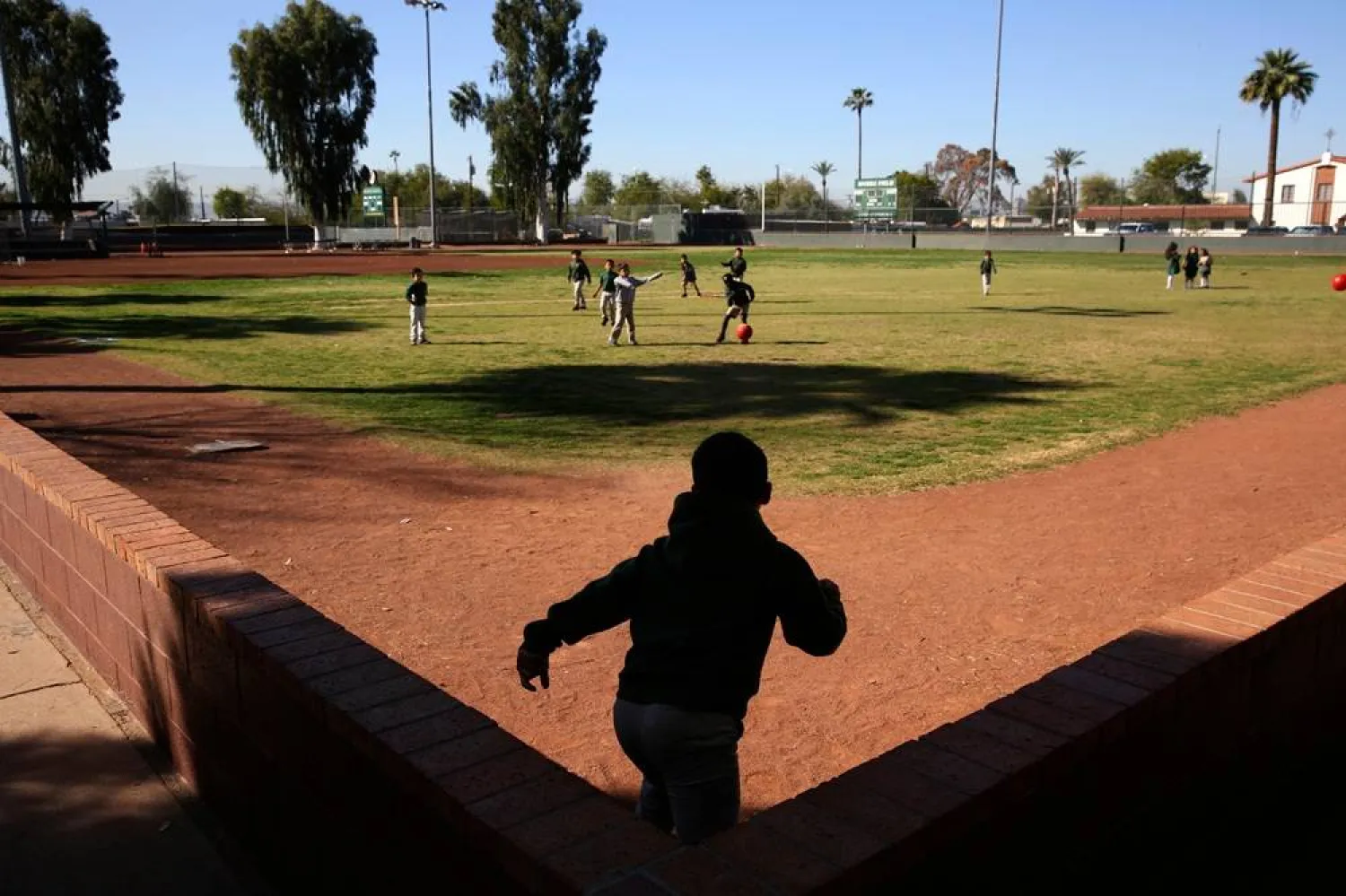



Pediatricians Group Finds Kids of All Ages Need Regular Recess for Physical and Mental Health

Students play ball during recess at the St. Agnes Elementary School in Phoenix, Ariz., on March 3, 2020. (AP)
TT

Pediatricians Group Finds Kids of All Ages Need Regular Recess for Physical and Mental Health

Students play ball during recess at the St. Agnes Elementary School in Phoenix, Ariz., on March 3, 2020. (AP)

Recess isn’t just a fun break for grade schoolers. It’s crucial to good health and good grades for kids of all ages.

That's the message from a leading pediatricians group, which just released the first new guidance in 13 years about this unstructured time at school and how it needs to be protected.

The updated policy statement by the American Academy of Pediatrics comes after years of shrinking recesses and worsening children’s health.

The group "has always supported play – free play for kids – but it’s been increasingly threatened over time,” partly by the drive for higher test scores, said Dr. Robert Murray, a lead author. “It has a very powerful benefit if it’s used to the fullest.”

The new guidance, published Monday in the journal Pediatrics, is similar to the previous policy statement but cites the latest research on why these breaks are essential for kids’ academic success and mental, physical, social and emotional growth.

For example, new evidence shows that kids need pauses between concentrated bouts of learning so the brain can hold and store the information. Researchers also say recess gives kids a chance to navigate relationships and build confidence, which is just as important for older kids as younger ones.

Murray and his colleagues also stressed the importance of physical activity in preventing obesity, a condition that now affects about 1 in 5 US children and teens.

Given these benefits, they recommend that recess be protected and never withheld for academic or punitive reasons, as sometimes happens in schools.

“If the child is disruptive or rude and disrespectful, recess is one of the things that teachers use to punish kids,” Murray said, adding that students struggling with behavioral issues or grades are often the ones who need recess most.

But those students aren’t the only ones losing out. Recess has been waning for all kids. Since the mid-2000s, up to 40% of school districts nationally have reduced or eliminated recess, according to data from the group Springboard to Active Schools in collaboration with the US Centers for Disease Control and Prevention.

Today, the duration of recess varies widely across US schools, ranging from less than 10 minutes to more than an hour a day, the pediatrics group said. Older kids generally get less time than younger ones.

Ideally, studies show, kids should get a minimum of 20 minutes a day and multiple breaks. In other countries such as Denmark, Japan and the United Kingdom, students get breaks after every 45 minutes to 50 minutes of classroom instruction.

“They should get a long enough period of time where they can de-stress and blow off steam and prepare for the next class,” Murray said.

Dr. Lauren Fiechtner, a childhood obesity expert at Mass General Brigham for Children in Boston, said she’s glad about the updated recess recommendations. She’s seen the importance of recess as both a doctor and mother of two. She recalled how her 8-year-old son learned how to play basketball at recess and now loves the game.

Fiechtner, who wasn’t involved in creating the guidance, agrees with the recommendation that middle and high school students need recess, too.

“As kids get older, they’re more on their screens. So it’s really helpful, I think, for outdoor activity and recess to be happening,” she said. “Recess is great. We all kind of need recess.”


Nazi-Looted Portrait Found in Home of Dutch SS Leader’s Family

This handout photograph taken in an undisclosed area and released by Arthur Brand on May 11, 2026, shows the painting "Portrait of a Young Girl" by Dutch artist Toon Kelder, an art piece stolen from the world-famous Goudstikker collection by the Nazis, discovered in the house of the descendants of a notorious Dutch SS collaborator. (Handout and Arthur Brand / AFP)
TT

Nazi-Looted Portrait Found in Home of Dutch SS Leader’s Family

This handout photograph taken in an undisclosed area and released by Arthur Brand on May 11, 2026, shows the painting "Portrait of a Young Girl" by Dutch artist Toon Kelder, an art piece stolen from the world-famous Goudstikker collection by the Nazis, discovered in the house of the descendants of a notorious Dutch SS collaborator. (Handout and Arthur Brand / AFP)

An artwork plundered by the Nazis from the world-famous Goudstikker collection has surfaced in the family of a notorious SS collaborator in the Netherlands, Dutch art detective Arthur Brand told AFP Monday.

"Portrait of a Young Girl", by Dutch artist Toon Kelder, had likely been hanging for decades in the home of descendants of Hendrik Seyffardt, Brand said, describing it as "the most bizarre case of my entire career".

The case has drawn parallels to a find that made global headlines in 2025, when an 18th-century Nazi-looted painting -- also from the collection of late Jewish art dealer Jacques Goudstikker -- featured in a property ad in Argentina.

In the Dutch case, Brand said he was approached by a man who had recently uncovered two horrifying secrets: he was a descendant of Seyffardt, and his family had displayed the looted art for years.

This family member, who wished to remain anonymous, told Brand he saw the painting hanging in the hallway of the granddaughter of Seyffardt, who was assassinated by Dutch resistance fighters in 1943.

Seyffardt, one of the highest-ranking Dutch collaborators with the Nazis, commanded a Waffen-SS unit of Dutch volunteers on the Eastern Front.

The New York Times splashed news of his death on its front page in 1943, and a lavish Nazi state funeral was held for him in The Hague, complete with a wreath sent by Adolf Hitler.

According to Brand, Seyffardt's granddaughter told the family member the painting was "Jewish looted art, stolen from Goudstikker. It is unsellable. Don't tell anyone."

But the family member wanted the story to go public, so contacted Brand, who has made a name for himself cracking numerous high-profile cases of stolen art.

This family member told De Telegraaf daily: "I feel ashamed. The painting should be returned to the heirs of Goudstikker."

The grandmother, quoted by the Dutch daily, said the family was discussing whether the painting should be returned to the Goudstikker heirs, and denied knowing it was looted.

"I received it from my mother. Now that you confront me like this, I understand that Goudstikker's heirs want the painting back. I didn't know that," she was quoted as saying.

- 'Truly tops everything' -

Brand launched his own investigation. The painting has a Goudstikker label on the back and the number 92 carved into the frame.

He searched the archives of an auction in 1940 where part of the looted Goudstikker collection went under the hammer and found item number 92: "Portrait of a Young Girl" by Toon Kelder.

Hermann Goering, a top Nazi official, plundered Goudstikker's entire collection when the art dealer fled to England in 1940.

Brand surmises that the Dutch collaborator Seyffardt acquired the painting at the 1940 auction and it was then passed down throughout the generations.

Lawyers for the Goudstikker heirs confirmed to Brand that this painting was looted and have called for its return.

The family member who contacted Brand also wants the painting returned to the Goudstikker heirs, but the police are powerless as the theft has passed the statute of limitations.

The Dutch Restitution Committee, which advises on looted Nazi art, is also hamstrung as it cannot compel private individuals to return artworks.

"The family member sees public exposure as the only way to hopefully return the painting to the Goudstikker heirs, where it rightfully belongs," Brand told AFP.

Brand, who has been nicknamed the "Indiana Jones of the Art World" for his extraordinary finds, said this surpassed anything he had uncovered before.

"I have recovered Nazi-looted art from World War II before, including pieces in the Louvre, the Dutch Royal Collection, and numerous museums," he said.

"But discovering a painting from the famous Goudstikker collection, in the possession of the heirs of a notorious Dutch Waffen-SS general, truly tops everything."


Groundbreaking: ‘Controlled’ Quakes Triggered Under Swiss Alps

This photograph taken on April 29, 2026 shows a view of the BedrettoLab tunnel, a unique underground research facility operated by the Federal Institute of Technology Zurich (ETH Zurich) located 1,500m beneath the Swiss Alps within a 5.2 km tunnel near Bedretto. (AFP)
TT

Groundbreaking: ‘Controlled’ Quakes Triggered Under Swiss Alps

This photograph taken on April 29, 2026 shows a view of the BedrettoLab tunnel, a unique underground research facility operated by the Federal Institute of Technology Zurich (ETH Zurich) located 1,500m beneath the Swiss Alps within a 5.2 km tunnel near Bedretto. (AFP)

Researchers have made the ground shake in southern Switzerland, triggering thousands of tiny earthquakes in a monitored setting, as they seek to discover seismicity insights that could reduce risks.

"It was a success!" said Domenico Giardini, one of the lead researchers on the project, as he inspected a crack in the rock wall lining a narrow tunnel far below the Swiss Alps.

Wearing a fluorescent orange jumpsuit and helmet, the geology professor at the Federal Institute of Technology in Zurich (ETH Zurich) switched on his headlight to get a better look.

"We had seismicity," he said excitedly, explaining that the goal was "to understand what happens at depth when the Earth moves".

Giardini was standing in the BedrettoLab carved out in the middle of a narrow 5.2-kilometer (3.2-mile) ventilation tunnel leading to the Furka railway tunnel.

Reached by specially adapted electric vehicles that slide through the dank darkness along concrete slabs laid over a muddy dirt floor, the deep underground laboratory is the ideal location to create and study earthquakes, Giardini said.

"It is perfect, because we have a kilometer and a half of mountain on top of us... and we can look very close at the faults, how they move, when they move, and we can make them move ourselves," he told AFP.

- 'Earthquake machine' -

Typically, researchers seeking to study earthquakes place sensors near known faults and wait.

In the BedrettoLab, by contrast, researchers filled a pre-selected fault with sensors and other instruments, and then sought to trigger movement.

For the experiment, dubbed Fault Activation and Earthquake Rupture (FEAR-2), dozens of scientists from across Europe spent four days in late April injecting 750 cubic meters of water into boreholes drilled into the tunnel's rock walls, aiming to provoke a magnitude-1 earthquake.

"We don't create a new fault... We only facilitate that it moves," Giardini said.

During the experiment, no people were in the tunnel for safety reasons, with everything managed remotely from the ETH Zurich lab in northern Switzerland.

When AFP visited the Zurich lab a day into the experiment, scientists were excitedly discussing the first signs of seismicity on the monitors.

"This is kind of pushing the frontier of science," said Ryan Schultz, a seismologist specialized in man-made earthquakes.

The excitement was interrupted by a sudden power cut in the tunnel that sent the scientists in Zurich scrambling for answers.

"We have our earthquake machine... Now we have to play with the parameters," said Frederic Massin, a French seismologist and technical expert, as he studied his screen for clues to what had caused the outage.

The glitch was short-lived and pumping soon resumed.

- 8,000 earthquakes -

In the end, some 8,000 small seismic events were induced along the targeted fault, but also, surprisingly, along other faults running perpendicular to the main one, sparking local magnitudes ranging from -5 to -0.14.

"We did not reach the target magnitude that we had set, but we reached just below," Giardini said.

That alone was a huge success, he insisted, pointing out that although there had been previous efforts to create tiny earthquakes in lab settings, it was "never at this scale and never this deep".

"It's simply never been tried."

The findings, he said, would help determine the best injection angles for reaching magnitude 1 at the BedrettoLab when researchers next give it a try in June.

Magnitudes on the Richter scale are measured logarithmically, with each whole number increase representing ten times more in measured amplitude.

Magnitudes below zero are still palpable. Anyone standing near the fault during the largest triggered quakes, at -0.14, would have felt an acceleration of "1.5 G", or 1.5 times the standard acceleration due to gravity, Giardini said.

They would have flown "in the air with a big jump", he explained.

- 'Safe' -

Nothing was felt at the surface, and Giardini stressed that by lubricating an existing fault, the team was adding only "about one percent of what is the natural risk".

The experiment, he insisted, was completely "safe".

Giardini explained the importance of the research, stressing: "If we master how to produce quakes of a certain size, then we know how not to produce them."

This was particularly important in connection with underground activities like excavation and extraction, he said, pointing for instance to quakes triggered by disposal of wastewater from the fracking industry in Texas.

He also highlighted South Korea's 5.4-magnitude Pohang quake in November 2017, triggered by water injections at the country's first experimental geothermal power plant.

"Without realizing it, they started injecting and initiating induced seismicity on a large fault, creating a very serious quake," Giardini pointed out.

"We're not saying we should not go underground," he insisted.

"We need to learn how to do it more safely."