
Miracle Cures or Modern Quackery? Stem Cell Clinics Multiply, with Heartbreaking Results for Some Patients.

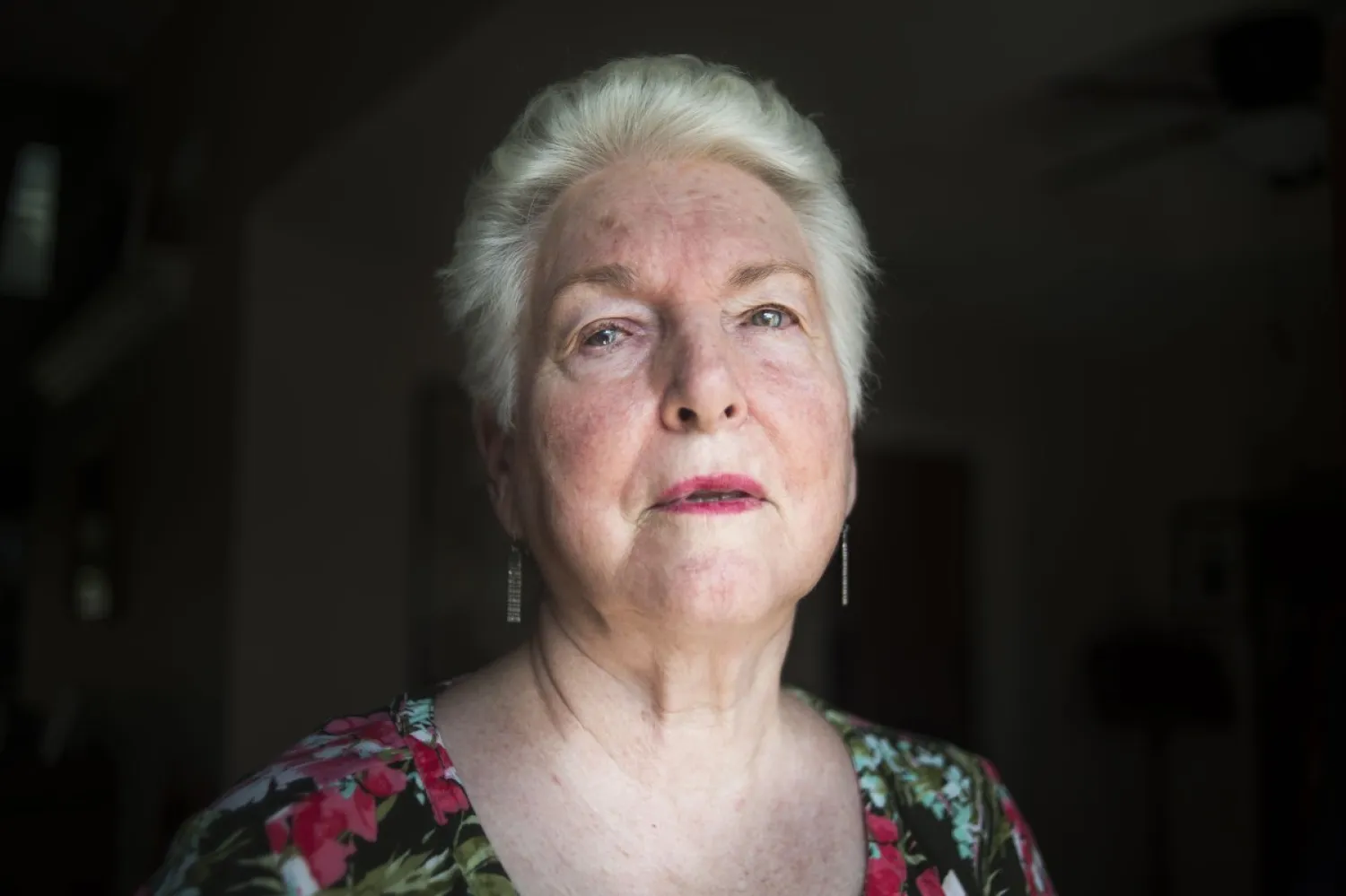
Doris Tyler in her living room in Ocoee, Fla., in February. (Zack Wittman for The Washington Post)
TT

Miracle Cures or Modern Quackery? Stem Cell Clinics Multiply, with Heartbreaking Results for Some Patients.

Doris Tyler in her living room in Ocoee, Fla., in February. (Zack Wittman for The Washington Post)

Doris Tyler lay on the examining table as the doctor stuck a long, thin tube into her belly. The doctor pulled back a plunger, and the syringe quickly filled with yellow blobs tinged with pink.

“Look at that beautiful fat coming out. Liquid gold!” one of the clinic’s staff exclaimed in a video of the procedure provided to The Washington Post.

Hidden in that fat were stem cells with the amazing power to heal, the Stem Cell Center of Georgia had told Tyler. The clinic is one of hundreds that have popped up across the country, many offering treatments for conditions from Parkinson’s disease to autism to multiple sclerosis.

Federal regulators have not approved any of their treatments, and critics call such clinics modern-day snake-oil salesmen. But on that day in 2016, Tyler trusted the clinic to extract stem cells from her fat and inject them into her eyes, where she was told they could halt or even cure the macular degeneration threatening her sight.

Five days after the injections, the clinic was boasting online that it had performed the first such treatment in Georgia for macular degeneration. On Facebook, the clinic called Tyler “our fabulous patient!” and urged others with her disease to book an appointment.

But by then, Tyler’s vision was getting blurry.

Within weeks, the retina in her left eye detached. Then went the retina in her right eye, according to a lawsuit Tyler and her husband filed in March against the clinic. Surgery after surgery failed to repair the damage. She quickly lost the ability to read large-text print. She could no longer make out the faces of her seven grandchildren.

Within months, she said, she was completely blind.

“We trusted these people. We never questioned that they knew what they were doing,” Tyler said at her Florida home.

The Tylers’ lawsuit alleges negligence by the clinic that treated her, the network to which it belongs and an outside eye doctor. The clinic’s owner and employees and the eye doctor declined to answer repeated calls and emailed questions. The co-founders of the clinic network said neither it nor the Georgia facility did anything wrong.

For years, such direct-to-consumer stem cell clinics have expanded mostly unchallenged. Cases like Tyler’s, however, are prompting lawsuits and new efforts by state and federal regulators to rein in potentially dangerous and worthless treatments.

Last year, California passed a law requiring stem cell clinics to post warnings that their treatments were unapproved, and Washington’s legislature passed a similar law this year. North Dakota’s attorney general is investigating a Bismarck clinic. And the Federation of State Medical Boards is exploring ways to increase oversight of the clinics.

In interviews, Food and Drug Administration Commissioner Scott Gottlieb and his predecessor blamed the agency’s limited resources for the lack of aggressive action in the past. Since last summer, Gottlieb has promised to pursue “unscrupulous actors” who he says are putting the promising field of stem cell therapies at risk.

The agency, which had issued only seven warning letters in seven years to stem cell clinics and suppliers, has sent two such letters since August. It also ordered the seizure of an experimental concoction made of stem cells and given to cancer patients.

Late last year, officials clarified previously murky policies to assert that many of the treatments clinics offer are unapproved drugs, a key point of contention. The facilities argue they aren’t subject to FDA regulation because they use surgical procedures to administer patients’ own cells — meaning they aren’t making new drugs.

But the agency now insists that their therapies require advance approval because the cells are intended to treat diseases and undergo substantial processing before being used in ways that are different from their original purposes.

Acknowledging the difficulty of curbing the entire booming industry, FDA officials say their crackdown will first focus on high-risk procedures such as injections into the brain, spinal cord and eye — rather than less risky ones, such as shots into achy joints.

This month, Sen. Charles E. Grassley (R-Iowa) sent a letter to the FDA, pushing for stronger action. Grassley cited the cases of three women who suffered permanent loss of vision at a Florida facility called US Stem Cell Clinic. He asked what has been done to ensure such dangerous procedures aren’t performed again.

Clinic operators say desperately ill patients have a right to use their own cells for experimental therapies. They say their treatments have the ability to find and repair damaged tissues and organs, and they cite online testimonials from satisfied customers as evidence.

Regulators and researchers disagree, saying strict regulations do apply because the clinics are essentially conducting human experiments without proper oversight.

“What they’re really selling is false hope,” said Timothy Caulfield, a health law professor at the University of Alberta. “It’s science-ploitation. They’re taking a legitimate and developing field of science and using it to prey on patients who are desperate for a cure.”

The treatments are not covered by insurance. Many of the clinics’ patients are old, sick and already struggling with medical bills. Some clinics urge individuals who can’t afford their steep fees — which range from $1,800 to more than $20,000 — to launch GoFundMe pages or take out loans, according to patients and former employees.

Many of the practitioners remain defiant, saying patients need alternative treatments like theirs.

Mark Berman is a Beverly Hills, Calif., plastic surgeon who co-founded Cell Surgical Network, the nation’s largest group of independent stem cell clinics, including the facility that injected material into Tyler’s eyes. After the network learned of her complications, Berman said, it directed all of its affiliated physicians to stop doing such injections into the eye.

Berman said Tyler’s problem was “virtually” the only serious adverse event to occur in his network in treating almost 8,000 patients. But an FDA report in July 2017 listed four adverse cases, including Tyler’s. Berman said the others were “very minor” and called the FDA’s concerns about patient safety “sanctimonious garbage.”

“How do you heal your body? You have to heal yourself,” Berman said. He said it’s “asinine” for the FDA to call patients’ own cells a drug.

For Tyler, however, the debate over the clinics has come too late.

Before the injections, she could still read large-print books and navigate her home in Ocoee. But now she moves cautiously, clutching each piece of furniture like a life raft. Her husband has learned to cook for them both, and Tyler — a former music teacher who is 77 — had to quit her church choir because she can no longer read the music.

“When I wake up in the morning, one of the hardest things is opening my eyes and seeing that everything is still dark,” she said recently. “And it’s going to be this way until I go to sleep.”

Yet what saddens her most, she said, is that she will never see her youngest grandchildren grow up. In her mind’s eye, they are frozen at ages 1 and 3.

Researchers say there is real promise in stem cells’ ability to self-renew and turn into other types of cells. They are methodically developing stem cell therapies for many types of disorders, including macular degeneration, which can destroy the central vision of the eye. British researchers recently said in a peer-reviewed clinical trial report that two patients who were implanted with an engineered stem cell patch to replace failing cells regained some vision.

But bringing such treatments — tested and refined in rigorous trials — safely to market will take years, experts say.

Only a few stem cell therapies have been approved by the FDA, primarily products made from placental and umbilical cord blood and used to treat leukemia and other blood diseases.

No one tracks how many injuries have occurred from unproven, direct-to-consumer treatments. Such cases have become public in recent years only when doctors write about them in medical journals or patients file lawsuits.

Two years ago, the New England Journal of Medicine published an account of a man who ended up with a huge spinal growth after getting fetal stem cell injections overseas. A 69-year-old woman died in 2010 after a doctor at a Florida clinic injected bone marrow stem cells into the arteries of her brain. In 2012, the same doctor infused fat-derived stem cells into the bloodstream of a man who died soon after, according to the findings of a state health department administrative hearing. But it wasn’t until 2013 that Florida’s state medical board revoked that physician’s license.

Financial harm is also a hazard. Some clinics use high-pressure sales tactics more typical of condominium time-shares than of medical procedures — complete with recruitment seminars, on-the-spot discounts and emotional patient-testimonial videos, according to patients and former employees who attended such seminars.

Some clinics list their unapproved, paid procedures as “studies” on ClinicalTrials.gov, a database maintained by the National Institutes of Health. Critics say they are using the database inappropriately to attract clients and give their treatments an air of legitimacy.

Most trials for new experimental therapies, unlike the stem cell clinic procedures, are overseen as part of the FDA’s investigational new-drug program and free for participants. But NIH doesn’t independently verify the information or indicate whether a “trial” listed in the database was reviewed by the FDA. The site recently added more visible disclaimers to warn consumers. Grassley expressed concern in his recent letter to regulators that the database is being misused.

An NIH spokesperson said the agency “does not assess the quality of clinical research studies — that is the role of funders, regulators and ethics review boards, among others.”

“We’re afraid that these charlatans will besmirch the reputation of legitimate work we have spent decades trying to bring to the clinic,” said Charles Murry, director of the Institute for Stem Cell and Regenerative Medicine at the University of Washington.

Patients who say they benefit from treatments at stem cell clinics could be experiencing the placebo effect or some biological improvement, Murry said. For conditions like arthritis, “these cells may be able to talk to our immune system and say, ‘Cool it,’ ” thus providing temporary relief — like a weak steroid shot.

But unless such treatments are tested in rigorous trials, he said, there’s no way to know whether they are safe and effective.

The first stem cell clinics popped up during the early 2000s in countries with lax regulations — like China, Russia and South Korea — and targeted desperate American “medical tourists.” US doctors soon followed. For many, especially plastic surgeons, sucking out patients’ adipose tissue, or fat, was already routine.

Stem cell clinics have exploded in number across the United States. In 2009, there were two; today, there are at least 700 and likely hundreds more, according to Leigh Turner, a University of Minnesota bioethicist, and Paul Knoepfler, a stem cell biologist at the University of California at Davis, who have compiled a database. In the past four years, at least 150 new facilities have opened every year.

(The Washington Post)


Half of France Hits New Monthly Records in Heatwave

 Tennis - French Open - Roland Garros, Paris, France - May 29, 2026 A spectator uses a tap outside the courts during the matches. (Reuters)
Tennis - French Open - Roland Garros, Paris, France - May 29, 2026 A spectator uses a tap outside the courts during the matches. (Reuters)
TT

Half of France Hits New Monthly Records in Heatwave

 Tennis - French Open - Roland Garros, Paris, France - May 29, 2026 A spectator uses a tap outside the courts during the matches. (Reuters)
Tennis - French Open - Roland Garros, Paris, France - May 29, 2026 A spectator uses a tap outside the courts during the matches. (Reuters)

Towns and villages in more than half of France have smashed temperature records for the month of May over the past week during an unusually early heatwave, a climatologist said Friday.

"More than half of France has experienced at least one monthly heat record -- whether in minimum and/or maximum temperatures -- during this episode, which is colossal," said Matthieu Sorel, a climatologist at French weather service Meteo France.

Temperatures were expected to cool over the weekend.

From Saturday to Wednesday, there were around 109 monthly minimum temperature records and 266 monthly maximum temperature records, he added.

France beat a national record for a month of May earlier this week, peaking with a national thermal average indicator of 24.9C on Tuesday.

On Thursday, the temperature in the southwestern city of Angouleme hit a maximum of 37.8C, the highest it had ever been in any part of France in May.

Studies and scientific bodies agree that heatwaves in Europe are becoming more frequent.

Meteo France says that of the 51 heatwaves recorded nationwide since 1947, 34 have come since 2000 and 26 since 2011.

Global average temperatures are likely to continue at or near record levels this year and for the next four years afterwards, the United Nations warned on Thursday.


Pigeons May Be Navigating with Their Liver, Study Suggests

Palestinian girl Ilan, 4, feeds pigeons at the Flag Square in the coastal city of Tyre, southern Lebanon, 20 May 2026. (EPA)
TT

Pigeons May Be Navigating with Their Liver, Study Suggests

Palestinian girl Ilan, 4, feeds pigeons at the Flag Square in the coastal city of Tyre, southern Lebanon, 20 May 2026. (EPA)

A surprising gut feeling may help pigeons find their way home.

Animals use various techniques to navigate including following the stars and remembering key landmarks. Birds, fish and turtles orient themselves using Earth's magnetic field as a compass. But it's not yet clear how exactly they do this.

Pigeons are a well-known group of frequent flyers that can traverse hundreds of miles (hundreds of kilometers) in a single day. For thousands of years, humans have used them to carry news, notes and military messages.

Scientists have long tried to untangle how pigeons travel without getting lost. Some think the birds detect magnetic cues using light-sensitive molecules in their eyes, while others suggest it happens in the beak or inner ear.

“The magnetic sense has been this mystery for almost 100 years,” said Martin Wikelski with the Max Planck Institute of Animal Behavior in Germany.

In a new study, Wikelski and other researchers decided to draw back the curtain on pigeons' navigational secrets. They searched for magnetic clues in the birds' organs and found a strong signal in an unexpected place: the liver.

Specialized immune cells in the pigeon's liver break down red blood cells and store iron. When scientists temporarily stripped pigeons of those immune cells and let them fly, the birds “just couldn't find their way,” said Christian Kurts with the University of Bonn in Germany. That suggested the iron-rich liver cells might play a role in their sense of direction.

The birds' magnetic compasses only got scrambled on overcast days. That's because they also use the sun as a navigational guide.

Scientists have previously wondered whether immune cells could be involved in magnetic sensing, but the new study published Thursday in the journal Science is the first to present a full-fledged theory.

“I would never have guessed it, but once it was explained to me, it makes sense,” said behavioral ecologist Albert Kao with the University of Massachusetts Boston, who had no role in the study.

The immune cells are located near nerve fibers in the liver. That might be how they transmit their “magnetic sense” to the brain “and help the pigeons to navigate,” said study co-author Clivia Lisowski with the University of Bonn.

The researchers think other birds and animals like mice could operate using a similar magnetic GPS. But outside experts say more work is needed to verify the pigeons navigate this way and to firm up how these signals get to the brain.

While the researchers found the strongest magnetic signal in the pigeons' livers, such immune cells have also been spotted in other areas including the beak and spleen.

It's possible this magnetic puzzle doesn't have a single answer, wrote veterinary pathologist Simon Spiro and biologist Hal Drakesmith in an accompanying editorial. The birds could use different techniques to sense magnetic fields depending on the task, be it traveling long distances or finding a specific destination.

“Indeed, it could be prudent to have more than one way of getting home in the dark,” they wrote.


Legacy of Himalaya’s ‘Sherlock Holmes’ Lives on in Digital

This photograph taken on May 20, 2026, shows mountaineers climbing a slope lined up during their ascent from the Hillary Step to summit Mount Everest in Nepal. (Furte Sherpa / AFP)
TT

Legacy of Himalaya’s ‘Sherlock Holmes’ Lives on in Digital

This photograph taken on May 20, 2026, shows mountaineers climbing a slope lined up during their ascent from the Hillary Step to summit Mount Everest in Nepal. (Furte Sherpa / AFP)

In a crowded Kathmandu restaurant far from Nepal's famed icy peaks, Billi Bierling questions climbers about their ascents, preserving each triumph in the Himalayan Database, mountaineering's revered 60-year-old register of success.

German climber Bierling, 58, inherited the stewardship of the archive from her mentor, the late Elizabeth Hawley, an American journalist who began the post-expedition interviews in Nepal while covering an American Everest expedition in 1963.

"It was her fascination," Bierling told AFP, after interviewing a Russian and a Ukrainian climber about their ascent of Manaslu, the world's eighth-highest mountain.

"She never climbed," Bierling said. "She never even went to a base camp -- but the people interested her."

Hawley's 50 years of chronicling climbs in the Himalayas earned her the moniker "the Sherlock Holmes of the mountaineering world" from Edmund Hillary, who with Tenzing Norgay made the first summit of Everest.

By the time she passed away in 2018, she had built a reputation as one of the most authoritative voices on Himalayan mountaineering.

The database she began had become the definitive record of Himalayan expeditions -- used by climbers, historians and researchers alike.

"She was very, very keen on her data, on her information," said Bierling, who first met Hawley in 2001 -- when she was in Nepal to climb the 7,129-metre (23,390-foot) Baruntse -- and began assisting her in 2004.

She described how Hawley would give the same grilling to all -- whether a climbing legend or an unknown.

"It didn't matter whether you were Reinhold Messner or you were Ueli Steck," she said, referring to the Italian great who made the first solo ascent of Everest, as well as the late Swiss speed climber.

"Or if you were Billi Bierling, a nobody," she said with a smile.

Bierling is now part of the team that continues her work, updating the vast database year after year.

At a time when each year more climbers are attempting the world's highest peaks than ever before, the task of recording the ascents is even more important.

- '40 drawers of reports'-

But times have changed.

In the 1970s, Hawley would drive to Kathmandu's airport in her blue Volkswagen Beetle, spotting those carrying the tell-tale heavy mountaineering boots as they walked off the two or three international flights a week.

Soon, it was the mountaineers who would seek her out.

In 1991, American climber Richard Salisbury, recognizing the archive's historical importance and fragility, proposed digitizing it.

It took nearly 11 years, Salisbury told AFP, a painstaking effort to convert "nearly 40 full file drawers" of meticulous handwritten expedition reports into a searchable digital resource.

"It was very important for a mountaineer to have their summit recorded in the Himalayan Database," said Garrett Madison, who has organized expeditions in Nepal since the 2000s, speaking to AFP from Everest base camp.

"If it wasn't recorded, it didn't happen."

Japanese climber Tatsuro Sugimoto, in Kathmandu after completing the first ascent of the 6,473-meter (21,237-foot) Jarkya, said the database was key for mountaineers seeking new records and routes.

"It is useful; we can check which mountains are unclimbed," he said.

- 'Need an army' -

Its scale, like climbing, has expanded exponentially.

Commercial expeditions now send hundreds of climbers each season, some summiting more than one peak.

"At one point I thought, 'this is no longer possible'," Bierling said. "I would be only running around. More and more mountains were being commercialized."

The database now supplements its records with official expedition numbers from Nepal's Ministry of Tourism.

"If we wanted to meet everybody in person, we'd need an army of 100 people," Bierling said. "It's all so quick. People come and go, they fly in, they fly out."

Nepal has issued a record 492 Everest permits for foreigners this season, with a city of tents set up at the foot of the mountain for climbers and support staff.

The focus has shifted to significant ascents, including first summits or new routes that push boundaries.

"The interesting climbs we chase," she said.

But the database still follows one of Hawley's key principles: first, trust the climber.

"Only when doubt arises do we dig in and look into it," said volunteer Tobias Pantel, 39.

"Then we can check the topography in their photographs and if other climbers are contradicting the claims."

As a result, some climbs are tagged "disputed", said Bierling.

"I often wonder what would Miss Hawley say," she said.