

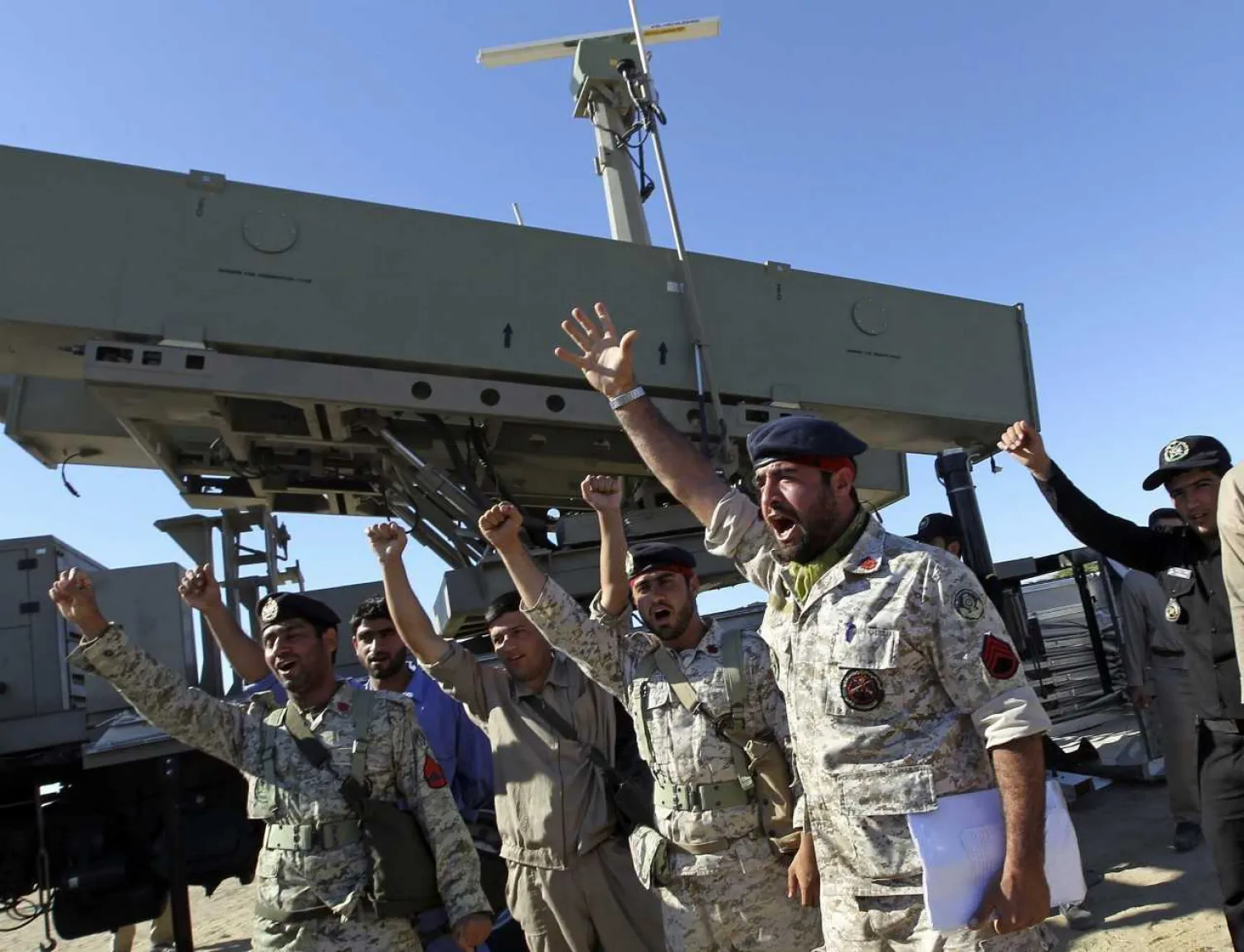

Washington: Major Iranian Naval Exercise in Hormuz

Iranian navy personnel celebrate after successfully launching a Ghader missile, January 1, 2013. (AP/Jamejam Online, Azin Haghighi)
TT

Washington: Major Iranian Naval Exercise in Hormuz

Iranian navy personnel celebrate after successfully launching a Ghader missile, January 1, 2013. (AP/Jamejam Online, Azin Haghighi)

US officials said on Thursday that the United States believes Iran has started carrying out naval exercises in the Arabian Gulf, apparently moving up the timing of annual drills amid heightened tensions with Washington.

A US official, speaking on condition of anonymity, told Reuters that possibly more than 100 vessels were involved in the drills, including small boats.

A second official expected the drill could be wrapped up this week.

The US military’s Central Command confirmed that it has seen an increase in Iranian activity, including in the Strait of Hormuz, a strategic waterway for oil shipments that Iran’s Revolutionary Guards have threatened to block.

“We are aware of the increase in Iranian naval operations within the Arabian Gulf, Strait of Hormuz and Gulf of Oman,” said Navy Captain Bill Urban, the chief spokesman at Central Command, which oversees US forces in the Middle East.

Meanwhile, Abdul Latif Al Sayadi, a researcher at the National Archives of the UAE Ministry of Presidential Affairs said Iran's potential closure of the Strait of Hormuz would violate the United Nations Convention on the Law of the Sea of December 1982, which ensures the right of transit for all countries, even within the territorial waters of other countries.

Al Sayadi was speaking during a lecture held Wednesday by the Emirates Center for Strategic Studies and Research, ECSSR, titled, "Iran’s Threats to Close the Hormuz Strait from an International Law Perspective."

Al Sayadi explained that the potential closure would be "an attack on the sovereignty of several countries, whose maritime borders fall within the area that Iran threatens to shut down.”

The expert also explained that Iran cannot close the Strait because its ports are located inside the basin of the Arabian Gulf and not outside. “Therefore, taking this step will harm the country and could destroy the Iranian regime,” he said.

Concluding the lecture, he said Iran might lay mines around the strait and send submarines, suicide boats, ballistic missiles and anti-ship missile.

However, he said, there are other alternatives for exporting oil even if Iran closes the strait. Such proposals include digging a tunnel through the UAE that will link Fujairah to Dubai without crossing the strait, he said.
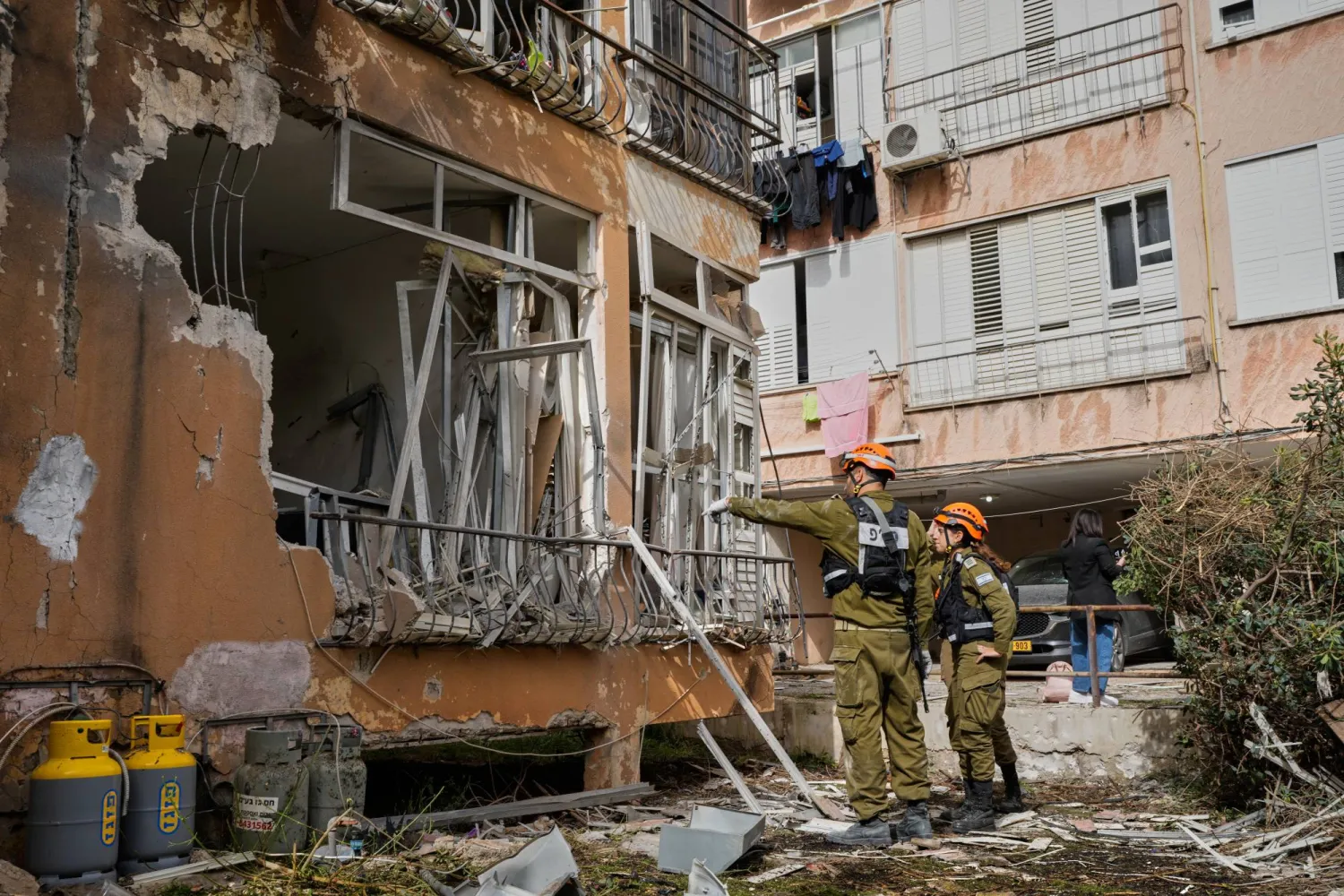



Israel Preparing for Two Weeks of Escalation with Iran

Israeli security forces inspect damage at an apartment building struck by an Iranian missile in Petah Tikva, Israel, Saturday, April 4, 2026. (AP)
TT

Israel Preparing for Two Weeks of Escalation with Iran

Israeli security forces inspect damage at an apartment building struck by an Iranian missile in Petah Tikva, Israel, Saturday, April 4, 2026. (AP)

Israel is prepared for another two weeks of war with Iran and has planned a list of targets for attacks, including infrastructure and economic facilities, while continuing to hit Iran's defense industries.

“The Iranian economy would be Israel’s next target,” the Kan public broadcaster reported.

Security officials told the channel that Israel has prepared a list of targets for attacks in the coming weeks, including infrastructure and bridges, as well as less frequently targeted sites such as energy and oil facilities.

Kan said Israeli officials believe the war could last longer than two weeks, and Israel is preparing accordingly.

The new timeframe extends past the four to six weeks initially set by the White House.

Meanwhile, Israel’s i24NEWS quoted senior Israeli officials as saying there is no expectation of a slowdown in operations in Iran, quite the opposite. The campaign to dismantle key infrastructure is intensifying, as this remains the primary arena shaping wider regional developments.

Sources said Israeli high-ranking military officials and US Central Command (CENTCOM) Commander Brad Cooper agreed in a meeting to continue strikes on Iran for another two to three weeks with a bank of targets including economic centers and banks.

Israel’s second phase represents a major strategic shift in the bank of targets against Iran, setting the military’s sights on the country’s economy, according to Kan.

In addition to the ongoing attacks on military facilities, Israel and the United States plan to hit Iran’s economic sectors, including financial institutions, banks, energy infrastructure, and petrochemical facilities that form the regime’s main “lifeline”.

According to the plan, the United States will operate in the designated areas under its responsibility, while the Israeli army will deepen its attacks on Iran’s basic infrastructure in various regions.

The new decisions were taken as US President Donald Trump told Tehran that his latest deadline for a deal to end the war was fast approaching.

“Remember when I gave Iran ten days to MAKE A DEAL or OPEN UP THE HORMUZ STRAIT. Time is running out — 48 hours before all Hell will reign (sic) down on them,” he wrote in a post on Truth Social.

Trump's messaging about the war has veered between hinting at diplomatic progress and making threats to bomb Iran “back to the Stone Ages.”

Kan noted that the new target list awaits Trump’s approval as the US President has not yet given up on negotiations with Iran.


Russia Says Ukraine Attack Damages Oil Pipeline

 A satellite near-infrared image shows smoke rising from damaged oil storage tanks after a Ukrainian attack, in Primorsk, Russia March 29, 2026. (Vantor/Handout via Reuters)
A satellite near-infrared image shows smoke rising from damaged oil storage tanks after a Ukrainian attack, in Primorsk, Russia March 29, 2026. (Vantor/Handout via Reuters)
TT

Russia Says Ukraine Attack Damages Oil Pipeline

 A satellite near-infrared image shows smoke rising from damaged oil storage tanks after a Ukrainian attack, in Primorsk, Russia March 29, 2026. (Vantor/Handout via Reuters)
A satellite near-infrared image shows smoke rising from damaged oil storage tanks after a Ukrainian attack, in Primorsk, Russia March 29, 2026. (Vantor/Handout via Reuters)

Russian authorities said Sunday that a Ukrainian drone attack has damaged an oil pipeline near the Baltic port of Primorsk.

Russian air defenses shot down 19 drones in the Leningrad region and debris from one "damaged a section of the oil pipeline near the port of Primorsk, and the pipeline is being safely burned out," regional governor Alexander Drozdenko said on Telegram. He said there were no casualties.

Ukraine has stepped up attacks on Russian infrastructure targets in recent months.

Primorsk, which is between the Finnish border and the key city of St Petersburg, was also attacked in March when an oil depot was set ablaze.


Spanish PM Under Fire as Ex-Top Aide Goes on Graft Trial

Former Spanish Minister of Transport Jose Luis Abalos leaves the Supreme Court following his appearance for alleged corruption in Madrid on October 15, 2025. (AFP)
TT

Spanish PM Under Fire as Ex-Top Aide Goes on Graft Trial

Former Spanish Minister of Transport Jose Luis Abalos leaves the Supreme Court following his appearance for alleged corruption in Madrid on October 15, 2025. (AFP)

A corruption trial of a former right-hand man to Spanish Prime Minister Pedro Sanchez begins on Tuesday, a politically explosive case that has threatened to topple the Socialist-led minority government.

Jose Luis Abalos is a disgraced ex-Socialist heavyweight, a former transport minister who helped propel Sanchez to power in 2018. The case is one of several corruption affairs rattling the fragile coalition.

Abalos and his former adviser Koldo Garcia are suspected of having pocketed kickbacks for handing out public contracts worth millions of euros for sanitary equipment during the Covid-19 pandemic.

The Supreme Court in Madrid will judge them for alleged bribery, embezzlement, influence peddling, membership of a criminal organization and misuse of confidential information. The men deny the charges.

Prosecutors want Abalos to serve 24 years in jail. They portray him as the mastermind of a scheme of illicit enrichment. They have called for a 19-year term for Garcia, who they say was a key intermediary.

They argued in court that both men had abused their government positions and contacts to favor the interests of businessman Victor de Aldama, who has already admitted his role in the vast and complex affair.

Abalos has consistently protested that the investigation has been unfair.

"I feel like I am living in a fiction," he told the conservative daily El Mundo in November, shortly before his arrest. "I cannot believe the prosecutor's office is asking for 24 years in jail for me."

Garcia also protested in comments to an investigatory committee of the Navarre regional parliament.

"I am in jail without proof that I've committed any crime," he said, speaking by video link from his place of pre-trial detention.

More than 75 witnesses and about 20 experts are to testify during the proceedings, which are due to run through April.

- Succession of scandals -

The investigation also appears to have ensnared Abalos's successor in the powerful post of Socialist organization secretary, Santos Cerdan.

Caught up in another case of suspected corruption for public works contracts, he has been forced to step down from what is a key position in the party.

The fall from grace of Abalos and Cerdan -- two of Sanchez's closest allies -- has embarrassed a leader who took power promising to clean up Spanish politics.

He took over from the main conservative Popular Party (PP) after it had been engulfed in its own graft scandal.

Separate corruption investigations into Sanchez's wife Begona Gomez and his brother David, who faces trial later this year, have piled further pressure on the government, one of few leftist administrations in Europe.

Both the PP and far-right opposition party Vox have called for Sanchez's resignation and early elections. They argue that the scandals expose systemic Socialist corruption that reaches the premier himself.

Sanchez has always denied any illegal funding of the Socialists and rebuffed calls for polls before the next scheduled general election, due in 2027.