


Iraq Religious Tourism Squeezed by US Sanctions on Iran

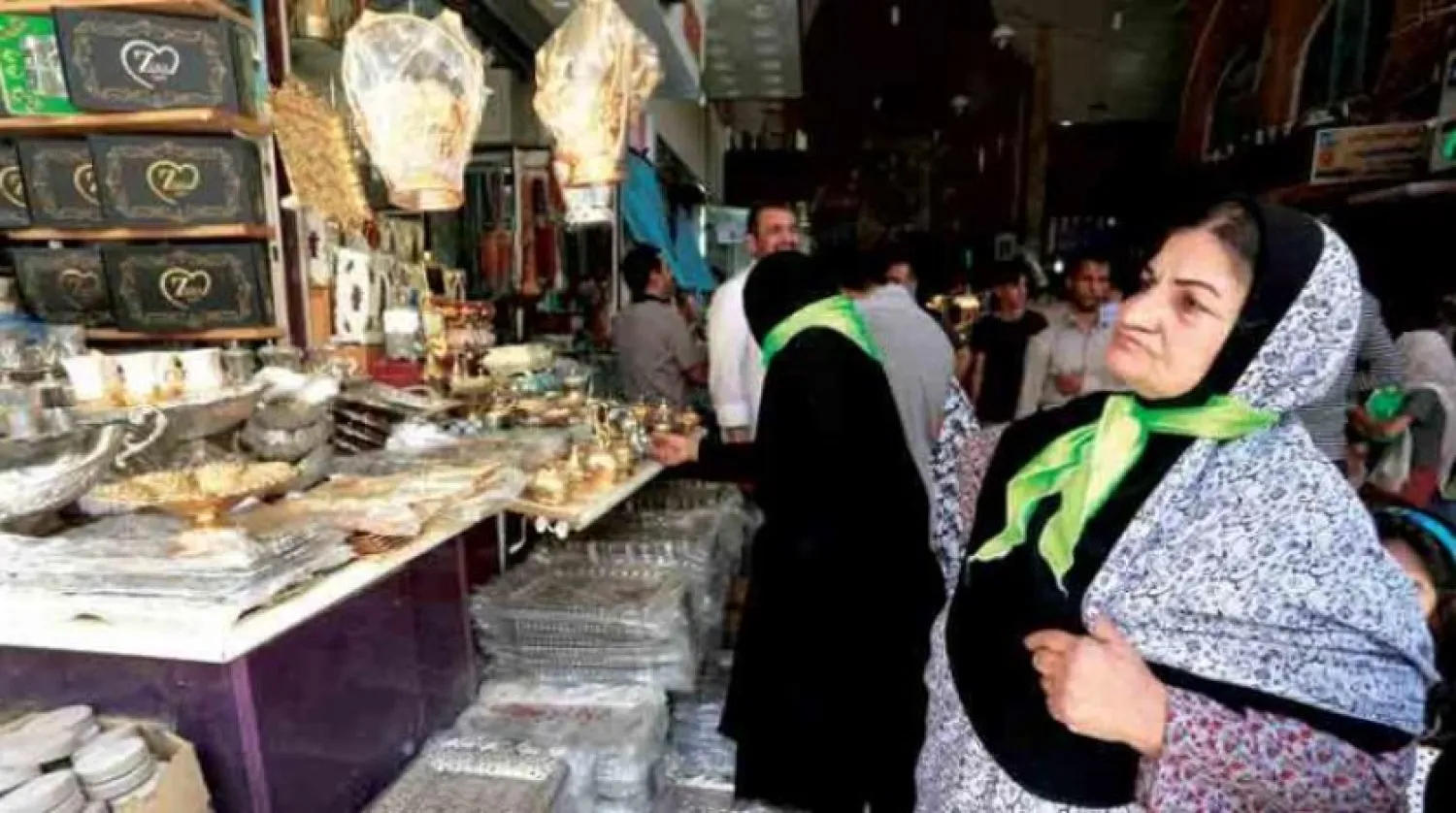
An Iranian tourist in Iraq's Najaf city. Reuters file photo
TT

Iraq Religious Tourism Squeezed by US Sanctions on Iran

An Iranian tourist in Iraq's Najaf city. Reuters file photo

With hotels facing mass cancellations, Iraqis in the holy city of Najaf are being hit hard by US sanctions on neighbouring Iran, which have forced cash-strapped pilgrims to stay home, Agence France Presse reported.

The city draws more than 1.5 million Shiite pilgrims each year.

The vast majority hail from neighboring Iran, whose population is overwhelmingly Shiite.

"More than 85 percent are Iranians," said Saeb Abu Ghoneim, president of the hoteliers' union in the city.

Signs throughout the city, 150 kilometers south of Baghdad, are translated into Farsi.

But just days after Washington this month re-imposed sanctions on Iran, following President Donald Trump's decision to pull the US out of a landmark 2015 nuclear accord with Tehran, the impact is already being felt in Najaf, AFP said.

The Iranian rial has been severely hit by internal economic woes and the US measures, losing around half of its value against the dollar since April.

Farzad Reza Ali, an Iranian who did manage to fund his trip to Najaf, said the drop in pilgrim numbers was a direct result of the currency crisis.

"(It's) because the rial is worth nothing," he said, a travel company badge tied to a ribbon around his neck in the colors of the Iranian flag.

The first round of sanctions against Iran covers financial transactions and imports of raw materials.

Further measures due to hit in November will affect Iran's central bank and the vital hydrocarbon industry.

At the start of the year the dollar exchange rate was 42,900 rials. It has since hit nearly 120,000 rials on the black market.

To get the $40 (35 euros) needed for a visa to Iraq, Mokdabandeh Mehrban said he had to go to the black market.

"Now the market fluctuates and it's not supported by the government, so there are fewer Iranian pilgrims," he said.

Cancellations by Iranian pilgrims could have dramatic consequences for Iraq's tourism sector, which last year directly or indirectly employed some 544,500 people, AFP said.

It also contributed three percent of GDP, nearly $5 billion dollars, according to the World Travel and Tourism Council.

Tourism is almost exclusively religious in Iraq and is concentrated in Najaf and nearly Karbala, the country's other holy Shiite city.

As Najaf prepares to welcome pilgrims for numerous religious festivals this month, there is a notable lack of Iranian arrivals.

Transport links have been slashed -- Najaf airport, which used to offer 35 flights a day between the two countries, now operates just 12. 

Officials say most of the passengers on the flights leaving Najaf for Iran are Iraqi pilgrims heading for Iranian holy sites.

To counter the trend, hoteliers have been forced to offer rooms at bargain basement prices.

"Prices have been slashed, to less than 50 percent sometimes," said Youssef Abu Al-Tabouk, owner of Najaf's Al Balad Al Amine hotel.

But discounted stays and other special offers are not enough to make up for the impact of sanctions, the 85-year-old said.

Without Iranian pilgrims, he said, "the market is in free fall".


Israel Arrests Citizen Suspected of Spying for Iran

Iranians drive past an anti-Israeli billboard carrying a sentence in Persian reading 'We are ready, are you ready?' hanging at Palestine Square in Tehran, Iran, 24 December 2025. (EPA)
TT

Israel Arrests Citizen Suspected of Spying for Iran

Iranians drive past an anti-Israeli billboard carrying a sentence in Persian reading 'We are ready, are you ready?' hanging at Palestine Square in Tehran, Iran, 24 December 2025. (EPA)

Israeli authorities announced on Thursday the arrest of an Israeli man on suspicion of committing security offences under the direction of Iranian intelligence agents, days after Tehran executed an Iranian accused of spying for Israel.

The arrest is the latest in a series of cases in which Israel has charged its own citizens with spying for its arch-foe since the start of the war in Gaza in October 2023.

The suspect, who is in his 40s and lives in the city of Rishon LeZion, was arrested this month in a joint operation by Israeli police and Shin Bet, Israel's domestic intelligence agency.

"The suspect was identified as having conducted photography in the vicinity of the home of former prime minister Naftali Bennett," a joint police and Shin Bet statement said.

"As part of his contact with Iranian handlers, he was instructed to purchase a dash camera in order to carry out the task," it added.

According to the statement, the man transferred photographs taken in his city of residence and other locations in exchange for various sums of money.

In May, Israel announced the arrest of an 18-year-old Israeli for spying on Bennett.

Iran and Israel, long-standing adversaries, have regularly accused each other of espionage.

Last week, Iran said it had executed an Iranian citizen convicted of spying for Israel.

In June, Israel launched strikes on Iranian military and nuclear sites as well as residential areas.

Iran responded with drone and missile strikes on Israel, and later on in war, the United States joined Israel in targeting Iranian nuclear facilities.

During the 12-day conflict, Israeli authorities arrested two citizens suspected of working for Iranian intelligence services.

Iran, which does not recognize Israel, has long accused it of conducting sabotage operations against its nuclear facilities and assassinating its scientists.


In First Christmas Sermon, Pope Leo Decries Conditions for Palestinians in Gaza

 Pope Leo XIV arrives looks on as he performs the Christmas mass at St Peter's Basilica in the Vatican on December 25, 2025. (AFP)
Pope Leo XIV arrives looks on as he performs the Christmas mass at St Peter's Basilica in the Vatican on December 25, 2025. (AFP)
TT

In First Christmas Sermon, Pope Leo Decries Conditions for Palestinians in Gaza

 Pope Leo XIV arrives looks on as he performs the Christmas mass at St Peter's Basilica in the Vatican on December 25, 2025. (AFP)
Pope Leo XIV arrives looks on as he performs the Christmas mass at St Peter's Basilica in the Vatican on December 25, 2025. (AFP)

Pope Leo decried conditions for Palestinians in Gaza in his Christmas sermon on Thursday, in an unusually direct appeal during what is normally a solemn, spiritual service on the day Christians across the globe celebrate the birth of Jesus.

Leo, the first US pope, said the story of Jesus being born in a stable showed that God had "pitched his fragile tent" among the people of the world.

"How, then, can we not think of the ‌tents in ‌Gaza, exposed for weeks to rain, ‌wind ⁠and cold?" he ‌asked.

Leo, celebrating his first Christmas after being elected in May by the world's cardinals to succeed the late Pope Francis, has a more quiet, diplomatic style than his predecessor and usually refrains from making political references in his sermons.

But the new pope has also lamented the conditions for Palestinians in Gaza several ⁠times recently and told journalists last month that the only solution in ‌the decades-long Palestinian-Israeli conflict ‍must include a Palestinian ‍state.

Israel and Hamas agreed to a ceasefire in ‍October after two years of intense bombardment and military operations, but humanitarian agencies say there is still too little aid getting into Gaza, where nearly the entire population is homeless.

In Thursday's service with thousands in St. Peter's Basilica, Leo also lamented conditions for the homeless across the globe and the destruction ⁠caused by the wars roiling the world.

"Fragile is the flesh of defenseless populations, tried by so many wars, ongoing or concluded, leaving behind rubble and open wounds," said the pope.

"Fragile are the minds and lives of young people forced to take up arms, who on the front lines feel the senselessness of what is asked of them and the falsehoods that fill the pompous speeches of those who send them to their deaths," he said.

Later on Thursday the pope will ‌deliver a twice-yearly "Urbi et Orbi" (to the city and the world) message and blessing, which usually addresses global conflicts.


China Accuses US of Trying to Thwart Improved China-India Ties

FILE PHOTO: Chinese and US flags flutter in Shanghai, China July 30, 2019. REUTERS/Aly Song
TT

China Accuses US of Trying to Thwart Improved China-India Ties

FILE PHOTO: Chinese and US flags flutter in Shanghai, China July 30, 2019. REUTERS/Aly Song

China accused the US on Thursday of distorting its defense policy in an effort to thwart an improvement in China-India ties.

Foreign ministry ‌spokesperson Lin ‌Jian was ‌responding ⁠to a question ‌at a press briefing on whether China might exploit a recent easing of tensions with India over disputed border areas to keep ⁠ties between the United States ‌and India from ‍deepening.

China views ‍its ties with ‍India from a strategic and long-term perspective, Lin said, adding that the border issue was a matter between China and India and "we object to ⁠any country passing judgment about this issue".

The Pentagon said in a report on Tuesday that China "probably seeks to capitalize on decreased tension ... to stabilize bilateral relations and prevent the deepening of US-India ties".
