Haftar Accuses Qatar of Trying to ‘Spark Strife’ between Libya and Algeria

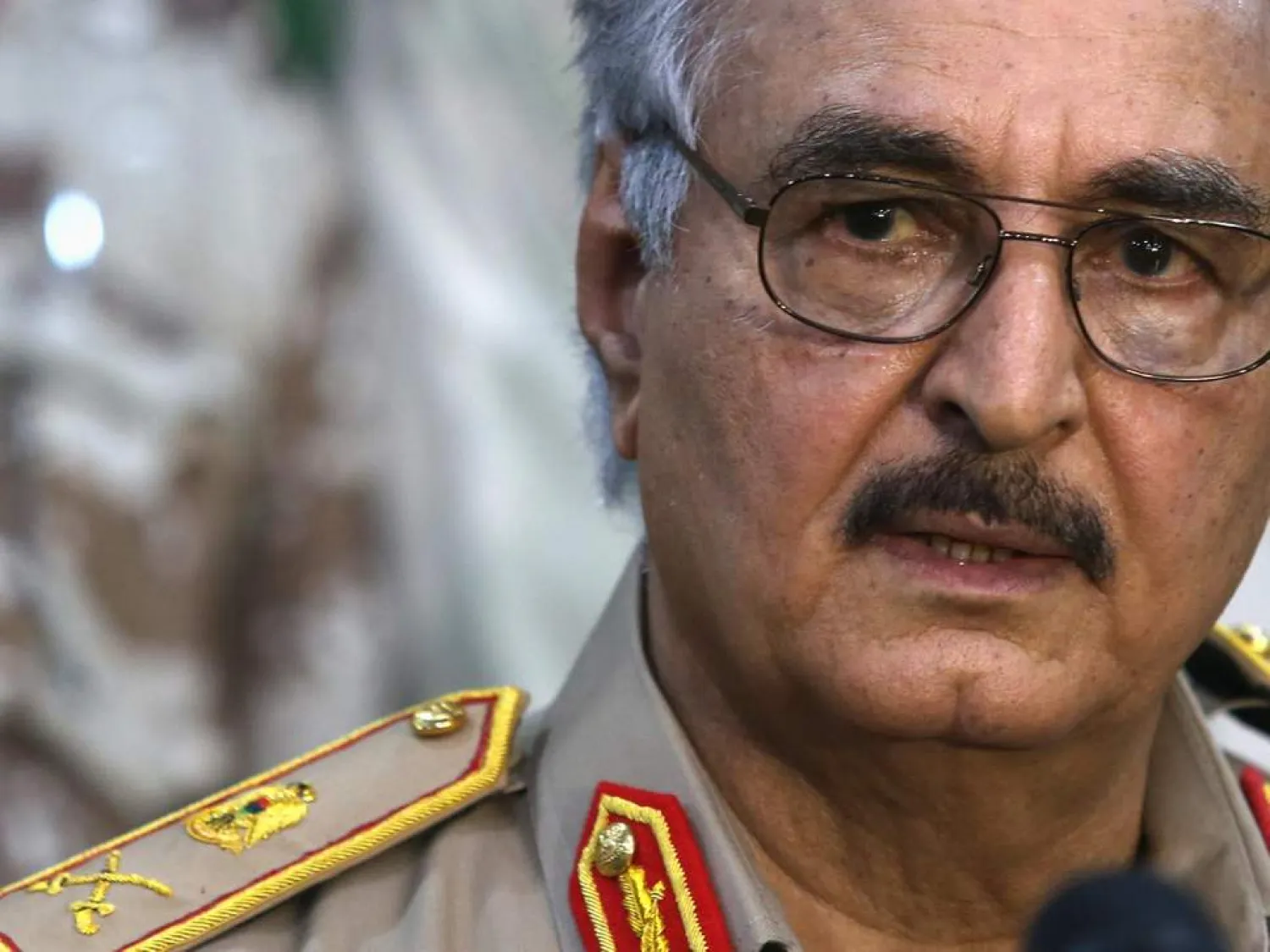
Libyan National Army commander Khalifa Haftar. (Reuters)
TT

Haftar Accuses Qatar of Trying to ‘Spark Strife’ between Libya and Algeria

Libyan National Army commander Khalifa Haftar. (Reuters)

Libyan National Army commander Khalifa Haftar denied on Monday claims that he had threatened to spread the “war in Libya to Algeria.”

He blamed Qatar and its affiliated satellite television channel, Al Jazeera, of seeking to spark strife between the two neighboring countries by distorting statements he had made to the media.

Head of Haftar’s media office Khalifa al-Obeidi said that Al Jazeera and the Muslim Brotherhood’s al-Naba channel, which broadcasts from Turkey, are trying to spark tensions between Libya and Algeria by attributing false statements to Haftar.

He explained that Haftar had noted that armed groups had entered Libyan territories through Algeria.

The LNA chief had dispatched one of his aides to inquire about the identity of these groups and whether they were affiliated to the Algerian border guards or if they were terrorists.

Algerian authorities had in turn vowed to tackle the issue, he added.

LNA spokesman Ahmed al-Mismari, meanwhile, spoke of the “deceptive” role played by Doha to drive a wedge between Libya and Algeria.

“Libyan-Algerian ties are greater than Al Jazeera and the state of Qatar that is spreading rumors,” he continued.

“We will not accept to be turned into a source of threat to any fraternal state.”


Red Crescent Says Israeli Settler Gunfire Kills Two Palestinians Including Child

A worker walks past a Palestinian flag installed along a street in Turmus Ayya village, north of Ramallah in the Israeli-occupied West Bank on April 19, 2026. (AFP)
TT

Red Crescent Says Israeli Settler Gunfire Kills Two Palestinians Including Child

A worker walks past a Palestinian flag installed along a street in Turmus Ayya village, north of Ramallah in the Israeli-occupied West Bank on April 19, 2026. (AFP)

The Palestinian Red Crescent said Israeli settler gunfire killed two people, including a 13-year-old child, in an attack on Tuesday near the city of Ramallah in the occupied West Bank.

"Two people were killed -- one aged 13 and the other 32 -- and four others were injured by live gunfire during a settler attack on the village of Al-Mughayyir near Ramallah," the Red Crescent said in a statement, adding the wounded had been taken to hospital.

When asked by AFP, the Israeli military -- which has occupied the West Bank since 1967 -- said it was looking into the incident.


Israel Says Applying Diplomatic, Military Pressure to Disarm Hezbollah

Mourners carry the flag-draped casket of a member of the Iran-backed Hezbollah group who was killed in southern Lebanon during their funeral in the Kafaat area in Beirut's southern suburbs on April 20, 2026. (AFP)
TT

Israel Says Applying Diplomatic, Military Pressure to Disarm Hezbollah

Mourners carry the flag-draped casket of a member of the Iran-backed Hezbollah group who was killed in southern Lebanon during their funeral in the Kafaat area in Beirut's southern suburbs on April 20, 2026. (AFP)

Israeli Defense Minister Israel Katz said Tuesday that his country's campaign in Lebanon relied on both military and diplomatic pressure to disarm Iran-allied Hezbollah.

"The overarching goal of the campaign in Lebanon is to disarm Hezbollah and remove the threat to the northern communities (of Israel), through a combination of military and diplomatic measures," Katz said during a ceremony marking Israel's national day of remembrance for fallen soldiers and victims of terror.

"We will act in the same way with regard to high-trajectory fire (towards Israel) from north of the Litani and from throughout Lebanon," he added, referring to the Litani river, a natural marker that cuts across southern Lebanon, below which Israel wants no more Hezbollah presence.

Though a truce between Israel and Lebanon took effect Friday, Israeli troops are still present and actively fighting Hezbollah fighters in Lebanon's south, with Katz saying Sunday that troops would use "full force" if threatened.

Israel has conducted airstrikes across Lebanon and invaded the country's south after Hezbollah entered the Middle East war in support of its backer Iran on March 2.

An Arabic-language spokesperson for Israel's military on Monday warned Lebanese residents of the country's south not to return to the homes it had earlier urged them to evacuate, saying it considered Hezbollah activities in the area to be ceasefire violations.

Israel and Lebanon are still engaged in talks under US mediation to prolong the current truce.

The two-week ceasefire between the US and Iran looms in the background of talks, with the truce set to expire overnight Tuesday with no new deal yet struck.


Lebanon Seeking to Leverage US Support in Negotiations with Israel

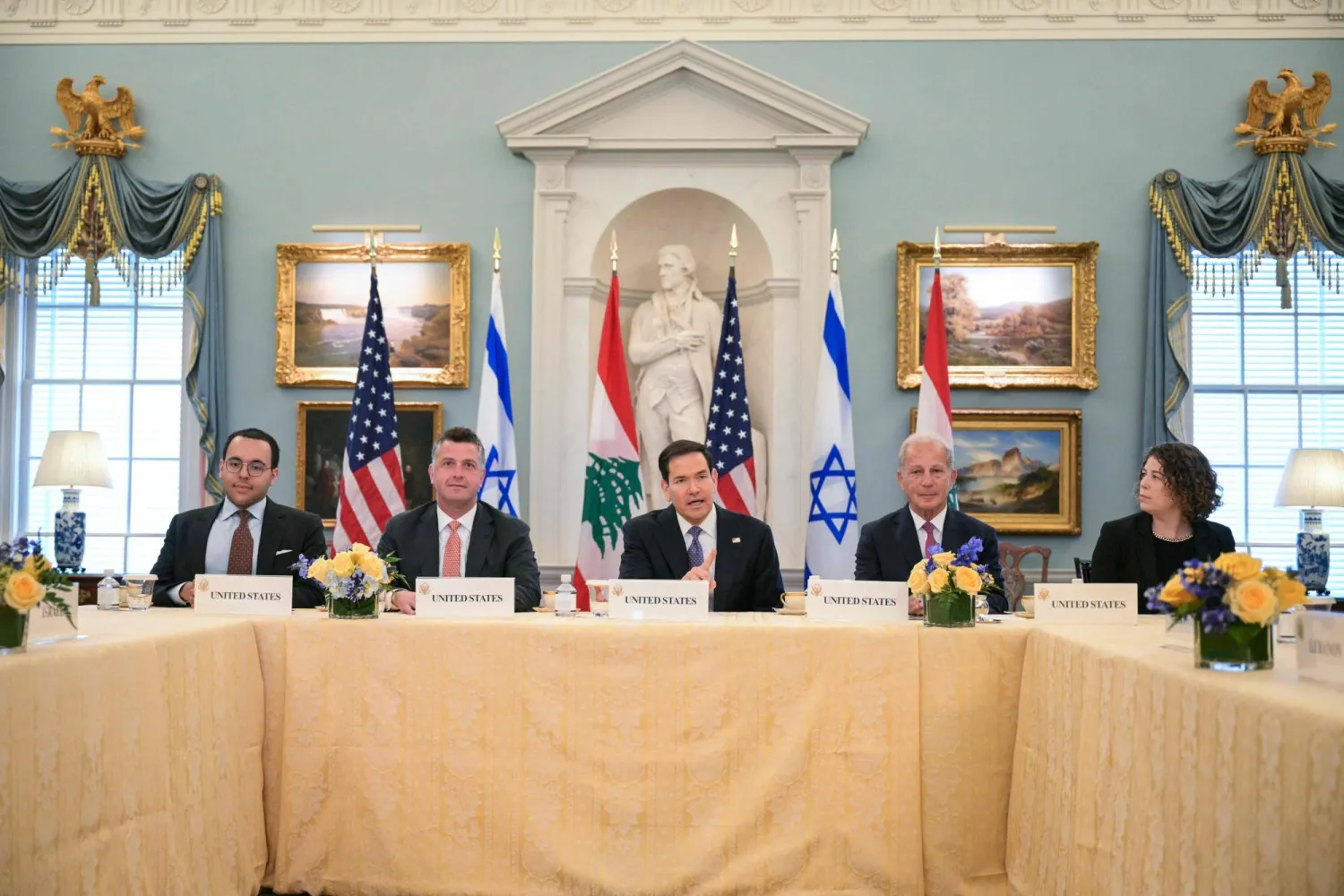
US Secretary of State Marco Rubio (C), alongside US State Department Counselor Michael Needham (2L) and US Ambassador to Lebanon Michel Issa (2R), speaks during a meeting with Lebanon's Ambassador to the US Nada Hamadeh Moawad (out of frame) and Israeli Ambassador to the US Yechiel Leiter (out of frame) at the State Department in Washington, DC, on April 14, 2026. (AFP)
TT

Lebanon Seeking to Leverage US Support in Negotiations with Israel

US Secretary of State Marco Rubio (C), alongside US State Department Counselor Michael Needham (2L) and US Ambassador to Lebanon Michel Issa (2R), speaks during a meeting with Lebanon's Ambassador to the US Nada Hamadeh Moawad (out of frame) and Israeli Ambassador to the US Yechiel Leiter (out of frame) at the State Department in Washington, DC, on April 14, 2026. (AFP)

Efforts to extend the ceasefire in Lebanon are accelerating amid Israeli reports of a new round of talks at the ambassador level paving the way for direct negotiations.

Lebanese officials say a meeting between President Joseph Aoun and US President Donald Trump could be scheduled “at any moment,” stressing it will remain bilateral and will not include Israeli Prime Minister Benjamin Netanyahu.

Parliament Speaker Nabih Berri has confirmed a US push to extend the ceasefire between Lebanon and Israel. However, official Lebanese sources told Asharq Al-Awsat that Beirut does not view the expected talks as limited to extending the truce, which expires at the end of the week.

The next step, the sources said, would be direct negotiations. Lebanon is ready to proceed after naming its delegation head, Ambassador Simon Karam, and preparing the necessary files.

Lebanese and Israeli representatives will hold talks in Washington on Thursday, a US State Department spokesperson told Reuters on Monday.

Aoun said Lebanon would conduct the talks through a delegation led by Karam, stressing no other party would represent or replace it.

Lebanese ministerial sources said the meeting would focus on extending the truce and setting a framework for direct negotiations, including their timing and location.

Meanwhile, US Ambassador to Lebanon Michel Issa met Aoun and Berri after returning to Beirut following the ceasefire announcement, without making public statements.

Berri confirmed to Asharq Al-Awsat that Washington is working to extend the truce but declined to comment on direct negotiations.

In a statement, Aoun noted the goal of the talks is to halt hostilities, end Israel’s presence in southern areas and deploy the Lebanese army along internationally recognized borders.

Trump had shown understanding of Lebanon’s position and intervened to help secure the ceasefire and launch a negotiating track aimed at restoring full Lebanese sovereignty, he remarked.

“The choice is between continued war, with its humanitarian, social and economic costs, or negotiations to end it and achieve lasting stability,” Aoun stated.

Hezbollah, for its part, has criticized the move toward direct talks. MP Hassan Fadlallah told AFP it would be in Lebanon’s interest to abandon that path and return to a national consensus, warning against unilateral decisions on issues tied to the country’s future.

He said the group would oppose any attempt to impose political concessions, calling for a sustained ceasefire, Israeli withdrawal, the return of displaced residents, the release of detainees and reconstruction.

Meanwhile, Information Minister Paul Morcos stressed that the Lebanese president values Saudi Arabia’s role in securing the ceasefire, noting Riyadh’s diplomacy contributed to the truce.

Lebanon continues to count on Saudi and broader Gulf support, he said, describing those ties as strategic and based on shared principles, including sovereignty and independence.