


Iran Approves Anti-money Laundering Bill

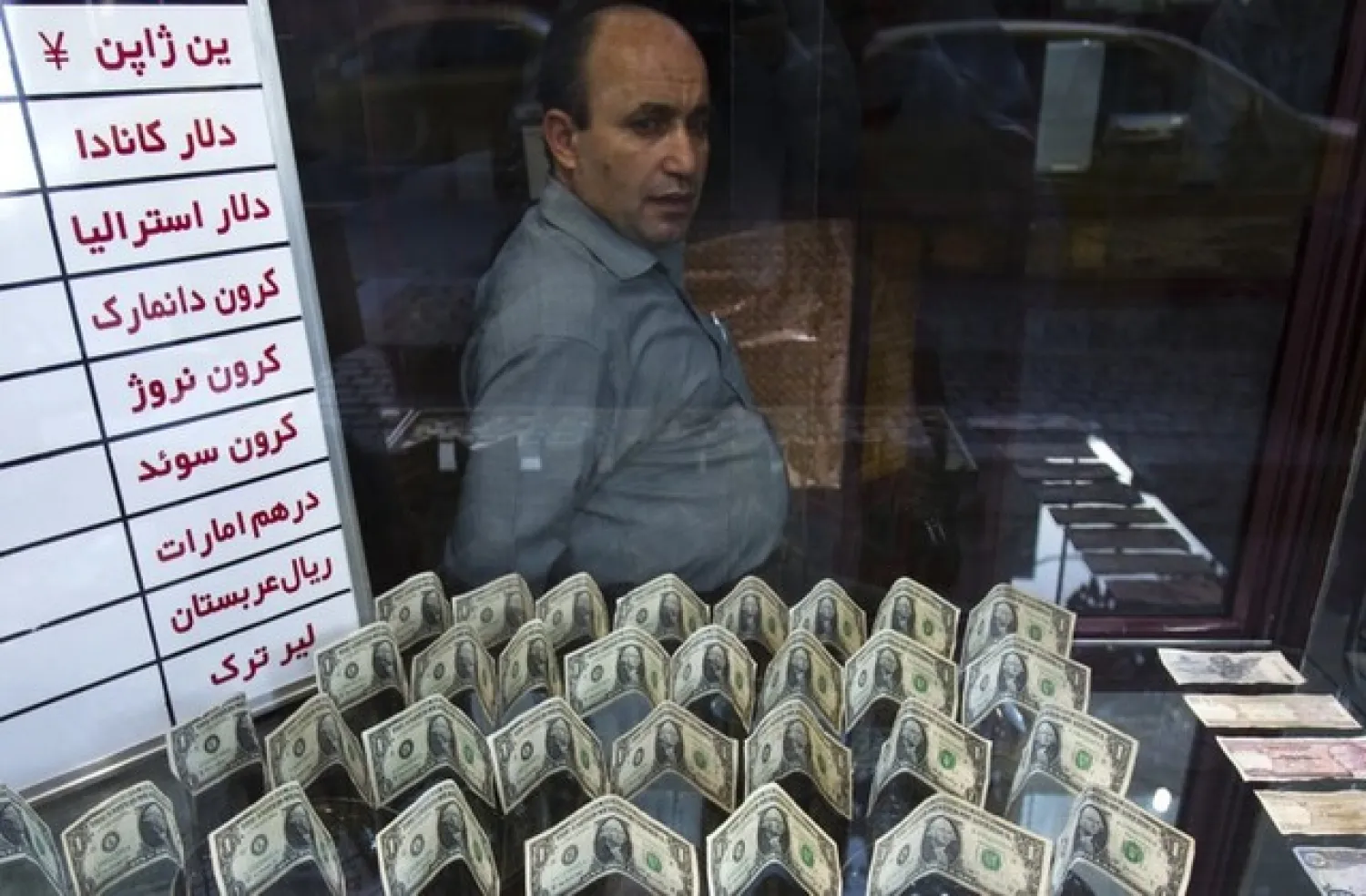
An exchange currency dealer sits at his shop October 24, 2011. (File Photo: Reuters)
TT

Iran Approves Anti-money Laundering Bill

An exchange currency dealer sits at his shop October 24, 2011. (File Photo: Reuters)

Iran's Expediency Discernment Council (EDC) approved Saturday an anti-money laundering bill, during the first meeting chaired by Sadeq Larijani who was appointed last week as the head of the Council.

The new bill will allow the government to execute several reforms in order to implement standards set by the Financial Action Task Force (FATF).

"The bill on amending the law to counter money laundering was approved with certain changes and will be sent to the parliament speaker to be communicated to the government," Expediency Council member Gholamreza Mesbahi told IRNA.

The amendment is one of four proposed by the government in March to facilitate joining FATF, and the three regulations are: amending the anti-terrorism act, signing Combating the Financing of Terrorism(CFT), and signing the Convention against Transnational Organized Crime.

The parliament also passed two other bills allowing Iran to join to international treaties on the financing of terrorism and organized crime, but their approval was delayed by higher authorities, including the Guardian Council.

In mid-December, the secretary of the Expediency Council, Mohsen Rezaee, said CFT, FATF, and other conventions on organized crime and money laundry opposes the constitution and general policies.

The anti-money laundering bill is one of four of legislation put forward by the government to that end. A previous bill on the mechanics of monitoring and preventing terrorist financing was signed into law in August.

The EDC is an assembly that resolves disputes between the parliament and the high legislative body of the Guardian Council of the Constitution. It currently has 44 members, all appointed by Supreme Leader Ayatollah Ali Khamenei.

The Iranian government has only one month to implement the criteria set by FATF, an international body to combat money laundering and terrorism financing.

The list of FATF includes Iran and North Korea, although the Paris-based organization has temporarily suspended its measures against the country since June 2017, while Tehran is working on reforms.

Iran's foreign minister, Mohammad Javad Zarif, told parliament in October that the remaining countries in the nuclear deal, including China and Russia, will require Iran to join FATF to facilitate banking transactions, denying it will falter activities of domestic bodies if Tehran agreed to FATF standards.

European countries say Iran's commitment to the FATF standards and its removal from the organization's black list are necessary to increase its investment, especially after the re-imposition of US sanctions on Tehran.

Iranian hardliners pointed that the legislation toward compliance with the FATF, will grant the Western powers influence on the Iranian economy and could hamper Iranian financial support for allies such as Lebanon’s Hezbollah.

Parliament last year passed the anti-money laundering bill, one of four amendments Iran needs to implement to meet FATF requirements, but the Guardian Council rejected it, saying it was against Islam and the constitution.

Seven months after his harsh dismissal of parliamentary efforts to adapt FATF and other international conventions on money laundering, Supreme Leader Khamenei seems to have warmed to the reforms, which experts believe is aimed at preventing Iran’s economic collapse.

In recent months, several protests swept the country against economic hardship. The sanctions have depressed the value of Iran’s rial currency and aggravated annual inflation fourfold to nearly 40 percent in November.

US President Donald Trump withdrew from a nuclear deal with Iran last year and reimposed the sanctions on its banking and energy sectors, hoping to curb its missile and nuclear programs and counter its growing influence in the Middle East.

European signatories are still committed to the nuclear deal and seek to launch the mechanism, special purpose vehicle (SPV), aiming to sidestep the US financial system by using an EU intermediary to handle trade with Iran.

The director general of Iran’s Strategic Council on Foreign Relations, an advisory body set up by Khamenei, voiced his support for the FATF-related bills on Friday, according to Reuters.

Semi-official ISNA new agency quoted Abdolreza Faraji as saying: “It is better to finalize the FATF and CFT in the earliest time, so the Europeans have no excuse not to implement SPV mechanism.”



Russia Pledges ‘Full Support’ for Venezuela Against US ‘Hostilities’

The US Navy replenishment oiler USNS Kanawha (T-AO-196) arrives at port in Ponce, Puerto Rico, amid ongoing military movements, December 21, 2025. (Reuters)
TT

Russia Pledges ‘Full Support’ for Venezuela Against US ‘Hostilities’

The US Navy replenishment oiler USNS Kanawha (T-AO-196) arrives at port in Ponce, Puerto Rico, amid ongoing military movements, December 21, 2025. (Reuters)

Russia on Monday expressed "full support" for Venezuela as the South American country confronts a blockade of sanctioned oil tankers by US forces deployed in the Caribbean, the two governments said.

In a phone call, the foreign ministers of the two allied countries blasted the US actions, which have included bombing alleged drug-trafficking boats and more recently the seizure of two tankers.

A third ship was being pursued, a US official told AFP Sunday.

"The ministers expressed their deep concern over the escalation of Washington's actions in the Caribbean Sea, which could have serious consequences for the region and threaten international shipping," the Russian foreign ministry said of the call between ministers Sergei Lavrov and Yvan Gil.

"The Russian side reaffirmed its full support for and solidarity with the Venezuelan leadership and people in the current context," it added.

"The ministers agreed to continue their close bilateral cooperation and to coordinate their actions on the international stage, particularly at the UN, in order to ensure respect for state sovereignty and non-interference in internal affairs."

The UN Security Council is to meet Tuesday to discuss the mounting crisis between Venezuela and the United States after a request from Caracas, backed by China and Russia.

On Telegram, Venezuela's Gil said he and Lavrov had discussed "the aggressions and flagrant violations of international law being perpetrated in the Caribbean: attacks on vessels, extrajudicial executions, and illicit acts of piracy carried out by the United States government."

US forces have since September launched strikes on boats Washington said, without providing evidence, were trafficking drugs in the Caribbean Sea and eastern Pacific Ocean.

More than 100 people have been killed, some of them fishermen, according to their families and governments.

US President Donald Trump on December 16 announced a blockade of "sanctioned oil vessels" sailing to and from Venezuela.

Trump has claimed Caracas under Maduro is using oil money to finance "drug terrorism, human trafficking, murder and kidnapping.

Gil said Lavrov had affirmed Moscow's "full support in the face of hostilities against our country."


Turkish Agents Capture an ISIS Member on the Afghan-Pakistan Border

A Turkish soldier stands guard outside the Silivri Prison and Courthouse complex near Istanbul, Turkey. (File/Reuters)
TT

Turkish Agents Capture an ISIS Member on the Afghan-Pakistan Border

A Turkish soldier stands guard outside the Silivri Prison and Courthouse complex near Istanbul, Turkey. (File/Reuters)

Turkish intelligence agents have captured a senior member of the ISIS terror group in an area along the Afghanistan-Pakistan border, allegedly thwarting planned suicide attacks in Türkiye and elsewhere, Türkiye's state-run news agency reported Monday.

Anadolu Agency said the suspect was identified as Mehmet Goren and a member of the group's Afghanistan-based ISIS-Khorasan branch. He was caught in a covert operation and transferred to Türkiye.

It was not clear when the operation took place or whether Afghan and Pakistani authorities were involved.

The report said the Turkish citizen allegedly rose within the organization’s ranks and was given the task of carrying out suicide bombings in Türkiye, Pakistan, Afghanistan and Europe.

ISIS has carried out deadly attacks in Türkiye, including a shooting at an Istanbul night club on Jan. 1, 2017, which killed 39 people.

Monday's report said Goren’s capture allegedly also exposed the group's recruitment methods and provided intelligence on its planned activities.


Iran Arrests Norwegian-Iranian Dual Citizen

Iran's Evin Prison (File photo: Reuters)
TT

Iran Arrests Norwegian-Iranian Dual Citizen

Iran's Evin Prison (File photo: Reuters)

A Norwegian-Iranian dual citizen has been arrested in Iran, Norway's foreign ministry told AFP on Monday.

"The Ministry of Foreign Affairs is aware that a Norwegian citizen has been arrested in Iran, but due to our obligation to respect confidentiality we cannot provide further details," ministry spokesman Mathias Rongved said in an email.

He confirmed the individual was a dual Norwegian-Iranian national and noted the government advises against travel to Iran.

On its website, the Norwegian government states that Iran does not recognise dual citizenship, and it is "therefore very difficult -- virtually impossible -- for the embassy to assist Norwegian-Iranian citizens if they are imprisoned in Iran".

The US-based Human Rights Activists News Agency (HRANA) identified the dual national as Shahin Mahmoudi, born in 1979.

It said she was arrested on December 14 after being ordered to report to authorities in Saqqez, in Iran's western Kurdistan province.

She is being held at a detention center in Sanandaj, it added.

HRANA said her family had not been informed of the reason for her arrest nor had they received any news of her health and well-being.