


UAE, Saudi Arabia to Drive Economic Growth in 2019

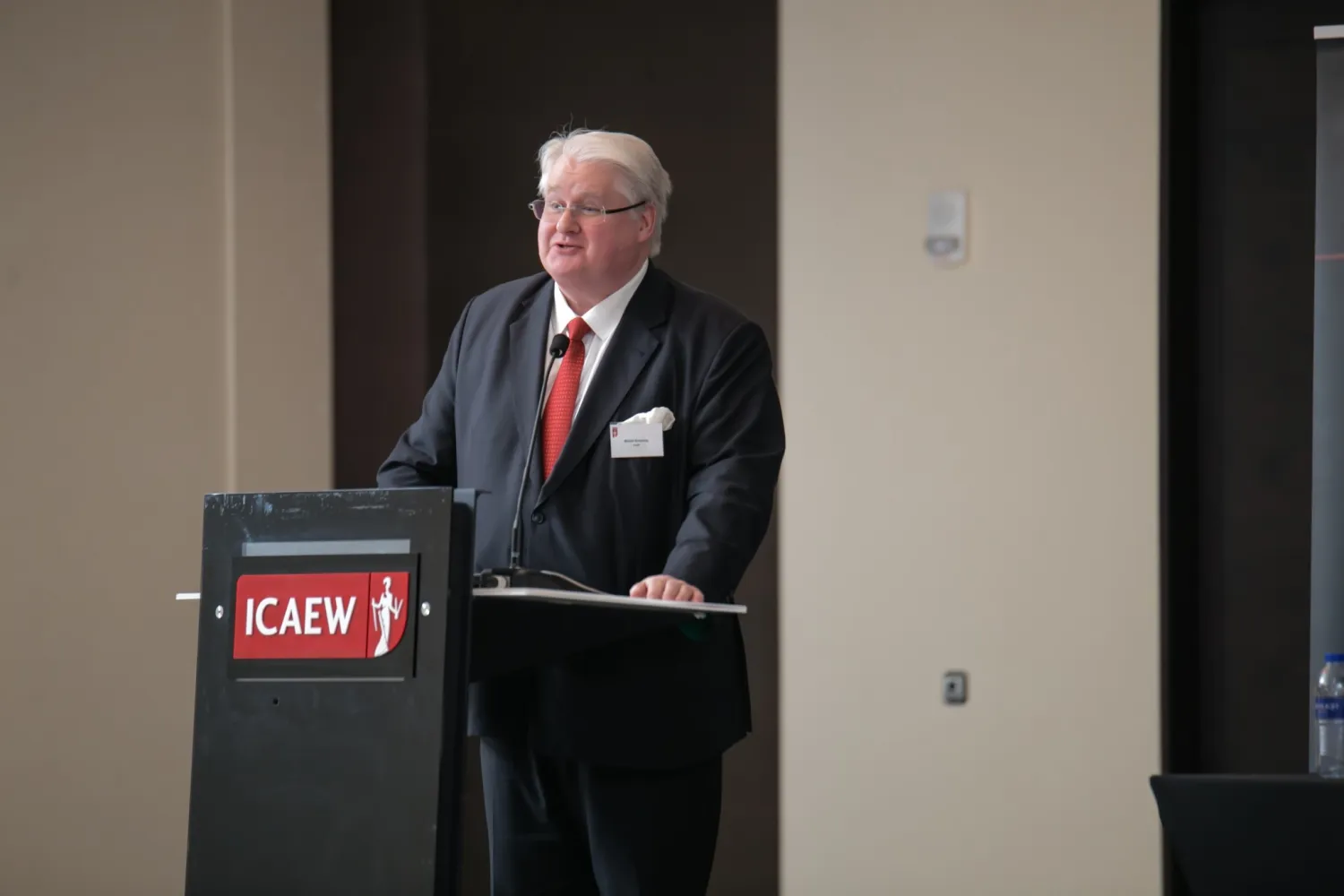
Michael Armstrong, FCA and ICAEW Regional Director for the Middle East, Africa and South Asia (MEASA)
TT

UAE, Saudi Arabia to Drive Economic Growth in 2019

Michael Armstrong, FCA and ICAEW Regional Director for the Middle East, Africa and South Asia (MEASA)

The GCC is expected to post economic growth of 2.3% in 2019, a marginal improvement on the previous year of 0.3 percentage points, according to ICAEW’s latest Economic Insight report. The GCC economy will be weighed down by renewed Opec-plus oil production cuts and lower oil prices, with the main source of growth coming from the non-oil sector.

Economic Insight: Middle East Q1 2019, produced by ICAEW and Oxford Economics, says that despite a strong drive in recent years by GCC authorities to diversify their economies, oil continues to play a dominant role, constituting up to 46% of total GDP. As such, the renewal of the OPEC-plus oil production cuts will limit the oil sector’s contribution to overall growth in 2019.

The oil sector will also be dampened by lower prices, forecast at US$64pb in 2019, down by US$7pb from the average in 2018. The oil price trajectory suggests many GCC countries will struggle to balance their budgets in 2019, as the price needed to cover their expenses is well above the current forecast, notably in Bahrain and Saudi Arabia, which need average oil prices of US$110pb and US$78pb respectively in 2019.

The non-oil sector in the GCC is expected to be the primary engine of growth in 2019, which is as 3.1%. This should be supported by higher government spending, notably in the UAE and Saudi Arabia, continued reforms and project spending like the UAE’s Expo 2020, as well as stimulus plans geared to support the private sector.

Mohamed Bardastani, ICAEW Economic Advisor and Senior Economist for Middle East at Oxford Economics, said: “As lower oil prices and production cuts hit the GCC, the non-oil sector will be the main growth engine in 2019. Recent oil market volatility highlights the region’s need for continued diversification efforts, including fiscal and structural reforms. GCC governments will have to play an ever-growing role in stimulating economic growth in 2019.”

As for the UAE, the report shows that economic activity there is set to accelerate to 2.2 percent in 2019, up from an estimated 1.7 percent in 2018. This will be buoyed by a pick-up in non-oil activity, rising public spending at the Federal and Emirate levels, higher investment ahead of the highly anticipated Expo 2020 and continued regional economic recovery.

The report says oil production in the UAE picked up in 2018 to mitigate for tightening global oil markets.

Oil production is expected to rise further and average 3.07m b/d this year, up from an average of 3m b/d in 2018, reflecting continued investment by the UAE to expand production capacity. The oil sector is forecast to grow by around 2.5% in 2019, marking the fastest growth rate for the sector in three years. But higher production will be weighed down by lower oil prices in 2019.

In contrast, the UAE’s non-oil sector is expected to accelerate from an estimated 1.3% in 2018 to 2.1% in 2019. Growth in the non-oil sector will be supported by expansionary budgets and various pro-growth government initiatives, notably in Abu Dhabi and Dubai, which collectively account for an estimated 90% of the UAE’s GDP.

The Dubai government has also announced a number of initiatives to support growth, including lowering certain taxes and fees and measures to reduce the overall costs of doing business for key industries. Large-scale projects in preparation for Expo 2020 and new visa rules are expected to continue boosting tourist arrivals in UAE, helping Dubai to maintain its status as a major global tourist and FDI destination.

Michael Armstrong, FCA and ICAEW Regional Director for the Middle East, Africa and South Asia (MEASA) said: “The UAE has done a tremendous job in implementing much-needed economic reforms in its aim to diversify the economy and achieve its Vision 2021 goals. Large-scale projects in preparation for Expo 2020, new visa rules, expansionary budgets, and various pro-growth government initiatives are expected to contribute to the overall growth of the economy this year. The predicted growth of the non-oil sector underscores the UAE’s ambitious economic transformation agenda.”

Despite general improvements in the macroeconomic environment, the real estate market remained weak throughout 2018 as residential sales prices continued to fall. The real estate market slump has weighed heavily on Dubai’s stock market, which was down by nearly 24% year-on-year in February 2019, while Abu Dhabi’s stock market was more insulated, growing by 8% year-on-year in January 2019. Real estate market conditions are unlikely to see a notable rebound this year, reflecting strong anticipated supply growth and still sluggish job market conditions.

Job creation also slowed from 2.6% in the first three quarters of 2017 to 1.6% for the same period in 2018. More tellingly, key sectors shed some jobs: total employment in services, which accounts for almost 20% of total employment, was down by 1.3% year-on-year in Q3 2018, while ‘transport, storage and communication’ and ‘manufacturing’ sectors declined by 4% and 1.1% respectively over the same period.


Saudi Industrial Production Jumps 8.9% in October, Driven by Mining Sector

 A facility operated by the Saudi International Petrochemical Company (Sipchem) (Photo: the company’s website) 
 A facility operated by the Saudi International Petrochemical Company (Sipchem) (Photo: the company’s website) 
TT

Saudi Industrial Production Jumps 8.9% in October, Driven by Mining Sector

 A facility operated by the Saudi International Petrochemical Company (Sipchem) (Photo: the company’s website) 
 A facility operated by the Saudi International Petrochemical Company (Sipchem) (Photo: the company’s website) 

Saudi Arabia’s General Authority for Statistics (GASTAT) released preliminary data for the Industrial Production Index (IPI) for October 2025, reporting a strong 8.9 percent increase compared with the same month last year.

The rise was supported by robust performance across most major economic activities, led by mining and quarrying, manufacturing, and higher output in electricity, gas, water, and wastewater services.

On a monthly basis, the overall index inched up 0.3 percent from September 2025. Mining and quarrying, by far the heaviest-weighted component of the IPI, was the main engine of growth, posting an 11.5 percent annual rise in October. The increase was largely attributed to a sharp boost in Saudi oil production, which reached 10 million barrels per day, up from 8.9 million barrels per day in the same month of 2024.

Month-on-month, the sector continued to strengthen, with its sub-index rising 0.4 percent from September.

The manufacturing sub-index recorded a solid 5.5 percent annual expansion. This performance was driven by coke and refined petroleum products, up 8.0 percent year-on-year, and chemicals and chemical products, which posted 8.1 percent growth.

Monthly data also showed momentum: manufacturing rose 0.9 percent from September, supported by a 2.7 percent increase in chemicals and a 1.5 percent rise in refined petroleum products.

Within manufacturing, most detailed activities registered year-on-year growth. Manufacture of paper and paper products climbed 5.6 percent, while non-metallic mineral products rose 4.4 percent. However, some subsectors diverged: basic metals declined 6.3 percent year-on-year, and food products fell 4.9 percent month-on-month despite recording 1.9 percent annual growth.

In the utilities segment, the electricity, gas, steam, and air conditioning supply index grew 5.1 percent year-on-year. Water supply, wastewater, waste management, and remediation activities posted an even stronger rise of 8.5 percent.

Despite positive annual trends, electricity and gas supply fell 5.8 percent on a monthly basis, whereas water and wastewater services edged up 0.6 percent.

A breakdown by economic activity shows that October’s annual growth was heavily influenced by oil production. The petroleum activities index recorded a 10.8 percent year-on-year increase.

Non-oil industrial activities also expanded, rising 4.4 percent annually. On a monthly basis, petroleum activities grew 0.6 percent, while non-oil activities slipped 0.3 percent compared with September.


Oil Extends Gains after US Seizure of Tanker off Venezuela

FILE PHOTO: A worker walks past infrastructure on D Island, the main processing hub, at the Kashagan offshore oil field in the Caspian sea in western Kazakhstan August 21, 2013.  REUTERS/Stringer/File Photo
FILE PHOTO: A worker walks past infrastructure on D Island, the main processing hub, at the Kashagan offshore oil field in the Caspian sea in western Kazakhstan August 21, 2013. REUTERS/Stringer/File Photo
TT

Oil Extends Gains after US Seizure of Tanker off Venezuela

FILE PHOTO: A worker walks past infrastructure on D Island, the main processing hub, at the Kashagan offshore oil field in the Caspian sea in western Kazakhstan August 21, 2013.  REUTERS/Stringer/File Photo
FILE PHOTO: A worker walks past infrastructure on D Island, the main processing hub, at the Kashagan offshore oil field in the Caspian sea in western Kazakhstan August 21, 2013. REUTERS/Stringer/File Photo

Oil rose for a second straight session on Thursday after the US seized a sanctioned oil tanker off Venezuela’s coast, escalating tensions between the two countries and raising concern over further supply disruptions.
Brent crude futures rose 27 cents, or 0.4%, to $62.48 a barrel by 0101 GMT, and US West Texas Intermediate crude was at $58.79 a barrel, up 33 cents, or 0.6%.
WTI crude oil is trading higher after news that the US seized an oil tanker off Venezuela’s coast, IG market analyst Tony Sycamore said in a note, adding that reports of Ukraine striking a vessel from Russia’s shadow fleet also lent support, reported Reuters.
"These developments are likely to keep crude oil above our key $55 support level into year-end, barring an unexpected peace deal in Ukraine," Sycamore said.
US President Donald Trump said on Wednesday, "we've just seized a tanker on the coast of Venezuela, large tanker, very large, largest one ever, actually, and other things are happening."
Trump administration officials did not name the vessel. British maritime risk management group Vanguard said the tanker Skipper was believed to have been seized off Venezuela.
Traders and industry sources said Asian buyers are demanding steep discounts on Venezuelan crude, pressured by a surge of sanctioned oil from Russia and Iran and heightened loading risks in the South American country as the US boosts its military presence in the Caribbean.
Meanwhile, Ukrainian sea drones hit and disabled a tanker involved in trading Russian oil as it sailed through Ukraine's exclusive economic zone in the Black Sea.
Investors remain focused on developments in Ukraine peace talks. The leaders of Britain, France and Germany held a call with Trump to discuss Washington's latest peace efforts to end the war in Ukraine, in what they said was a "critical moment" in the process.
On the US policy front, a sharply divided Federal Reserve cut interest rates. Lower rates can reduce consumer borrowing costs and boost economic growth and oil demand.


Riyadh Air, IBM Build the World’s First Airline Founded on AI

A Riyadh Air aircraft (The company’s website)
TT

Riyadh Air, IBM Build the World’s First Airline Founded on AI

A Riyadh Air aircraft (The company’s website)

The Middle East’s aviation sector has undergone rapid transformation in recent years, driven by network expansion, advanced digital technologies, and growing reliance on smart analytics to enhance passenger experience and improve operational efficiency.

As competition intensifies among regional and international carriers, digital innovation has become central to differentiation and customer appeal.

Aligned with Saudi Arabia’s Vision 2030, which is focused on strengthening air connectivity, diversifying the economy, and leveraging modern technology, the Kingdom has paved the way for innovations such as service automation, workforce digitalization, and real-time data analytics for smarter operational decision-making.

In this context, Riyadh Air - one of the Public Investment Fund’s aviation companies -announced, in partnership with IBM Middle East and North Africa, the creation of the world’s first national airline built entirely on artificial intelligence from day one.

The initiative represents a new model for the airline of the future, going beyond traditional digital transformation to establish an operating and management structure free from legacy systems.

Through a collaboration involving more than 60 technology partners across 59 workstreams, Riyadh Air aims to set a global benchmark not only for AI-driven operational efficiency, using generative AI and the watsonx Orchestrate platform, but also for highly personalized experiences for passengers and employees.

The airline is preparing for the launch of its first commercial flights in early 2026, with a goal of connecting the Kingdom to more than 100 international destinations by 2030.

Riyadh Air Chief Financial Officer Adam Boukadida told Asharq Al-Awsat that the objective was to build a fully modern national airline.

“We started from scratch so Riyadh Air could become the first airline built on AI platforms that define the sector’s future, while preserving the human touch for both employees and guests,” he said.

He added that the biggest challenge was developing all systems anew and coordinating dozens of partners to ensure seamless integration while embedding AI across every operational layer.

The digital infrastructure provides employees with a unified workspace that simplifies tasks and strengthens data-driven decision-making. AI empowers crew to deliver customized, proactive services, from booking to arrival and beyond. This includes a virtual assistant offering tailored suggestions such as car rentals and reservations for events or restaurants.

Boukadida noted that real-time analysis of operational, financial, and commercial data will boost efficiency, profitability, and cost management, while elevating Saudi Arabia’s global air connectivity.

Mohamad Ali, Senior Vice President of IBM Consulting, said integrating AI into the airline’s core operations makes Riyadh Air “a model of adaptability, where technology and human hospitality converge on every journey.” IBM platforms provide unified, real-time data to enhance performance for both staff and travelers.

He highlighted watsonx Orchestrate as a key component enabling personalized digital workplaces, seamless access to HR tools, and instant insights for crew, such as alerts to offer fast-track services to late-arriving passengers.

For travelers, the platform will power an AI virtual assistant offering customized add-on services and curated experiences.

Riyadh Air plans to serve over 100 global destinations by 2030 with a fleet of long-range aircraft. Boukadida said Saudi talent has been integral to building the airline, reflecting the Kingdom’s commitment to developing digital expertise and creating high-value jobs in aviation.