


Gulf Acquisitions, Mergers Grow by 39 Percent

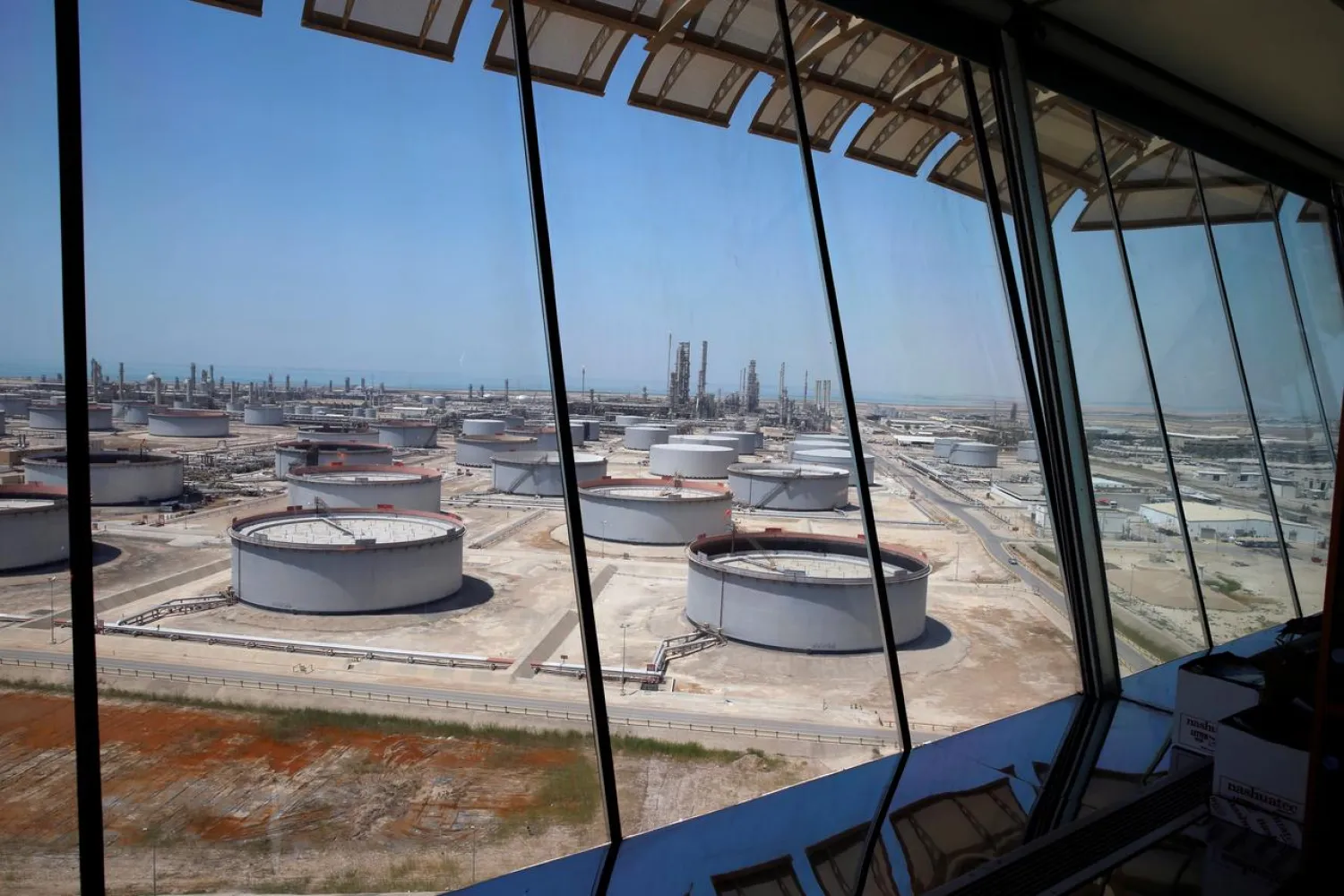
General view of Aramco's Ras Tanura oil refinery and oil terminal in Saudi Arabia May 21, 2018. (Reuters)
TT

Gulf Acquisitions, Mergers Grow by 39 Percent

General view of Aramco's Ras Tanura oil refinery and oil terminal in Saudi Arabia May 21, 2018. (Reuters)

The number of merger and acquisition deals (M&As) in the Gulf Cooperation Council (GCC) grew 39 percent year-on-year during the first quarter of 2019, according to a report released by Kuwait Financial Center (MARKAZ) on Saturday.

The Saudi market topped the Arabian Gulf markets in terms of M&As in Q1-19, in which the sector witnessed Aramco's 70 percent acquisition of SABIC in a deal worth USD69.1 billion.

In January, the Kuwait Finance House (KFH) said it gave initial approval for the average of stock exchange with AUB Bahrain at a rate of 2.33 shares of AUB’s in return for one share in KFH, added the report.

Abu Dhabi Commercial Bank (ADCB), listed on Abu Dhabi Securities Exchange (ADX), announced last month that its general assembly approved its merger with Union National Bank (UNB).

Italy’s Eni and Austria’s OMV will collectively acquire a 35 percent stake in ADNOC Refining for an estimated USD5.8 billion, whereby ADNOC will retain the remaining 65 percent stake in the company. KKR and BlackRock have acquired a 40 percent stake in ADNOC Oil Pipelines, an entity that will lease ADNOC’s interest in 18 pipelines for 23 years.

GCC acquirers accounted for 60 percent of the total number of transactions during Q1 2019 and 75 percent during Q4 2018. Foreign acquirers accounted for 34 percent of the total number of transactions during Q1 2019 and 17 percent during Q4 2018. Buyer information was not available for 6 percent of the transactions in Q1 2019.

Each of the GCC acquirers seemed to have a different appetite with regards to M&A transactions during Q1 2019.

Kuwaiti acquirers preferred investing in their home country. Saudi acquirers mostly invested in their home country and equally between other GCC countries and outside the GCC. UAE acquirers mostly invested outside the GCC and within their home country. Bahraini acquirers only invested outside the GCC. Qatari and Omani acquirers each engaged in one acquisition in their respective countries.

Q1 2019 witnessed a 70 percent increase in the number of completed transactions by foreign buyers compared to Q1 2018. In comparison to Q4 2018, the number of such transactions grew by 89 percent.

UAE targets represented 71 percent of the closed transactions by foreign acquirers during Q1 2019, while Saudi Arabia and Kuwait represented 23 percent and 6 percent respectively of the transactions during the same period. Bahraini, Omani and Qatari targets did not attract any foreign buyers during Q1 2019.

As per MARKAZ’s report, the industrial, financial and consumer sectors in the GCC accounted for 62 percent of M&As in the region during the first three months of 2019.

The media, insurance, telecommunication services and aviation sectors each accounted for 2 percent of the total closed transactions during Q1 2019, collectively amounting to 8 percent of the transactions during the period.

There was a total of 14 announced transactions in the pipeline during Q1 2019, representing a 27 percent increase in the number of announced transactions compared to Q4 2018.

UAE and Saudi Arabia collectively accounted for 79 percent of the announced transactions during Q1 2019. Oman and Qatar made up 21 percent of the announced transactions.



Gold Holds Steady, Eyes Fourth Weekly Gain on US-Iran Peace Deal Hopes

Samples of gold displayed in a program affiliated with the Brazilian Federal Police specializing in tracking gold in Brasilia (Reuters)
TT

Gold Holds Steady, Eyes Fourth Weekly Gain on US-Iran Peace Deal Hopes

Samples of gold displayed in a program affiliated with the Brazilian Federal Police specializing in tracking gold in Brasilia (Reuters)

Gold held largely steady on Friday and was on track for a fourth straight weekly gain, as hopes for a US-Iran peace deal eased fears of higher inflation and elevated interest rates.

Spot gold eased 0.1% to $4,784.72 per ounce by 0646 GMT, but was up about 1% so far this week. US gold futures for June fell 0.1% to $4,805.20.

A 10-day ceasefire between Lebanon and ‌Israel went ‌into effect on Thursday and US President Donald ‌Trump ⁠said the next meeting between ⁠the United States and Iran may take place over the weekend.

"Investors are now watching closely for concrete progress in US-Iran negotiations. Any progress or extension of the current fragile ceasefire could further calm oil markets and inflation fears, potentially unlocking more upside for gold," said Tim Waterer, chief market analyst at KCM Trade.

The US dollar was headed ⁠for a second weekly drop, making greenback-denominated commodities ‌more affordable for holders of other currencies, Reuters said.

Oil ‌prices fell, easing fears of higher inflation on optimism that the Iran ‌war could be nearing an end.

Concerns that higher energy prices ‌could stoke inflation and keep global interest rates higher for longer have driven down gold prices by more than 8% since the Iran war began in late February.

While gold is considered an inflation hedge, higher interest rates crimp ‌demand for the non-yielding asset.

Traders now see a 27% chance of a 25-basis-point Federal Reserve interest ⁠rate cut in ⁠December. Before the war, there were expectations of two reductions for this year.

Meanwhile, Indian banks have halted gold and silver import orders from overseas suppliers, with tons of the metals stuck at customs as a formal government order has not been issued authorizing bullion imports.

Gold demand in India was modest this week, as high domestic prices weighed on retail purchases ahead of the key Akshaya Tritiya festival weekend, while premiums in China held steady.

Spot silver rose 0.3% to $78.61 per ounce, and was headed for a fourth straight weekly gain.

Platinum fell 0.3% to $2,079.24 and palladium was down 0.5% at $1,542.50. Both the metals were on track for a third straight weekly gain.


IMF: Middle East Faces Pivotal Economic Moment

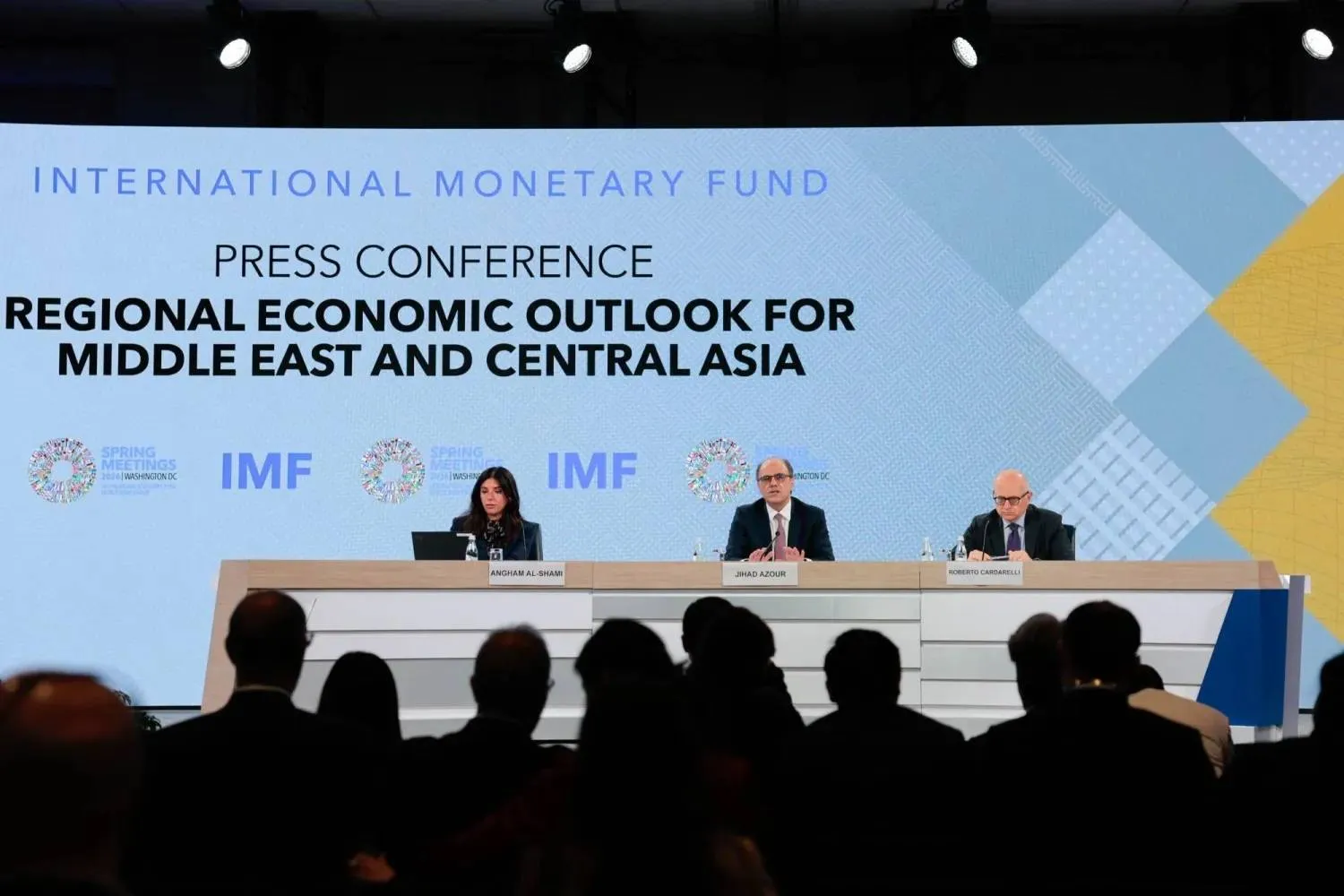
Azour speaks during a presentation of the Regional Economic Outlook update (AFP)
TT

IMF: Middle East Faces Pivotal Economic Moment

Azour speaks during a presentation of the Regional Economic Outlook update (AFP)

The International Monetary Fund said the Middle East, North Africa, and Pakistan were facing a pivotal and exceptionally difficult moment in their modern economic history after the war that broke out on Feb. 28, 2026, describing it as a severe and multifaceted shock to one of the world’s most strategically important economic corridors.

The IMF said the conflict was not merely a border crisis but had disrupted “three pillars of stability, energy markets, trade routes, and business confidence,” triggering a global energy shock and weakening supply chains.

Amid these challenges, Saudi Arabia’s economy emerged as a model of resilience, showing what the IMF described as “exceptional sturdiness” that enabled it to absorb the impact of disruptions to the Strait of Hormuz and a decline in regional output, supported by the pillars of Vision 2030, which strengthened fiscal discipline and logistical flexibility.

Jihad Azour, director of the IMF’s Middle East and Central Asia Department, said while presenting an update of the Regional Economic Outlook in Washington, on the sidelines of the IMF and World Bank Spring Meetings, that the war was reshaping the region’s economic outlook.

At the center of the shock was energy, he said, noting that the Strait of Hormuz, “the world’s most critical energy chokepoint, through which roughly one-fifth of global oil supply and about one-quarter of global LNG trade normally transit,” had come close to a standstill.

He said disruptions and shutdowns had cut oil and gas output across Gulf Cooperation Council countries, pushing Brent crude above $100 a barrel, while “European gas prices rose by roughly 60 percent, exceeding the spike observed after Russia’s invasion of Ukraine,” putting global energy security at risk.

He said energy disruptions caused by the war would weigh heavily on Gulf exporters, while oil-importing countries such as Egypt and Jordan were facing higher commodity prices and weaker remittance flows.

More broadly, the Middle East and North Africa region is expected to see a marked slowdown in growth this year, with real GDP projected at about 1.1%, significantly below pre-war forecasts, before a recovery in 2027, according to the IMF.

Azour said the shock extended beyond oil and gas, noting that “commodity disruptions extend beyond oil and gas,” affecting fertilizers, chemicals, and other products in which the region holds a strategic position.

He warned that rising food costs were directly threatening vulnerable populations, saying that “these price increases translate directly into higher food costs for some of the world’s most vulnerable populations,” particularly in import-dependent economies across the region and beyond.

He added that the conflict had also affected services, saying, “air traffic collapsed at major Gulf hubs, maritime insurance premiums surged, shipping routes lengthened, and logistics chains weakened,” highlighting the broad impact on aviation and logistics.

The IMF said some oil-importing economies in the region relied heavily on Gulf countries for energy imports and financial flows, leaving them exposed if the conflict intensified or persisted.

Saudi experience

Azour said one of the most important lessons from the war and the disruption of the Strait of Hormuz was the need to diversify trade routes.

“This shock underscores the importance of building greater resilience and strengthening integration,” he said, adding that this includes “diversifying trade routes and deepening regional cooperation,” to ensure the continued flow of goods and energy.

He said Saudi Arabia’s approach under its strategic vision went beyond infrastructure development to a broader reshaping of logistics networks. By expanding alternative ports on the Red Sea and strengthening land and rail connectivity, the kingdom reduced its reliance on a single maritime chokepoint.

He said this ability to create parallel trade routes allowed Saudi trade to continue effectively despite disruptions to regional corridors, offering a model for protecting economic security and ensuring uninterrupted supply flows.

Egypt

Azour said economic reforms implemented by Egypt, along with stronger policy buffers, were helping the country better manage external shocks.

He said allowing the exchange rate to become more flexible helped absorb shocks, while higher reserves provided reassurance to markets.

Regional divergence

The IMF report highlighted a sharp divergence across countries. Qatar faced a steep downgrade to growth forecasts due to damage to its gas infrastructure, while Oman showed relative resilience given its geographic position outside the Strait of Hormuz.

At the same time, financing pressures increased on Egypt, Pakistan, and Jordan as sovereign spreads widened, prompting Azour to stress that the IMF stood ready to support countries.

He said that if oil production recovered and the Strait of Hormuz fully reopened, countries would be able to increase output quickly, adding that higher oil prices compared with pre-2026 levels would help producers recover some of their losses from the crisis.


Pakistan Central Bank Receives $2 billion from Saudi Arabia as Part of Broader Financial Support Package

Mohammed Al-Jadaan and Muhammad Aurangzeb following the agreement for Saudi Arabia to provide an additional $3 billion in support to Pakistan (X).
TT

Pakistan Central Bank Receives $2 billion from Saudi Arabia as Part of Broader Financial Support Package

Mohammed Al-Jadaan and Muhammad Aurangzeb following the agreement for Saudi Arabia to provide an additional $3 billion in support to Pakistan (X).

Pakistan announced that it has received $2 billion from Saudi Arabia’s Ministry of Finance as part of a broader financial support package.

Earlier, Pakistan’s Finance Minister, Muhammad Aurangzeb, said that Saudi Arabia had committed to depositing an additional $3 billion, while extending an existing $5 billion loan for three years instead of renewing it annually.

This support comes as Pakistan faces repayment of $3.5 billion to the United Arab Emirates, putting pressure on its reserves, which stand at about $16.4 billion.

Saudi Arabia has a history of assisting Pakistan during economic crises, including a $6 billion support package in 2018 that included deposits and deferred oil payments.