


Ethiopia's Abiy Wins Nobel Peace Prize for Ending Eritrea Standoff

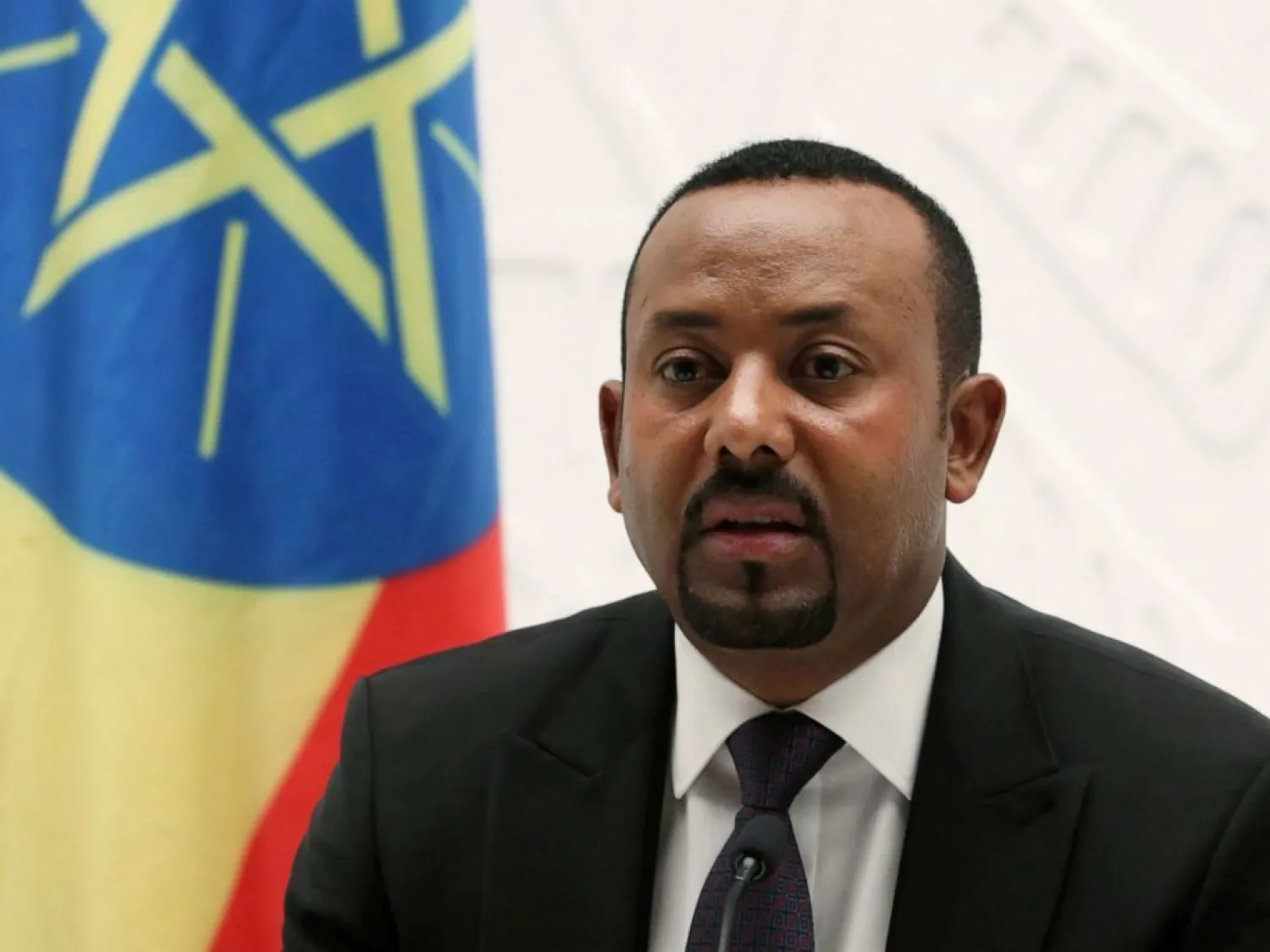
Ethiopia's Prime Minister Abiy Ahmed speaks at a news conference at his office in Addis Ababa, Ethiopia August 1, 2019. REUTERS/Tiksa Negeri
TT

Ethiopia's Abiy Wins Nobel Peace Prize for Ending Eritrea Standoff

Ethiopia's Prime Minister Abiy Ahmed speaks at a news conference at his office in Addis Ababa, Ethiopia August 1, 2019. REUTERS/Tiksa Negeri

Ethiopian Prime Minister Abiy Ahmed won the 2019 Nobel Peace Prize on Friday for his peacemaking efforts which ended two decades of hostility with longtime enemy Eritrea.

Though Africa’s youngest leader still faces big challenges, he has in under two years in power begun political and economic reforms that promise a better life for many in impoverished Ethiopia and restored ties with Eritrea that had been frozen since a 1998-2000 border war.

“I am so humble and thrilled ... It is a prize given to Africa, given to Ethiopia,” Abiy Ahmed said in a recorded phone call with the secretary of the award committee that was posted online.

Abiy was meeting Sudanese Prime Minister Abdalla Hamdok when he was informed he had won the prize, Abiy’s spokeswoman said.

The Nobel Committee said Abiy had won the prestigious prize for “efforts to achieve peace and international cooperation, and in particular for his decisive initiative to resolve the border conflict with neighboring Eritrea.”

It said the prize was meant to recognize “all the stakeholders working for peace and reconciliation in Ethiopia and in the East and Northeast African regions.”

News of the award trickled slowly down to the streets of the Ethiopian capital, Addis Ababa. Bisrat Hadte, a 45-year-old businessman, said he was glad but the government still had much to do to improve daily life in the country of about 100 million.

“The prime minister also has to work on to improve the economy and drive down the cost of living,” he told Reuters.

The Nobel Committee’s decision appeared designed to encourage the peace process, echoing the 1994 peace prize shared by Israeli and Palestinian leaders and the 1993 award for moves towards reconciliation in South Africa, said Dan Smith, head of the Stockholm International Peace Research Institute.

“It is a case of wanting a constructive intervention in the peace process ... to give leverage and encouragement,” he told Reuters.

“The challenge now is internal for Abiy Ahmed, with Ethiopia needing to deal with the consequences of long-term violence, including three million displaced people and the need for continuing the political process.”

Abiy had been bookmakers’ second favorite to win, behind the teenage Swedish climate change campaigner Greta Thunberg.

“I have said often that winds of hope are blowing ever stronger across Africa. Prime Minister Abiy Ahmed is one of the main reasons why,” said United Nations Secretary-General Antonio Guterres.

“His vision helped Ethiopia and Eritrea achieve a historic rapprochement.”

CHALLENGES AHEAD FOR ABIY

Abiy, now 43, took office in April 2018 after the resignation of Hailemariam Desalegn following three years of violent anti-government protests. The ruling coalition had already begun making conciliatory measures, including releasing many political prisoners, but Abiy speeded up the reforms.

His government has promised to liberalize the bureaucratic, state-controlled economy, unbanned many political parties and dismissed or arrested many senior officials accused of corruption, torture or murder.

The changes are the most sweeping since the coalition took power in 1991, and the loosening of the state’s iron grip has raised hopes in the country and abroad.

Abiy’s landmark achievement to date is securing peace with neighboring Eritrea. What remains to be seen is whether Abiy - who joined the Ethiopian army in his teens and rose through the ruling EPRDF coalition over the past two decades - can control the political forces he has unleashed.

He faces challenges from elements within the ruling coalition who feel disempowered and from new, ethnically-based parties eager to flex their muscles in next year’s elections.

The loosening of political freedoms means many regional powerbrokers are demanding more influence and resources, fueling ethnically-tinged conflicts around the country.

In June, a rogue state militia leader killed the state president of the Amhara region and other top-level officials in what the government described as a regional coup attempt.

Desalegn Chane, president of the new National Movement of Amhara (NAMA) party said three of his party’s leaders were still in jail, held without charge and suspected of being linked to the violence.

“As an Ethiopian, actually, I am very happy that the prime minister won the Nobel peace prize,” he told Reuters by phone.

“However, we still have legitimate concerns and grievances that Abiy needs to address. The political repression our people the Amhara have been suffering from has continued under Abiy.”

Abiy also faces high expectations from young Ethiopians who want jobs, development, and opportunities.

The Nobel Peace Prize will be presented in Oslo on Dec. 10, the anniversary of the death of Swedish industrialist Alfred Nobel, who founded the awards in his 1895 will. It is worth nine million Swedish crowns, or around $900,000.

This year’s award is the 100th Nobel Peace Prize award since 1901, when Henry Dunant, a founder of the Red Cross, and the French parliamentarian and peace activist Frederic Passy shared the first one. No awards were made on 19 occasions, including during the two world wars.



US Judge Blocks Deportation of Columbia University Palestinian Activist

Mohsen Mahdawi at a press conference in Vermont last year - Photo by Alex Driehaus/AP
TT

US Judge Blocks Deportation of Columbia University Palestinian Activist

Mohsen Mahdawi at a press conference in Vermont last year - Photo by Alex Driehaus/AP

A US immigration judge has blocked the deportation of a Palestinian graduate student who helped organize protests at Columbia University against Israel's war in Gaza, according to US media reports.

Mohsen Mahdawi was arrested by immigration agents last year as he was attending an interview to become a US citizen.

Mahdawi had been involved in a wave of demonstrations that gripped several major US university campuses since Israel began a massive military campaign in the Gaza Strip.

A Palestinian born in the occupied West Bank, Mahdawi has been a legal US permanent resident since 2015 and graduated from the prestigious New York university in May. He has been free from federal custody since April.

In an order made public on Tuesday, Judge Nina Froes said that President Donald Trump's administration did not provide sufficient evidence that Mahdawi could be legally removed from the United States, multiple media outlets reported.

Froes reportedly questioned the authenticity of a copy of a document purportedly signed by Secretary of State Marco Rubio that said Mahdawi's activism "could undermine the Middle East peace process by reinforcing antisemitic sentiment," according to the New York Times.

Rubio has argued that federal law grants him the authority to summarily revoke visas and deport migrants who pose threats to US foreign policy.

The Trump administration can still appeal the decision, which marked a setback in the Republican president's efforts to crack down on pro-Palestinian campus activists.

The administration has also attempted to deport Mahmoud Khalil, another student activist who co-founded a Palestinian student group at Columbia, alongside Mahdawi.

"I am grateful to the court for honoring the rule of law and holding the line against the government's attempts to trample on due process," Mahdawi said in a statement released by his attorneys and published Tuesday by several media outlets.

"This decision is an important step towards upholding what fear tried to destroy: the right to speak for peace and justice."


Fire Breaks out Near Iran's Capital Tehran, State Media Says

Smoke rises from a fire caused by an explosion in Tehran (File photo - Reuters)
TT

Fire Breaks out Near Iran's Capital Tehran, State Media Says

Smoke rises from a fire caused by an explosion in Tehran (File photo - Reuters)

A fire broke out in Iran's Parand near the capital city Tehran, state media reported on Wednesday, publishing videos of smoke rising over the area which is close to several military and strategic sites in the country's Tehran province, Reuters reported.

"The black smoke seen near the city of Parand is the result of a fire in the reeds around the Parand river bank... fire fighters are on site and the fire extinguishing operation is underway", state media cited the Parand fire department as saying.


Pakistan PM Sharif to Seek Clarity on Troops for Gaza in US Visit

US President Donald Trump looks at Pakistan's Prime Minister Shehbaz Sharif speaking following the official signing of the first phase of the Gaza ceasefire agreement between Israel and Hamas, during a world leaders' summit on ending the Gaza war, in Sharm El-Sheikh, Egypt, October 13, 2025. REUTERS/Evelyn Hockstein/File Photo
TT

Pakistan PM Sharif to Seek Clarity on Troops for Gaza in US Visit

US President Donald Trump looks at Pakistan's Prime Minister Shehbaz Sharif speaking following the official signing of the first phase of the Gaza ceasefire agreement between Israel and Hamas, during a world leaders' summit on ending the Gaza war, in Sharm El-Sheikh, Egypt, October 13, 2025. REUTERS/Evelyn Hockstein/File Photo

Before Pakistan commits to sending troops to Gaza as part of the International Stabilization Force it wants assurances from the United States that it will be a peacekeeping mission rather than tasked with disarming Hamas, three sources told Reuters.

Pakistan's Prime Minister Shehbaz Sharif is set to attend the first formal meeting of President Donald Trump's Board of Peace in Washington on Thursday, alongside delegations from at least 20 countries.

Trump, who will chair the meeting, is expected to announce a multi-billion dollar reconstruction plan for Gaza and detail plans for a UN-authorized stabilization force for the Palestinian enclave.

Three government sources said during the Washington visit Sharif wanted to better understand the goal of the ISF, what authority they were operating under and what the chain of command was before making a decision on deploying troops.

"We are ready to send troops. Let me make it clear that our troops could only be part of a peace mission in Gaza," said one of the sources, a close aide of Sharif.

"We will not be part of any other role, such as disarming Hamas. It is out of the question," he said.

Analysts say Pakistan would be an asset to the multinational force, with its experienced military that has gone to war with arch-rival India and tackled insurgencies.

"We can send initially a couple of thousand troops anytime, but we need to know what role they are going to play," the source added.

Two of the sources said it was likely Sharif, who has met Trump earlier this year in Davos and late last year at the White House, would either have an audience with him on the sidelines of the meeting or the following day at the White House.

Initially designed to cement Gaza's ceasefire, Trump sees the Board of Peace, launched in late January, taking a wider role in resolving global conflicts. Some countries have reacted cautiously, fearing it could become a rival to the United Nations.

While Pakistan has supported the establishment of the board, it has voiced concerns against the mission to demilitarize Gaza's militant group Hamas.