Companies Listed on 'Tadawul' Make Profits Worth 17B in 9 Monthshttps://english.aawsat.com/home/article/1988361/companies-listed-tadawul-make-profits-worth-17b-9-months
Companies Listed on 'Tadawul' Make Profits Worth 17B in 9 Months
Reuters
Recent figures issued by the Saudi Stock Exchange (Tadawul) reveal that the percentage of ownership of foreign investors increases from week to another in Saudi Arabia.
This indicates that the Kingdom’s stock market has become one of the most attractive for foreign investments.
It also proves the vitality of the financial market on one hand and the confidence of foreign investors in the Saudi economy and listed companies on the other hand.
Meanwhile, foreign ownership in the Saudi stock market has jumped to more than nine percent of the total market.
The stock market index continued Monday the positive gains it had started last week, with about 48 points. On Sunday, it achieved gains of about 77 points.
The Saudi companies listed on the local stock market ended on Monday the announcement period of their financial results for the Q3 2019.
These results are the complementary for the first nine months of this year.
While the net profit achieved during the nine months period amounted to about SAR64.7 billion ($17.2 billion).
According to the announced results, 85 listed companies (more than 50 percent of the listed companies in the local market), have achieved a positive development in their financial results for the first nine months of 2019 compared to the same period last year.
This positive development takes two forms, one is the growth in profits, the largest number of companies, and the other is the marked decline in the amount of losses realized.
Based on these results, which are somehow in line with expectations of financial experts, the Saudi Stock Market Index has become close to 8,000 points, driven by the gains achieved by the market over the past few days.
In this context, the Saudi stock market index ended trading on Monday up 0.6 percent to close at 7922 points, amid transactions worth a total of about SAR2.7 billion ($720 million).
World Energy Council to Asharq Al-Awsat: Diversifying Routes is Essential to Withstand Shockshttps://english.aawsat.com/business/5326921-world-energy-council-asharq-al-awsat-diversifying-routes-essential-withstand
Women use paddleboards, as a vessel in the Strait of Hormuz appears in the distance, near the beach of Bandar Abbas, Iran, October 6, 2026. Amirhosein Khorgooi/ISNA/via WANA (West Asia News Agency) via REUTERS
World Energy Council to Asharq Al-Awsat: Diversifying Routes is Essential to Withstand Shocks
Women use paddleboards, as a vessel in the Strait of Hormuz appears in the distance, near the beach of Bandar Abbas, Iran, October 6, 2026. Amirhosein Khorgooi/ISNA/via WANA (West Asia News Agency) via REUTERS
Recent disruptions to oil trade flows have highlighted the importance of having multiple routes to market and infrastructure capable of absorbing shocks, at a time when geopolitical risks and bottlenecks facing the global energy system are increasing.
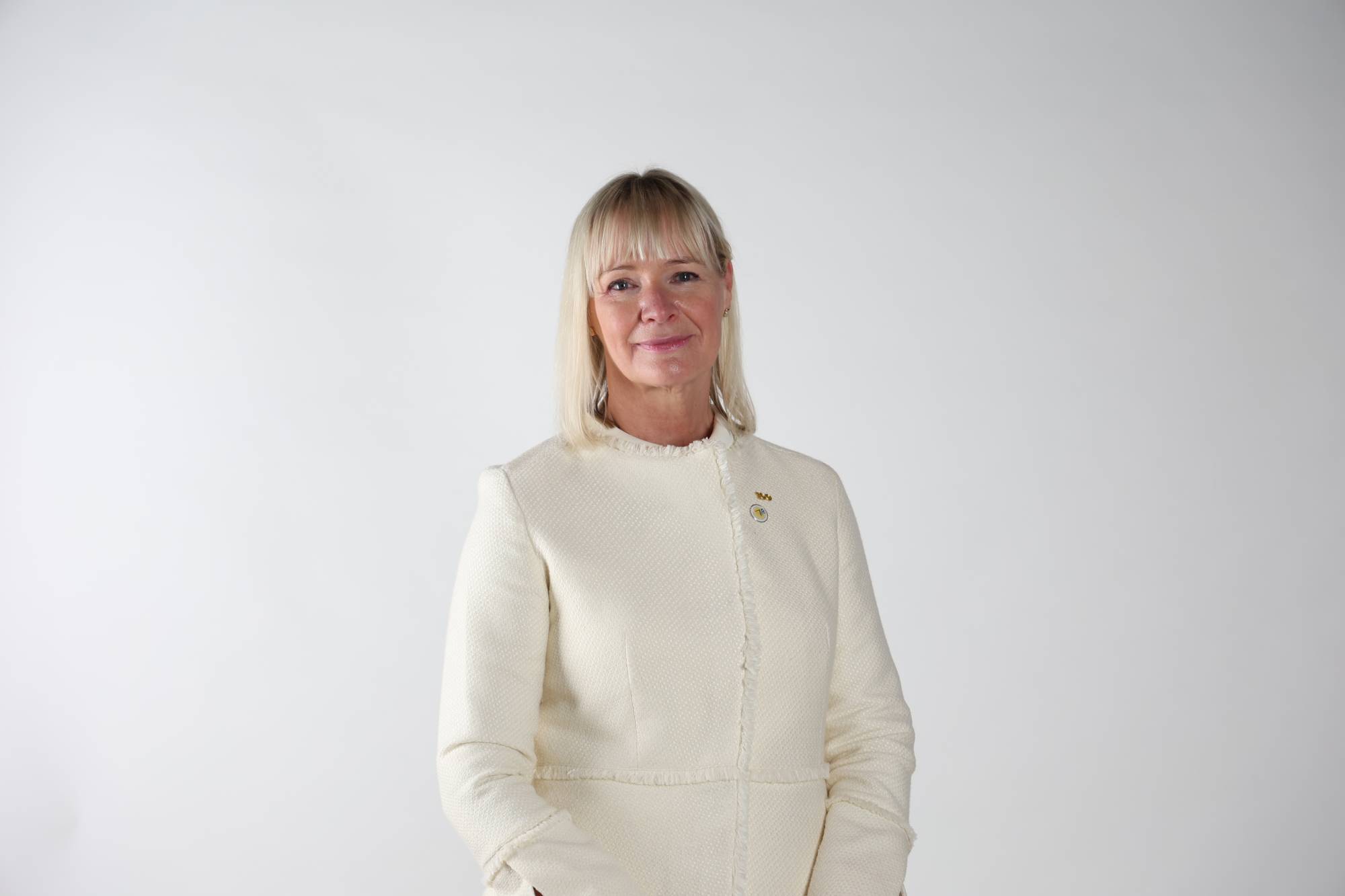
This was emphasized by Angela Wilkinson, Secretary General and CEO of the World Energy Council, in an exclusive interview with Asharq Al-Awsat ahead of her participation in Riyadh Energy Week.
She explained that the energy system's ability to cope with disruptions depends not only on production volumes, but also on infrastructure, transportation networks, and the relationships between producers and consumers.
Starting Sunday, Riyadh Energy Week will host the 25th World Energy Congress for the first time in Saudi Arabia, bringing together more than 70 ministers, over 300 chief executives from leading global energy companies, and leaders of more than 25 international organizations.
Held under the theme “Pathways to an Energy Future for All,” the congress will feature more than 30 ministerial, strategic, and leadership sessions addressing energy security, global oil and gas markets, investment and finance, artificial intelligence and digital transformation, critical minerals, carbon management, natural gas, and the future of the energy mix.
Angela Wilkinson, Secretary General and CEO of the World Energy Council
Hormuz Tests the Resilience of the Energy System
Wilkinson says energy underpins every aspect of life in the modern world. Therefore, the global priority is to de-escalate regional conflicts that could trigger a crisis in both energy markets and the world economy.
She noted that energy leaders are now operating within a new geopolitical landscape, while communities across different regions face multiple shocks and bottlenecks affecting transportation routes, refining capacity, liquefied natural gas (LNG), electricity grids, and critical minerals.
She explained that the trade-offs between energy security, equitable access and affordability, and environmental sustainability have not disappeared. Rather, they have become more pronounced, making it essential to rebalance these priorities in real time to achieve sustainable progress. She cited findings from the 2026 World Energy Trilemma Report, prepared by the Council following consultations with more than 275 energy leaders across 65 countries.
Wilkinson added that the longer-term impact of the crisis, regardless of its duration, may lie in how industry leaders collaborate to strengthen resilience, integration, and operational alignment, and to build systems capable of absorbing today's disruptions while becoming better prepared for future shocks and transformation opportunities.
Saudi Arabia and the Importance of Multiple Routes to Market
Wilkinson said that Saudi Arabia’s production capacity and alternative export infrastructure play an important role in global energy markets, particularly when existing routes face disruptions. She noted that recent developments have demonstrated that “there is no single route that eliminates all risks,” and that energy security depends on robust infrastructure, multiple pathways to markets, and greater cooperation between producers and consumers.
She added that the resilience of the Gulf region’s energy system cannot be measured solely by the amount of energy the region can produce. It also depends on its ability to transport that energy reliably through ports, pipelines, electricity grids, and international markets.
Wilkinson pointed to investments in new infrastructure, stronger networks, and increasingly diverse partnerships as factors that expand the options available to the energy system. She summarized the concept of resilience as “building optionality into the system” through diversified energy sources, multiple routes to market, strong infrastructure, and solid international relationships.
From Supply to “Capabilities”
Wilkinson does not believe that the crisis changes the need to balance energy security, equitable access and affordability, and environmental sustainability. However, she explained that what does change, sometimes very rapidly, is where pressures intensify and where new bottlenecks emerge.
She said that the trade-offs managed by energy leaders have shifted, driven by geopolitics, technological innovation, climate change impacts, growing demand, and industrial competitiveness, moving to new geographies and different parts of the global energy system.
In her view, the most significant transformation may be the shift from a world in which the energy system was organized around supply to one increasingly structured around “capabilities.” In response, the World Energy Council is evolving the Energy Trilemma framework from a measurement tool into a leadership dialogue focused on system integration and resilience, energy security, and industrial competitiveness.
She emphasized that integration is not merely a technical challenge related to standardization. It also concerns the institutional, financial, and human capabilities required to ensure that the various components of the energy system work together efficiently.
Geopolitics and New Dependencies
Wilkinson expects geopolitics to play an increasingly important role in shaping decisions about interdependence in the energy sector over the next five to ten years. Electricity, artificial intelligence, emerging technologies, and growing demand will remain important factors, but they are developing within a world that is becoming more fragmented and competitive.
She explained that countries are discovering that reducing one dependency may create another, whether on critical minerals, technologies, manufacturing capabilities, or infrastructure.
According to Wilkinson, the way leaders manage these interconnected dependencies and address widening capability gaps will help shape the energy system over the coming decade.
An Electrification “Supercycle”
As demand for electricity accelerates, Wilkinson believes that the greatest constraint on the electrification “supercycle” is not any single technology, policy, or piece of infrastructure, but rather the ability to make the entire energy system work efficiently.
She explained that this requires electricity generation, power grids, energy storage, and investment. Expanding each of these components, however, creates new dependencies on supply chains, critical minerals, aging infrastructure, and a skilled workforce.
She stressed that deploying energy technologies remains essential, but ensuring that these technologies work together is becoming an increasingly complex challenge that requires new capabilities.
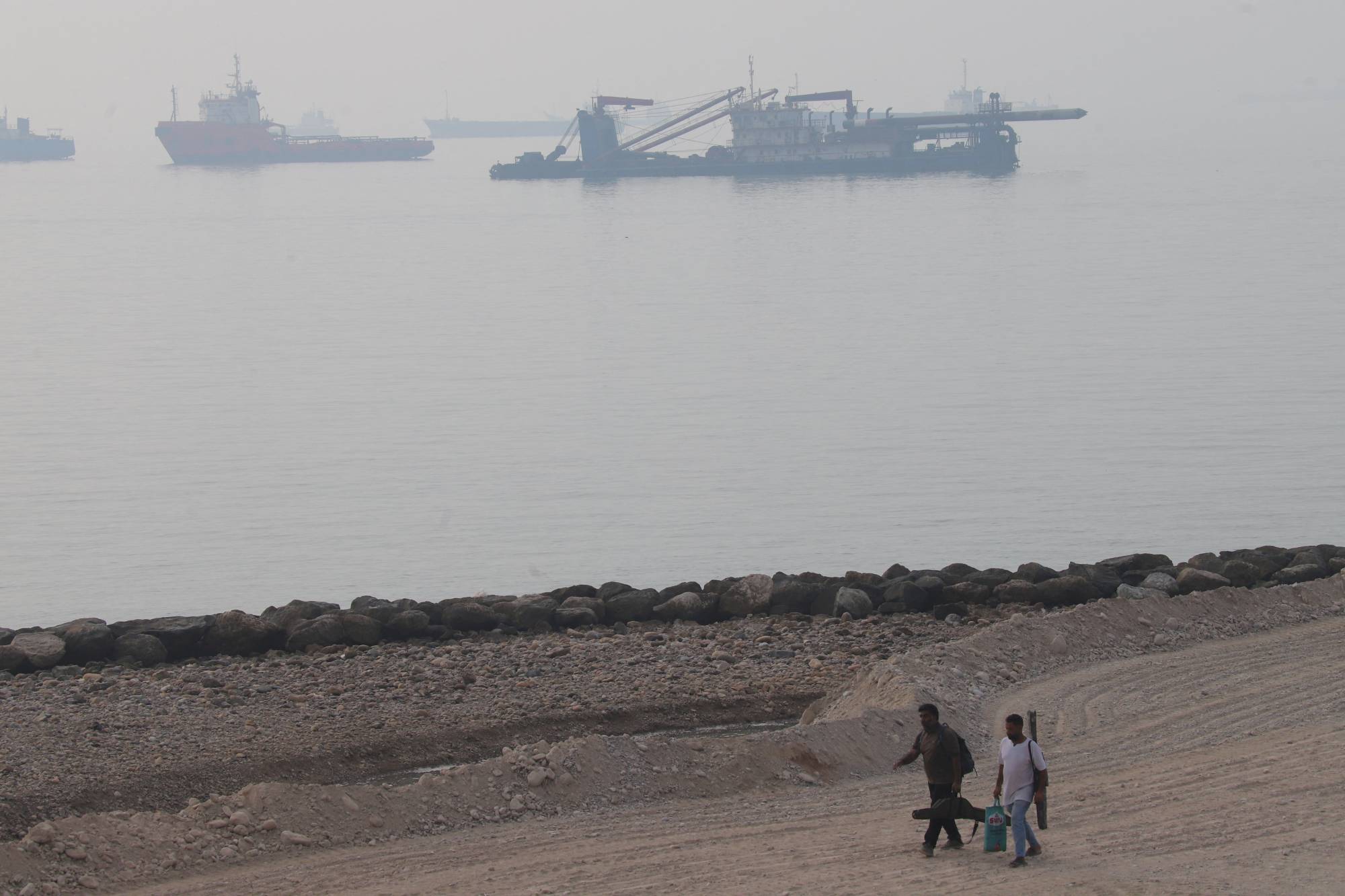
Vessels in the Strait of Hormuz near the beach of Bandar Abbas, Iran, October 6, 2026. Amirhosein Khorgooi/ISNA/via WANA (West Asia News Agency) via REUTERS
No Single Global Pathway for the Energy Transition
Wilkinson rejects the notion of a single global pathway for the energy transition, arguing instead that multiple pathways and transitions are emerging, shaped by differing resources, infrastructure, and economic and social needs.
The findings of the World Energy Trilemma demonstrate that energy leaders are being forced to rebalance energy security, equitable access and affordability, and environmental sustainability more frequently and dynamically than ever before.
She said the challenge lies in advancing all of these priorities simultaneously, because neglecting any one of them could create vulnerabilities elsewhere in the system. The question, she argued, is not whether the transition should proceed faster or slower, but how its stages can be sequenced in a way that delivers reliable, affordable, and sustainable energy services while meeting growing demand for clean electricity and future fuels.
Between Sovereignty and Independence
Wilkinson believes that one of the most underestimated risks through 2030 is the tendency to confuse “energy sovereignty” with “energy independence,” or to assume that demand will remain predictable and passive, when in reality it has become increasingly active and influential in shaping the energy system.
She noted that modern energy systems are inherently based on interdependence. A country may reduce its reliance on fuel imports, but in doing so it may increase its dependence on critical minerals, technologies, or the capabilities required to build clean-energy systems.
For that reason, energy security does not simply mean relocating every element of the energy system within national borders. Rather, it requires understanding and managing interdependencies. As the global energy system continues to expand, this also means looking beyond generation capacity alone to include the resilience of power grids, plants, supply chains, and the connections between them.
HSBC Reportedly Plans Job Cuts Across UK Wealth Business in AI Pushhttps://english.aawsat.com/business/5326891-hsbc-reportedly-plans-job-cuts-across-uk-wealth-business-ai-push
HSBC Reportedly Plans Job Cuts Across UK Wealth Business in AI Push
HSBC logo is seen in this illustration taken January 7, 2026. REUTERS/Dado Ruvic
HSBC is planning sweeping job cuts across its UK wealth management business, including a sharp reduction in financial advisers and specialist staff, as part of a broader push to integrate AI, the Financial Times reported on Wednesday.
The bank plans to cut about half of management and specialist roles in the business, while reductions among financial advisers could reach around 70%, the report said, citing people familiar with the plans.
HSBC does not disclose the number of employees in its UK wealth business, though it is thought to have hundreds of relationship managers across the country, according to the FT.
The bank did not immediately respond to a Reuters request for comment outside regular business hours.
"HSBC UK is a long-established, leading UK wealth manager and premium banking provider," the bank said in a statement to Reuters. "We're continuing to evolve to deliver more digitally enabled products and journeys to support our best-in-class wealth service and meet the changing needs of our customers."
The bank is currently in a consultation period on the proposed changes, the report said, adding that affected employees are expected to leave by the end of the month.
In May, Chief Executive Georges Elhedery said at an HSBC investor day event that staff needed to embrace AI-driven change rather than resist it and that "generative AI will destroy certain jobs".
Elhedery has made AI a central part of his strategy since taking over in 2024, deploying the technology across multiple functions and businesses to simplify operations and personalize content for customers.
Banks across the globe have increased investments in AI, reshaping workforces and leading to changes in job roles. This has deepened concerns among economists that AI will upend established industries, with job losses already emerging in sectors most exposed to automation.
Norway Plans to Spend $63.6 Billion from Wealth Fund in 2027https://english.aawsat.com/business/5326874-norway-plans-spend-636-billion-wealth-fund-2027
Norway Plans to Spend $63.6 Billion from Wealth Fund in 2027
A general view of the cityscape in Oslo, Norway November 17, 2020. NTB SCANPIX/Cornelius Poppe via REUTERS
Norway's minority Labour Party government said on Wednesday it plans to raise its spending level in 2027 from the country's $2.3 trillion sovereign wealth fund to help cover public expenses.
The government proposed withdrawing 608.4 billion Norwegian crowns ($63.61 billion) from the fund in 2027, up from a revised 583.4 billion in 2026, and must now negotiate with four centrist and left-wing parties to pass the budget.
Gross domestic product (GDP) outside the oil industry is now expected to grow by 1.1% this year, against 1.7% growth seen in May.
Growth is seen at 1.7% in 2027, an increase from 1.6% predicted previously.
"The budget proposal is estimated to have a neutral effect on the activity in the economy next year," the government said in a statement.
It saw core inflation in 2026 at 3.1%, down from 3.2% seen in May, easing to a rate of 2.8% in 2027 against 2.6% seen previously.
The structural non-oil deficit for 2027, a key measure of how much money the government will spend from the wealth fund, was expected to be 2.7% of the fund's projected value at the end of 2026, in line with the current year.
لم تشترك بعد
انشئ حساباً خاصاً بك لتحصل على أخبار مخصصة لك ولتتمتع بخاصية حفظ المقالات وتتلقى نشراتنا البريدية المتنوعة