


All King Bibi's Men: Netanyahu's Inner Circle Key to Criminal Cases

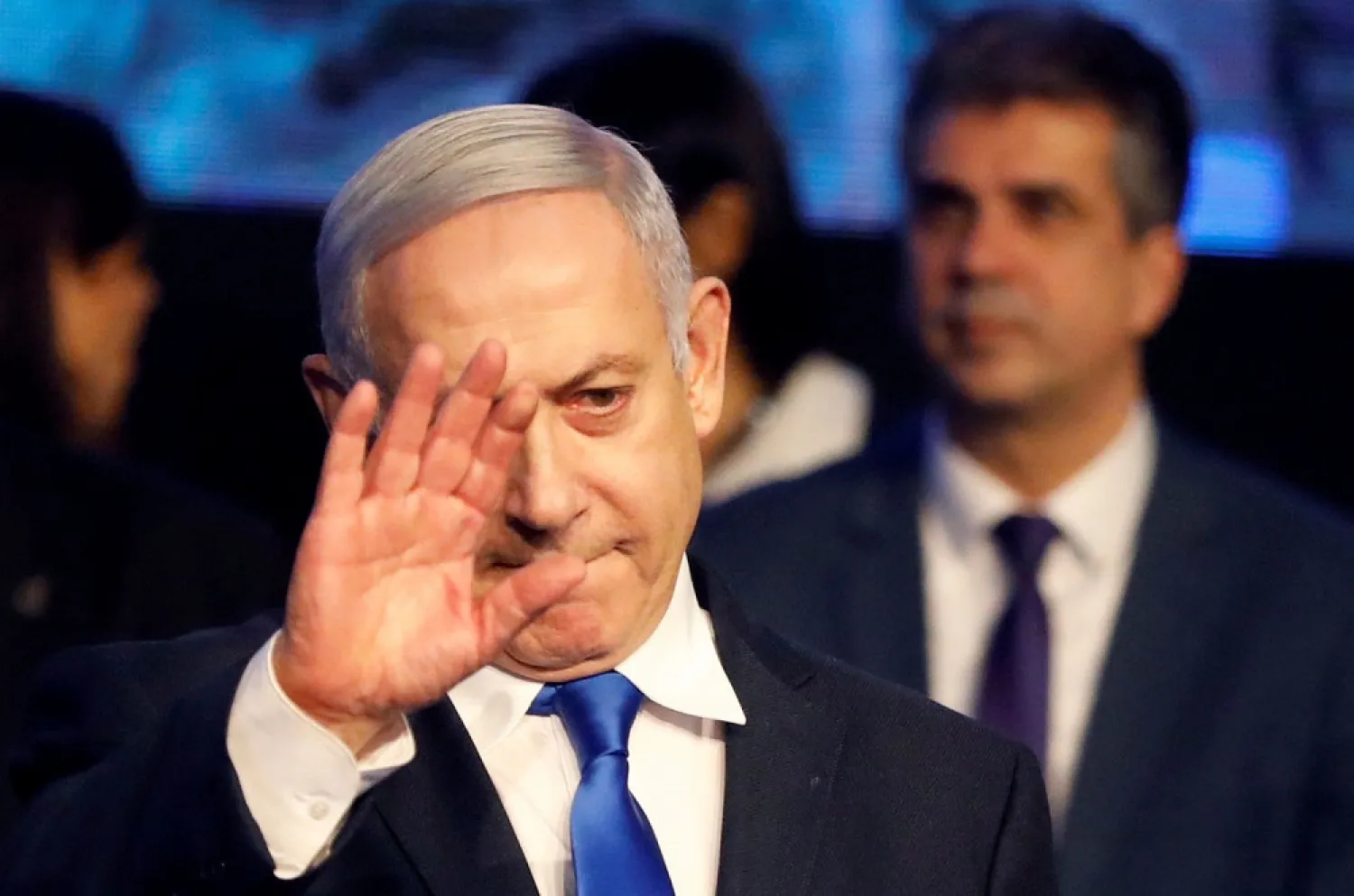
Israeli Prime Minister Benjamin Netanyahu. (Reuters file photo)
TT

All King Bibi's Men: Netanyahu's Inner Circle Key to Criminal Cases

Israeli Prime Minister Benjamin Netanyahu. (Reuters file photo)

Secret recordings, powerful media moguls, illicit gifts of cigars and champagne, betrayals by trusted aides. The three corruption cases against Israeli Prime Minister Benjamin Netanyahu have all the makings of a political thriller.

On Thursday, after more than three years of investigations, the most dominant Israeli politician of his generation was charged with bribery, fraud and breach of trust.

Investigators have not revealed the informants who provided the first tips about alleged corruption by the veteran conservative nicknamed “King Bibi.” But from there they methodically picked off members of the prime minister’s inner circle of hand-picked aides and senior officials as state witnesses against him. The mounting evidence was revealed in a series of tantalizing leaks that undercut what prosecutors allege was Netanyahu’s scheme to control his public image by trading regulatory favors to news companies for positive coverage.

The man who charged the prime minister was Israel’s Attorney General Avichai Mandelblit - who was chosen for the job by Netanyahu in 2016 after having served as his cabinet secretary starting in 2013.

“I had the privilege of working with him and witnessing his many talents and capabilities as prime minister,” Mandelblit said in announcing the charges. “The decision to file an indictment against him was made with a heavy heart.”

Netanyahu has denied wrongdoing from the beginning of the investigations and remained defiant in his emotional prime-time national address on the night of his indictment. He called the cases an “attempted coup” to overthrow him, based on “fabrications.”

‘Rotten’

The probe began with tips trickling into investigators.

“Something smelled rotten, but it wasn’t clearly criminal,” a law enforcement source with direct knowledge of the investigation told Reuters.

Mandelblit launched an initial inquiry in July 2016, soon after Netanyahu chose him as attorney general. Investigators soon focused on dealings between the prime minister, Israeli Hollywood producer Arnon Milchan and Australian billionaire James Packer.

The inquiries would eventually lead to Case 1000, in which Netanyahu is charged with fraud and breach of trust for allegedly requesting and receiving gifts from Packer and Milchan, which included a regular supply of cigars and champagne.

The indictment alleges Netanyahu helped Milchan with various business interests. Milchan and Packer provided testimony and have not been charged with any wrongdoing.

During a separate probe of Netanyahu’s former chief of staff, Ari Harow, investigators stumbled on a Pandora’s box: secret recordings made on Harow’s mobile phone.

They documented a series of meetings between two men who were then known publicly as enemies: Netanyahu and Arnon Mozes, the owner of Israel’s best-selling newspaper, Yedioth Ahronoth, and the popular news website Ynet.

“It was jaw-dropping,” said the source, describing the moment investigators first heard the recordings.

In meetings held between 2008 and 2014, the two allegedly discussed a deal in which Mozes would provide positive coverage of Netanyahu and negative coverage of his political rivals, while Netanyahu would push for regulations on Yedioth’s biggest competitor, Israel Hayom, a free daily owned by US casino mogul and Netanyahu supporter, Sheldon Adelson.

The 63-page indictment released on Thursday quotes a meeting held in December 2014 during the run-up to the 2015 election. Prosecutors allege the two men discussed a bill that would have limited Israel Hayom’s circulation.

“We need to make sure you are prime minister,” Mozes allegedly told Netanyahu. “Assuming there will be a law that you and I have agreed upon, I will do my utmost best that you stick around for as long as you want to.”

The bill the two men discussed would never become law, and the coverage of Netanyahu in Yedioth and Ynet did not substantially change.

The recordings shocked prosecutors as they digested them over six hours, the source told Reuters.

“That was a big drama,” said the source. “It’s hard to believe something like this can even happen.”

The recordings set off the investigation that led to Case 2000, which charges Netanyahu with fraud and breach of trust and Mozes with bribery.

Harow served two stints as Netanyahu’s chief of staff before resigning in 2015 amid allegations that he improperly advanced his own business interests while holding the position.

Harow turned state’s witness against Netanyahu in 2017 as part of a plea deal in which he confessed to fraud and breach of trust.

Mozes’s lawyers denied wrongdoing in a written statement and called prosecutors allegations of bribery an “erroneous and warped interpretation” of the recordings.

‘They were after me’

The most serious case against Netanyahu, Case 4000, did not start with the prime minister. In 2017, Israel’s Securities Authority (ISA) was investigating Shaul Elovitch, the chairman of the country’s biggest telecommunications firm, Bezeq Israel Telecom. ISA was investigating whether he had illegally profited from a 2015 deal in which Bezeq bought out his remaining shares in a satellite TV company.

Netanyahu, who at the time also served as Communications Minister, was not a suspect.

One of the key figures in the probe - Shlomo Filber, then director-general of the communications ministry - was picked for the government job by Netanyahu soon after he took over the communications ministry. The investigation revealed a secret backchannel between Bezeq and Filber, according to the indictment.

Investigators later found evidence pointing to the prime minister’s involvement in regulatory moves that prosecutors allege provided a benefit worth about 1.8 billion Shekels ($500 million) to Bezeq. The company has denied wrongdoing.

In 2018, Filber turned state witness against Netanyahu.

Case 4000 alleges that Netanyahu’s regulatory favors for Elovitch were part of a wider “give and take” relationship.

Bezeq controlled a popular news website called Walla. The indictment alleges that Netanyahu made a series of regulatory concessions that benefited Elovitch in return for better coverage of him and his family on the website.

It describes a dinner in which Netanyahu and his wife, Sara, hosted Elovitch and his wife, Iris, a few weeks before Israel’s 2013 election.

“The defendants agreed that Netanyahu and his wife will be able to make demands on Mr. and Mrs. Elovitch concerning their media coverage,” the indictment said.

The Netanyahus allegedly made hundreds of demands over the next few years for Walla to change headlines, remove negative reports about them and increase exposure of positive ones.

The Elovitches have been charged with bribery and obstruction of justice. Shaul Elovitch has also been charged with money laundering. The couple denies any wrongdoing.

The indictment cited a striking example of Netanyahu’s influence on the news involving a rare interview he gave Walla, days before a 2015 election.

“Netanyahu was very angry about the questions,” Dov Gilhar, the journalist who interviewed him, told Israel’s public broadcaster Kan in March. After the interview, “Netanyahu ripped the neck-mic off, threw it on the floor, says nothing, gets up, walks into his office and slams the door.”

Gilhar told Kan that he had expected the exclusive interview to be published quickly, but two days passed before a chopped-down version ran after being edited without the journalist’s involvement.

The indictment alleges the edits were dictated by Netanyahu and Nir Hefetz, the media advisor to the prime minister’s family at the time and his former official spokesman.

Hefetz turned state witness in 2018. Netanyahu has been charged with bribery in this case, as well as fraud and breach of trust.

Netanyahu’s demands on Walla ceased around January 2017, the indictment said, when the prime minister and Elovitch became concerned about an investigation into their dealings and Walla stopped complying with requests to favor Netanyahu in its coverage.

Walla’s news desk did not respond to a request for comment.

Netanyahu said on Thursday that quid pro quo relations between politicians and the media were common, but he was being singled out.

“They weren’t after the truth,” Netanyahu said of police and prosecutors. “They were after me.”

Attorney General Mandelblit has rejected Netanyahu’s accusations. A source close to Mandelblit described him as “very fond of Netanyahu.”

“But at the end of the day, there’s no room for sentiment,” the source said. “Either the evidence tells the story or it doesn’t.”



Iranians Chant Slogans Against Supreme Leader at Memorials for Slain Protesters

An Iranian man holds the Iranian national flag during a memorial ceremony for those killed in anti-government protests earlier last month, at the Mosalla mosque in Tehran, Iran, 17 February 2026. (EPA)
TT

Iranians Chant Slogans Against Supreme Leader at Memorials for Slain Protesters

An Iranian man holds the Iranian national flag during a memorial ceremony for those killed in anti-government protests earlier last month, at the Mosalla mosque in Tehran, Iran, 17 February 2026. (EPA)

Iranians shouted slogans against Supreme Leader Ali Khamenei on Tuesday as they gathered to commemorate protesters killed in a crackdown on nationwide demonstrations that rights groups said left thousands dead, according to videos verified by AFP.

The country's clerical authorities also staged a commemoration in the capital Tehran to mark the 40th day since the deaths at the peak of the protests on January 8 and 9.

Officials acknowledge more than 3,000 people died during the unrest, but attribute the violence to "terrorist acts", while rights groups say many more thousands of people were killed, shot dead by security forces in a violent crackdown.

The protests, sparked by anger over the rising cost of living before exploding in size and anti-government fervor, subsided after the crackdown, but in recent days Iranians have chanted slogans from the relative safety of homes and rooftops at night.

On Tuesday, videos verified by AFP showed crowds gathering at memorials for some of those killed again shouting slogans against the theocratic government in place since the 1979 revolution.

In videos geolocated by AFP shared on social media, a crowd in Abadan in western Iran holds up flowers and commemorative photos of a young man as they shout "death to Khamenei" and "long live the shah", in support of the ousted monarchy.

Another video from the same city shows people running in panic from the sounds of shots, though it wasn't immediately clear if they were from live fire.

In the northeastern city of Mashhad a crowd in the street chanted, "One person killed, thousands have his back", another verified video showed.

Gatherings also took place in other parts of the country, according to videos shared by rights groups.

- Official commemorations -

At the government-organized memorial in Tehran crowds carried Iranian flags and portraits of those killed as nationalist songs played and chants of "Death to America" and "Death to Israel" echoed through the Khomeini Grand Mosalla mosque.

Iranian President Masoud Pezeshkian attended a similar event at the Imam Reza shrine in Mashhad.

Authorities have accused sworn enemies the United States and Israel of fueling "foreign-instigated riots", saying they hijacked peaceful protests with killings and vandalism.

Senior officials, including First Vice President Mohammad Reza Aref and Revolutionary Guards commander Esmail Qaani, attended the ceremony.

"Those who supported rioters and terrorists are criminals and will face the consequences," Qaani said, according to Tasnim news agency.

International organizations have said evidence shows Iranian security forces targeted protesters with live fire under the cover of an internet blackout.

The US-based Human Rights Activists News Agency (HRANA) has recorded more than 7,000 killings in the crackdown, the vast majority protesters, though rights groups warn the toll is likely far higher.

More than 53,500 people have been arrested in the ongoing crackdown, HRANA added, with rights groups warning protesters could face execution.

Tuesday's gatherings coincided with a second round of nuclear negotiations between Iran and the United States in Geneva, amid heightened tensions after Washington deployed an aircraft carrier group to the Middle East following Iran's crackdown on the protests.


Independent UN Body Condemns ‘Vicious Attacks’ on UN Expert on Palestinian Rights

United Nations (UN) Special Rapporteur on the occupied Palestinian territories Francesca Albanese looks on at the end of a press conference on the human rights situation in Gaza in Geneva on September 15, 2025. (AFP)
TT

Independent UN Body Condemns ‘Vicious Attacks’ on UN Expert on Palestinian Rights

United Nations (UN) Special Rapporteur on the occupied Palestinian territories Francesca Albanese looks on at the end of a press conference on the human rights situation in Gaza in Geneva on September 15, 2025. (AFP)

An ‌independent United Nations body on Tuesday condemned what it described as vicious attacks based on disinformation by several European ministers against the organization's special rapporteur for Palestine, Francesca Albanese.

In the past week several European countries, including Germany, France and Italy, called for Albanese’s resignation over her alleged criticism of Israel. Albanese, an Italian lawyer, denies making the remarks.

On Friday, the Czech Republic's Foreign Minister Petr Macinka quoted Albanese on X as having called Israel a "common enemy of humanity", and he ‌also called for ‌her resignation.

A transcript of Albanese's remarks ‌made ⁠in Doha on ⁠February 7 seen by Reuters did not characterize Israel in this way, although she has consistently criticized the country in the past over the Gaza conflict.

The UN Coordination Committee - a body of six independent experts which coordinates and facilitates the work of Special Rapporteurs - accused European ministers of relying on "manufactured ⁠facts".

"Instead of demanding Ms. Albanese's resignation ‌for performing her mandate...these government representatives ‌should join forces to hold accountable, including before the International Criminal Court, ‌leaders and officials accused of committing war crimes and ‌crimes against humanity in Gaza," the Committee said.

It said the pressure exerted on Albanese was part of an increasing trend of politically motivated and malicious attacks against independent human rights experts, UN officials ‌and judges of international courts.

US President Donald Trump's administration imposed sanctions on Albanese after she wrote ⁠letters ⁠to US companies accusing them of contributing to gross human rights violations by Israel in Gaza and the West Bank.

UN experts are commissioned by the Geneva-based Human Rights Council to monitor and document specific human rights crises but are independent of the organization itself.

There is no precedent for removing a special rapporteur during their term, although diplomats said that states on the 47-member council could in theory propose a motion to do so.

However, they said strong support for Palestinian rights within the body means that such a motion was unlikely to pass.


US Plans to Deploy More Missile Launchers to the Philippines Despite China’s Alarm 

A US M142 High Mobility Artillery Rocket System (HIMARS) fires a missile during a Combined Joint Littoral Live Fire Exercise at the joint military exercise called "Balikatan", Tagalog for shoulder-to-shoulder in a Naval station in Zambales province, northern Philippines on Wednesday, April 26, 2023. (AP)
TT

US Plans to Deploy More Missile Launchers to the Philippines Despite China’s Alarm 

A US M142 High Mobility Artillery Rocket System (HIMARS) fires a missile during a Combined Joint Littoral Live Fire Exercise at the joint military exercise called "Balikatan", Tagalog for shoulder-to-shoulder in a Naval station in Zambales province, northern Philippines on Wednesday, April 26, 2023. (AP)

The United States plans to deploy more high-tech missile systems to the Philippines to help deter aggression in the South China Sea, where the treaty allies on Tuesday condemned what they called China’s "illegal, coercive, aggressive, and deceptive activities."

Beijing has repeatedly expressed alarm over the installation in the northern Philippines of a US mid-range missile system called the Typhon in 2024 and of an anti-ship missile launcher last year. It said the US weapons were aimed at containing China’s rise and warned that these were a threat to regional stability.

China has asked the Philippines to withdraw the missile launchers from its territory, but officials led by President Ferdinand Marcos Jr. have rejected the demand.

US and Philippine officials held annual talks Monday in Manila on broadening security, political and economic engagements and boosting collaboration with regional security allies.

The US and the Philippines outlined in a joint statement Tuesday specific defense and security plans for this year, including joint military exercises, Washington's support to help modernize the Philippine military and efforts "to increase deployments of US cutting-edge missile and unmanned systems to the Philippines."

The longtime allies "underscored their support for preserving freedom of navigation and overflight, unimpeded lawful commerce and other lawful uses of the sea for all nations," the statement said.

"Both sides condemned China’s illegal, coercive, aggressive and deceptive activities in the South China Sea, recognizing their adverse effects on regional peace and stability and the economies of the Indo-Pacific and beyond," it added.

Confrontations between Chinese and Philippine coast guard forces have spiked in the disputed waters in recent years. Vietnam, Malaysia, Brunei and Taiwan are also involved in the territorial standoffs.

Neither side elaborated on the planned missile deployments but Philippine ambassador to Washington, Jose Manuel Romualdez, who took part in Monday’s talks, said US and Filipino defense officials discussed the possible deployment this year of "upgraded" types of US missile launchers that the Philippines may eventually decide to purchase.

"It’s a kind of system that’s really very sophisticated and will be deployed here in the hope that, down the road, we will be able to get our own," Romualdez told The Associated Press.

The Typhon missile system that the US Army deployed to the main northern Philippine region of Luzon in April 2024 and an anti-missile launcher called the Navy Marine Expeditionary Ship Interdiction System that was deployed in April last year also to Luzon have remained in the Philippines, Romualdez said.

During joint drills, US forces have exhibited the missile systems to batches of Filipino forces to familiarize them with the weapons’ capabilities and usage, military officials said.

Romualdez said the US missile deployments to the Philippines did not aim to antagonize any country.

"It’s purely for deterrence," he said. "Every time the Chinese show any kind of aggression, it only strengthens our resolve to have these types."

The Typhon missile launchers, a land-based weapon, can fire the Standard Missile-6 and the Tomahawk Land Attack Missile. Tomahawk missiles can travel over 1,000 miles (1,600 kilometers), which places China within their target range, from the northern Philippine region of Luzon.

Last year, the US Marines deployed the anti-ship missile launcher, the Navy Marine Expeditionary Ship Interdiction System, to Batan island in the northernmost Philippine province of Batanes, which faces the Bashi Channel just south of Taiwan.

The sea passage is a critical trade and military route that the US and Chinese militaries have tried to gain strategic control of.